
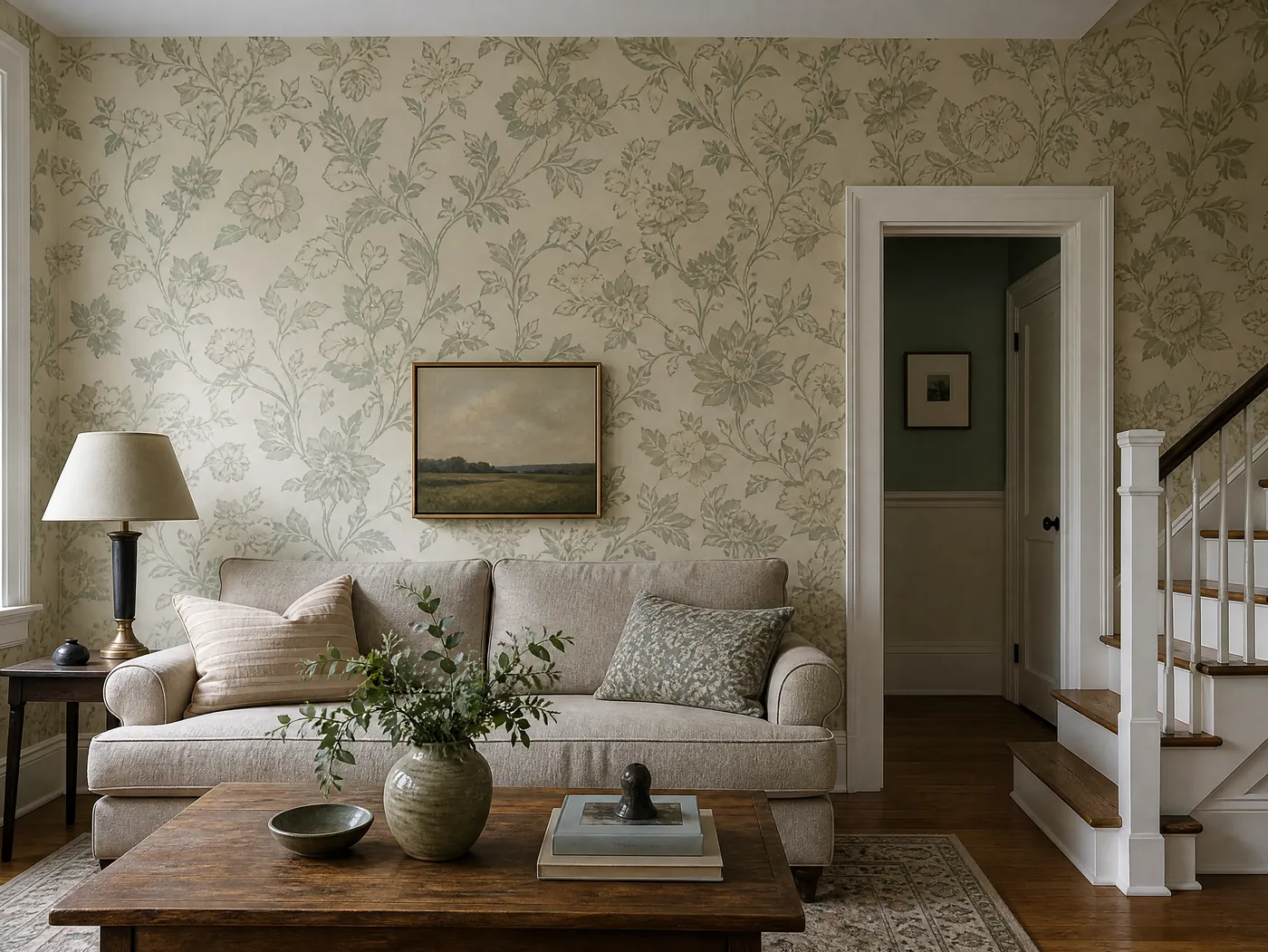
WALLPAPER
INSTALLATION
& REMOVAL hung straight or stripped clean

- Free quotes
- Itemized written quote
- Since 2010
- Open 7 days
We hang new wallpaper on walls that have been repaired and primed for it, and we strip old paper by scoring, soaking or steaming, then repair and prime the walls for paint or fresh paper.
Paper on, paper off
Wallpaper installation and removal across Toronto
Wallpaper work runs in two directions, and we handle both. Installation covers feature walls, full rooms, powder rooms, stair halls, ceilings and sloped walls, in traditional paper, non-woven, vinyl and fabric-backed papers. Removal covers single layers of builder paper, several layers stacked up over the decades, paper that someone painted over, and borders left behind from an older decorating scheme. After removal we repair and prime the walls. If you would rather not re-paper, the walls are left smooth and sealed under a primer suited to paint, so the room is ready for its next finish.
Some people call because they have found a paper they love and want it hung properly on one wall of a dining room or bedroom. Others have bought a home with dated florals, a faded border in the kitchen or paper peeling at the seams in a bathroom. Landlords and property managers ask for removal between tenants so units are ready for the next lease. Condo owners want a feature wall that adds pattern without a renovation. Sellers ask for busy patterns to come down before listing photos, so buyers walk into plain, neutral walls.
Good wallpaper work is hard to notice. On a new installation, the strips are plumb, the pattern lines up at every seam, and seams lie flat with no gaps, overlaps or lifted edges. There are no bubbles or paste stains, and the cuts at the ceiling, baseboard and outlets are clean. On a removal job, a good result is a smooth wall with no torn drywall paper, no glue residue and no ridges where the old seams were, ready for primer and paint so that nobody would guess paper was ever there.
Planning starts with the walls. We test a small area to see how existing paper releases, check for painted-over layers, and look at the surface for cracks, damp spots or old repairs. For a new installation we measure the room, talk through the pattern repeat and the type of paper you have chosen, and help you work out how many rolls to order with enough for matching. You then receive an itemized written quote that separates removal, repairs, priming and hanging, so every part of the job is clear before we begin.
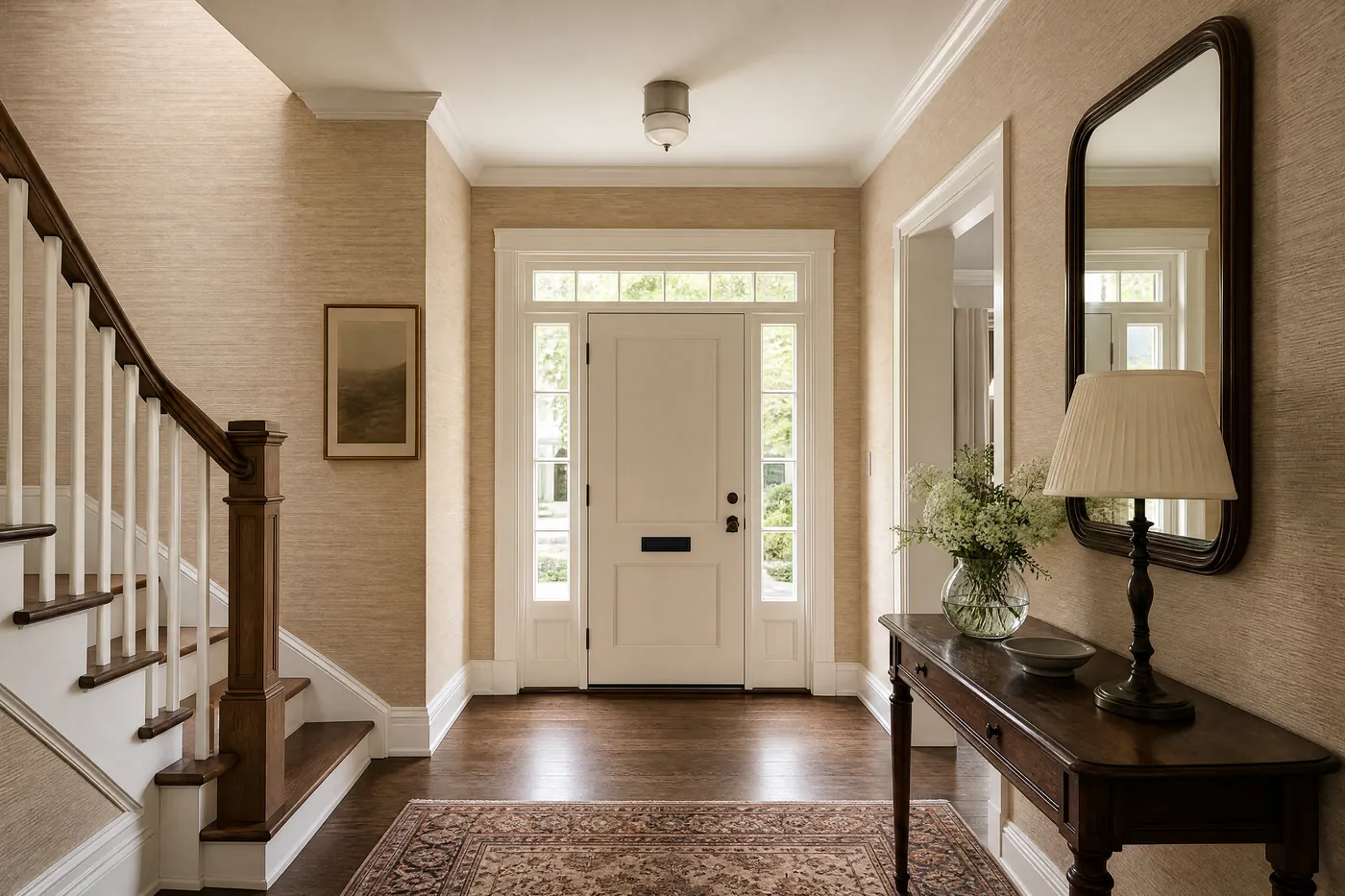
Feature walls and full rooms
A single accent wall or every wall in the room, hung plumb from a measured start line. On full rooms we plan where the pattern begins so the last seam, which rarely matches perfectly, falls in a corner or behind a door where it stays out of sight.
Removal of old paper
Single layers, multiple layers, borders and painted-over paper are all stripped. The method depends on the paper and the paste: dry peeling, scoring and soaking with a removal solution, or steaming for stubborn layers, always with care to protect the drywall face.
Wall repair and priming
After stripping, torn drywall paper is sealed, gouges and old anchor holes are filled, and rough areas are skim coated and sanded. Walls are then washed of paste and primed, with a wallpaper primer for new paper or a sealing primer for paint.
Ceilings, stairwells and wet rooms
Ceilings, sloped attic walls, tall stair halls, bathrooms and powder rooms can all be papered, with humidity-rated papers in wet rooms. These areas need more setup and careful handling, so they are measured on their own and priced as their own item on the quote.
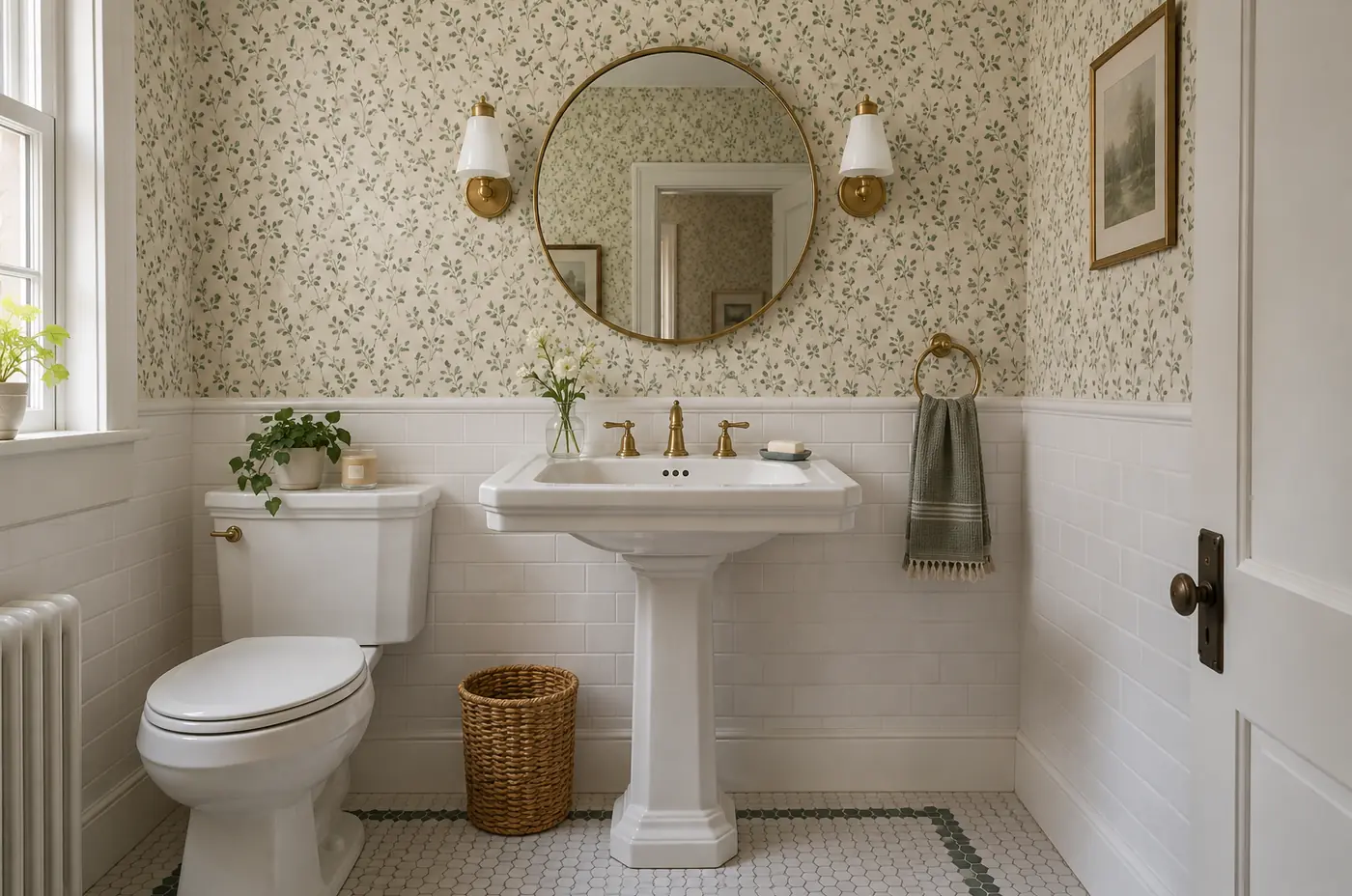
How we hang and strip wallpaper, step by step
Installation starts with a sound, primed wall. Once repairs are sanded and the wallpaper primer has dried, we mark a plumb line rather than trusting the corners, which are rarely straight in older homes. Each strip is cut with extra length, then pasted on the back or, for non-woven papers, the paste goes on the wall instead. Strips are hung, matched to the pattern, smoothed from the centre outward to push out air, and trimmed at the ceiling and baseboard with a fresh blade. Seams are rolled lightly and paste is wiped off the face straight away.
Removal starts with a test patch. Strippable papers sometimes peel off dry, leaving a backing layer that is then soaked and scraped. Vinyl and older papers are scored with a perforating tool so a removal solution or steam can reach the paste, then lifted in sections with wide scrapers held flat to protect the drywall. Painted-over paper takes the most patience, because the paint stops water reaching the glue. Once the paper is off, the walls are washed until the paste residue is gone, since leftover glue cracks and bubbles any paint applied over it.
After removal, the walls are repaired before anything new goes on. Spots where the drywall face tore are sealed with a primer made for that purpose, because water-based compound applied directly makes the exposed paper bubble. Gouges, anchor holes and old seam ridges are filled and skim coated, then sanded smooth. The whole wall is primed. From there, the room either gets new paper over a wallpaper primer or is left sealed under a primer suited to paint, ready for whatever finish comes next. Debris is bagged and taken away when the job is done.
Reviews
What clients say
Why hire professionals
Why wallpaper is a job for practised hands
Wallpaper is unforgiving. A strip hung off plumb pulls the whole room crooked, a torn wall shows through new paint, and paper you paid good money for can be wasted by one careless cut. Knowing how pastes, primers and patterns behave protects both the paper and the wall.
Plumb lines and pattern match
Walls and corners in older homes are rarely straight. We set a true vertical line and plan the pattern so motifs line up across seams and carry neatly around windows and doors.
Less wasted paper
Rolls from different print batches can differ slightly in shade, so ordering enough at once matters. We measure and help you order the right quantity, allowing for the pattern repeat.
Walls that survive removal
Scraping too hard or soaking too long tears drywall paper and creates a lot of repair work. Our method is matched to each paper so the wall underneath stays intact.
The right primer each time
New paper needs a wallpaper primer for grip and later removal, while a stripped wall needs a sealing primer before paint. Using the wrong one leads to bubbles, peeling or cracked paint.
Clean work in lived-in rooms
Paste, water and wet paper are messy. Floors are protected, furniture is moved and covered, and the room is left orderly at the close of each working day.
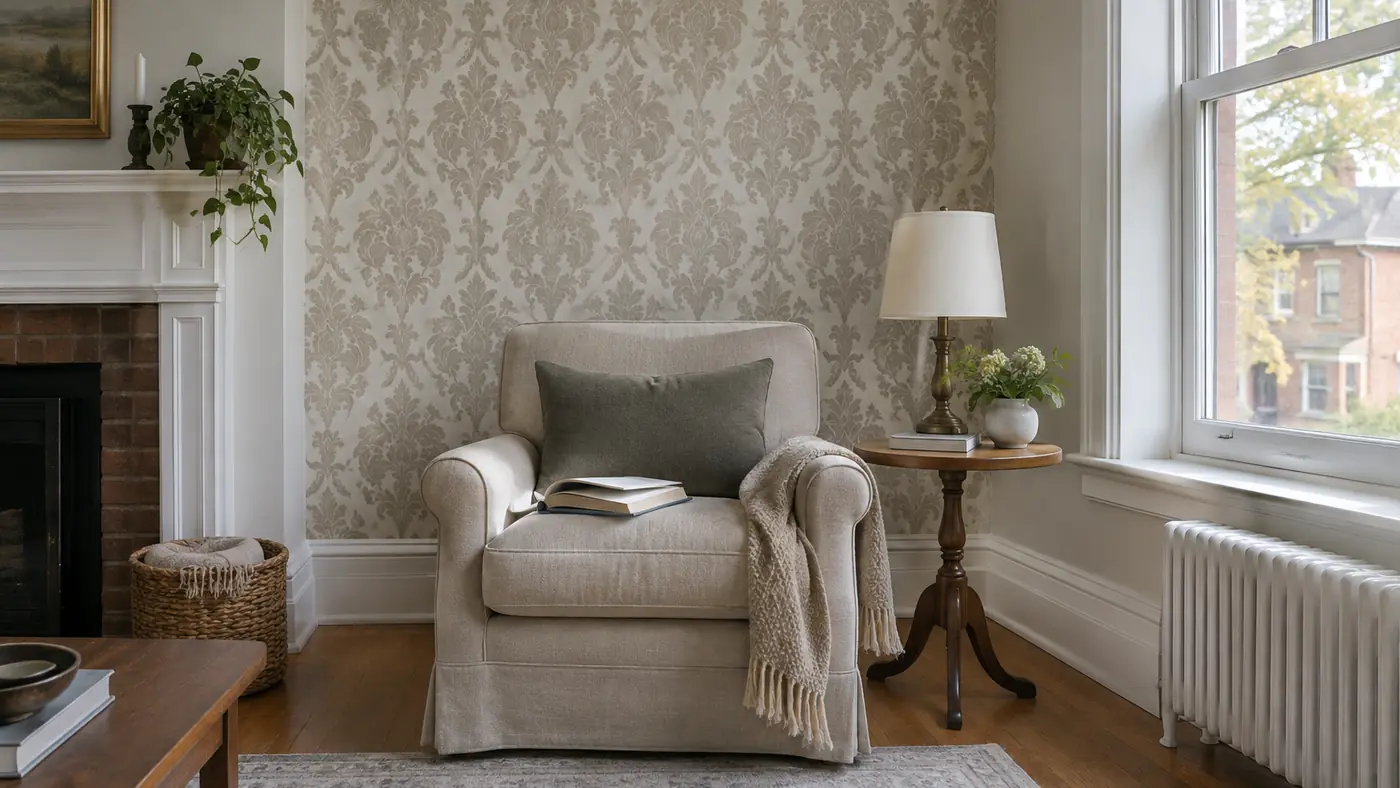
Our process
From first visit to finished walls
Every wallpaper job follows the same five stages, from a single feature wall to a whole floor of stripping. Before stripping or hanging begins, you know who is coming, and your quote lays out what happens in each room.
Visit and measuring
We test the existing paper, inspect the walls and measure each room. For new paper, we talk through your choice, the pattern repeat and the number of rolls. You then get a free, itemized written quote.
Room protection
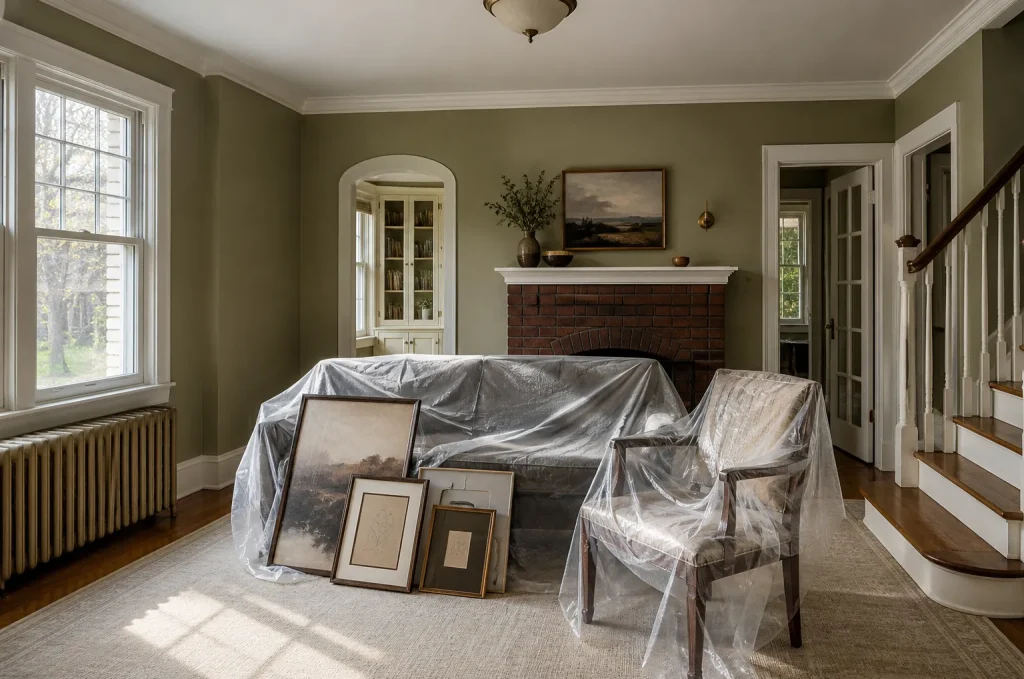
Furniture is pulled into the middle of the room under covers, and floors get drop sheets. Outlet and switch plates come off with the openings taped, and baseboards are covered so water and paste cannot stain them.
Removal and wall prep
Old paper is scored, soaked or steamed and lifted with scrapers, then the paste residue is washed off. Walls are repaired, skim coated where needed, sanded and primed with the primer that suits the next finish.
Hanging new paper
New paper is hung from a plumb line with matched seams and clean trims at ceiling and baseboard. Rooms not being re-papered are left sealed under a primer suited to paint, smooth and ready for the next finish.
Clean-up and care notes
Offcuts and old paper are bagged and removed, outlet and switch plates go back on, and furniture returns to its place. For new paper, we explain how to clean it and when it is safe to wipe the surface.
Ready to start?
Call (416) 710-4224 or send a few details and photos for a free, itemized quote.
Preparation
Preparing walls before paper goes up or comes off
Testing the old paper
We lift a corner in a hidden spot to see whether the paper is strippable, peelable with a backing, vinyl or a traditional paper glued straight to the wall. We also check for paint over the paper, since that changes the method and the effort needed.
Protecting floors and trim
Removal uses a lot of water and creates wet, sticky scraps. Floors are covered with absorbent drop sheets over a waterproof layer, baseboards and window trim are masked, and electrical plates are removed with the openings taped to keep water out.
Repairing the wall surface
Cracks, dents, nail holes and old anchor holes get filled and sanded. Where the drywall face tore during removal, it is sealed before any compound goes on, then skim coated so the surface is flat. New paper shows every bump underneath, so this stage is never rushed.
Washing off paste residue
Old wallpaper paste stays on the wall as a thin, invisible film. Left in place, it can make new paint crack or bubble and stop new paper sticking evenly. Walls are washed with warm water and a paste remover, then rinsed and allowed to dry fully.
Priming for the next finish
Before new paper, walls get a wallpaper primer that helps the paper grip, lets strips slide for pattern matching and makes future removal easier. Before paint, walls get a sealing primer that locks down any trace of residue and evens out patched areas.
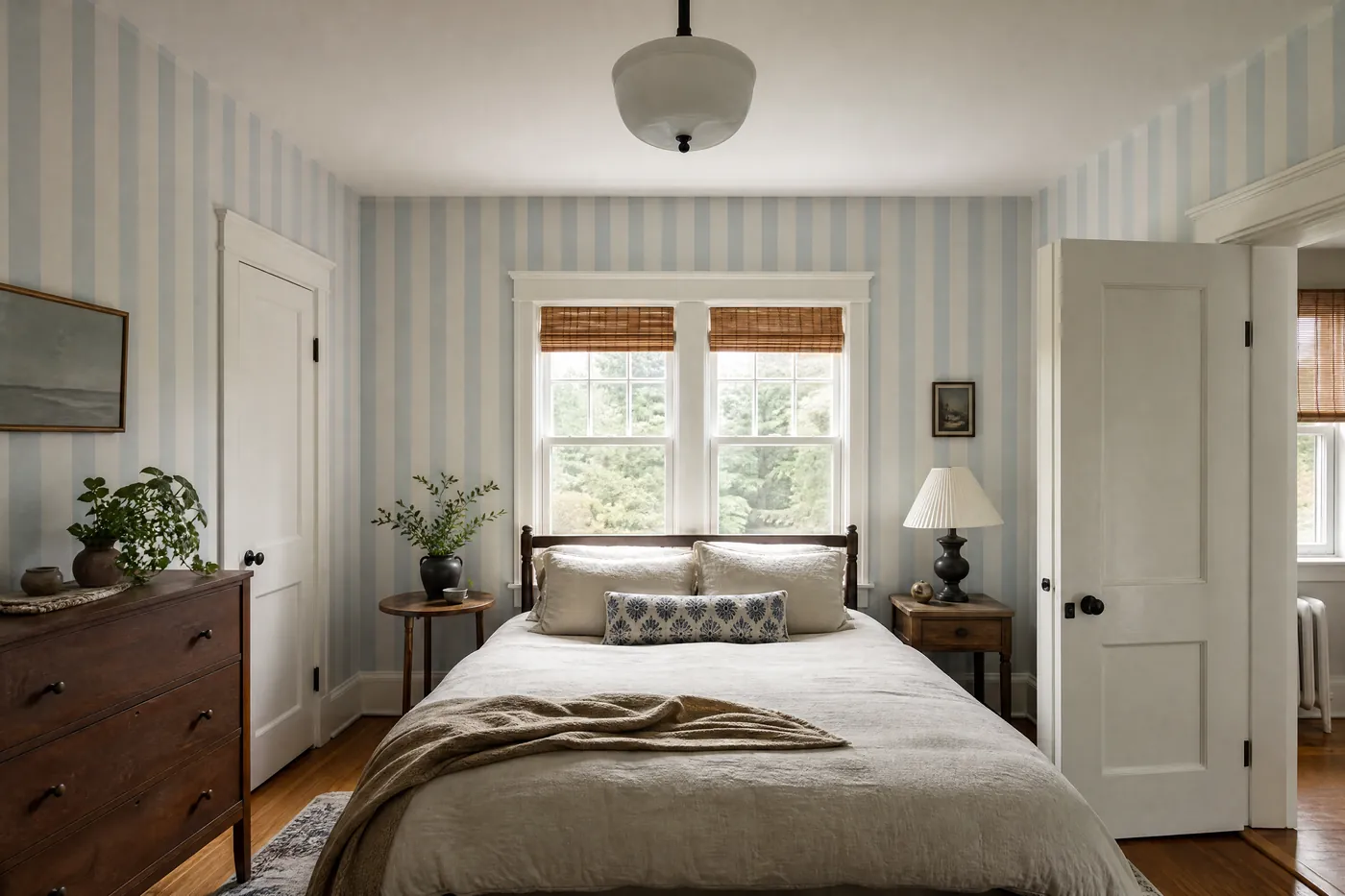
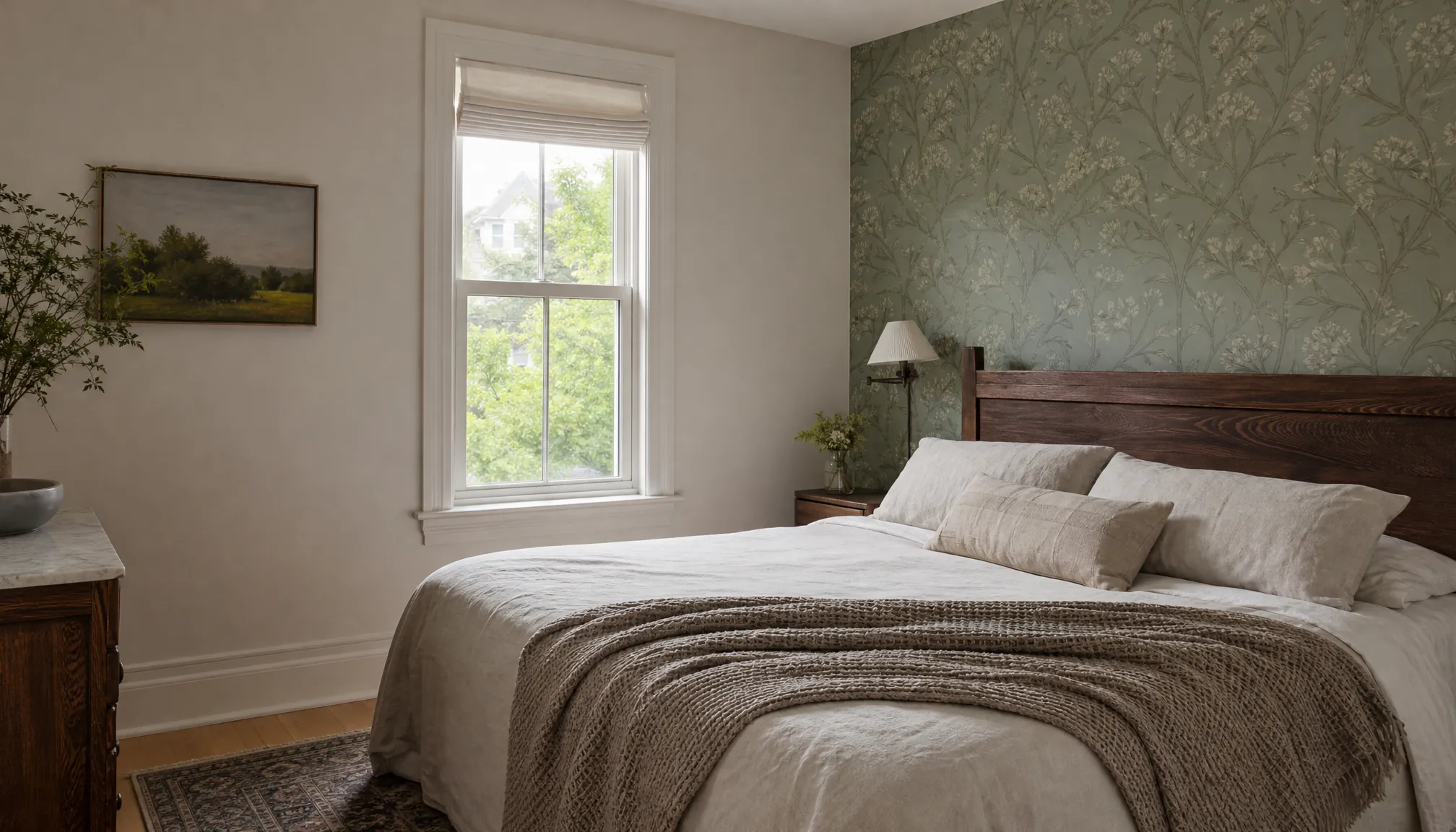
Products and finishes
Traditional and non-woven papers
Traditional papers are pasted on the back and left to relax before hanging, while non-woven papers go up on a pasted wall and are easier to strip later. Both suit living rooms, bedrooms and dining rooms, and we follow the maker's instructions for paste and soaking time.
Vinyl and humidity-rated papers
Vinyl and vinyl-coated papers resist moisture and can be wiped, which makes them practical in kitchens, bathrooms and laundry rooms. In wet rooms, a humidity-rated paper and a mould-resistant paste are used, and good ventilation after showers helps the seams stay down.
Wallpaper and sealing primers
A wallpaper primer creates an even, slightly grippy base for new paper and protects the drywall when the paper comes off in future. A sealing or oil-based primer goes on stripped walls before paint, so paste traces and torn drywall paper cannot cause bubbling.
Pastes and seam adhesives
Premixed clear paste suits most traditional and non-woven papers, while heavier vinyls need a stronger adhesive that grips without staining the face. A seam adhesive is kept on hand for edges that need extra hold, and the paste for each paper follows the maker's instructions on mixing and open time.
Service areas
Where we hang and strip wallpaper
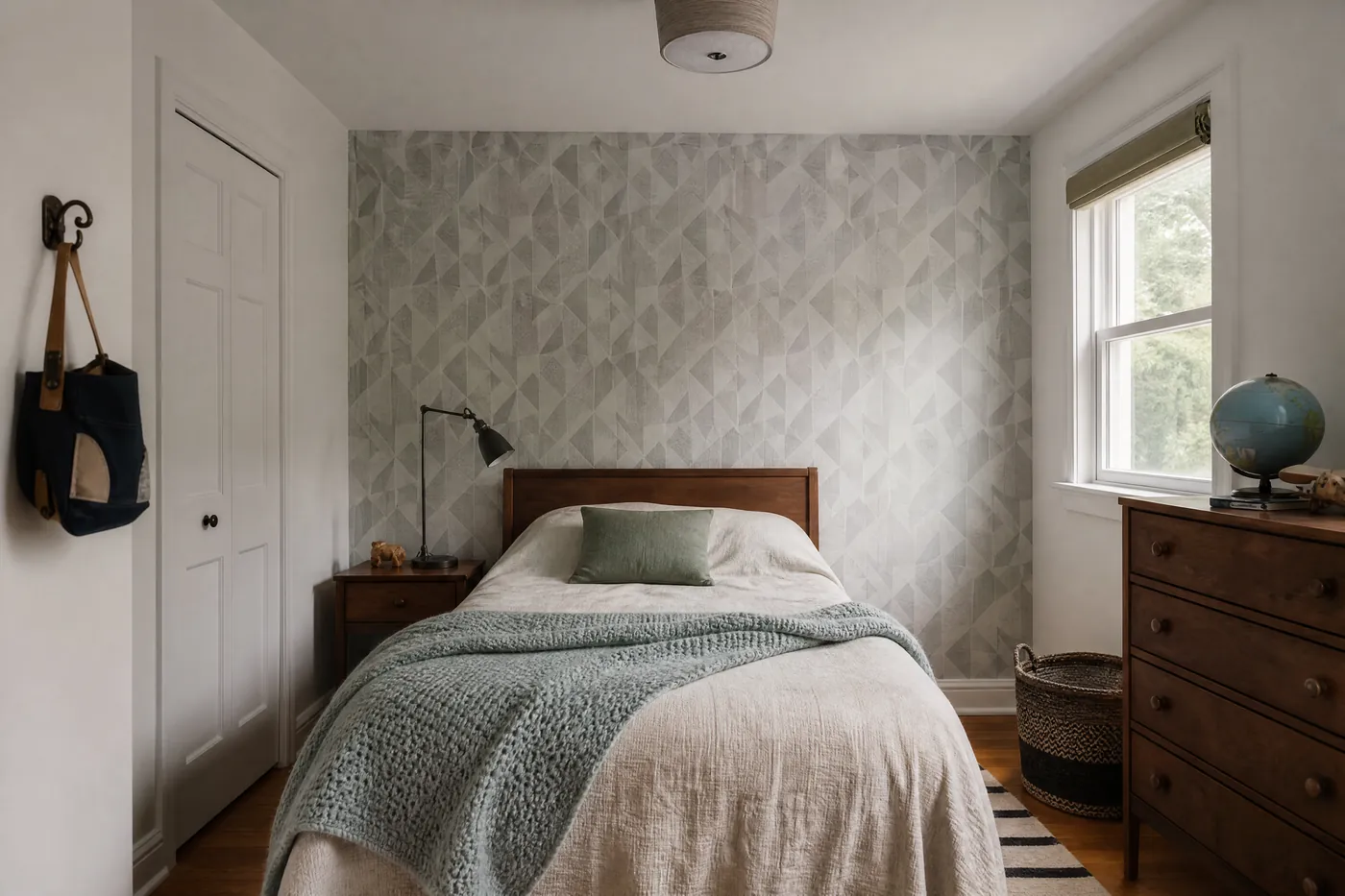
Across Toronto, wallpaper jobs follow the age of the house. In older neighbourhoods, plaster walls in Victorian and Edwardian homes may carry several layers of paper, sometimes painted over more than once, and the plaster underneath can be cracked or loose in places. Postwar bungalows often have one or two layers from a renovation decades ago, frequently in kitchens and bathrooms. Downtown condos tend to have drywall with builder paint, which suits a feature wall of new paper as long as the wall is primed first so it can come off cleanly at the end of a lease or before a sale.
Outside the city, many homes in Peel Region and Durham Region were finished with wallpaper borders and accent papers when they were new, and owners now want them stripped for paint. In York Region and Halton Region, newer custom homes often call for statement papers in dining rooms, powder rooms and two-storey foyers, which need tall ladders and careful seam work. Drywall in these newer houses was usually painted before any paper went up, so removal there tends to be easier than in older plaster homes.
Local conditions
Wallpaper in older houses, condos and rentals
Seasonal humidity swings matter for wallpaper. Paper expands when it is pasted and shrinks as it dries, and in muggy summer weather it dries slowly, while dry winter air from the furnace can pull it tight and open the seams. We keep the room at a steady temperature during hanging, avoid fans or space heaters aimed at fresh strips, and ask you to keep windows closed until the paste has set. In bathrooms and basements, which stay damp for much of the year in this climate, we check for moisture before hanging anything.
The housing stock decides the removal method. Plaster walls in older homes usually release paper more easily than drywall, but the plaster itself may be soft or cracked. Drywall that was never primed before papering is the hardest case, because the paste bonds to the drywall's paper face and tears it on the way off. Postwar homes sometimes have paper over paneling or over earlier paint, and some kitchens have paper sealed under several coats of gloss. We look at each wall and explain what we found before we put a quote together.
In condos, wallpaper work follows the building's renovation rules: elevator bookings, set working hours and disposal of debris through the service areas rather than the garbage chute. Removal is quieter than most trades, which helps in shared buildings. Most condo walls are painted drywall, so steam is rarely needed and stripping stays fairly clean. For rental suites, removal is timed around the move-out date so the walls are smooth and sealed before the next tenant moves in, and feature walls are hung over a primer that lets the paper come off cleanly when the lease ends.
- Find out whether your old paper has been painted over
- Order all rolls at once from the same print batch
- Decide on paint or new paper before the walls are stripped
- Check condo rules for working hours and debris disposal
- Take down artwork, shelves and fragile items before work begins
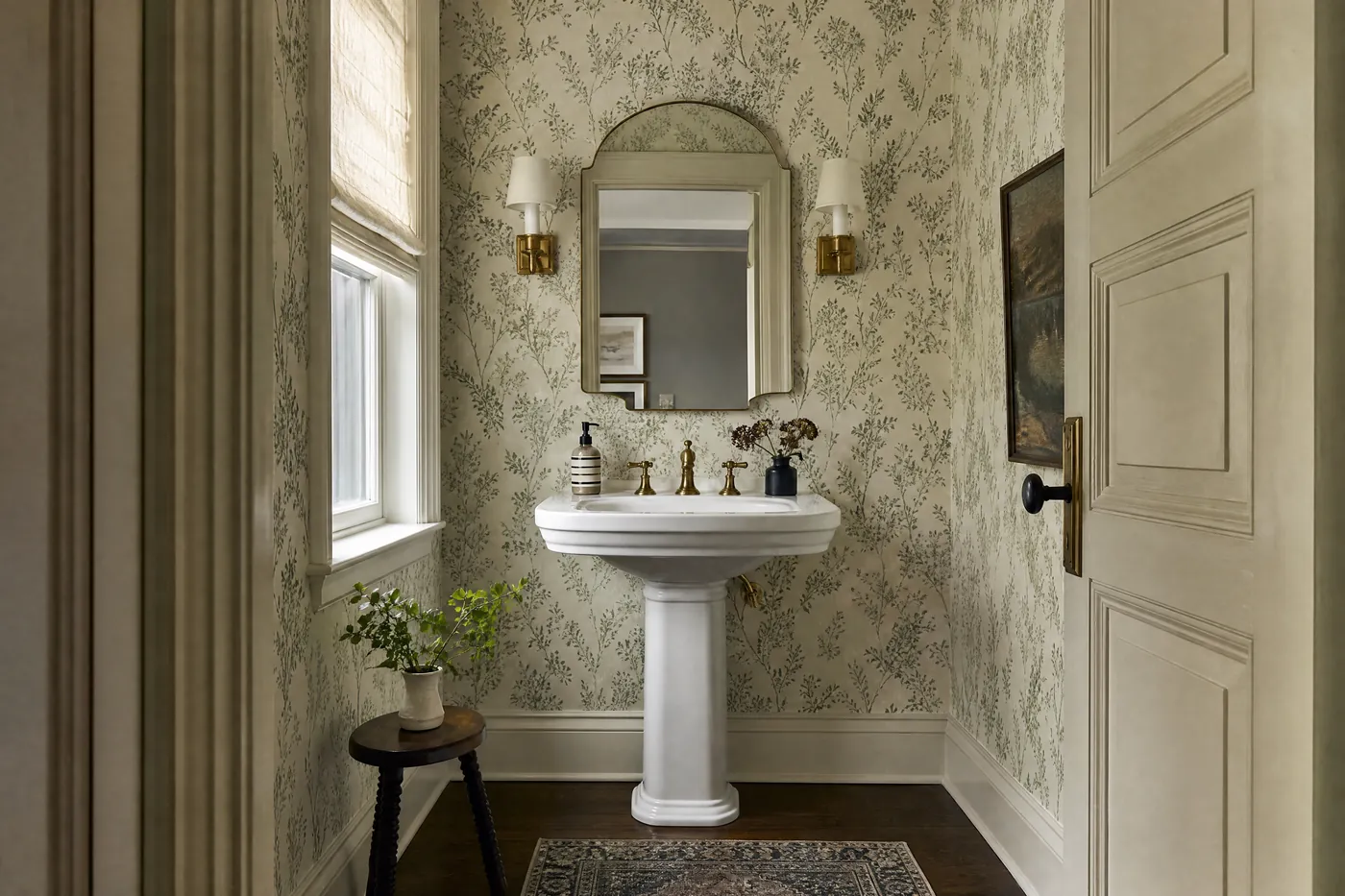
What changes the price of wallpaper work
For removal, what matters most is the size of the room, the number of layers, the kind of paper and whether it has been painted over. Vinyl and strippable papers usually come off more easily than paper glued to unprimed drywall, and painted-over layers take the most labour. The condition of the wall underneath decides how much repair and skim coating follows. High ceilings, stairwells and rooms full of built-ins add setup and cutting work.
For installation, the type of paper, the pattern repeat, the number of walls and the amount of cutting around windows, doors and outlets all play a part. Large-repeat patterns and delicate papers take more care, and ceilings take more than walls. Your itemized written quote separates removal, repairs, priming and hanging so you can see each part. For a first rough budget before anyone visits, the painting cost calculator is a reasonable starting point.
Price it before anyone visits
Pick the rooms and the work in our cost calculator for a ballpark range in about a minute.
Then ask for a free quote: written, itemized and free to change before work starts.
Projects
Recent wallpaper projects
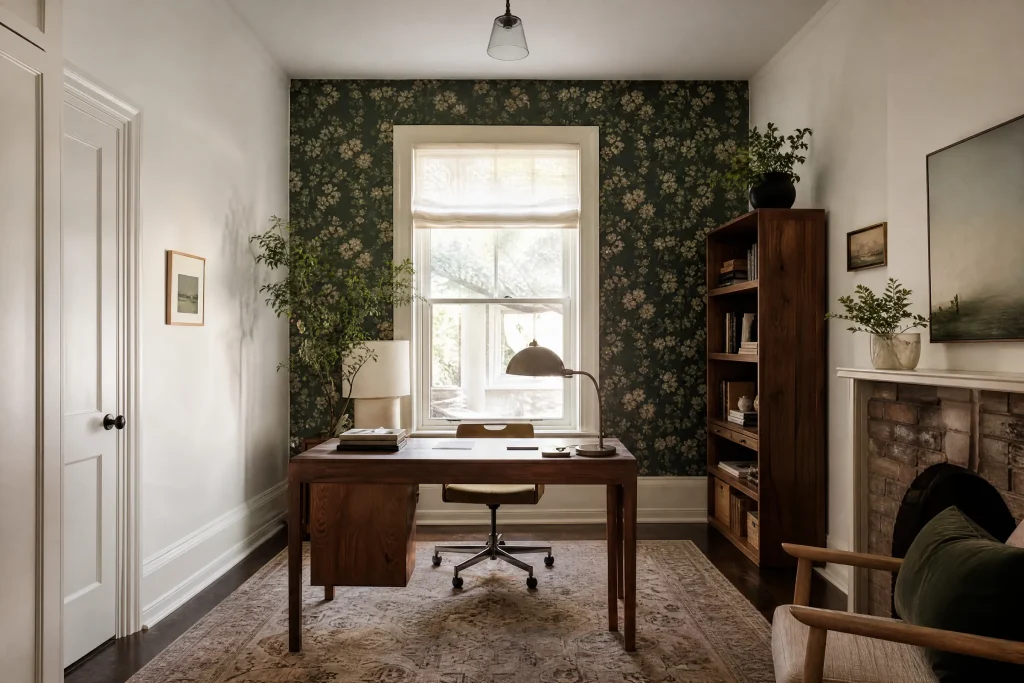
- Wallpaper
- Etobicoke
Art deco fan wallpaper for a Humber Bay Shores condo den
A condo den in Humber Bay Shores: peel-and-stick paper removed and torn drywall skimmed, then papered in sage art deco fans with pale putty walls.
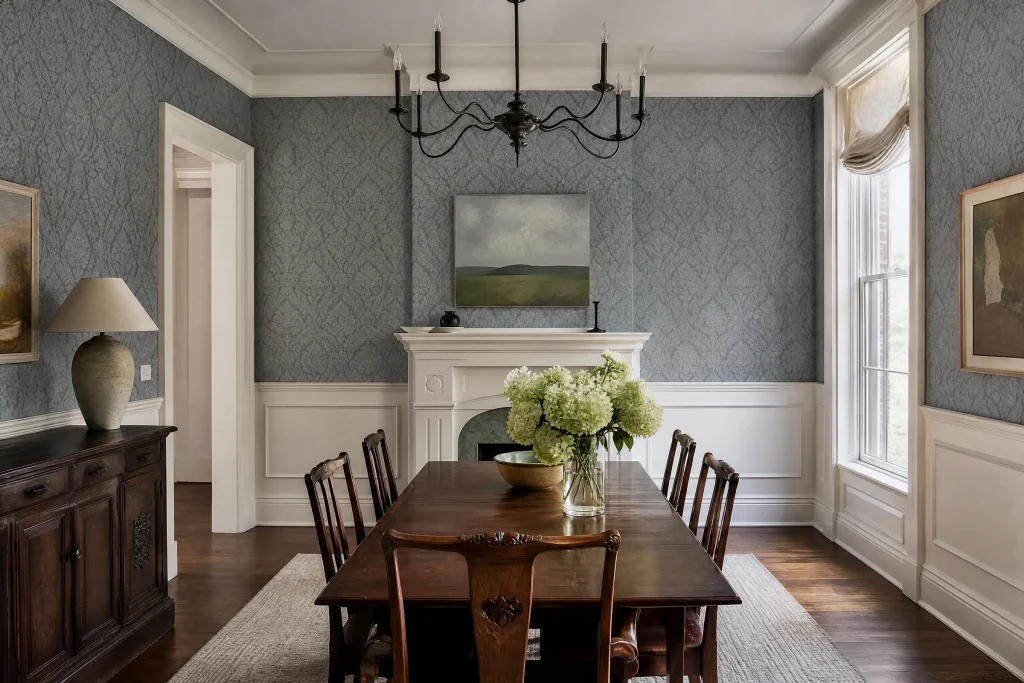
- Wallpaper
- East York
Painted-over wallpaper replaced on a Pape Village semi party wall
A dining room in Pape Village: painted-over wallpaper scored and gel-soaked off the plaster, then papered in navy and gold, with trim painted navy satin.
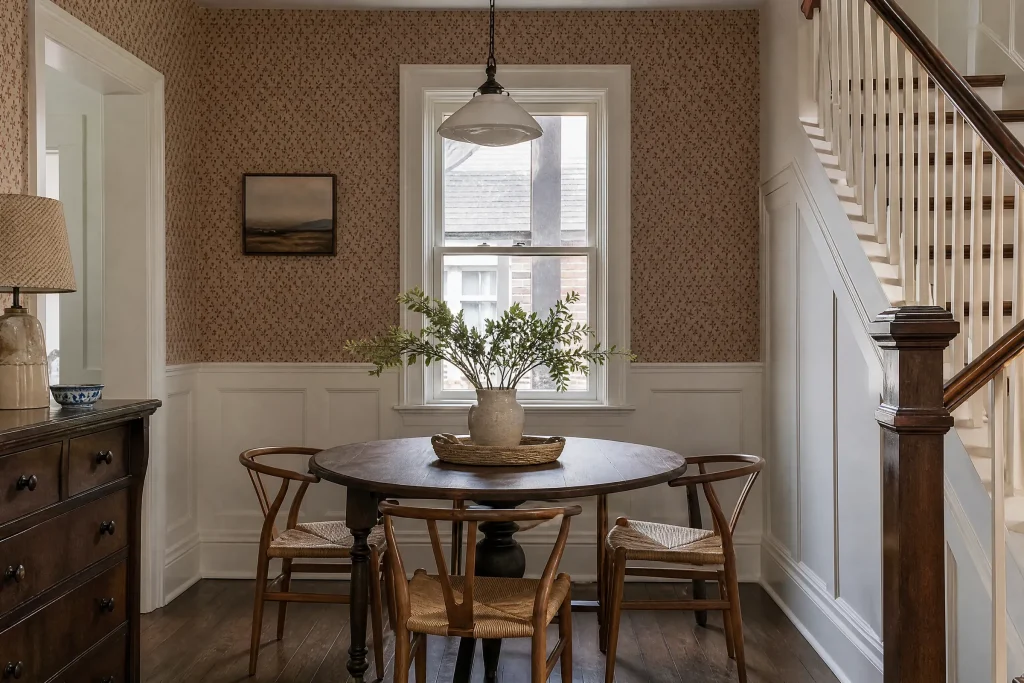
- Wallpaper
- Aurora
Old vinyl paper stripped and a diagonal stripe hung in Aurora
Living and dining rooms in Aurora: vinyl wallpaper stripped and torn drywall sealed, then painted warm white beside a navy and blush diagonal stripe.
Resources
Painting Guides and Resources
- Guide
Choosing paint sheen room by room
Matte, eggshell, satin or semi-gloss? How sheen changes the way a wall looks, cleans and wears, and which finish suits each room in the house.
- Guide
How to prepare your home for painters: a checklist
A practical checklist for the weeks, days and morning before the painters arrive, inside and out, so the job starts on time and finishes without surprises.
FAQ
Wallpaper installation and removal questions
Can you paint over wallpaper?
It can be done, but the result is rarely good. Seams usually show through the paint, and the moisture in water-based paint can soften the paste and make the paper bubble or lift. Painted-over paper is also much harder to remove later. In nearly every case we recommend stripping the paper, repairing and priming the wall, and then painting, which gives a smoother, more even finish.
How long does wallpaper removal take?
It depends on the paper, the number of layers, whether it has been painted and how the wall underneath reacts. Strippable paper on primed drywall can come off quickly, while several layers on unprimed drywall take patient soaking and repair. We test a small area during the quote visit and give you a schedule for the removal, the repairs and the priming that follows.
Do you supply the wallpaper?
You choose and buy the paper, which gives you the full range of patterns and makers. Before you order, we measure the room and work out how many rolls you need, allowing for the pattern repeat and waste at corners and openings. We suggest ordering all rolls at once and checking that they share a batch number, so the shade matches across the walls.
Can new wallpaper be hung over old wallpaper?
We do not recommend it. Old paper can lift or bubble under the weight and moisture of new paste, and its seams can show through. Texture from the old layer also telegraphs through thinner papers. Removing the old paper, repairing the wall and applying a wallpaper primer gives the new paper a sound, even base and makes the next change much easier.
Do you hang wallpaper on ceilings?
Yes. Ceilings, sloped attic walls and tall stairwell walls can all be papered. They need planks or scaffolding, a second pair of hands to support long strips, and careful planning so the pattern runs the right way across the room. Because they take more setup than a standard wall, they are measured separately and appear as their own line on the quote.
Will removing wallpaper damage my walls?
Some marks are normal, especially where paper was glued to drywall that was never primed. We reduce damage by testing first, using the gentlest method that works, and scraping with the blade held flat. Where the drywall face does tear, we seal it, fill and skim coat the area and sand it smooth, so the wall is ready for paint or new paper.
Is wallpaper a good idea in a bathroom?
It can be, with the right paper and prep. Vinyl or other humidity-rated papers, a mould-resistant paste and a properly primed wall are the basics. Ventilation matters a great deal: an exhaust fan used during and after showers keeps the seams from lifting. We avoid papering walls that get direct splashes, such as the area beside a tub without a surround.
How should I care for new wallpaper?
Give the paste time to set before cleaning the paper or hanging anything on the walls. After that, most vinyl and coated papers can be wiped gently with a damp cloth and mild soap, while traditional and non-woven papers usually only take light dusting. We leave you with care notes for your specific paper, and we suggest keeping a spare roll for future repairs.
Free quotes across the GTA
Have a wall that needs paper on or off?
Send us photos of the room and the paper, old or new. We will test the old paper, measure the walls and send a free quote, written and itemized.