
DECK & FENCE
STAINING a fresh, even finish for outdoor wood

- Free quotes
- Itemized written quote
- Since 2010
- Open 7 days
We clean, dry and stain decks, fences, pergolas and wood siding, choosing a clear, transparent, semi-transparent or solid stain that suits the wood, its condition and how much of the grain should show.
Outdoor wood, cared for
Deck and fence staining in Toronto backyards
Deck and fence staining covers the outdoor wood around your house: deck boards, stairs, railings, spindles and the skirting under the deck, fence boards, posts, rails and gates, and structures such as pergolas, privacy screens and planter boxes. Wood siding, shakes and trim on the house itself can be stained as well. Stain soaks into the wood and adds colour while keeping its texture, and most stains wear away gradually rather than peeling in sheets. That makes them easier to maintain than paint on wood that sits in sun, rain and snow.
The calls we get about decks and fences usually start with grey wood. Sun breaks down the surface fibres and turns cedar and pressure-treated lumber a silvery grey, then water soaks in, boards cup and check, and black mildew spots appear in shaded corners. Some people have a new deck or fence and want it protected from the start. Others have an older one with peeling stain or paint that needs to be taken back before anything new can go on. Many simply want the deck, fence and house to look like they belong together.
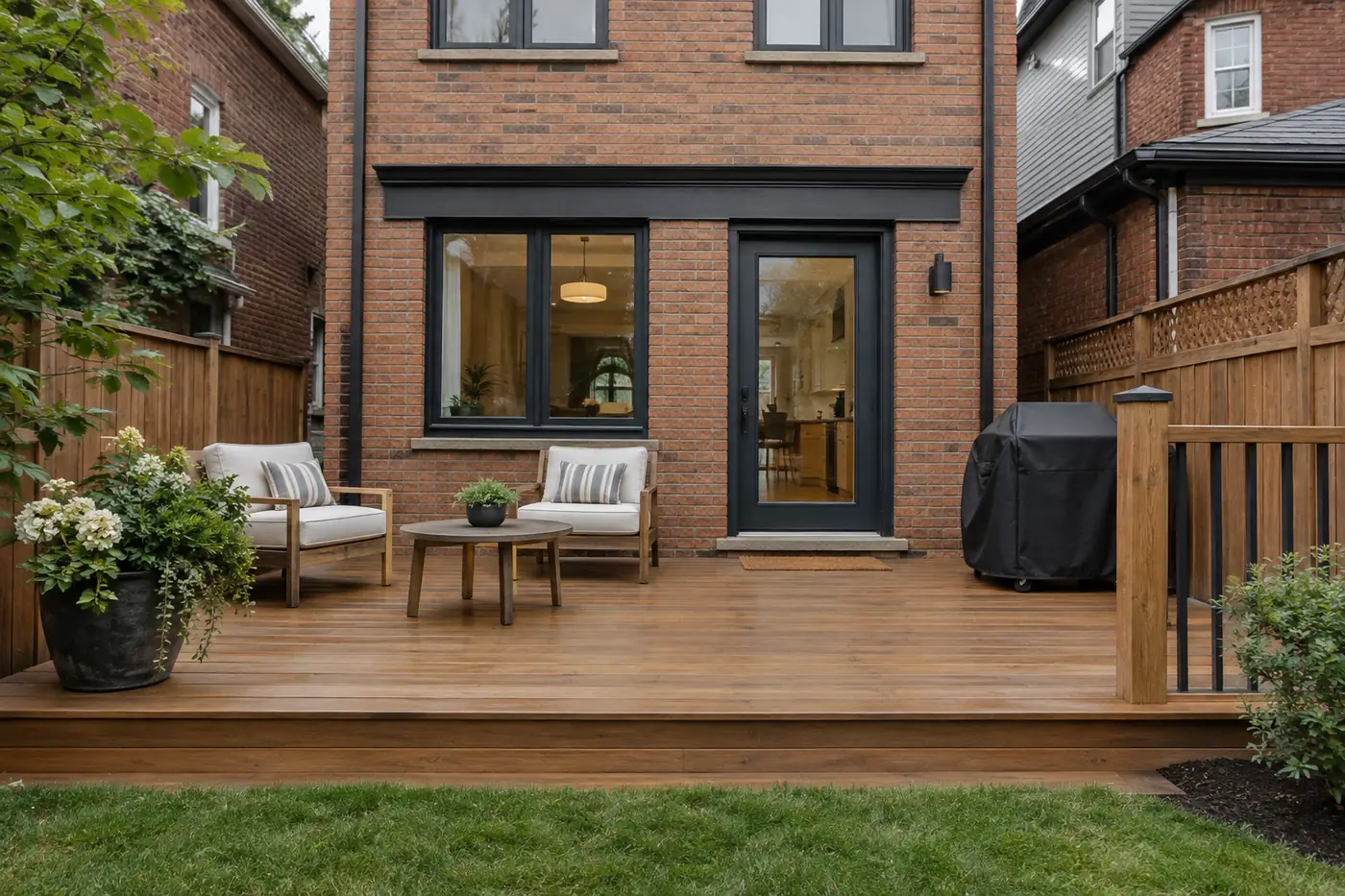
A good result is wood with an even colour from board to board, without dark lap marks where stain overlapped or blotches where one board soaked up more than its neighbour. The grain shows as much as you asked for: clearly through a transparent stain, softly through a semi-transparent one, or not at all under a solid stain. Ends of boards, the tops of posts and the edges of deck boards are coated as well as the faces, and no stain has ended up on the siding, the patio stones or the plants below.
Planning starts with a free quote visit. We look at the type of wood, its age, what finish is on it now and how weathered it is, and check for soft boards, popped nails and loose railings. You choose the stain type and colour, and we bring real sample pots so you can test shades on a hidden board. The itemized written quote then lists each part separately, the deck surface, stairs, railings, skirting and each fence run, along with the cleaning and sanding each needs and the coats planned.
Decks and stairs
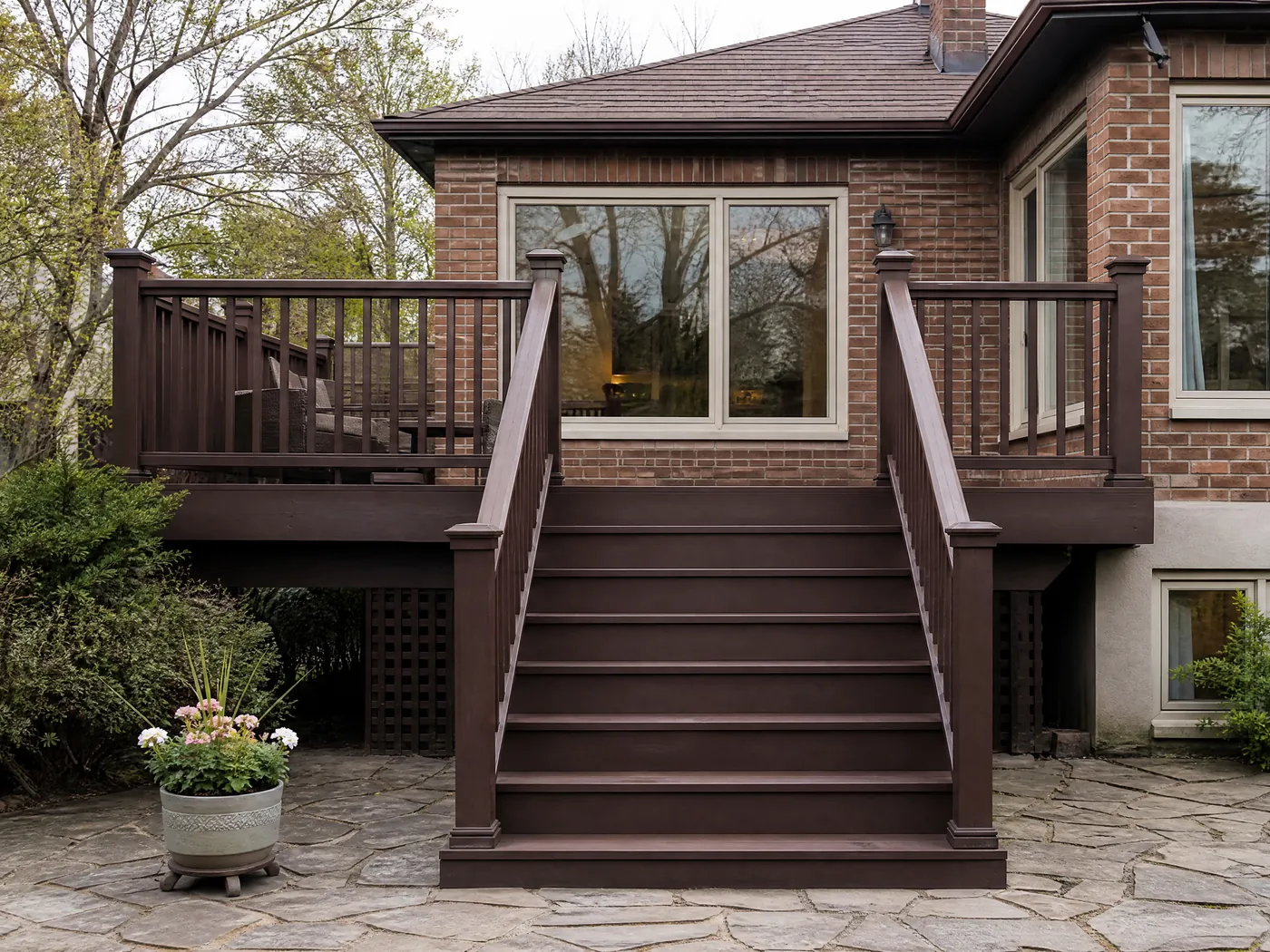
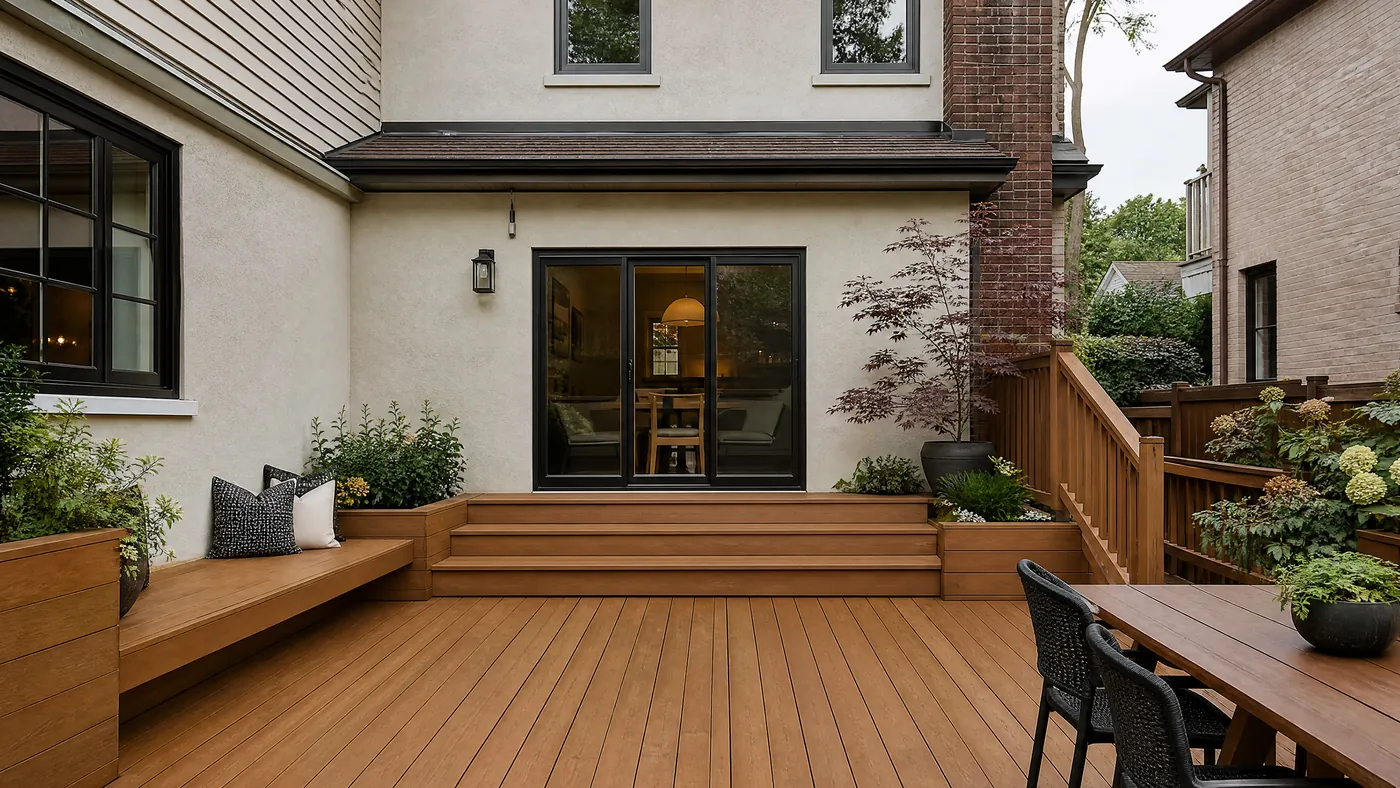
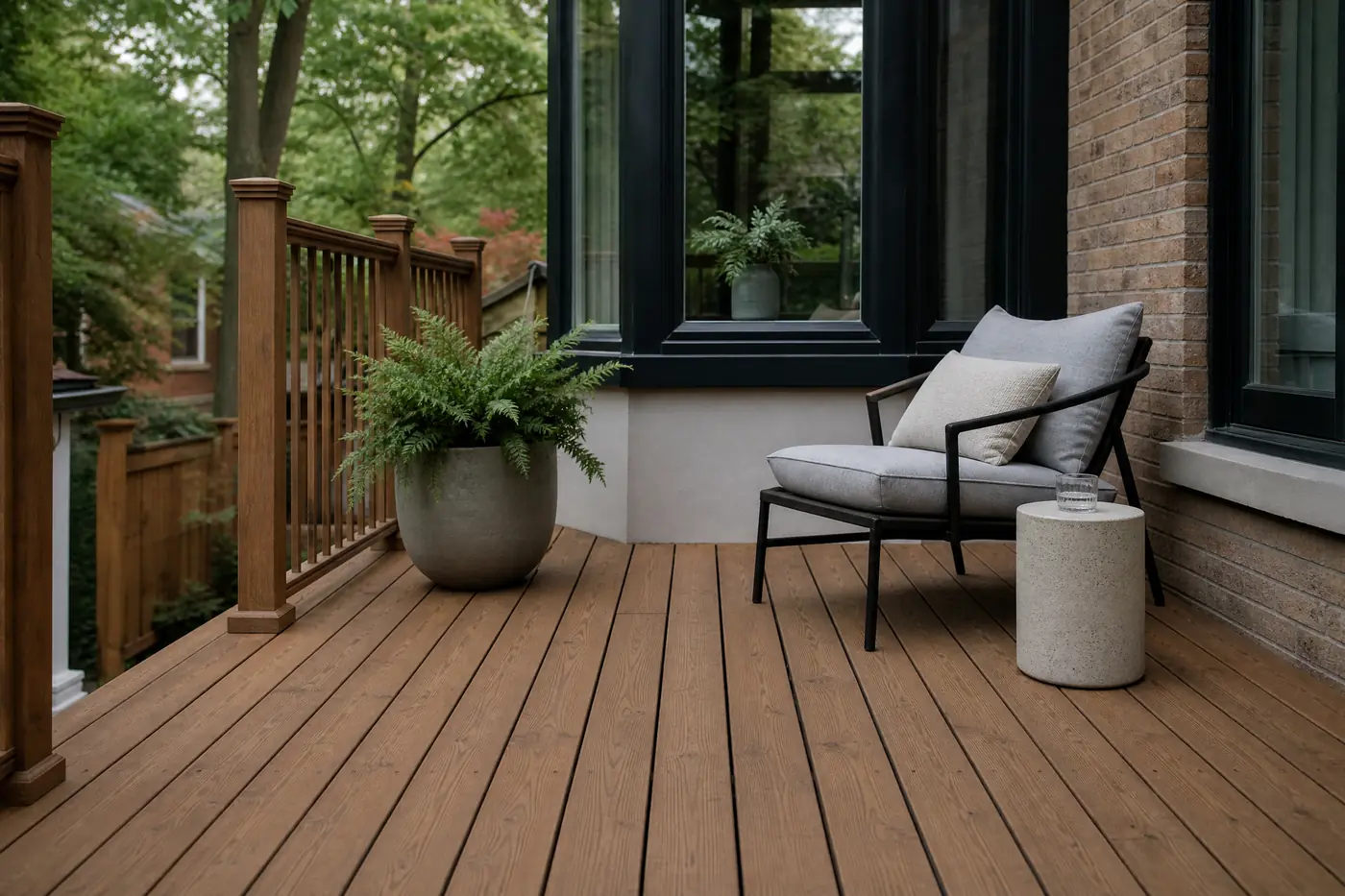
Deck boards, stair treads and risers, landings and the fascia boards around the edge. The walking surface gets the most wear, so cleaning is thorough, raised fibres are sanded, and the stain is worked into the gaps and board ends where water sits longest.
Railings and skirting
Handrails, spindles, posts, post caps and the lattice or board skirting below the deck. Spindles are stained on all four sides by brush, and the flat tops of posts and rails are sealed with extra care because they take rain and snow directly.
Fences and gates
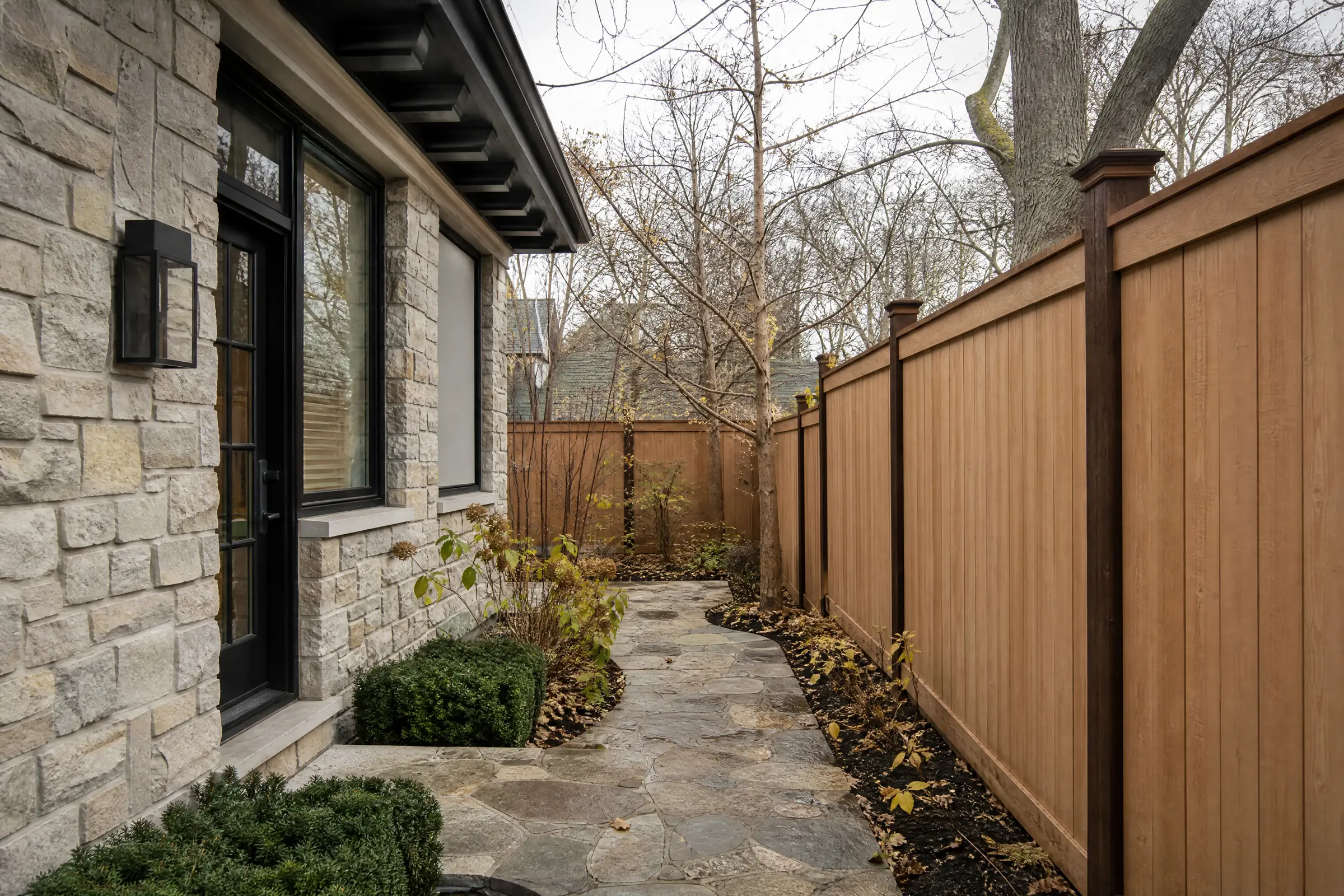
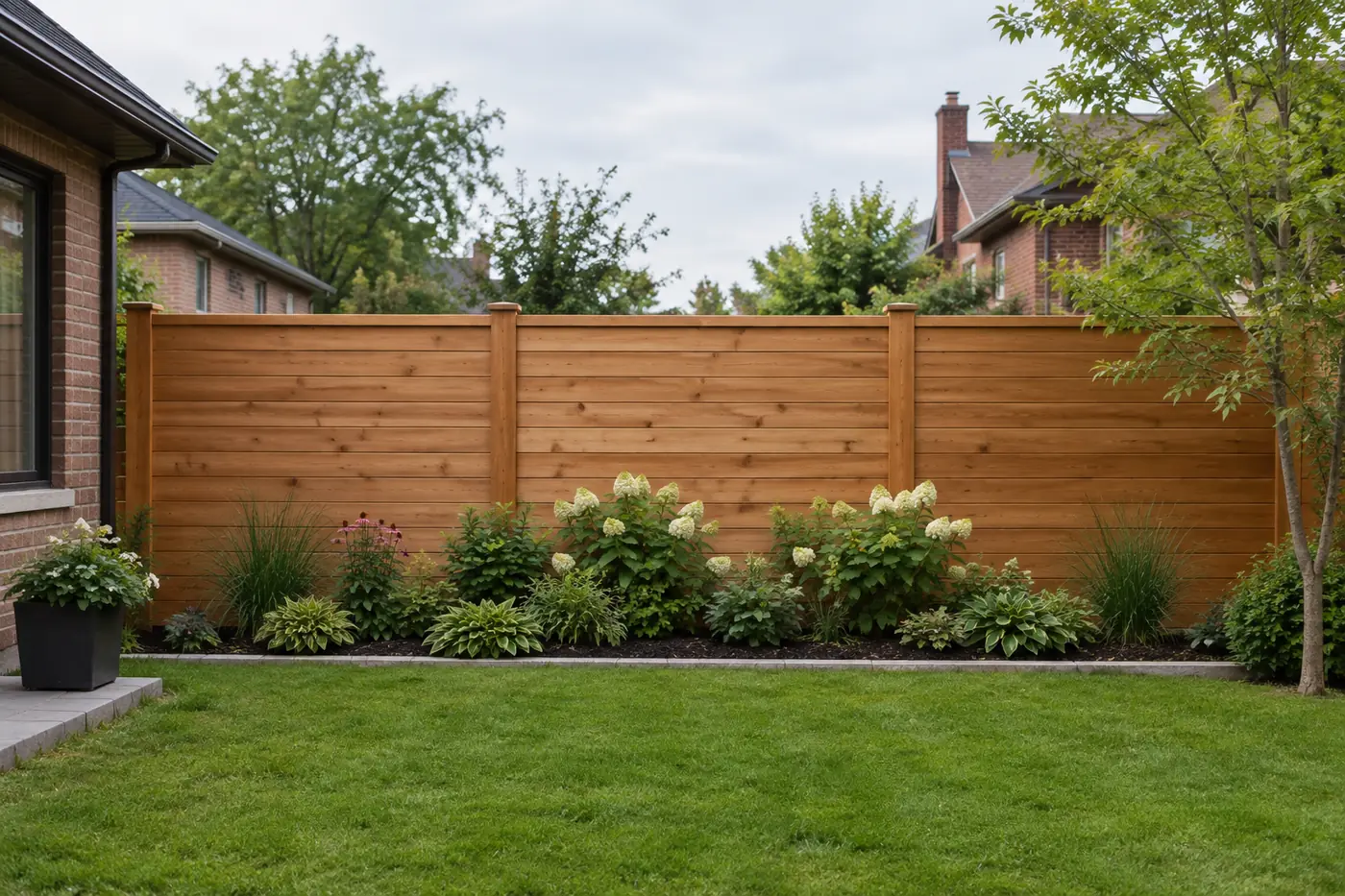
Fence boards, posts, rails and gates, on your side and, where your neighbour agrees and gives access, on theirs as well. The bottoms of boards and the tops of posts, where wood soaks up water first, get extra stain so the end grain is sealed.
Pergolas and wood siding
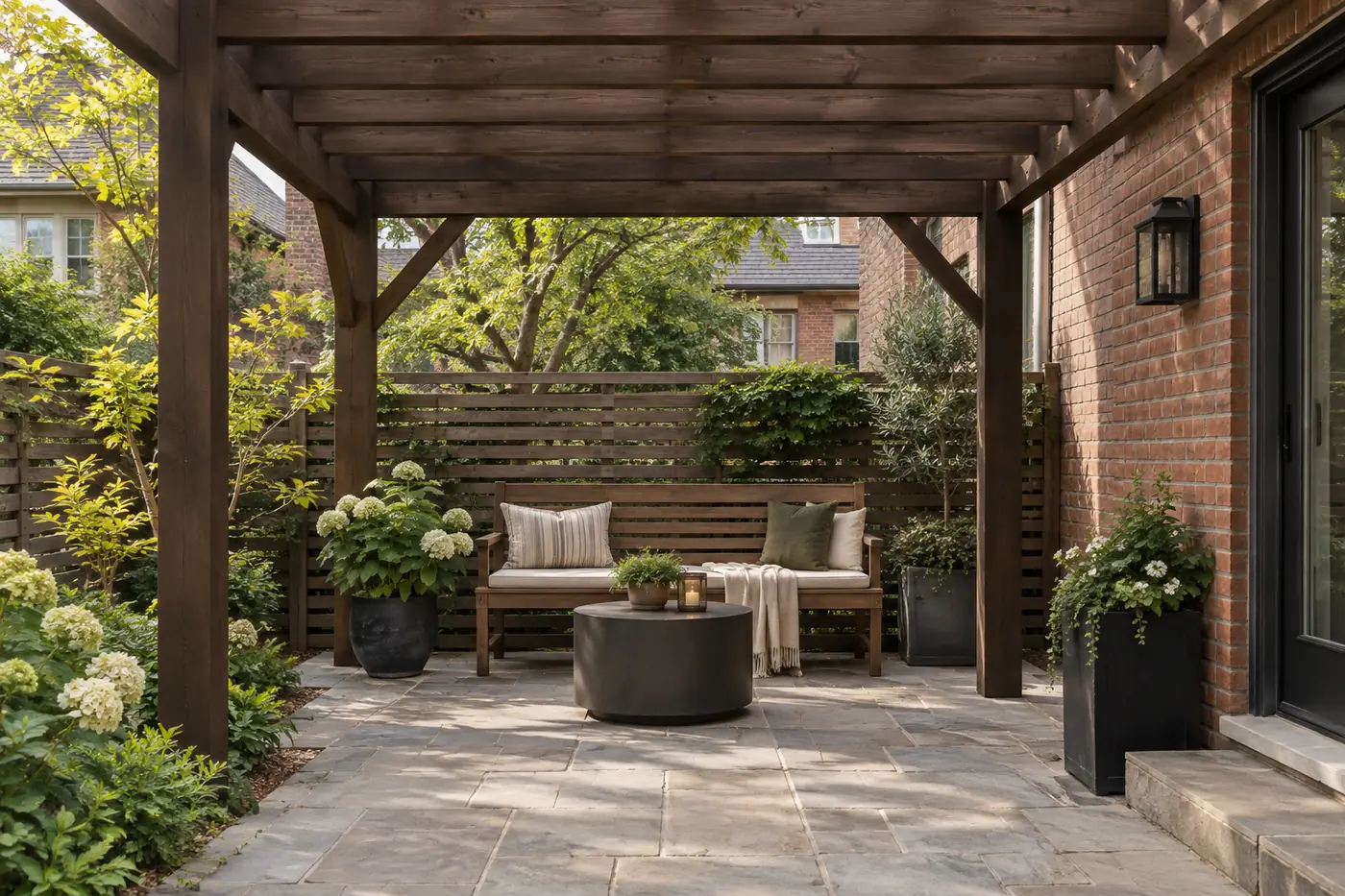
Pergolas, privacy screens, sheds, planter boxes and wood siding, shakes or trim on the house. These can be stained to match the deck and fence or in a separate scheme, and higher parts are reached from ladders set up safely on the deck or the lawn.
How decks, fences and siding are stained
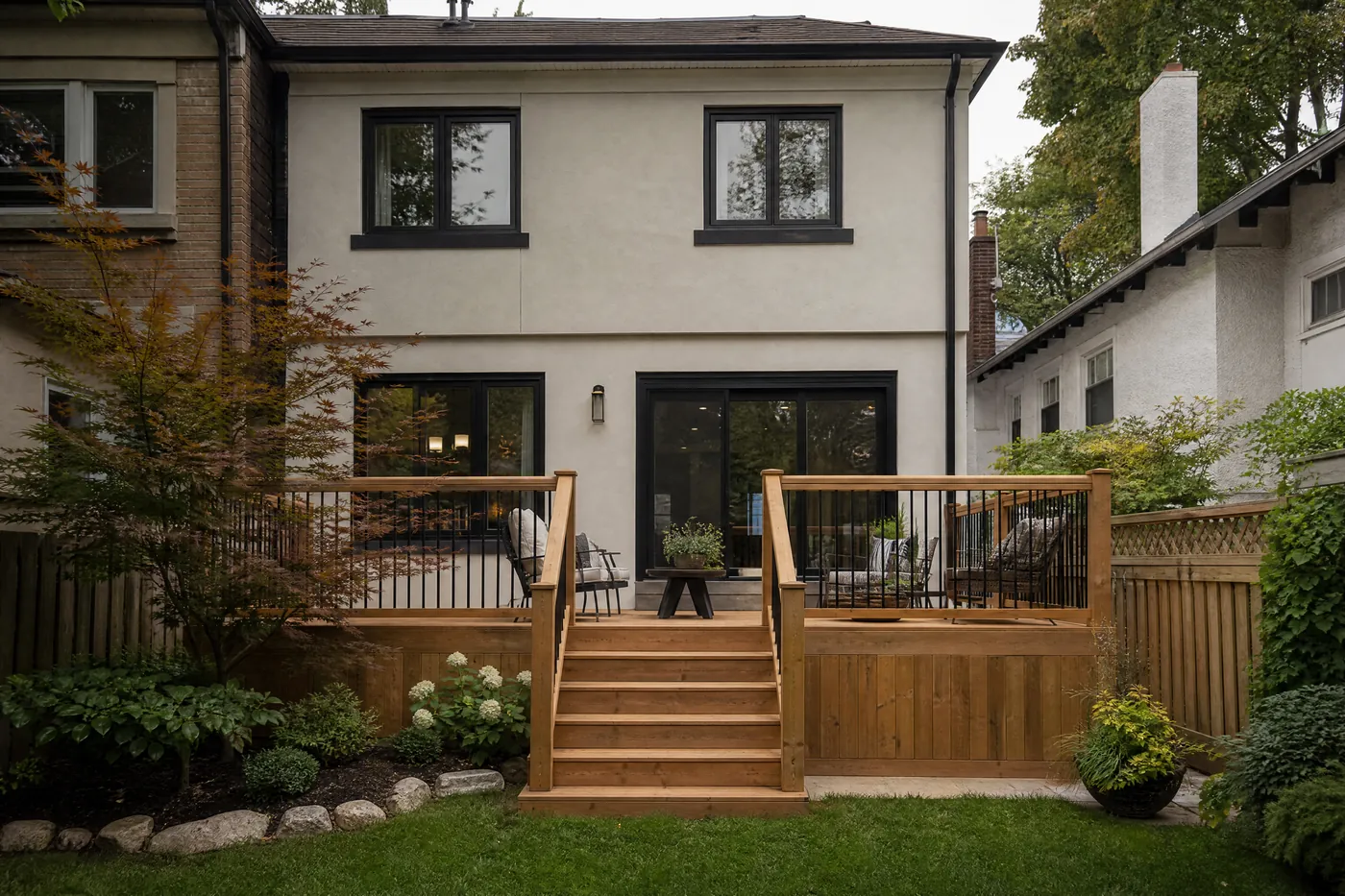
On a deck, the surface is cleared and swept, then scrubbed with a wood cleaner to lift dirt, grey fibres and mildew, and rinsed. Old stain that is peeling is stripped so the new coat can soak in. Once the wood has dried out properly, raised grain and rough patches are sanded, popped nails are set, and dust is blown out of the gaps. Stain goes on a few boards at a time along their full length, so each board finishes in one pass and no lap marks form across the deck. Railings and spindles are done before the floor.
Fences are stained from the highest point downward. Post caps and rail tops are coated first, then the boards, working along the run so the wet edge is kept. Brushes push stain into rough-sawn faces and the joints between boards, and a sprayer can be used on long runs, with back-brushing straight after so the stain penetrates rather than sitting on the surface. Plants, patio stones, siding and the neighbour's side are covered against drift. The bottom edges of the boards and any wood near the soil get an extra coat.
Wood siding and shakes are cleaned more gently, since they sit on the house and water must not be driven behind them. Mildew is treated, loose or split pieces are flagged, and caulking at windows and trim is checked. Stain is brushed along each course, starting high on the wall and working down, keeping the edges of courses wet so stripes do not form. Trim is finished last, either in the same stain or in a solid colour. Pergolas are treated like fences, with every face of the beams, rafters and posts coated, including the tops.
Reviews
What clients say
Why hire professionals
Why deck and fence staining needs a careful hand
Stain looks forgiving, but most problems on decks and fences come from wood that was not clean or dry enough, the wrong product for the surface, or stain left to puddle and peel. Getting those parts right is what makes the finish wear evenly.
Wood ready to take stain
Stain only works when the wood can take it in. New lumber, glazed cedar and old film finishes can all block absorption, and a professional checks this before any colour goes on.
Proper cleaning
Grey fibres, mildew and dirt have to come off, or stain bonds to them and wears away with them. Cleaners are chosen for the wood and rinsed off so they do not harm plants.
No lap marks or blotches
Stain dries fast on warm wood. Working full board lengths and keeping a wet edge stops the dark overlaps and patchy colour that make a do-it-yourself deck look uneven.
The right stain for the surface
A solid stain that suits a fence can wear quickly on a busy deck floor. Matching the product to each surface means the deck, railings and fence all wear at a sensible rate.
Problems spotted early
Soft boards, loose railings, popped nails and posts rotting at the ground are easier to see once the wood is clean. We point them out, so repairs can be made before staining.
Our process
Our deck and fence staining process
Every staining job runs through the same five steps, from the first look at the wood to clearing up the yard. The weather sets the timing, because both cleaning and staining depend on the wood being dry.
Assess and choose
We assess the wood type, its age, the current finish and how weathered it is, and talk through the look you want. Real sample pots go on a hidden board so you see the colour on your own wood.
Written quote
The quote is itemized by surface: deck floor, stairs, railings, skirting, each fence run and any pergola or siding, with the cleaning, sanding and coats for each. Before staining day, you will know who is coming.
Clean and strip
Furniture, planters and barbecues are moved, plants and nearby surfaces covered, and the wood is scrubbed with a cleaner to lift dirt, grey fibres and mildew. Peeling old finish is stripped so new stain soaks in.
Dry and sand
Then the boards are given time to dry out completely. Raised grain and rough spots are sanded smooth, popped nails are set, and dust is cleared from between the boards so the stain reaches clean wood.
Stain and tidy
Stain goes on in full board lengths, ends and edges included, with a second coat where the product calls for it. The yard is tidied every evening, and we tell you when the deck can be walked on again.
Ready to start?
Call (416) 710-4224 or send a few details and photos for a free, itemized quote.
Preparation
Preparing outdoor wood so the stain soaks in
Testing absorption
A few drops of water on the boards show whether the wood is ready. If the water soaks in, stain will too. If it beads on the surface, there is still a finish, mill glaze or moisture in the way, and that has to be dealt with first.
Cleaning and brightening
A wood cleaner lifts dirt, grey weathered fibres and mildew, and is scrubbed in and rinsed. On some woods a brightener follows to even out dark tannin stains, so the new colour goes on over clean, uniform wood rather than patches.
Stripping old finishes
Stain or paint that is peeling, or a film-forming finish that water cannot get through, is stripped and scraped. New stain will not soak into wood that is still covered, and it will peel off with the old coating if it is applied over it.
Letting the wood dry
Freshly cleaned wood is full of water, and so is new pressure-treated lumber. Staining waits until the boards have dried right through, which is checked rather than guessed, because stain on damp wood stays blotchy and wears off early.
Sanding and repairs
Cleaning raises the grain, so rough boards are sanded smooth, especially on stairs and railings where hands and feet touch the wood. Popped nails are set, loose boards are fastened, and rotten pieces are pointed out for replacement before stain goes on.
Products and finishes
Clear and transparent stains
Clear finishes and transparent stains add little or no colour, so the grain and the natural tone of the wood show through. They suit new or freshly cleaned cedar in good condition, but because they carry less pigment, they need recoating more often than heavier stains.
Semi-transparent stains
Semi-transparent stain adds more colour while the grain still shows. It evens out boards that have weathered differently or a deck with a few replacement boards, and it is the usual choice when you want the wood to look like wood, only fresher and more uniform.
Solid stains
Solid stain covers the grain like paint but keeps the texture of the wood. It hides weathering, old stain colours and mismatched boards, and suits older fences and siding. On a busy deck floor it can show wear in traffic paths, which we discuss before you choose.
Oil and water-based formulas
Oil-based stains soak deeply into dense or weathered wood and tend to wear away gradually. Water-based stains dry faster, clean up with water and hold their colour well. Low-odour and Zero‑VOC water-based options are available for decks close to doors and windows.
Service areas
Where we stain decks and fences
In Toronto, backyards are often small and close together. Older homes in the east and west ends have narrow lots with board fences shared between neighbours, back decks off the kitchen and steps down to a laneway garage. Many decks sit in the shade of mature trees, which keeps them damp and invites mildew, and fences along lanes take splash from traffic and snow. Access usually comes through a side gate or a narrow walkway, so materials and equipment are carried in and the work is planned around the space available.
In the suburbs, yards are bigger and so are the decks. Homes in Peel Region and York Region, such as Mississauga and Markham, often have raised or multi-level decks with long stairs and plenty of railing, and long runs of pressure-treated fence between properties. In Halton Region, from Oakville to Burlington, cedar decks, pergolas and privacy screens are common. Newer subdivisions in Durham Region, from Ajax to Bowmanville, have young pressure-treated decks and fences that can take a first coat of stain as soon as the boards pass a water test.
Wood in this climate
What each season does to decks and fences
Outdoor wood here goes through a hard cycle every year. Summer sun breaks down the surface fibres and fades colour, especially on south and west-facing decks. Spring and fall rain soak the boards, and winter adds snow that sits on deck surfaces for weeks, plus freeze and thaw that opens up cracks and checks. Horizontal deck boards take far more of this than vertical fence boards, which is why decks usually need restaining sooner than the fence around them, and why the deck floor is often given a different product from the railings.
Staining is weather-dependent work. The wood has to be dry after cleaning, the air and wood temperature have to be within the range on the stain label, and rain should stay away while the stain soaks in. Direct midday sun on a hot deck can make stain dry too fast and leave lap marks, so work moves around the yard with the shade where possible. Here, that usually puts staining between late spring and early fall, with dates moved if the forecast turns wet.
Many fences here are shared with neighbours, and the city has rules on fence heights and placement, though staining an existing fence does not change those. What does matter is access: staining your neighbour's side needs their agreement and a way into their yard, and overspray must not reach their car, siding or plants. On townhouse and condo properties, deck and fence colours may be set by the corporation, so check the rules before choosing. Wood touching soil or under planters also needs attention, as it stays wet longest.
- Check whether your neighbour agrees to staining their side of the fence
- Look for soft boards, loose railings and posts rotting at ground level
- Find out whether condo or townhouse rules set the stain colour
- Clear furniture, planters and barbecues off the deck before work
- Decide how much wood grain you want to see through the stain
What changes the price of deck and fence staining
Size is the obvious factor: the area of deck floor and the length and height of each fence run. Detail matters just as much. Railings with many spindles, long stair runs, lattice skirting and pergolas take far more brush work than flat boards. Fences stained on both sides double the surface, and a run along a narrow lane or behind a garage can be slower to reach. Multi-level decks and steep yards also take more time to set up and move around.
The condition of the wood changes the prep. A fairly new deck needs a clean and a coat, while weathered, mildewed wood, or wood carrying old peeling stain or paint, has to be cleaned and stripped first. The stain type matters too, since some need two coats. For a rough range before you call, our painting cost calculator is a helpful place to begin. A visit then gives you a free, itemized written quote you can adjust by surface.
Price it before anyone visits
Pick the rooms and the work in our cost calculator for a ballpark range in about a minute.
Then ask for a free quote: written, itemized and free to change before work starts.
Projects
Recent deck and fence projects

- Deck and fence
- Newmarket
Stripped and restained deck stair and front porch in Newmarket
A deck, side stair and porch in Newmarket: peeling solid stain stripped and the wood brightened, then walking surfaces stained mid-brown and railings finished white.
- Deck and fence
- Burlington
Peeling varnish stripped from a shaded cedar fence in Tyandaga
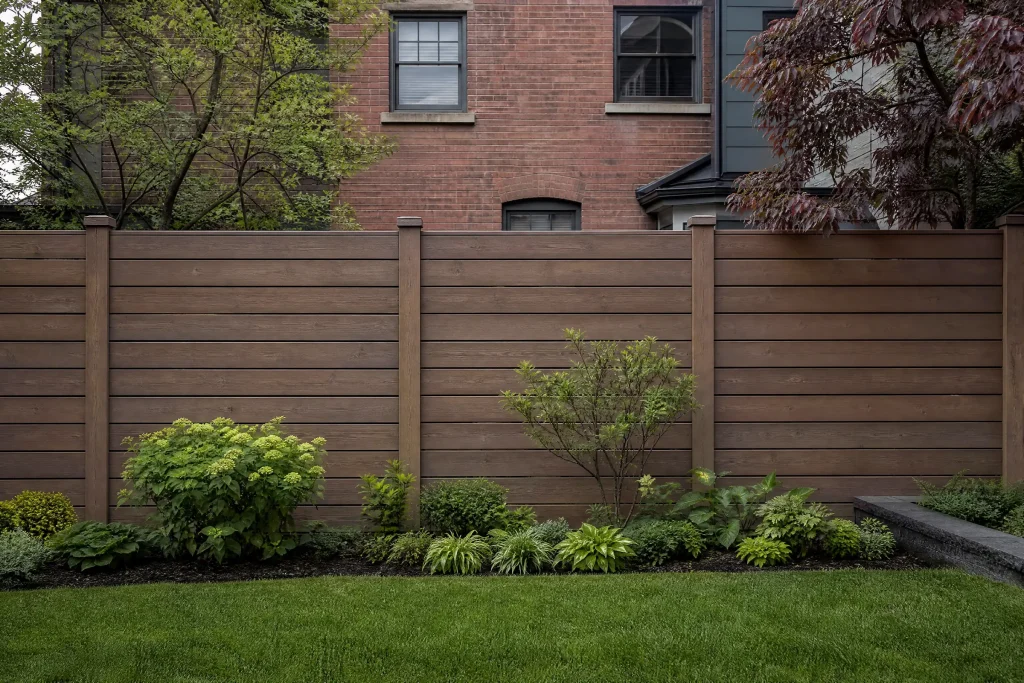
A shaded horizontal cedar fence in Tyandaga, Burlington: peeling varnish stripped to bare wood and mildew treated, then brushed with a semi-transparent mildew-resistant stain.
- Deck and fence
- Georgina
Weathered horizontal cedar fence restored in Jackson’s Point, Georgina
A lakeside cedar fence in Jackson's Point: weathered grey fibres and mildew removed, wood brightened, then fence and deck stair stained semi-transparent honey cedar.
Resources
Painting Guides and Resources

- Guide
When to paint your house exterior in Toronto
Temperature, humidity, dew and rain all decide how well exterior paint cures. How to pick the right season, and the right days, for an exterior repaint in Toronto.
How do I know my deck needs staining?
Sprinkle some water on the deck boards. If it soaks in quickly and the wood darkens, the old finish has worn off and the wood is exposed. Other signs are grey, faded boards, splinters on the surface, black mildew spots in shaded areas and stain that has worn away in traffic paths while it remains around the edges. Catching it at that stage keeps the job to a clean and a fresh coat rather than stripping and heavy sanding.
Can you stain a new deck or fence right away?
Usually not. New pressure-treated lumber is often still wet from treatment, and new cedar can have a smooth mill glaze that stops stain soaking in. The wood needs time to dry out and, in some cases, a cleaning or light sanding to open the surface. A simple water test shows when it is ready. We can look at a new deck or fence and tell you when it is ready to stain.
Which type of stain should I choose?
It depends on the wood, its condition and how much of its grain you would like to see. Clear and transparent stains suit new or well-kept cedar and show the most grain. Semi-transparent stains add colour and even out weathered boards while the grain still shows. Solid stains cover the grain like paint and suit older wood, fences and siding. We look at your wood and talk through the options at the visit, with sample pots to test.
Should I stain or paint my deck?
On a deck floor, stain is usually the better choice, because it soaks in and wears away gradually, so recoating is a matter of cleaning and staining again. Paint forms a film that can peel on a horizontal surface where water and snow sit, and peeling paint has to be scraped off before the next coat. A solid stain gives a painted look while behaving more like stain. Railings and skirting can take either.
Can you stain both sides of my fence?
Yes, if your neighbour agrees and gives us access to their yard. Staining both sides seals the whole board and gives both properties a finished fence. If only your side is stained, the other side weathers on its own, which is common and acceptable. We cover the neighbour's plants, car and siding when working near the property line, and the quote lists each side separately.
Do you stain pergolas and wood siding too?
Yes. Pergolas, privacy screens, sheds and planter boxes can be added to the same quote, and every face of the beams and rafters is stained, upper faces included. Wood siding, shakes and trim on the house are cleaned gently and stained course by course. Trim can take the same stain as the siding or a solid stain colour, so it ties in with the deck and fence.
When can we use the deck again?
That depends on the stain and the weather, so the label sets the timing. Light foot traffic is usually possible once the surface is dry to the touch, but furniture, planters and barbecues should stay off until the stain has properly set, and rugs much longer. We tell you on the day when the deck can be walked on and when everything can go back.
Which areas do you serve for staining?
We stain decks, fences and outdoor wood across the city, from the older neighbourhoods downtown to the Peel, York, Halton and Durham suburbs. All Painting has been looking after homes here since 2010, working from its office at 18 King St E. Send a few photos of your deck or fence, or book a visit, for a free quote.
Free quotes across the GTA
Ready to bring your deck and fence back?
Photos of the deck, fence or pergola are enough to start, or you can book a visit. After checking the wood, we send a free quote that breaks down every surface.