
STAIRCASE
PAINTING
& STAINING treads, risers and rails, painted or stained

- Free quotes
- Itemized written quote
- Since 2010
- Open 7 days
We sand, stain, seal and paint wood and metal staircases, from oak treads with white risers to painted spindles and stained handrails, and we plan each job so you can still get upstairs.
Every step covered
Staircase painting and staining for Toronto homes
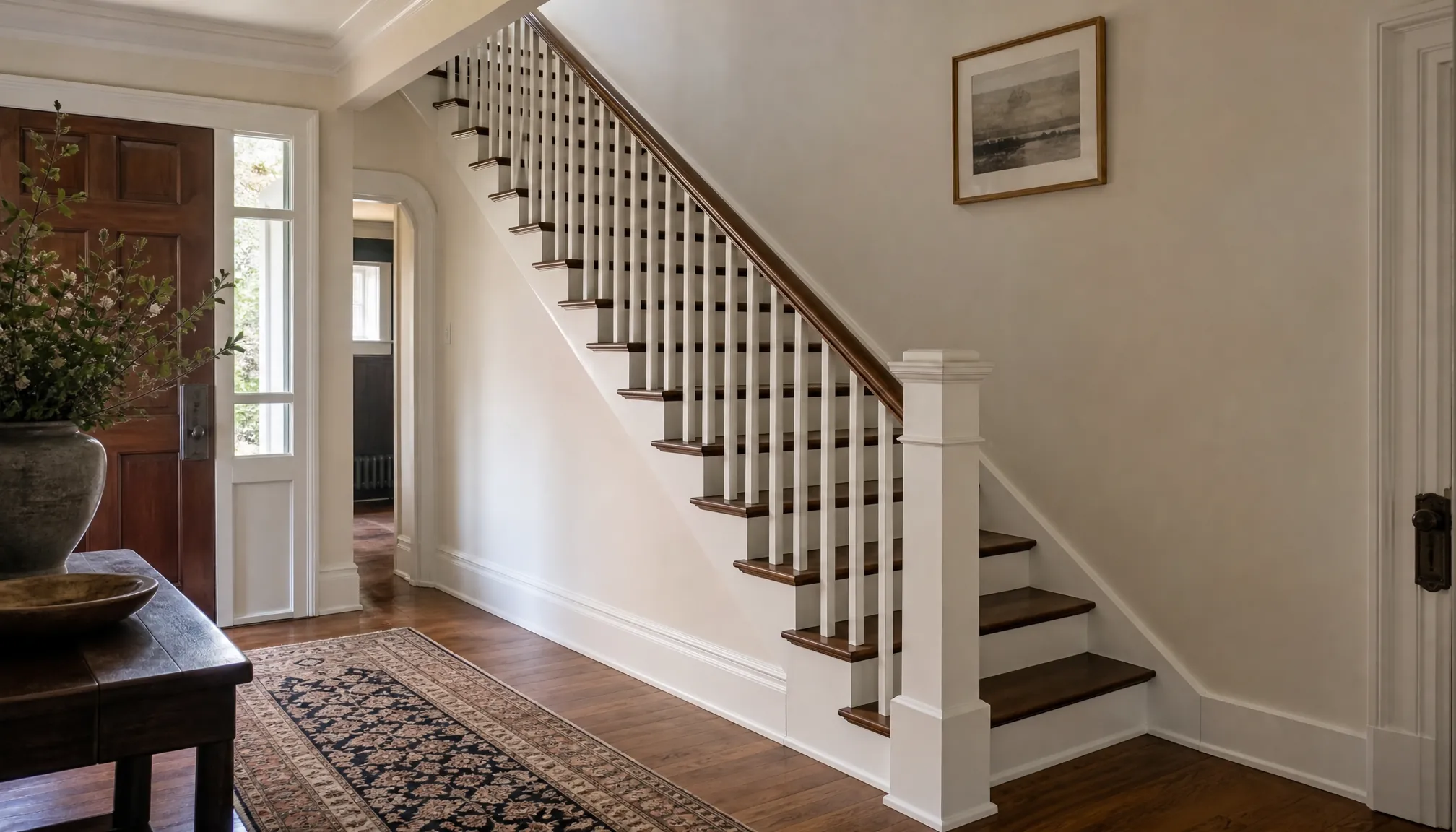
Staircase work covers every part of the stair you see: treads, risers, stringers and skirt boards, spindles or balusters, newel posts, handrails and the nosing that wraps the front of each step. We paint and stain wooden staircases, paint metal spindles and railings, and refinish landings on the same visit so the whole flight is finished as one piece. Some owners want a full colour change, others only want worn treads brought back. Because a staircase is a mix of surfaces with very different wear, the finish on each part is chosen separately rather than one product for everything.
Requests come from many directions. New owners want to remove the scuffs, stains and patchy finishes a previous owner left behind. People pulling up old carpet find oak treads underneath and want them stained and sealed. Families with builder honey-oak stairs want darker treads and white risers to suit new flooring. Others simply want spindles changed from wood tone to black or white. Some prefer to tackle the job in stages, railings now and treads later, which works well and is easy to list separately on a quote. We take on small single flights and long open staircases alike.
A good staircase finish is even from the first step to the last. Stain shows the grain without blotches, lap marks or sanding swirls, and the clear coat feels smooth under bare feet without being slippery. Painted risers have crisp lines where they meet the treads, spindles are covered on every turned profile, and the handrail feels smooth with no drips hanging underneath. Where the stringer meets the wall, the joint is caulked so no dark gap shows. The colours sit comfortably with your floors and trim, and nothing on the stair looks freshly patched.
We plan the job at a visit. We check the species and condition of the wood, test the existing finish, count steps and spindles, and look at whether the stringers are open or closed. Then we agree a colour scheme, with real sample pots for paint and a test patch of stain in a hidden spot. The itemized written quote lists treads, risers, spindles, rails and posts separately. Last, we work out how to keep a route up and down the stairs while coats dry, which matters most in a house with only one staircase.
Treads and nosings
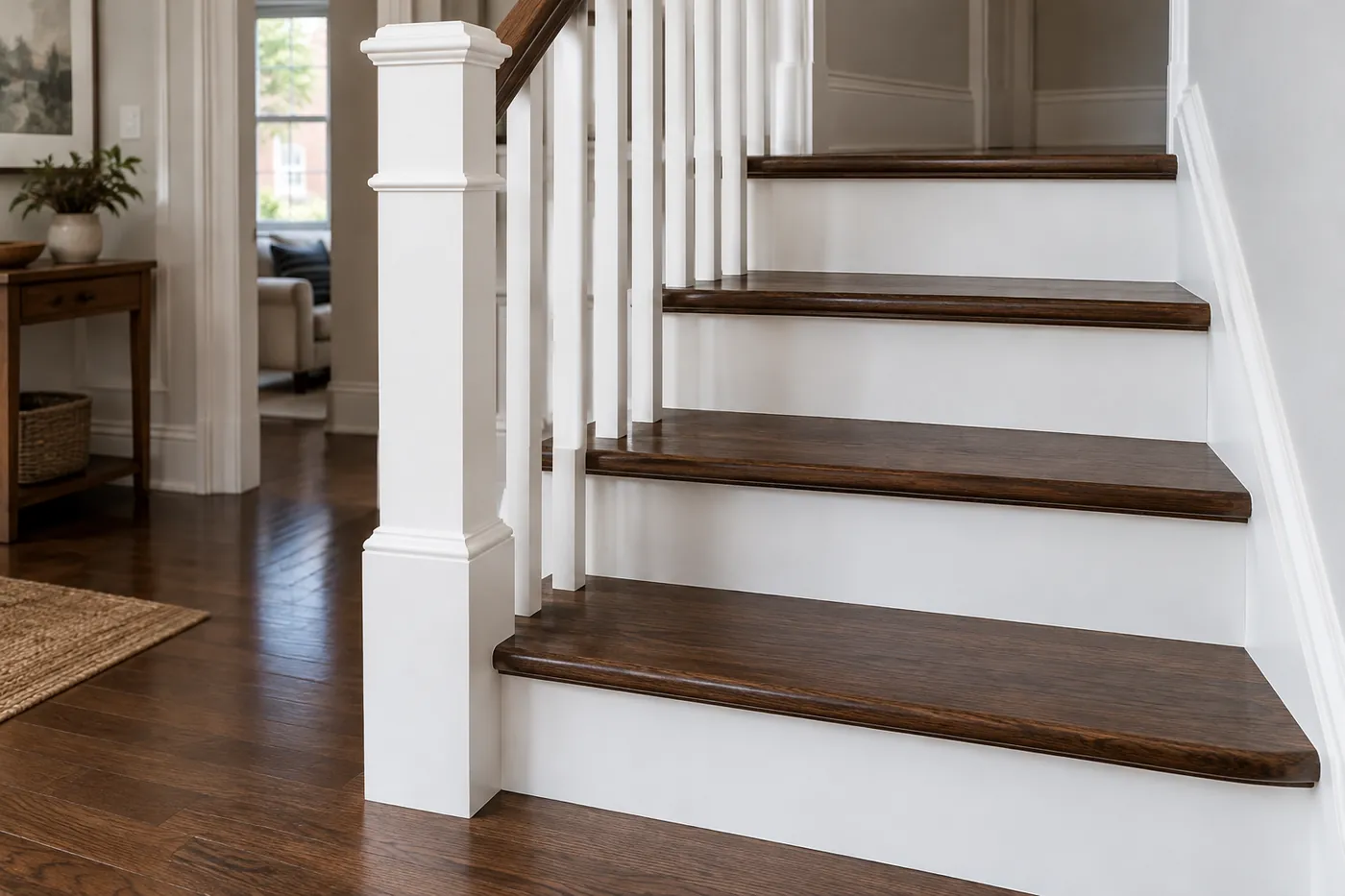
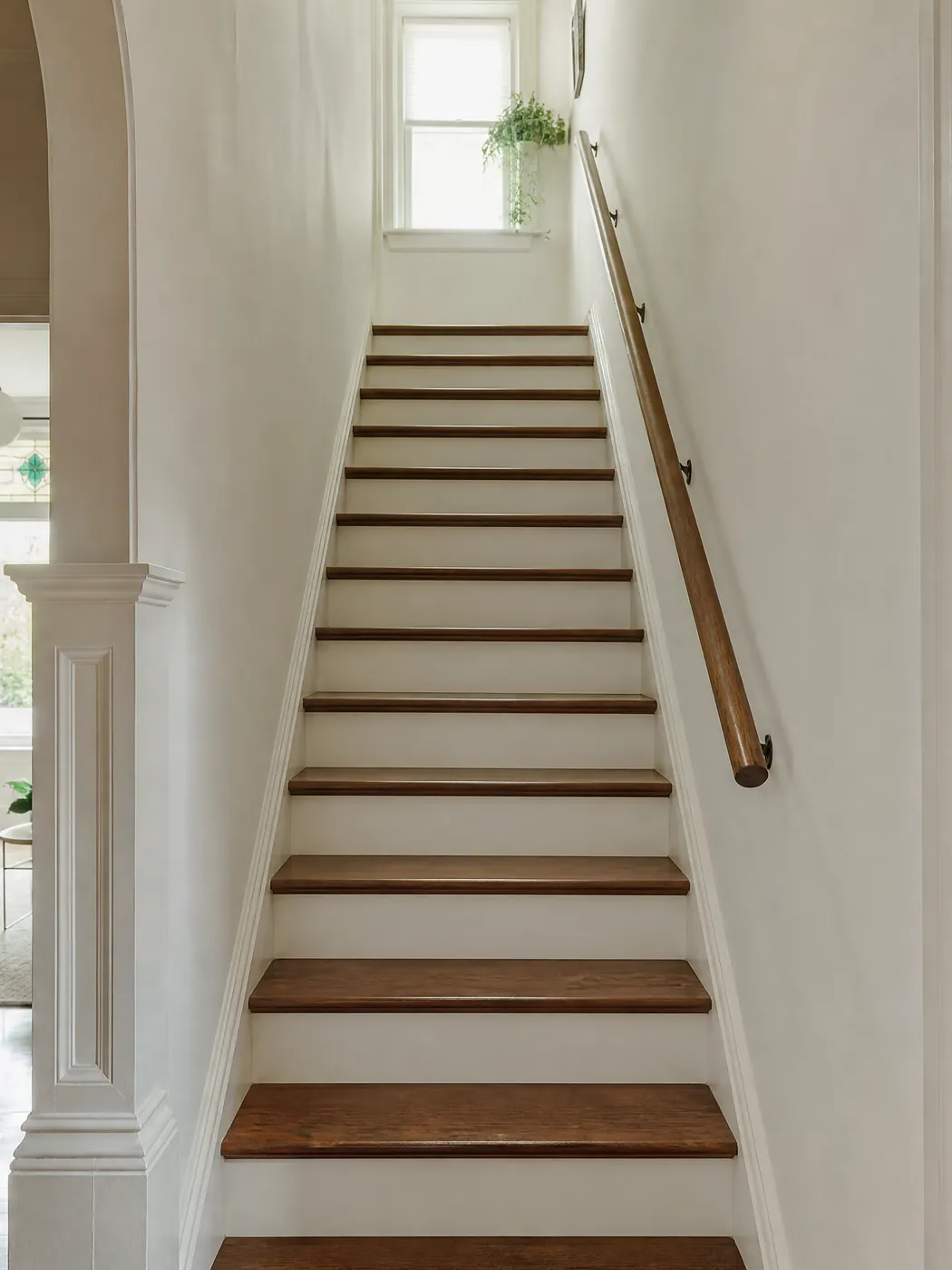
Treads take the most traffic, so they get the most protection. They are sanded to clean wood, stained or painted, and sealed with clear coats made for floors. The rounded nosing at the front of each step is sanded by hand, because machines cannot follow its profile.
Risers and stringers
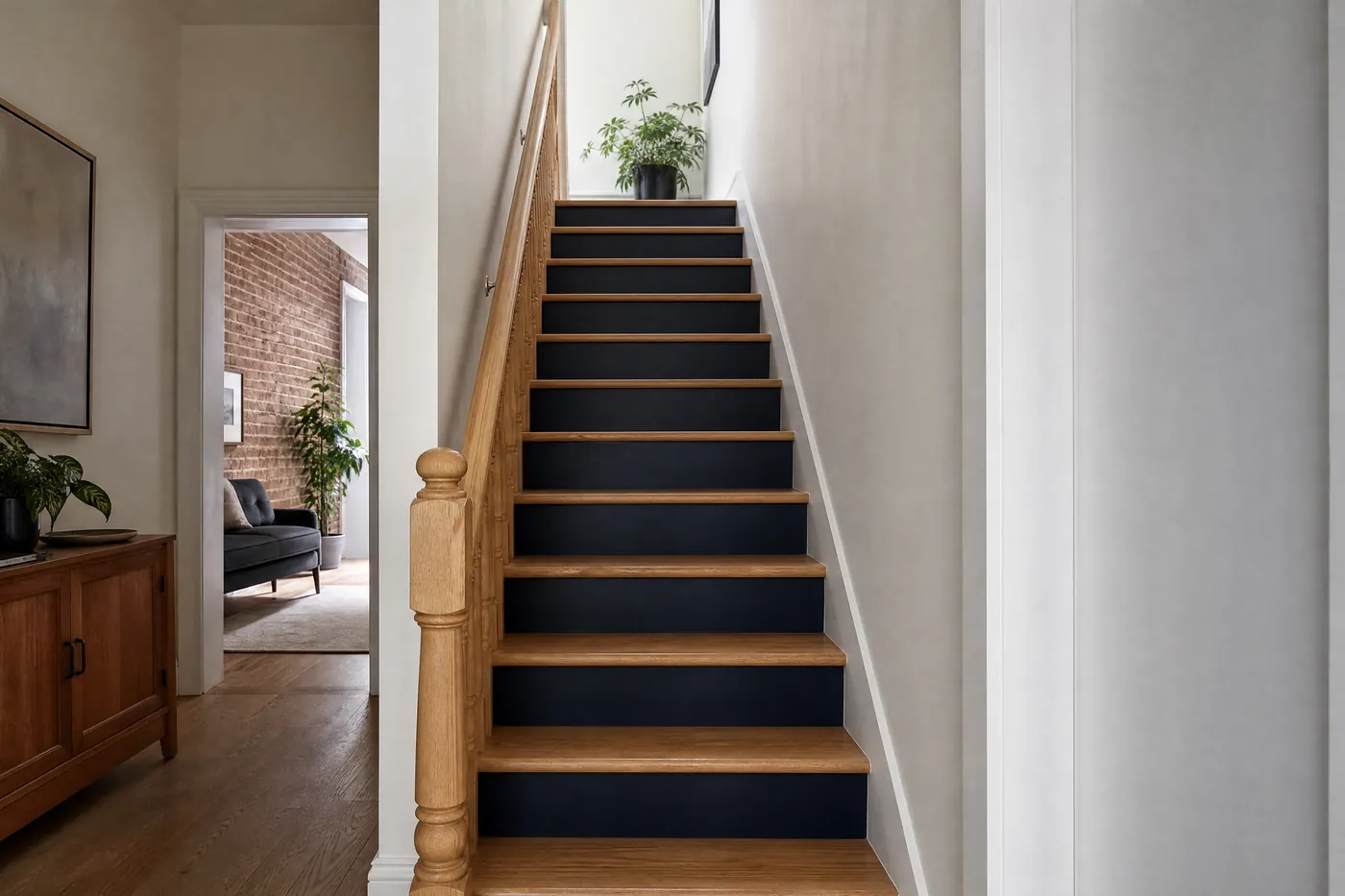
Risers and stringers are usually painted, often in white or a trim colour, because a painted surface hides toe scuffs and wipes clean easily. Joints between risers, stringers and walls are caulked first so the painted lines look crisp from the bottom of the stairs.
Spindles and railings
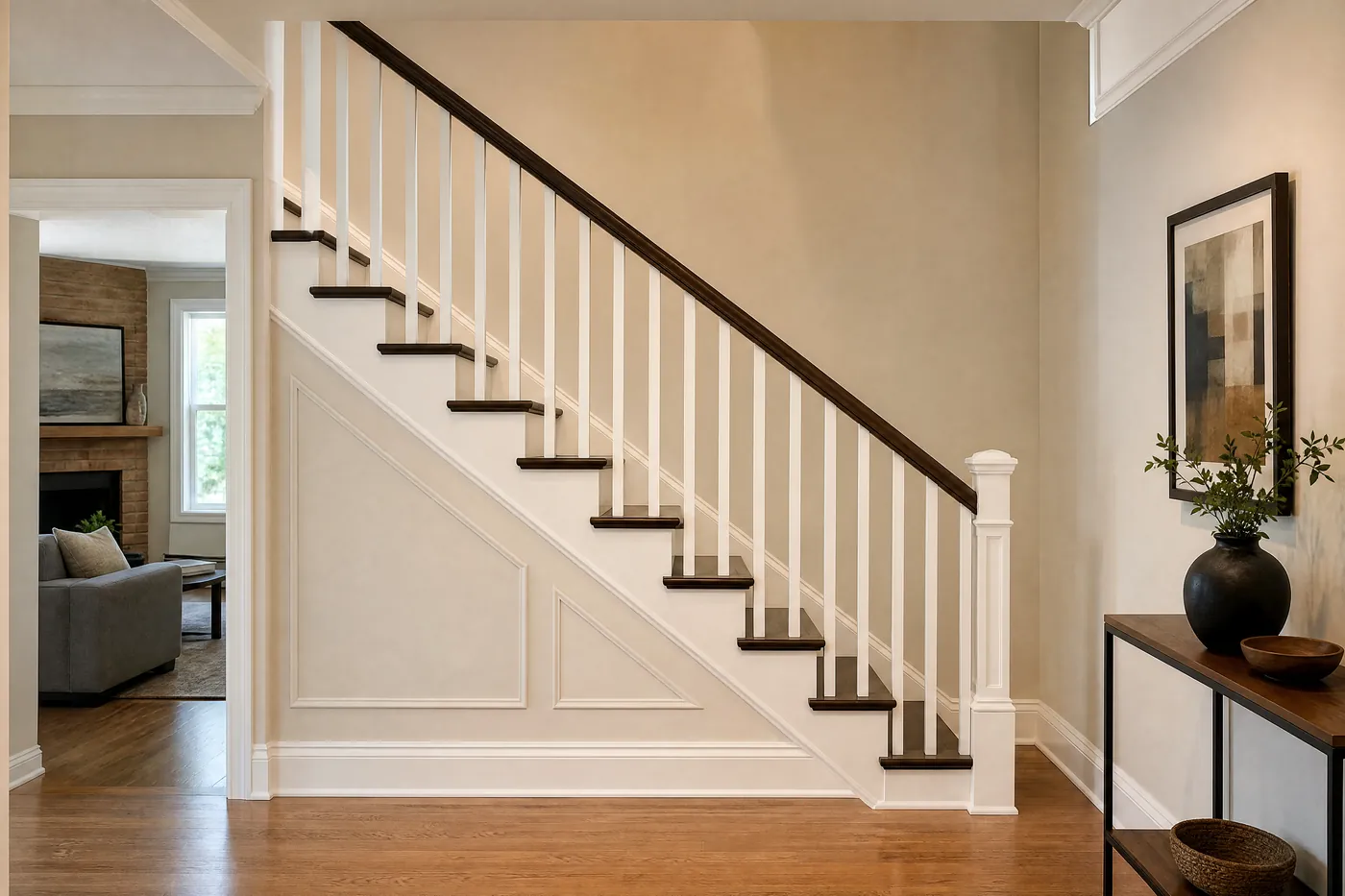
Wooden spindles and balusters are sanded and brushed by hand to cover every curve. Metal spindles and railings are cleaned, abraded and primed with a primer made for metal before the finish. Handrails can be stained to match the treads or painted to match the spindles.
Posts and landings
Newel posts, landing floors and the nosing that edges each landing are finished to match the flight, so the stair reads as one piece. Posts are sanded around every bevel and cap, and landing floors get the same stain and floor-grade clear coats as the treads.
Our staircase method, part by part
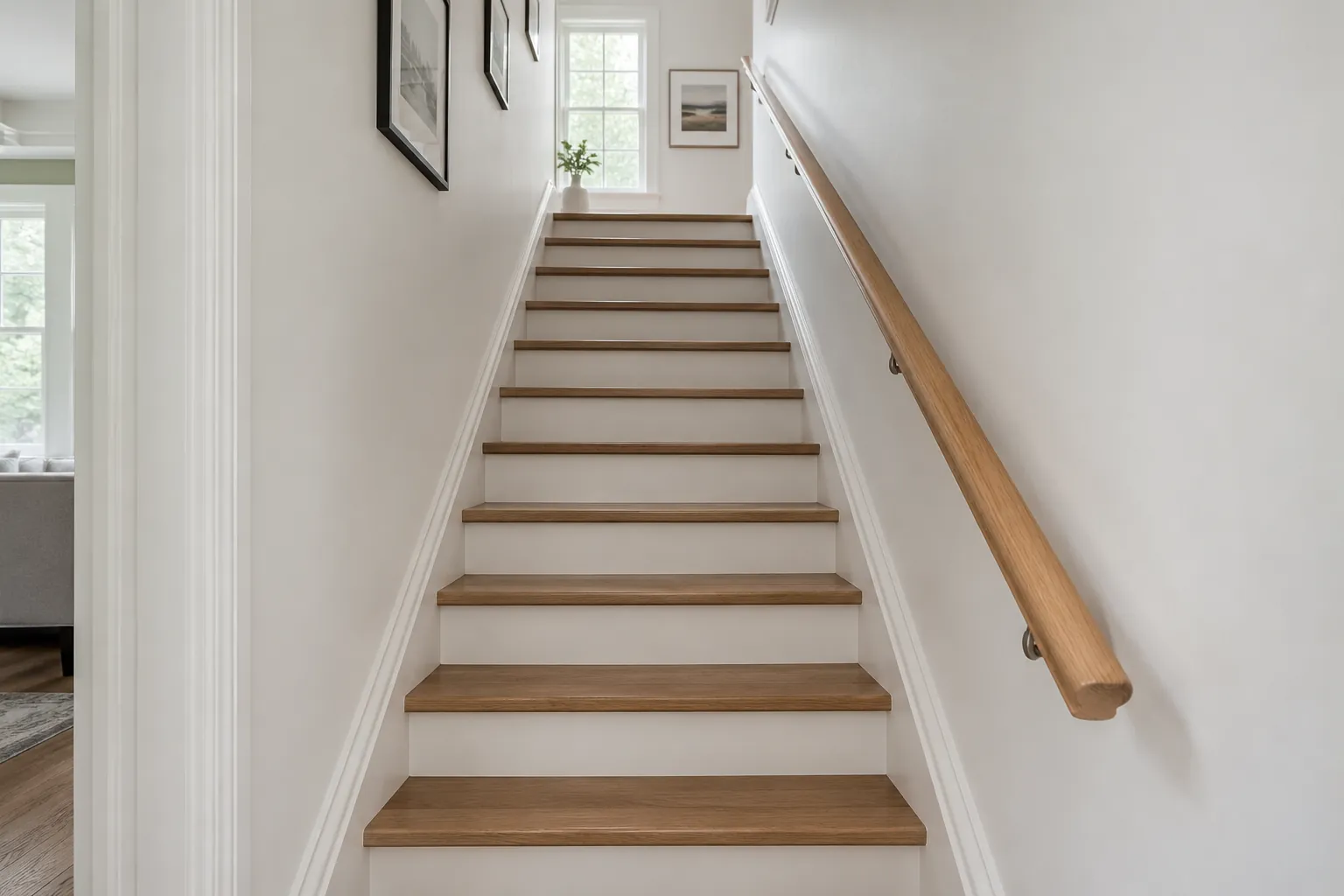
Treads start with removing the old finish. Carpet, pad, tack strips and staples come out first if they are there. Each tread is then sanded in stages, from coarse to fine grit, until the old stain and clear coat are gone and the colour of the wood is even. Edges and corners are finished with detail sanders and by hand. Dust is vacuumed and wiped off, stain is applied and wiped back to an even tone, and once it dries, thin clear coats go on with light sanding between them for a smooth, hard-wearing surface.
Risers, stringers and skirt boards are prepared for paint instead of stain. They are cleaned, scuff-sanded so the new paint bonds, and nail holes, dents and split seams are filled. Gaps along the wall and between riser and tread are caulked. A primer goes on, which is especially important over old stain or bare wood, followed by at least two finish coats of a hard enamel. Painting usually follows the stained treads, with low-tack tape protecting the finished tread edge so the line between wood and paint stays sharp.
Spindles, balusters, posts and handrails are the slowest part because of their shape. Wooden ones are cleaned to remove hand oils, sanded with flexible pads that follow the turnings, primed if they are being painted, and brushed so no drips collect underneath. Handrails that will be stained are sanded to bare wood like the treads and sealed with several thin clear coats. Metal spindles and railings are cleaned of rust and flaking paint, primed with a metal primer and finished in enamel. Each coat waits for the manufacturer's recoat time.
Reviews
What clients say
Why hire professionals
Why stairs are worth a professional finish
Stairs look like a small job, but they combine floor finishing, trim painting and fine detail work in one narrow, steep space that the household uses all day. The prep is heavy, the angles are awkward, and any mistake shows under every footstep.
Sanding without damage
Treads on newer stairs are often veneer or thin engineered hardwood. Aggressive sanding can cut through that layer quickly, so we check its thickness first and sand in controlled stages.
Even stain on every step
Stain reveals every swirl mark and missed patch of old finish. We sand until the wood is uniform and test the colour first, so the first step matches the last.
Floor-grade clear coats
Treads need clear coats made for floors, applied in thin layers. Wall or furniture finishes on stairs wear through fast and can feel slippery underfoot.
Safe work over the steps
High railings and the upper ends of long stringers need stable planks and ladders set on uneven steps. We bring and set up that equipment, so nobody balances on a stair with a brush.
Stairs you can still use
We plan the order of coats so there is a way up and down, mark which treads are wet, and tidy the stairs and nearby floors at the end of every day.
Our process
How a staircase job runs from quote to final coat
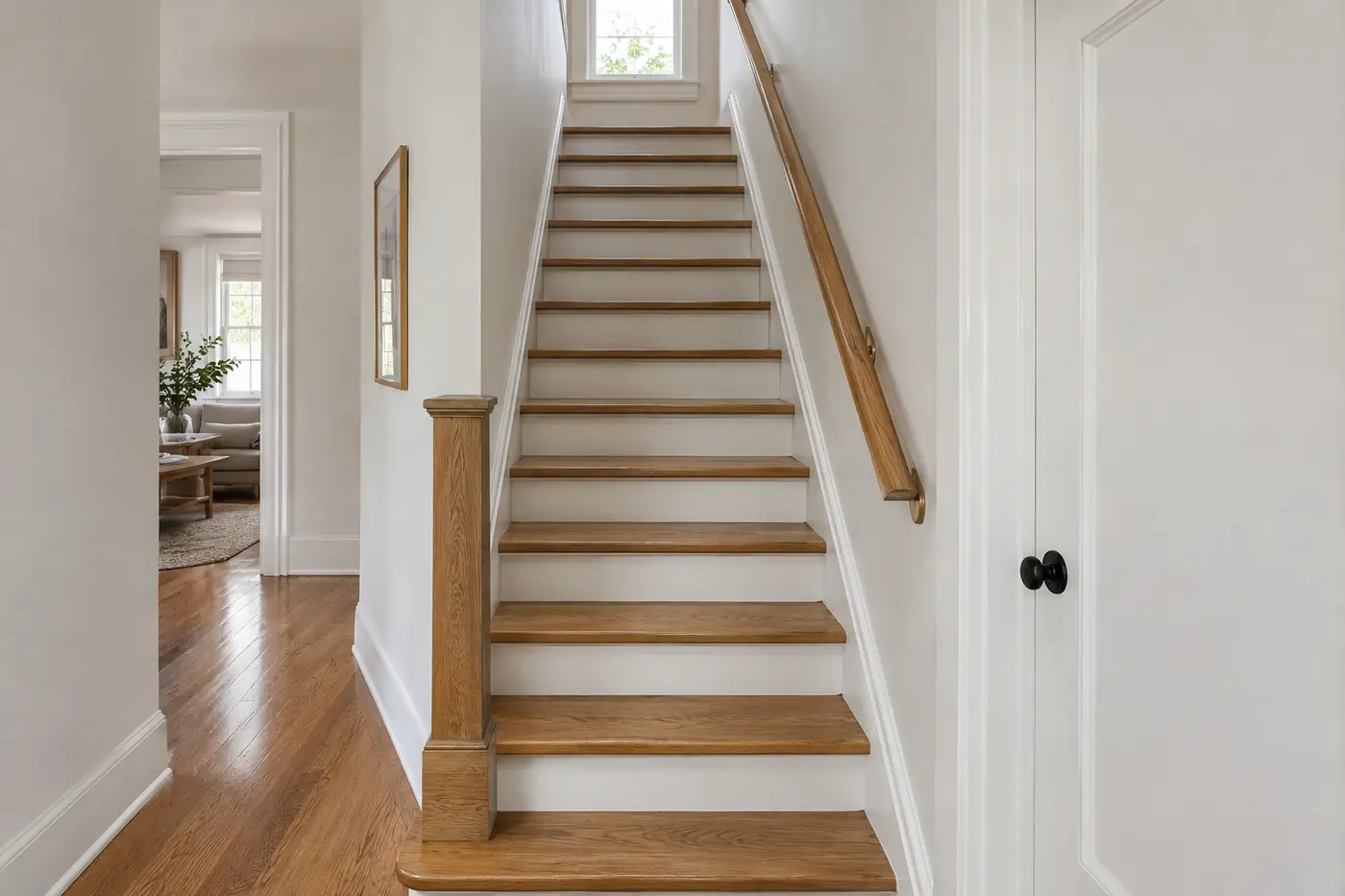
The process is the same for a short basement stair or a curved open staircase; only the scale changes. Before work on the stairs starts, you know who is coming, and your written quote shows the order the parts will be done in.
Visit and colour plan
We look at the stairs, identify the wood, test the old finish and count treads, risers and spindles. You choose stain and paint colours with real sample pots and a stain test, then receive a free, itemized written quote.
Protect the house
Floors at the head and foot of the stairs are covered, walls along the stair are masked, and doors to nearby rooms are closed or sheeted to hold back sanding dust. Carpet and staples are removed first if the stairs are carpeted.
Sand and repair
Treads and rails are sanded to clean wood, risers and stringers are scuff-sanded, and holes, dents and gaps are filled or caulked. Everything is vacuumed and wiped so no dust is trapped under stain or paint.
Stain, seal and paint
Stain goes on the treads and rail and is sealed with thin clear coats. Risers, stringers and spindles are primed and given at least two finish coats. The order of work keeps a route up and down wherever possible.
Final check
We remove tape and coverings, look over each step under good light, then check every tread and riser with you. We explain how to care for the new finish and which treads to treat gently at first.
Ready to start?
Call (416) 710-4224 or send a few details and photos for a free, itemized quote.
Preparation
Preparing a staircase for stain and paint
Carpet removal
If the stairs are carpeted, the carpet, underpad, tack strips and every staple come out. The treads underneath are then checked: solid hardwood in good shape can be stained, while treads that were never meant to show, such as plywood or patched pine, are usually painted instead.
Testing the wood and old finish
We find out what the treads are made of and what finish is on them. Oak, maple and pine take stain differently, and a hard old finish may need more sanding. A small stain test on a hidden spot shows the real colour before we commit to it.
Sanding to bare wood
For stain, treads and rails are sanded until no trace of old finish remains, because leftover coating shows up as light patches. Sanding moves through the grits from coarse to fine. Painted parts only need scuff-sanding so the primer can bond to the existing surface.
Filling and caulking
Nail holes, cracks and dents in risers and stringers are filled and sanded flush. Gaps where the stringer meets the wall, and where risers meet treads, are caulked with a paintable caulk. That removes the dark lines that make an older staircase look worn and tired.
Dust control
Sanding stairs creates fine dust that drifts up the stairwell. We cover floors, mask walls, sheet off open doorways and vacuum as we go. Before any stain or paint, every surface is vacuumed and wiped with a tack cloth so nothing gets sealed into the finish.
Products and finishes
Penetrating wood stain
A penetrating stain soaks into the wood and brings out the grain. Tones run from natural and light honey to dark walnut and ebony. A pre-stain conditioner can be used on maple and pine, which absorb stain unevenly, so the colour stays consistent across every tread.
Clear floor finish
Treads and handrails are sealed with a clear finish made for floors, waterborne or oil-modified, applied in several thin coats. Satin is a popular sheen because it hides scratches and feels less slippery; gloss looks richer but shows wear and dust sooner.
Enamel for risers and spindles
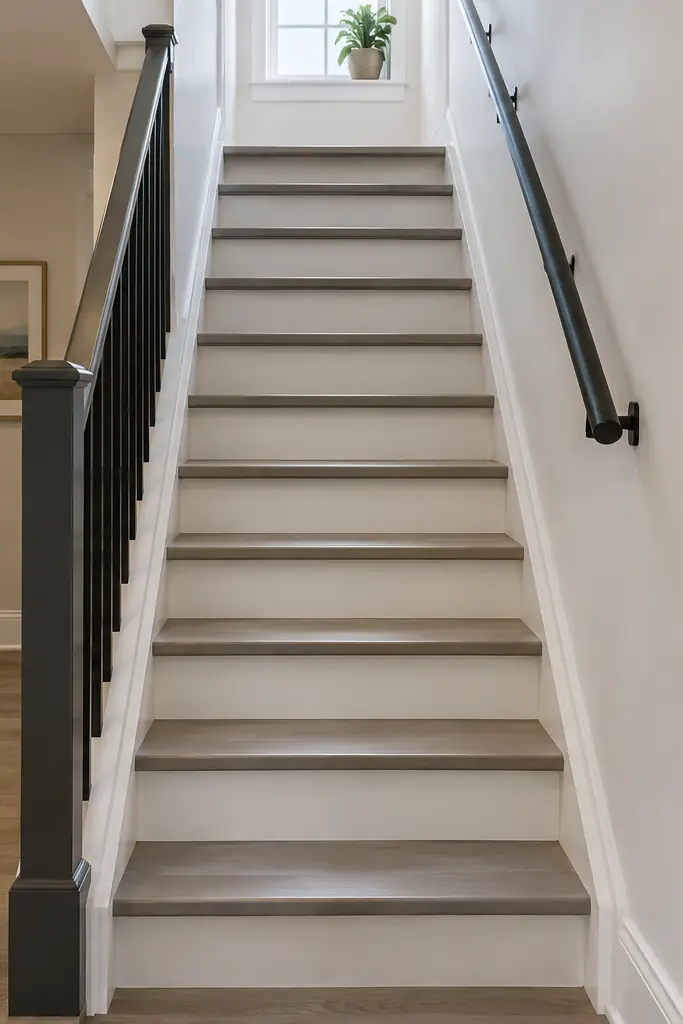
Risers, stringers, spindles and posts are finished in a hard, washable enamel, usually satin or semi-gloss, which stands up to shoes, vacuums and hands. White is the classic riser colour, with black, charcoal and soft grey common for spindles. If odour is a concern, Zero‑VOC and low-odour enamels can be used.
Primers for wood and metal
Bare wood and old stained surfaces take a stain-blocking primer so tannins and old colour do not bleed through white paint. Metal spindles and railings get a rust-inhibiting primer made for metal. Glossy older paint is scuffed and given a bonding primer before the finish coats.
Service areas
Where we refinish staircases
In Toronto, staircases vary as much as the houses do. Victorian and Edwardian homes often have narrow, steep stairs in pine or fir under layers of old paint, with turned spindles that take patient hand sanding. Postwar bungalows usually have short, straight runs down to the basement. Newer infill homes and townhouses have open stairs with glass or metal railings, where only the treads and stringers are wood. Lofts and condo townhouses may have steel stairs that need cleaning and a metal primer. Each layout changes how we sequence the work so there is always a way through.
Across the suburbs the pattern shifts toward builder staircases. Homes in Peel Region and York Region, from Brampton and Mississauga to Vaughan and Markham, often have oak treads, oak rails and turned oak spindles that owners want darkened and updated. In Halton Region, Oakville, Burlington and Milton houses frequently have curved or open stairs with long handrails. Durham Region homes in Ajax, Whitby and Oshawa commonly have carpeted stairs over treads that can be stained or painted once the carpet is gone.
Around the house
Seasons, house age and a stair in daily use
Seasons affect staircase work because stain and clear coats are sensitive to humidity. In humid summers, finishes take longer to dry, and wood takes on moisture that can make stain look uneven. In winter, furnace heat dries the air, which helps drying but can open small gaps between treads and stringers that need caulking. We check conditions in the house before each coat and adjust recoat timing to suit. Good ventilation helps, though we avoid open windows on cold days, since a sudden drop in temperature can leave a clear coat cloudy.
The city's older housing stock brings its own surprises. Under carpet in many semis and detached houses we find painted edges, old adhesive, patched treads or treads replaced with a different species. Stairs in homes built several decades ago may carry older paint layers with lead in them, and where that applies we settle with you, ahead of sanding, how those coats are treated. Newer subdivisions have more predictable oak, but the treads can be thin engineered material, which limits how much sanding they can take. Either way, what we find at the visit decides the method.
A staircase is the one surface nobody in the house can avoid using. In a home with a single stair between the bedrooms and the kitchen, we work in an order that keeps a path open, often finishing every other tread first or one side of a wide stair at a time. For households with pets, we talk about keeping them off fresh coats, since paw prints are hard to hide in a clear finish. In townhouses with shared walls, we keep loud sanding to reasonable daytime hours. The schedule is agreed in writing before we start.
- Decide which parts are stained and which parts are painted
- Find out what is under the carpet before choosing a finish
- Plan where pets and children will be while coats dry
- Pick spindle and riser colours that work with your existing trim
- Decide whether the basement stair should join the same visit
What changes the price of staircase refinishing
The size of the stair is the starting point: the number of treads, risers and spindles, plus landings and the length of the handrail. Staining treads takes more work than painting them, because the old finish has to come off completely and several clear coats follow. Turned or carved spindles take longer than square ones, and metal railings need extra cleaning and a metal primer. Open stringers with exposed tread ends, curved stairs and winding sections add detail work at every step.
Condition matters too. Carpet removal, old adhesive, deep gouges, many layers of paint or thin engineered treads that need careful sanding all change the scope. Adding the basement stair or a second flight to the same visit avoids setting up twice. The itemized written quote lists every part, so you can stage the job if you prefer. For a first rough figure, the painting cost calculator offers a starting range ahead of your free quote.
Price it before anyone visits
Pick the rooms and the work in our cost calculator for a ballpark range in about a minute.
Then ask for a free quote: written, itemized and free to change before work starts.
Projects
Recent staircase projects
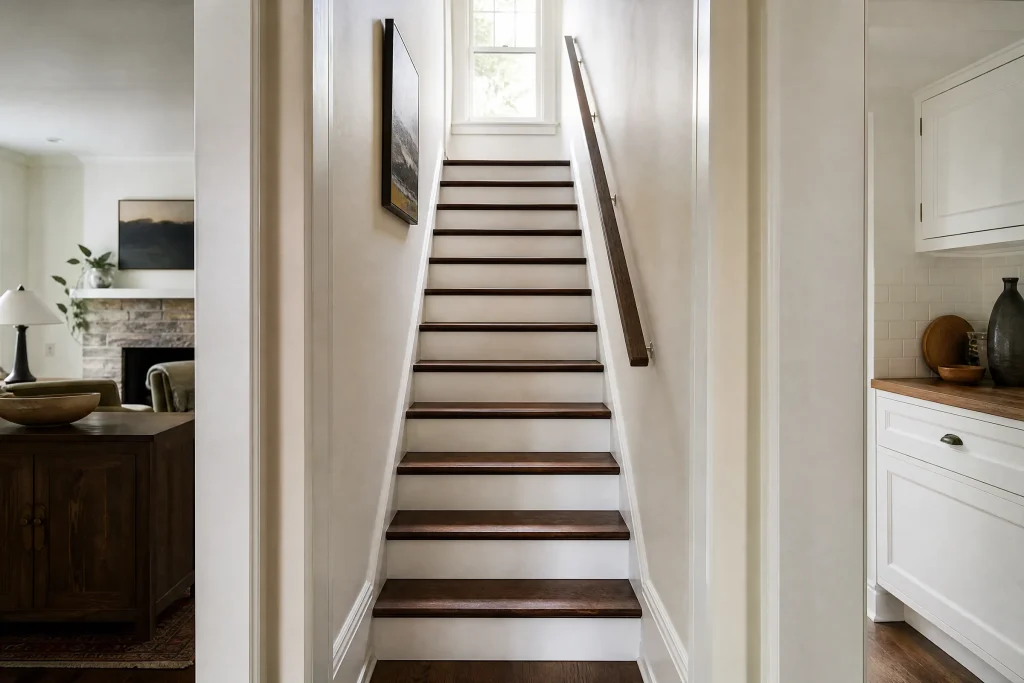
- Staircase
- North York
Painted-over side-split stairs stripped and stained, Bayview Village
Oak side-split stairs in Bayview Village: painted treads stripped and layered spindle paint wet-scraped in containment, then treads stained deep red-brown and spindles white.
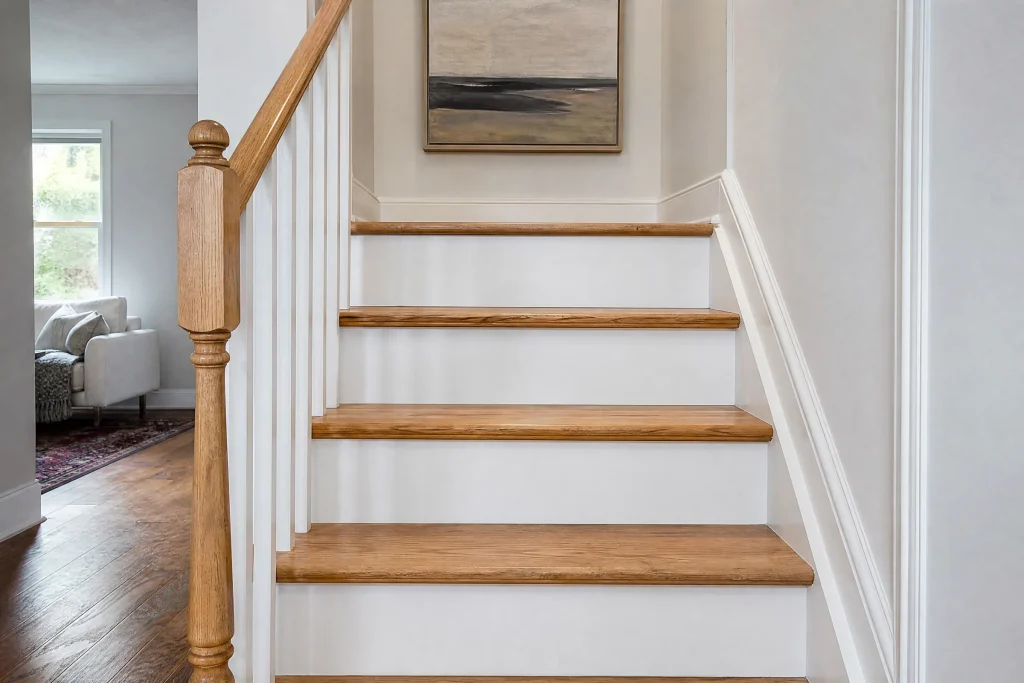
- Staircase
- Brampton
Two-flight staircase refresh in a Bramalea semi, Brampton
A semi's staircase in Bramalea, Brampton: oak treads sanded bare and chipped spindles primed, then finished clear, with white satin spindles and grey basement steps.
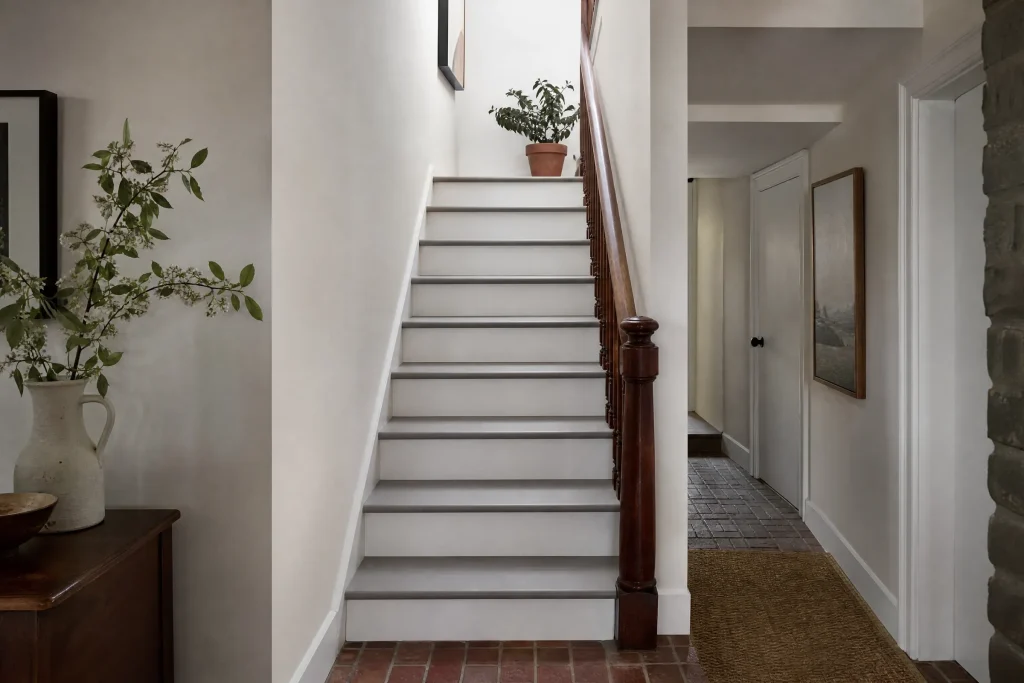
- Staircase
- Vaughan
Carpet off, oak on show: stair refinish in a Maple home, Vaughan
A staircase in Maple, Vaughan: carpet, tack strips and staples pulled and oak sanded bare, then evenly stained and sealed clear satin, with white balusters.
Resources
Painting Guides and Resources
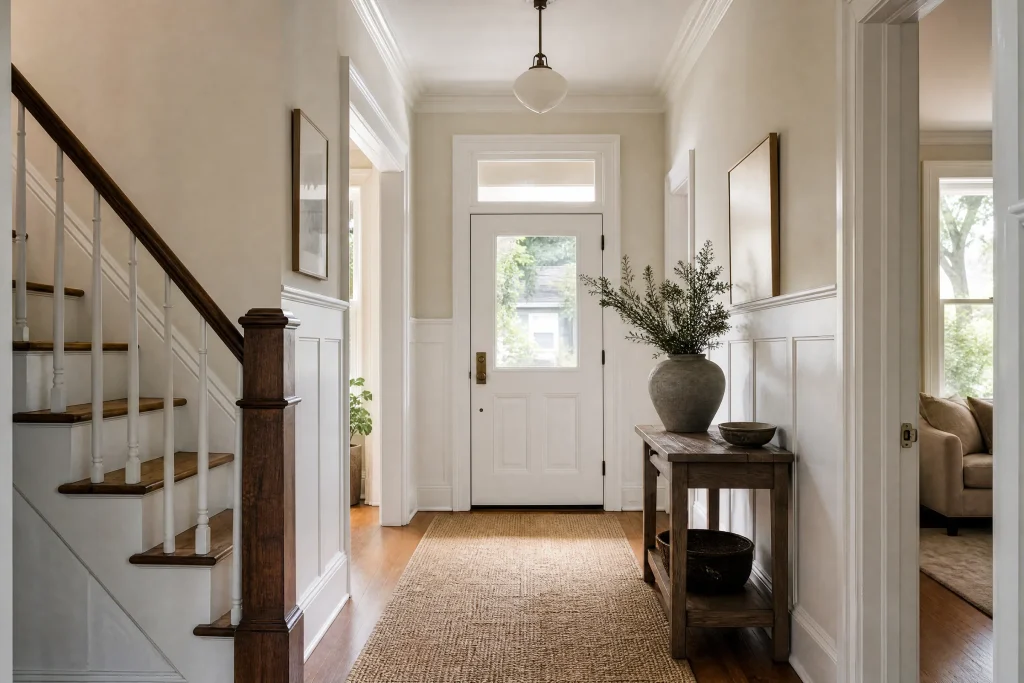
- Guide
Choosing paint sheen room by room
Matte, eggshell, satin or semi-gloss? How sheen changes the way a wall looks, cleans and wears, and which finish suits each room in the house.
- Guide
How to prepare your home for painters: a checklist
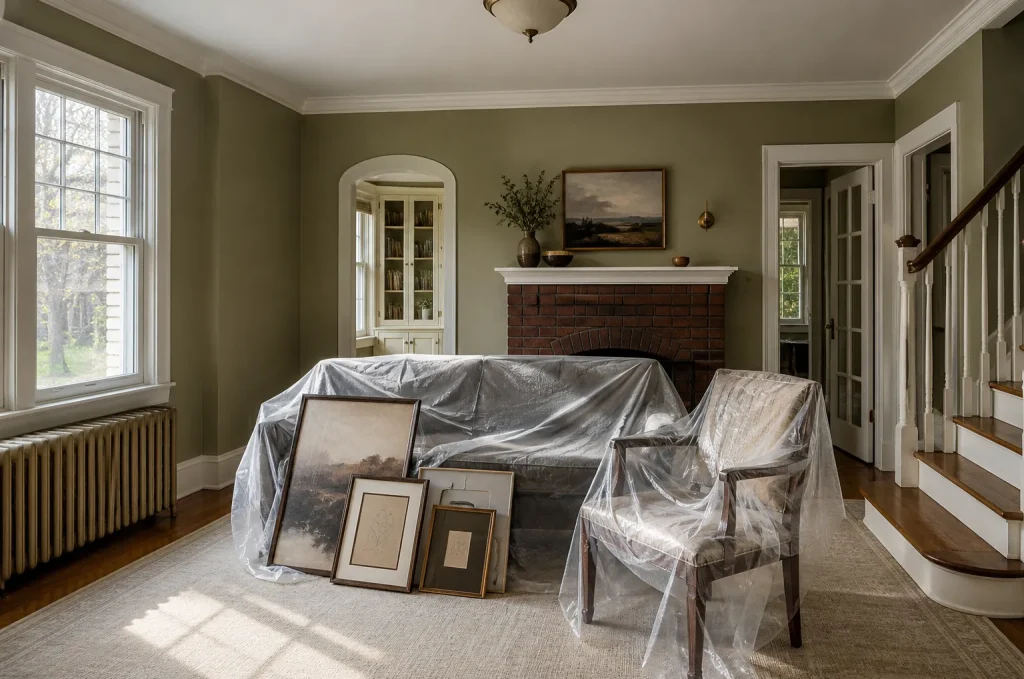
A practical checklist for the weeks, days and morning before the painters arrive, inside and out, so the job starts on time and finishes without surprises.
FAQ
Staircase painting and staining questions
Can we still use the stairs while you work?
Usually, yes. We often finish every other tread first, so you can step on the dry ones, then complete the rest once the first set can take light traffic. On wide stairs we sometimes do one side at a time. Painted risers and spindles do not block the route at all. We mark wet areas clearly and agree the plan with you before we start, so nobody is stuck upstairs.
Should my treads be stained or painted?
Hardwood treads in good condition, especially oak, usually look better stained and sealed, because the grain is part of the look. Softwood treads, patched treads or plywood that was hidden under carpet are often better painted with a floor-grade enamel. Many people choose a mix, with stained treads and rail and painted risers and spindles. We look at your stairs and give you a straight answer at the visit.
Can you remove the carpet from my stairs?
Yes. We take up the carpet, pad and tack strips and pull every staple, then fill the holes they leave behind. Once the treads are uncovered we check what they are made of and how they look. If they are good hardwood, they can be sanded and stained. If they were never meant to be seen, painting them is often the more sensible route.
Do you paint metal stairs and railings?
Yes. Metal staircases, spindles and railings are cleaned of grease and rust, flaking paint is removed, and the surface is abraded so primer can bond. A primer made for metal goes on first, then at least two coats of a durable enamel. Black, charcoal and bronze-toned finishes are common for railings, but any colour is possible, including one that matches other metal accents in the house.
Can the work be done in stages?
Yes. Some owners start with the spindles and railings and leave the treads for later, or refinish the main stair now and the basement stair another time. Each part has its own line on the written quote, so splitting the job is straightforward. The one caution is colour: if you plan to stain in stages, we record the stain and mix so the second phase matches the first.
How long before we can walk on newly finished treads?
Treads can usually take careful foot traffic in socks once the last clear coat is dry to the touch, but the finish keeps hardening for a while after that. We give you specific timing for the product used on your stairs. Until it cures, avoid dragging furniture up the stairs, keep pet nails trimmed and hold off on runners or rugs.
Can you change the colour of my spindles?
Yes. Wooden spindles are cleaned, sanded, primed and given at least two coats of enamel, most often in white or black, though any colour works. Going from a dark stain to white needs a stain-blocking primer so the old colour does not bleed through. Square spindles are quicker to coat than turned ones, but both can be done neatly.
Will sanding fill my house with dust?
Sanding does create fine dust, so we contain it. Floors at both ends of the stairs are covered, walls are masked, nearby doorways are sheeted, and sanders are connected to vacuums wherever the shape allows. Hand sanding is cleaned up as we go. At the end of every day the stairs and nearby floors are tidied and vacuumed, so the house stays livable.
Free quotes across the GTA
Planning to refresh your staircase?
Send a photo of your stairs and tell us what is under any carpet. We will arrange a free quote and a colour plan for stain and paint.