
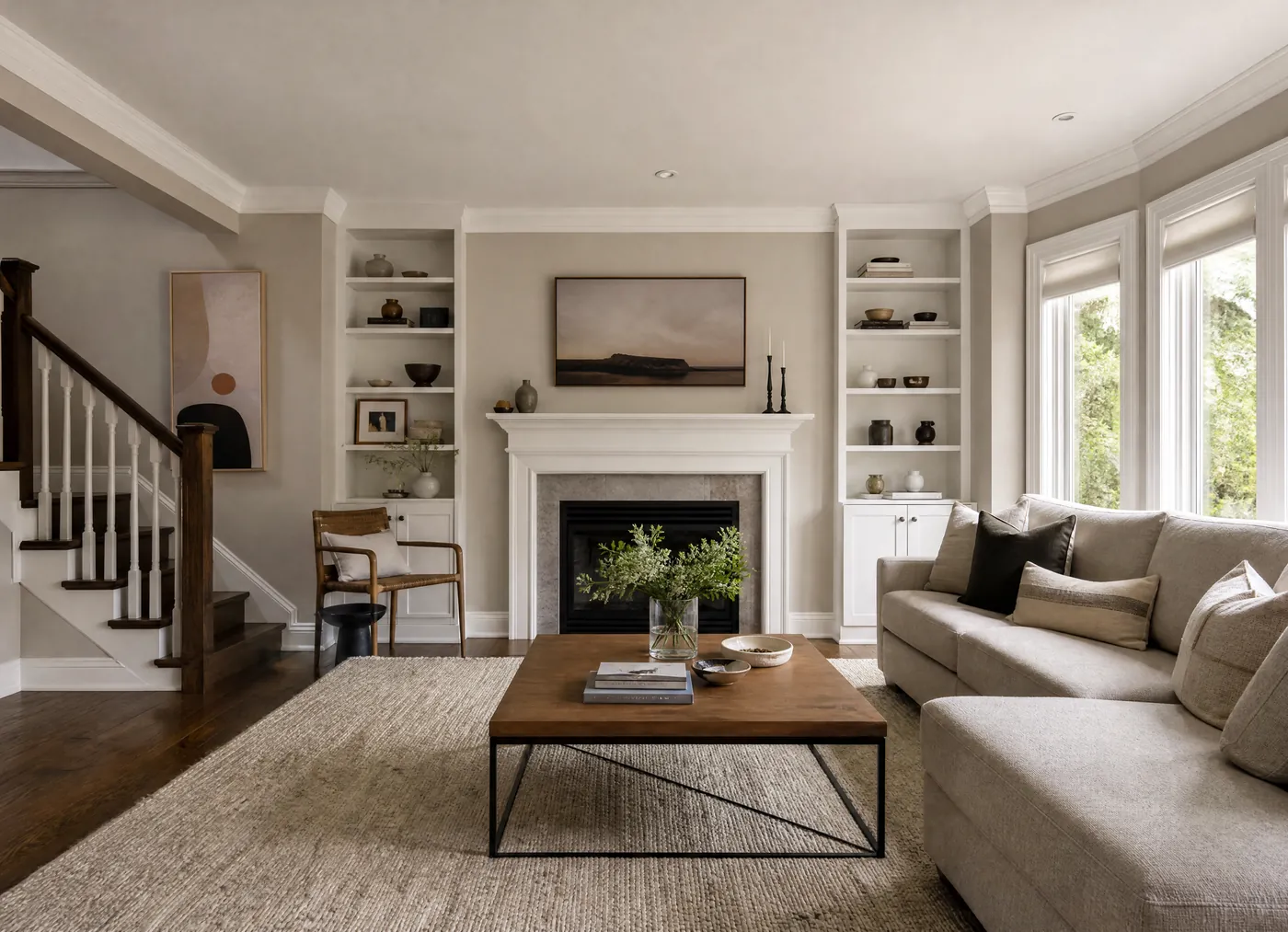
INTERIOR
PAINTING clean, even colour in every room

- Free quotes
- Itemized written quote
- Since 2010
- Open 7 days
We paint the inside of houses, townhomes and condos room by room: patched and primed walls, clean ceilings, hard-wearing trim and doors, at least two finish coats, and a tidy space at the end of each day.
Inside your home
Interior painting in Toronto, planned room by room
Interior painting covers every painted surface inside a building: walls, ceilings, baseboards, door and window casings, interior doors, closets, stairwells and the odd radiator. All Painting has done this work since 2010, in detached houses, semis, townhouses, condo units and basement apartments of every vintage. A job can be a single bedroom, one floor or the entire inside of a home. Repairs that come up along the way, from nail holes to hairline cracks in plaster, are treated as part of the preparation rather than a separate trade you have to book.
People call us for interior painting at predictable moments. New owners want the previous family's colours gone before the furniture arrives. Families with young children find that hallways and stair walls have taken a beating and need a finish they can scrub. Landlords repaint between tenants, and sellers ask for neutral walls before listing photos. Others have simply lived with a dated colour scheme long enough. Each of these jobs looks different on the quote: a move-in repaint is usually quick and empty, while a lived-in home needs furniture moved, rooms sequenced and a quieter pace.
A good interior result is easy to describe and hard to fake. Cut lines along the ceiling are straight, with no colour creeping onto the white. Walls show an even sheen when light rakes across them from a window, without roller lap marks or patches that flash dull. Trim feels smooth under your hand, caulked joints are tight, and doors close without sticking to fresh paint. Outlets and switch plates go back on square. Nothing on the floor, furniture or hardware carries a speck of paint, and the colour on the wall matches the sample you approved.
Planning starts with a walk through the rooms you want painted. We note ceiling heights, the state of the walls, the amount of trim and any stains, cracks or leftover wallpaper glue that will need attention. If you are unsure about colour, we can set up a free colour consultation: real sample pots are brushed onto your own walls, so you judge each shade in your own light. Everything then goes into an itemized written quote listing rooms, surfaces, preparation, products and sheens. Before the start date you know who is coming and the order in which the rooms will be done.
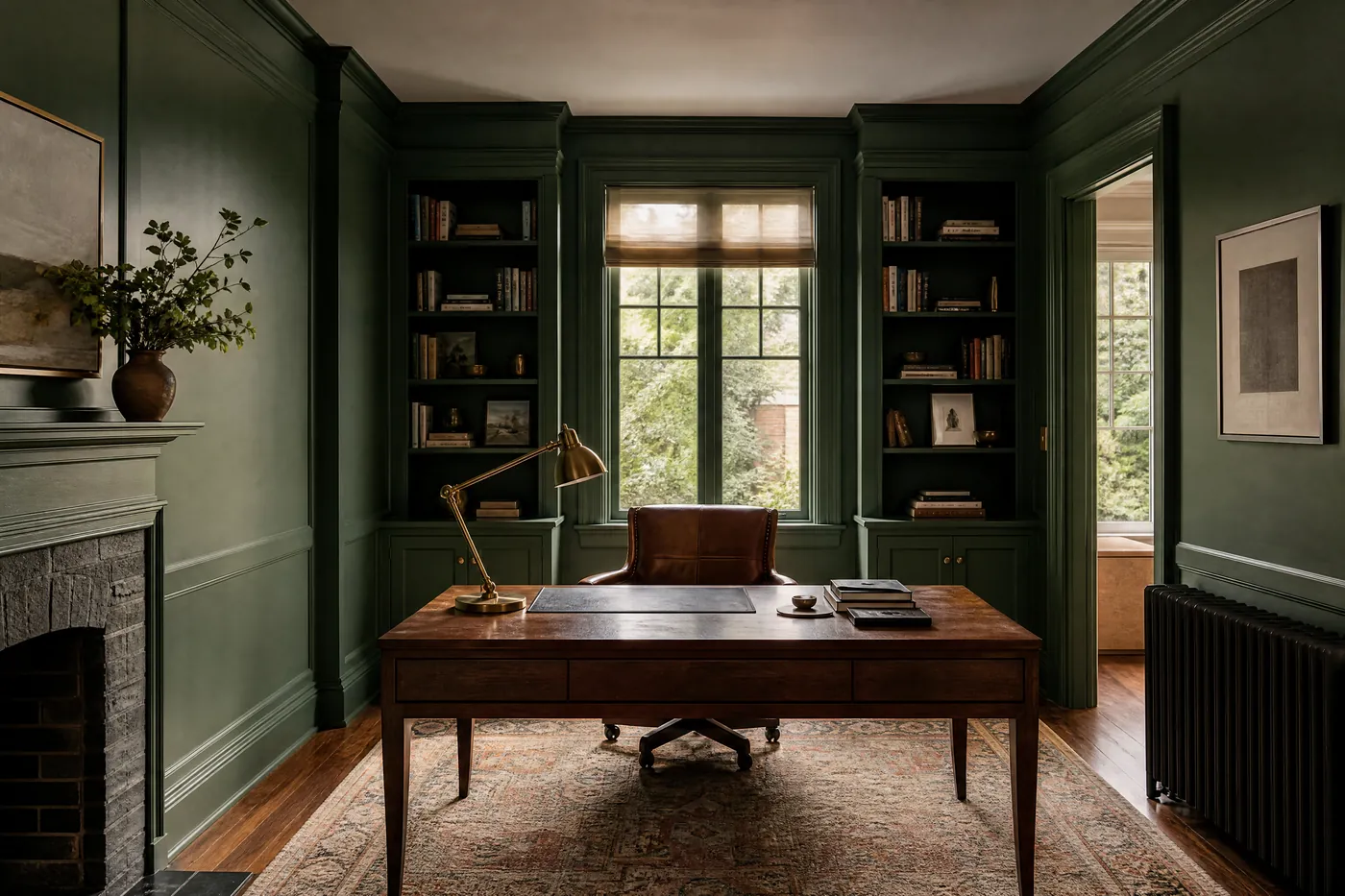
Walls and accent walls
Living rooms, bedrooms, kitchens, bathrooms, dens and finished basements, patched and spot-primed before two or more finish coats go on. Accent walls in a deeper shade are cut by hand along the corner so the line stays sharp where one colour meets the next.
Ceilings
Flat white or a colour, cut in along the wall line and rolled in one direction so window light does not pick up lap marks. Brown rings from old leaks are sealed under a stain-blocking primer first, otherwise they bleed back through the new paint within days.
Trim, doors and closets
Baseboards, casings, crown moulding, interior doors and closet interiors are cleaned, lightly sanded and caulked before an enamel that dries hard goes on. Hardware is removed or masked, and doors are brushed panel by panel so wet edges blend instead of drying in streaks.
Stairwells and hallways
Tall stairwell walls, landings and hallway walls that take knocks every day. Ladders and planks are set up safely over the steps, and these areas usually get a washable finish. The wall paint is cut in neatly against the stringers and skirt boards along the climb.
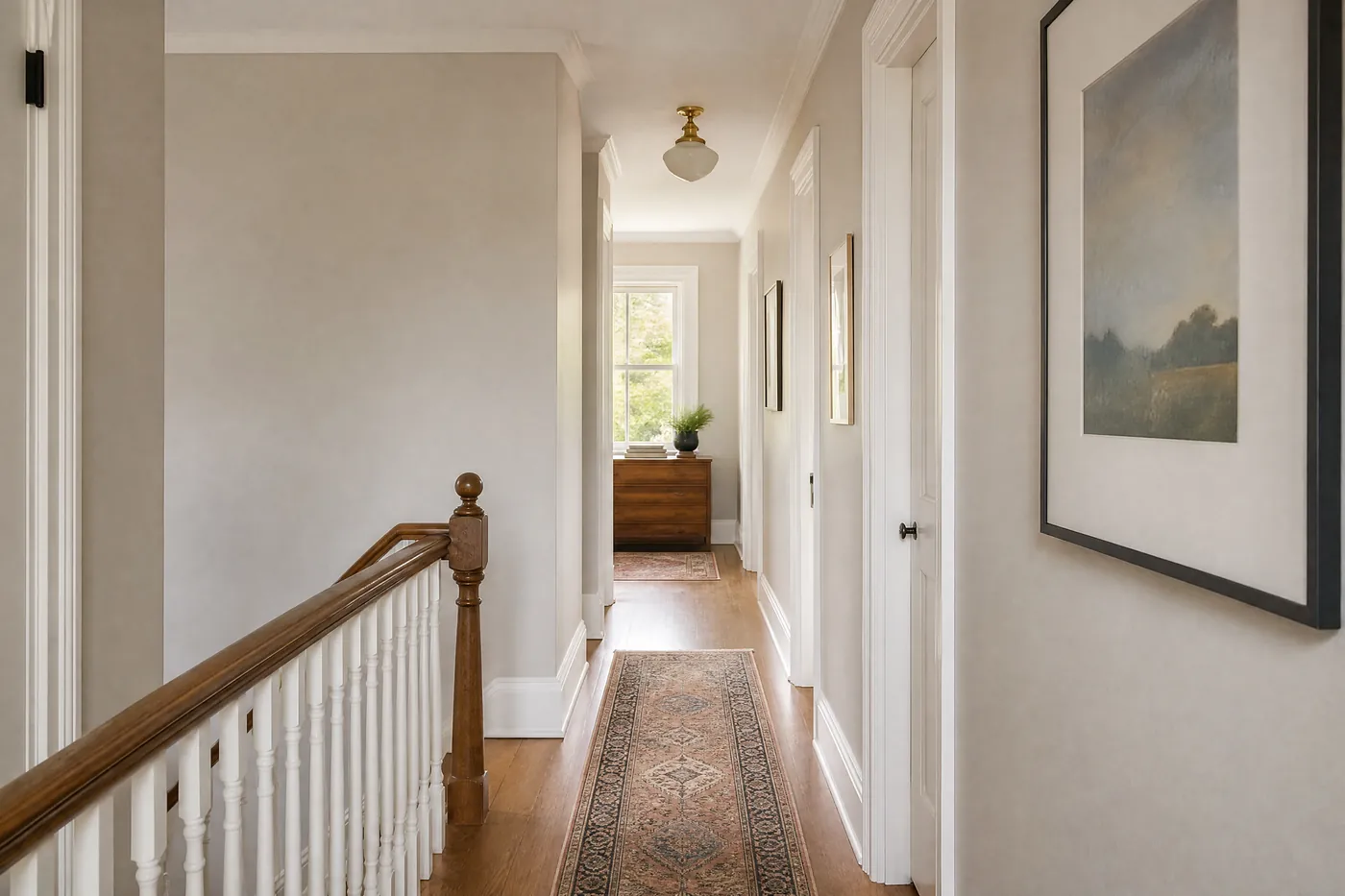
Our interior method, one surface at a time
We start high and work down. Ceilings come first, because roller spatter and drips fall onto walls that have not been finished yet. The edge where ceiling meets wall is cut in with a brush, then the field is rolled in a single direction parallel to the main window, which keeps lap marks out of sight. Smoke or leak stains are locked in under a stain-blocking primer ahead of any colour. Textured or stippled ceilings are looked at during the quote visit, since some older coatings soften when wet and need a different approach.
Walls follow once the ceiling is dry. Each wall is inspected with a work light held flat against the surface, which shows dents and ridges that ordinary room light hides. Holes are filled, sanded flush and spot-primed so the patch does not show up as a dull spot later. The perimeter and corners are cut in, then the wall is rolled while the brushed edge is still wet so the two textures blend. The second finish coat goes on once the first has reached the recoat time printed on the can, and never sooner.
Trim and doors are finished last. Baseboards and casings are wiped clean, scuffed with fine sandpaper and tested for old oil-based paint, which needs a bonding primer before a water-based enamel will stick. Open joints are caulked and nail holes filled. Doors come off their hinges when that gives a cleaner finish, or are painted in place with the hardware masked. Panels, rails and stiles are brushed in a set order so each section stays wet while it is worked, and the door is left to firm up before it closes against the frame.
Reviews
What clients say
Why hire professionals
Why hire a painter for your interior rooms
Rolling paint onto a wall looks simple, and for a small touch-up it can be. A whole room, or a whole floor, is a different matter: the prep, the cut lines, the order of surfaces and the drying times all decide whether the finish looks even once the furniture goes back. Homeowners describe how their rooms turned out on our reviews page.
Prep that disappears
Most visible flaws come from skipped preparation. A painter fills, sands and primes every repair so the patches vanish under the finish instead of showing as shiny or dull spots in daylight.
Straight lines
Clean cut lines at ceilings, trim and accent corners take a steady hand and the right brush. Tape helps in some places, but it cannot rescue a wavy line on a textured surface.
The right product per room
Bathrooms, kitchens, hallways and bedrooms each call for a different sheen and paint type. Choosing well gives you walls you can wipe where it counts and a soft, low-glare look where you want calm.
Your home stays usable
We shift and wrap the furniture, lay drop sheets and leave each room neat when we pack up in the evening, so you can still cook, sleep and get on with life while rooms are painted.
Your weekends back
A room that would take a weekend of your own time, plus the cleanup, gets finished without you climbing ladders or shifting the sofa, and every surface still gets at least two proper finish coats.
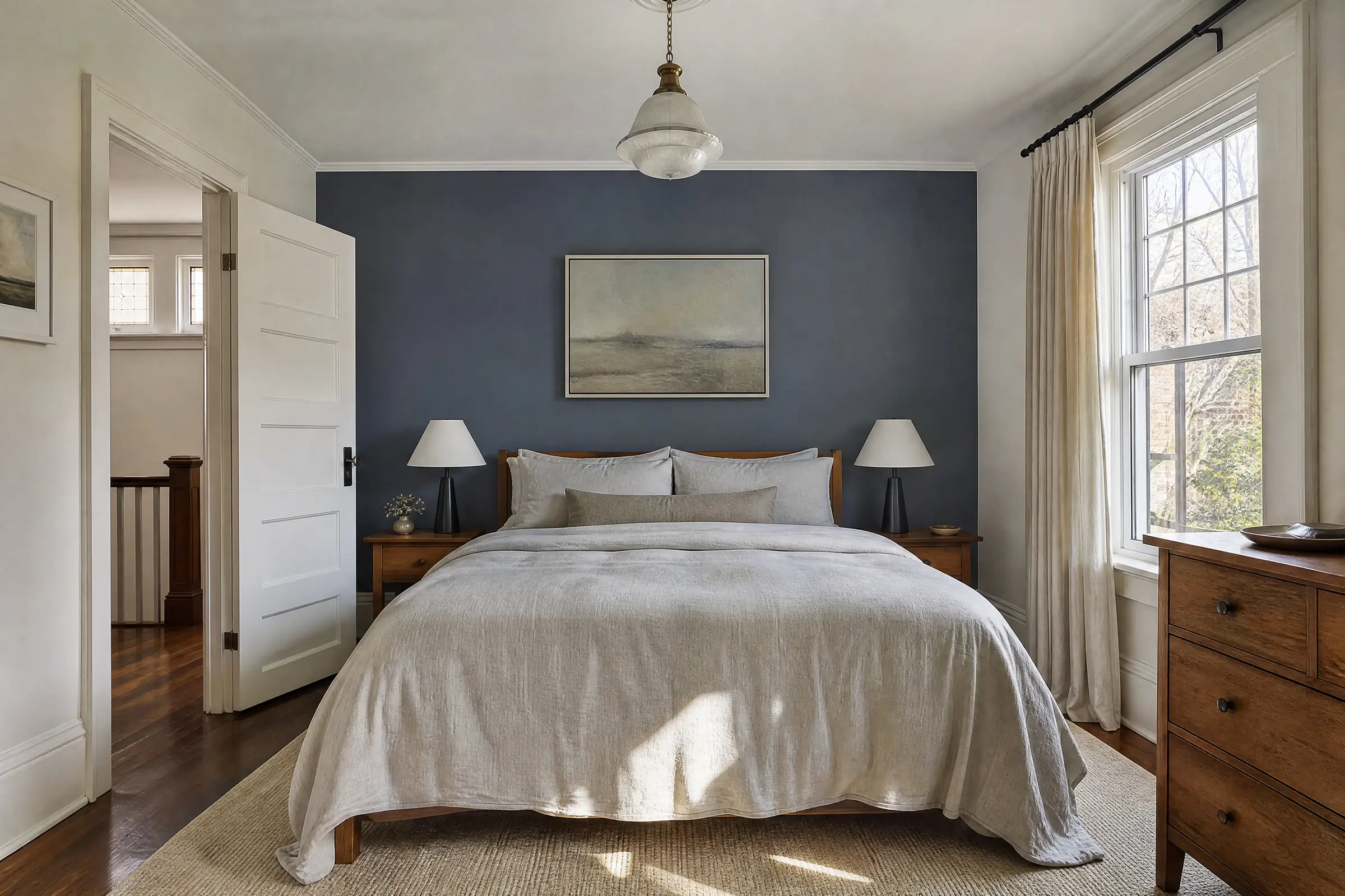
Our process
How an interior painting job runs
Every interior project moves through the same five stages, whether it covers one bedroom or every room in the house. You know what is happening at each point, and nothing moves on until the stage before it is properly finished.
Free quote visit
We walk the rooms with you, measure, look closely at the walls and trim, and ask which ceilings, closets and doors you want included. Small jobs can often be quoted from a few clear photos instead of a visit.
Colour and written quote
Unsure about shades? Real sample pots go on your walls at a free colour consultation. The written quote then itemizes every room, surface, colour, sheen and product, and you can trim or widen the scope before booking.
Room setup and repairs
On day one, sofas, beds and shelves are pulled into the middle and wrapped, drop sheets go down and plates come off. Then the repairs: filling, sanding, caulking and spot-priming until each surface is ready to take colour.
Finish coats
Ceilings, then walls, then trim and doors, each getting two finish coats or more, with the paint maker's recoat interval observed in between. The rooms are tidied at the close of each working day while the job is underway.
Walk-through and cleanup
When the paint is dry, we look over every wall, ceiling and trim line with you in good light. Furniture goes back in place, switch plates are reinstalled and every drop sheet and paint can leaves with us.
Ready to start?
Call (416) 710-4224 or send a few details and photos for a free, itemized quote.
Preparation
Preparing your rooms before the first coat
Clearing and covering
Small belongings, pictures and fragile items should be put away by you before the start date. We handle the heavy part: furniture is grouped in the middle of the room and wrapped, and floors are covered from wall to wall with drop sheets that do not slide underfoot.
Filling and sanding
Nail holes, screw pops, dents and hairline cracks are filled with a compound suited to their depth. Once dry, each repair is sanded flush and checked again under a raking light, because a patch that looks flat in daylight can still cast a shadow under evening lamps.
Plaster in older homes
Plaster walls in older homes crack differently from drywall. Loose areas are secured, cracks are opened slightly and filled so they are less likely to return, and chalky or powdery surfaces are sealed with a bonding primer so the new paint has something firm to grip.
Stains and glossy surfaces
Water marks, smoke residue, marker and grease spots are cleaned and then sealed with a stain-blocking primer. Glossy paint on trim, doors or kitchen walls is scuffed with a fine abrasive so the new coat bonds properly instead of peeling at the first knock.
Caulking and masking
Gaps between trim and wall, along countertops and around door casings are filled with paintable caulk so the finished edge reads as one line. Switch plates and vent covers are removed, hardware is masked, and window glass and flooring edges are protected before painting starts.
Products and finishes
Flat and matte
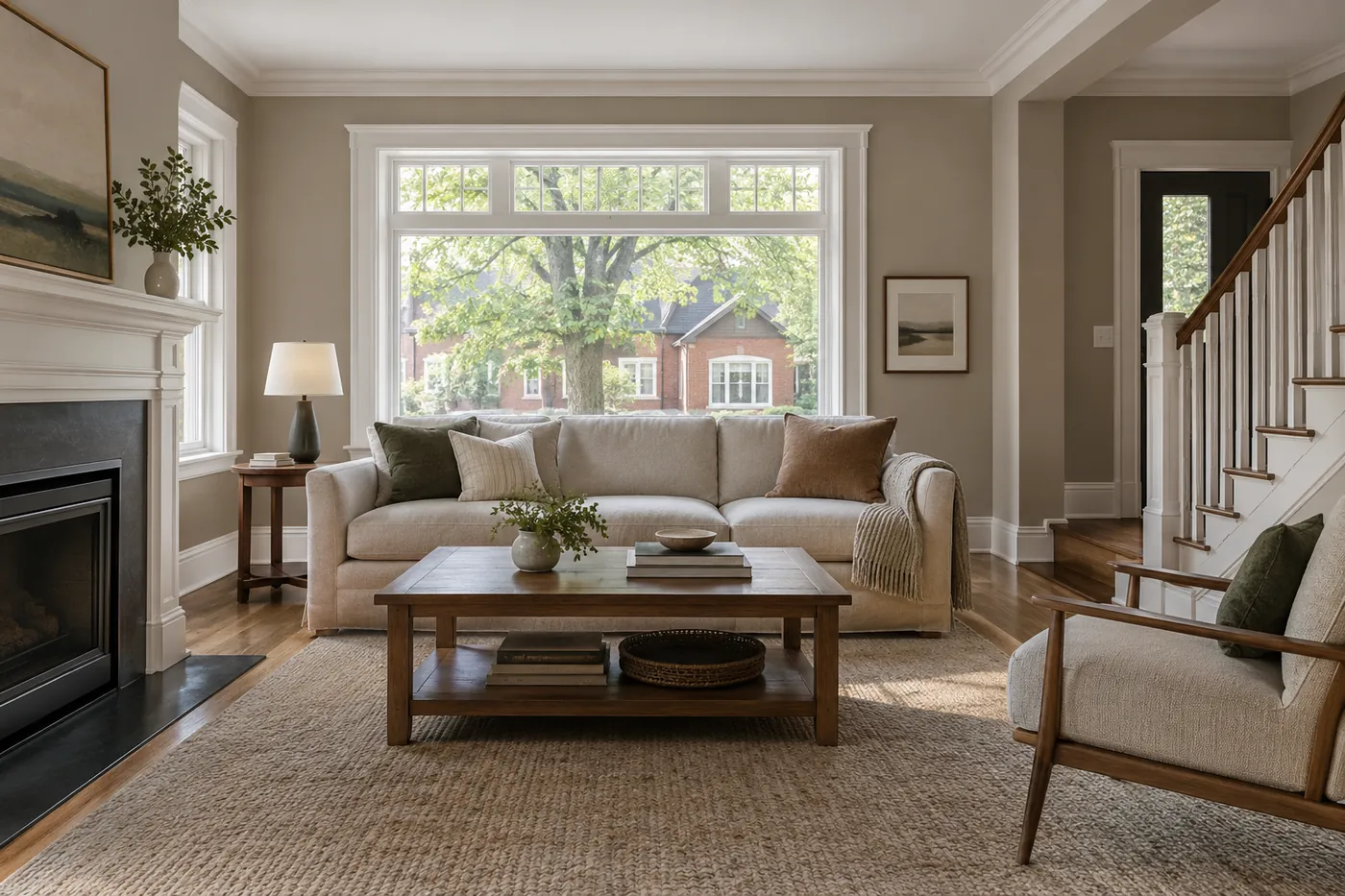
A flat or matte finish reflects very little light, which hides small waves and repairs in a wall. It suits ceilings, formal rooms and bedrooms. Washable matte formulas handle light cleaning well, but walls that get daily knocks usually do better with a slightly higher sheen.
Eggshell
Eggshell has a soft, low lustre that sits between matte and satin. It is the usual choice for living rooms, dining rooms and bedrooms, because it wipes clean more easily than matte while still looking calm and even across a large, uninterrupted wall.
Satin and semi-gloss enamel
Satin and semi-gloss enamels dry harder and resist moisture and scrubbing. They suit bathrooms, kitchens, laundry rooms, trim and doors, where hands, steam and shoes are constant. The extra sheen shows surface flaws more, so the preparation underneath has to be thorough.
Zero-VOC and low-odour paint
Zero‑VOC and low-odour paints give off far less smell as they dry, so they make sense in bedrooms, nurseries and homes where people stay in during the work. They come in the same sheens as standard paint, and your quote names the product for each room.
Service areas
Where we paint interiors
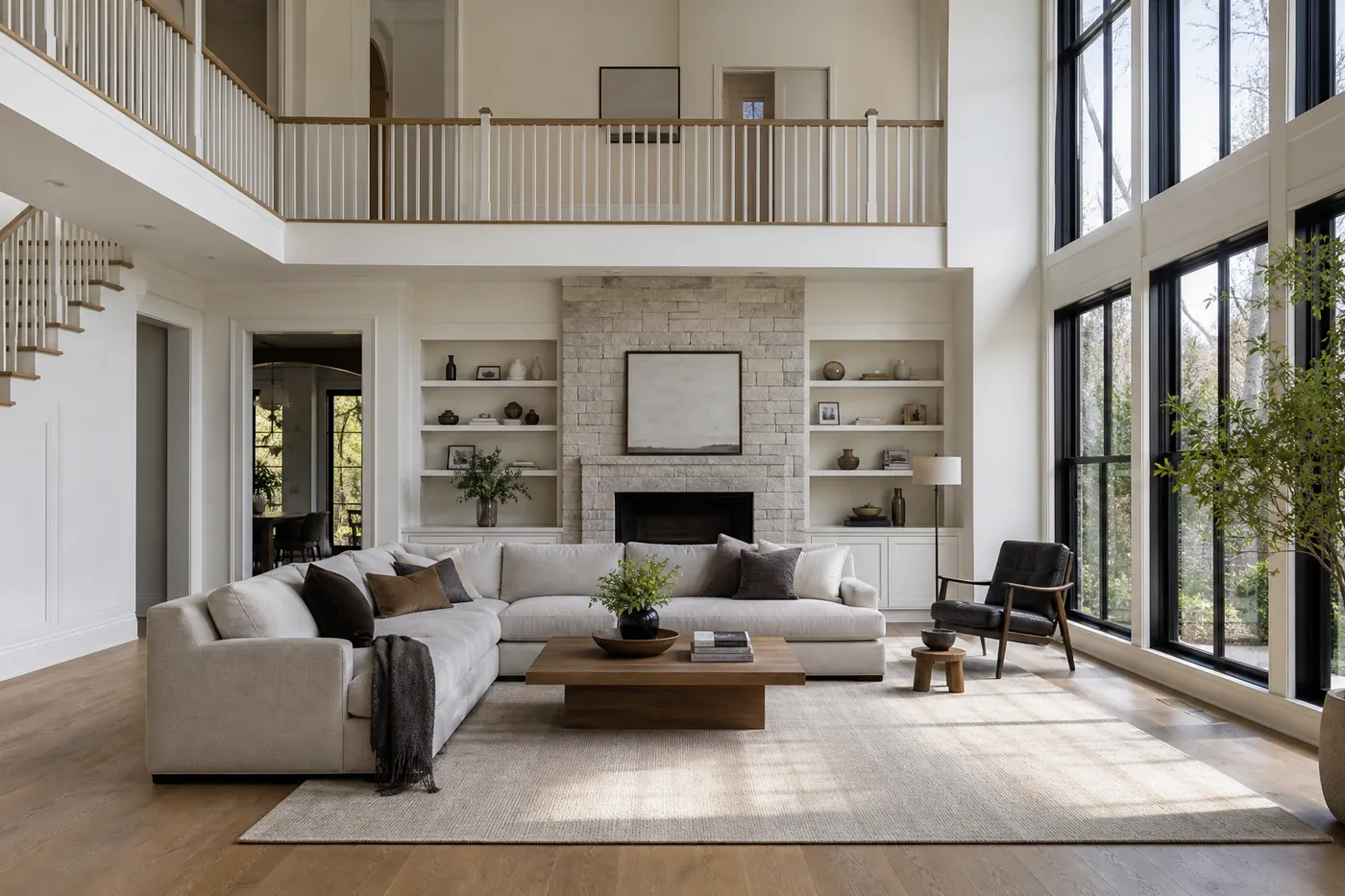
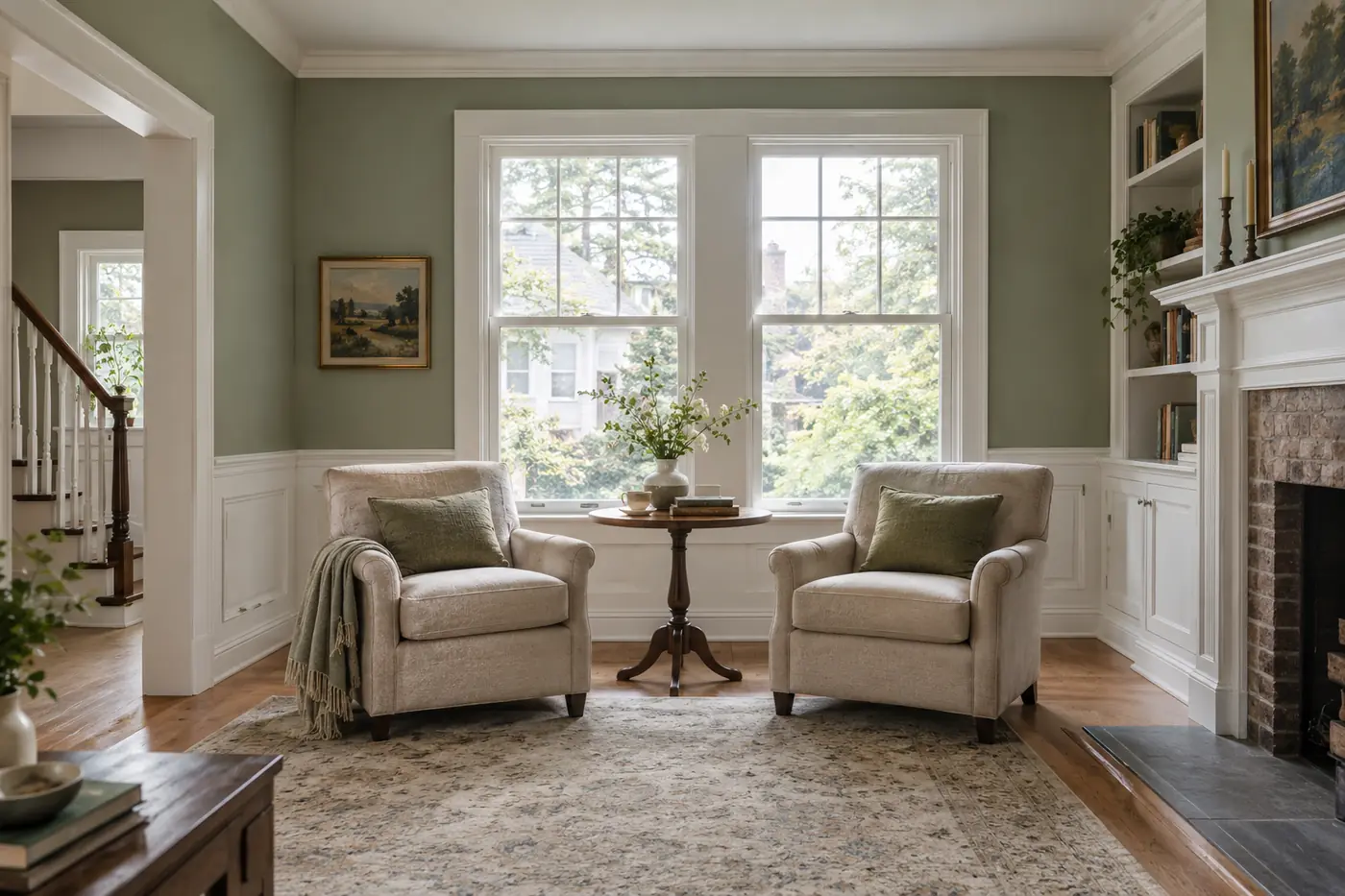
In Toronto itself, interior work ranges from narrow Victorian row houses with plaster walls and deep baseboards to downtown condo units with smooth drywall and floor-to-ceiling windows. Older houses in the Annex, Leslieville and the Junction often carry many layers of paint and some oil-based trim, so the choice of primer matters. Mid-century bungalows in North York and Scarborough tend to have simpler trim but tired, dated colours throughout. In each case the rooms are scheduled so the household can keep living around the work, with bedrooms and the kitchen available every evening.
Beyond the city, interior painting in Peel Region often means newer two-storey homes in Mississauga and Brampton with open main floors and tall foyers. In York Region, larger houses in Vaughan, Markham and Richmond Hill bring high ceilings and two-storey family rooms. Halton Region mixes established streets in Oakville and Burlington with newer Milton subdivisions, and Durham Region has many homes in Pickering, Ajax, Whitby and Oshawa still wearing their original flat builder paint, which scuffs easily and is ready for a sturdier finish.
Local conditions
Weather, house age and the light in your rooms
The weather here reaches indoors more than people expect. In winter, furnace heat dries the air and cold exterior walls chill the surface, which slows curing on outside walls and in unheated rooms. Painting through the colder months is still common, and many owners prefer it because they are home anyway, but the schedule leaves more time between coats and keeps the heat at a steady level. Summer humidity has the opposite effect: paint stays soft longer, especially in basements and bathrooms, so open windows, fans or a dehumidifier help each coat set before the next goes on.
The city's housing stock shapes the prep. Pre-war homes have plaster, picture rails, high baseboards and sometimes several coats of oil-based paint on the woodwork, all of which need a careful primer plan. Post-war bungalows and split-levels often have drywall over original plaster, with seams that show through old paint. Newer builds and infill homes have smooth drywall finished in flat builder paint that scuffs at the first touch. Basements across the city range from finished family rooms to damp storage spaces, so moisture is checked before a single can is opened.
Light is the other local factor. Many city houses sit on narrow lots with neighbours a few feet away, so side rooms get little direct sun and colours read darker and cooler than they do on the chip. Bay windows and south-facing fronts do the opposite, warming and washing out paler shades by mid-afternoon. That is why sample pots are brushed onto the actual walls and checked at different times of day before anything is ordered. Sheen is chosen with the same light in mind, since a raking winter sun across a long hallway will show every ripple in a glossier finish.
- Decide which rooms, ceilings, closets and doors belong in the scope
- Note any cracks, stains or old leaks you want looked at
- Choose colours with sample pots in daylight and lamplight
- Plan where people will sleep and work while rooms are painted
- Put away small items, art and anything fragile before day one
What shapes the cost of an interior repaint
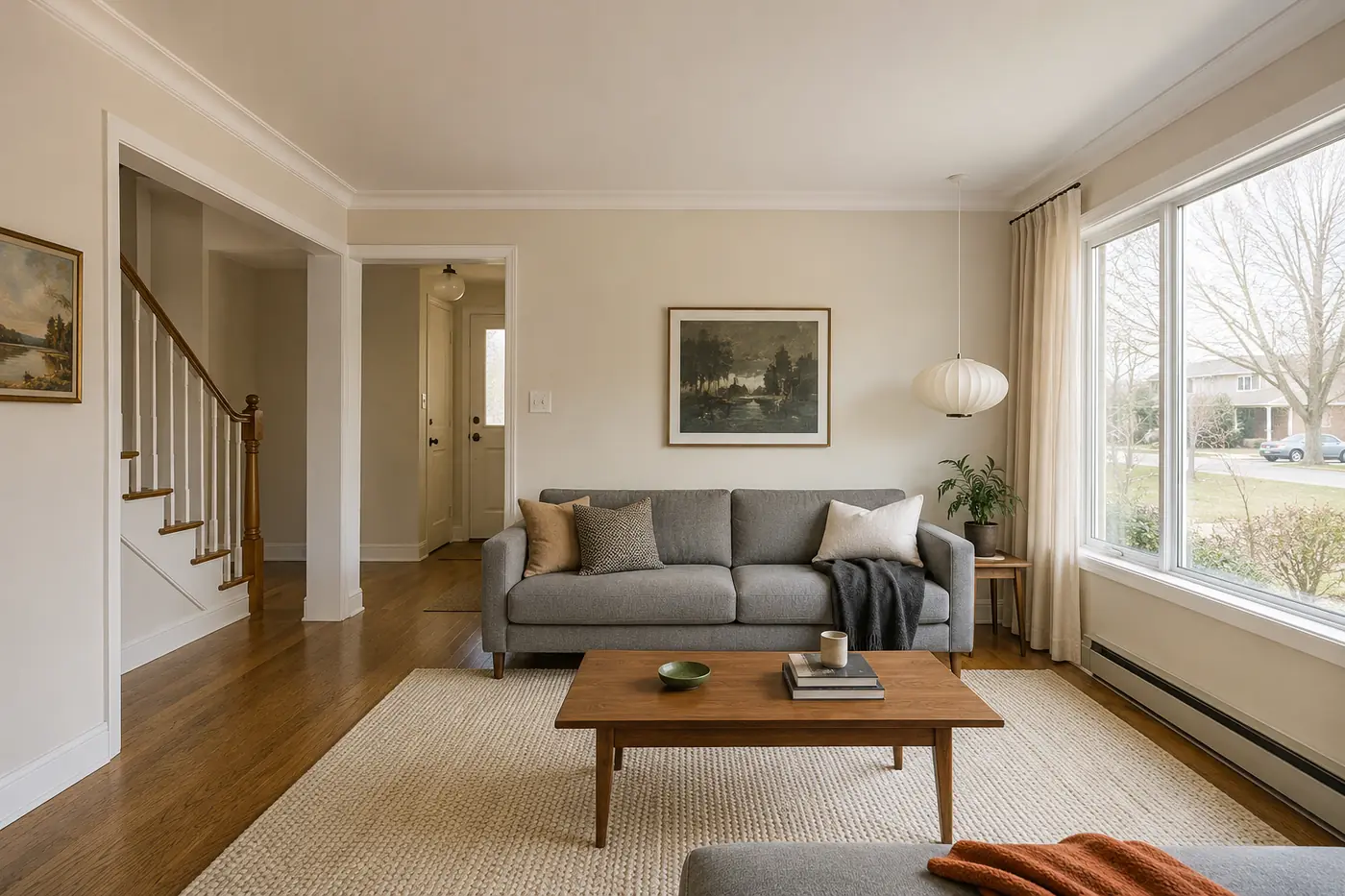
Floor area is only the starting point. Ceiling height, the number of windows and doors, the length of baseboard and casing, and how much patching the walls need all change the hours involved. Colour choices count too: going from a deep shade to a pale one, or the reverse, can call for an extra primer coat underneath. Plaster repairs, stain sealing, old oil-based trim and tall stairwells add their own time, as do closets and detailed trim such as crown moulding or wainscoting.
Access and sequencing also matter. An empty home is quicker to paint than one full of furniture, and working around a family takes more setup each day. For a rough planning range before anyone visits, try our painting cost calculator. After the visit you receive a free quote, written and itemized, that lists every room and surface, so you can drop a room, add a closet or split the work into phases and see exactly how the scope changes.
Price it before anyone visits
Pick the rooms and the work in our cost calculator for a ballpark range in about a minute.
Then ask for a free quote: written, itemized and free to change before work starts.
What a repaint changes
Drag the handle, see the difference
A living room before and after a repaint: scuffs and patch marks filled, then two coats of a warm off-white. Slide to compare.
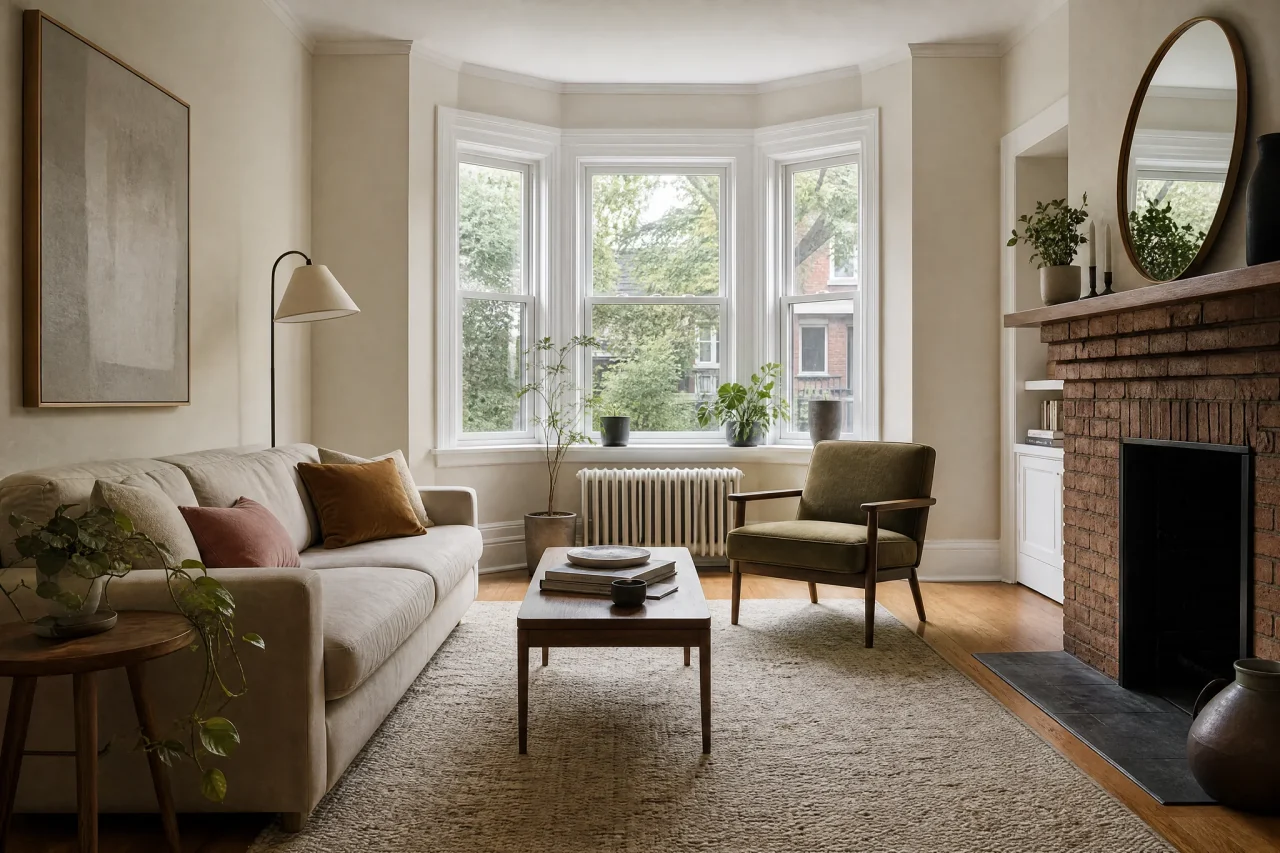
 Living room repaint
Projects
Recent interior painting projects
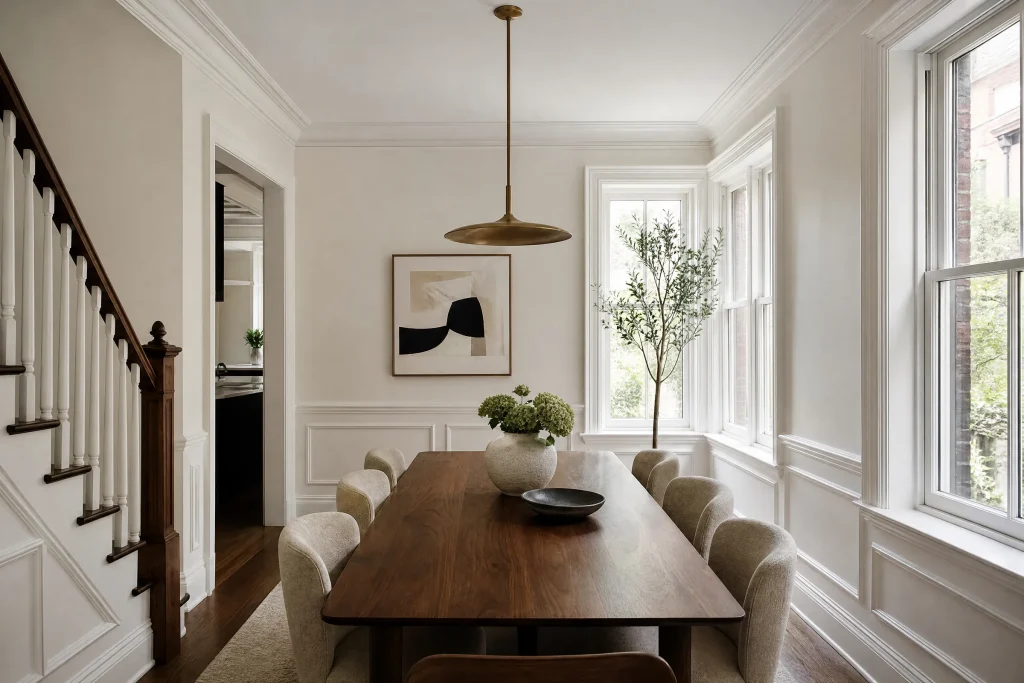
- Interior
- Scarborough
Vaulted living room and split-level halls in a West Hill back-split
A back-split in West Hill, Scarborough: textured ceiling spot-tested and deep red walls primed out, then the vaulted ceiling sprayed and rooms painted white.
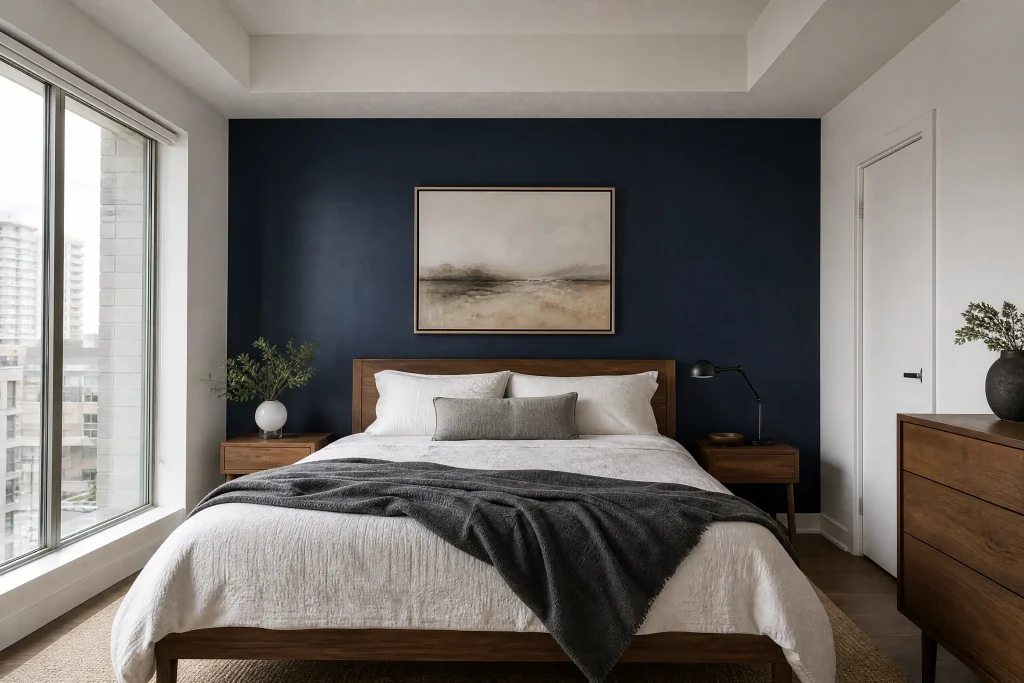
- Interior
- Vaughan
Navy accent wall and full suite repaint in a Vaughan condo
A condo suite in Vaughan: moving-day gouges and dings filled, then repainted in washable white and pale warm grey with a deep navy accent wall.
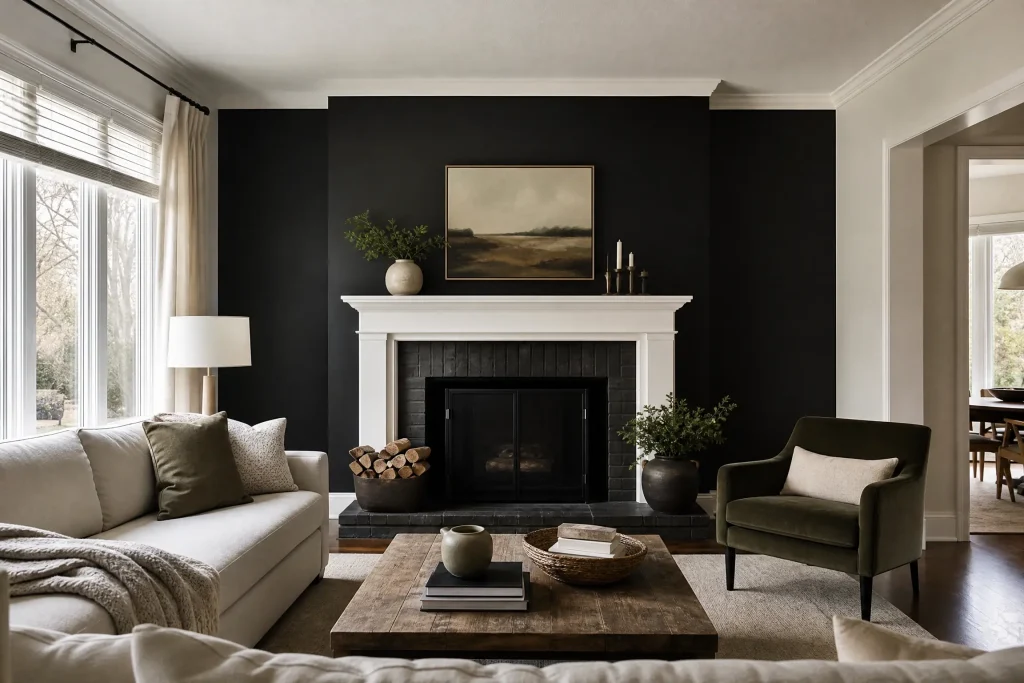
- Interior
- Richmond Hill
Black feature wall and living room redo in Jefferson, Richmond Hill
Living rooms in Jefferson, Richmond Hill: roller ridges and drips sanded out and walls primed, then painted warm beige with a matte black accent wall.
Resources
Painting Guides and Resources
- Guide
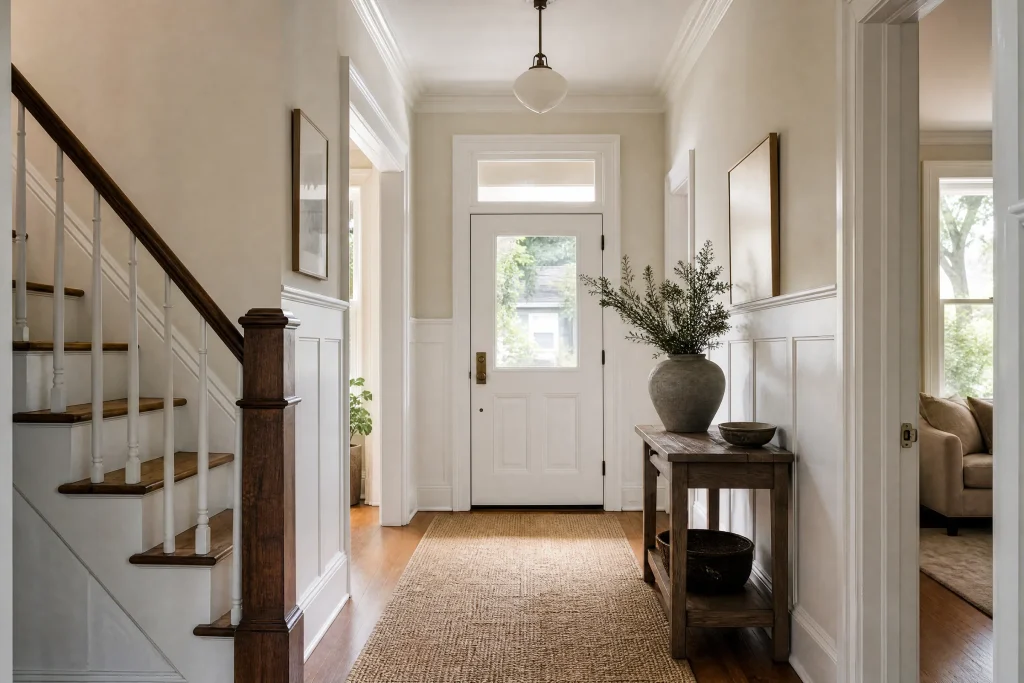
Choosing paint sheen room by room
Matte, eggshell, satin or semi-gloss? How sheen changes the way a wall looks, cleans and wears, and which finish suits each room in the house.
- Guide
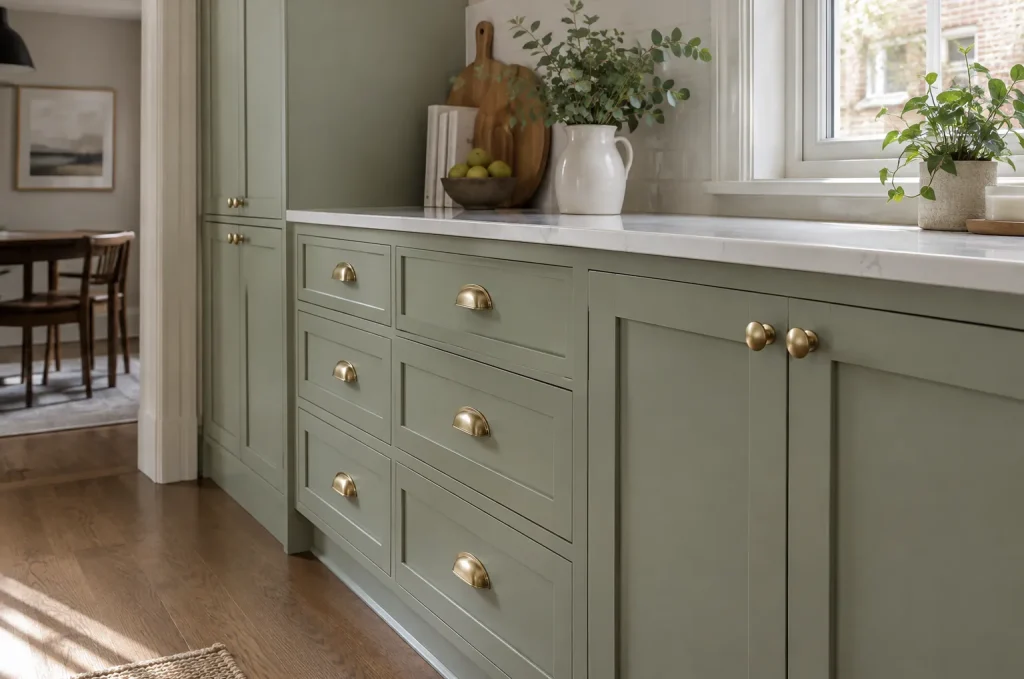
Painting vs replacing kitchen cabinets: what the process involves
When painting your existing cabinets makes sense, when replacing them is the better call, and what a proper cabinet painting job involves from degreasing to rehanging.
- Guide
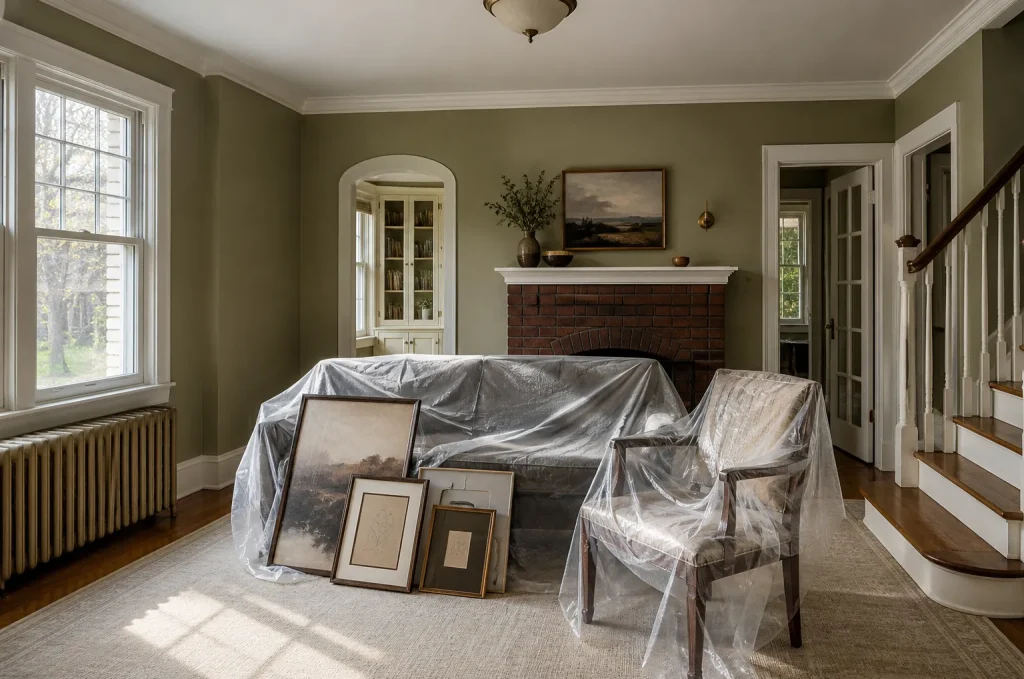
How to prepare your home for painters: a checklist
A practical checklist for the weeks, days and morning before the painters arrive, inside and out, so the job starts on time and finishes without surprises.
Do I need to empty the rooms before you start?
No. Please put away small items, pictures, electronics and anything fragile, and clear the tops of dressers and shelves. We take care of the furniture: it is pulled into the centre of the room or into a neighbouring space and covered, and floors are protected from wall to wall. Each evening we leave the room neat, so you can use it after we go if the paint allows.
How many coats will my walls get?
You get a minimum of two finish coats on each painted surface, with the paint maker's recommended recoat time between them. Before that, repairs are spot-primed so they do not show through. A big colour change, such as covering a dark red with a light grey, or painting over bare drywall or stains, can also need a full primer coat. The quote spells out the coats planned for each room so there is no guesswork.
Can we stay at home while you paint?
Yes, and most of our interior clients do. Rooms are painted in a planned order so you always have somewhere to sleep, cook and work. Zero‑VOC and low-odour paint options keep the smell down, which helps in bedrooms and for anyone sensitive to paint fumes. Let us know about pets, children's nap times or home offices at the quote stage, and the daily schedule is arranged around them.
Can you help us choose colours?
Yes. The colour consultation is free and uses real sample pots painted onto your own walls, so you see each shade in your light, next to your floors and furniture. Colours often look very different on a small chip than on a whole wall, especially in north-facing rooms. Once you decide, the colour and sheen for each surface is written into the quote so everyone works from the same list.
Can you paint over dark colours or glossy paint?
Yes. A dark wall gets a primer coat first where needed, then the finish coats, so the old shade does not ghost through the new one. Glossy paint on walls or trim is cleaned and scuffed with a fine abrasive, and old oil-based enamel is sealed with a bonding primer so the water-based coat grips instead of peeling. Both situations are noted at the quote visit so the price reflects the extra steps.
How long does an interior painting job take?
It depends on the number of rooms, the amount of repair work, ceiling heights and how many colours are involved, as well as drying time between coats. An empty home also moves faster than a furnished one. After the visit, your written quote includes a schedule showing which rooms are painted in what order, so you can plan around it before the first day.
Which areas do you serve for interior painting?
Interiors anywhere in the city and in the surrounding regions of Peel, York, Halton and Durham. We work out of 18 King St E, downtown. Detached and semi-detached houses, townhouses, condo units and rental properties are all included, and the order of rooms is planned around the people who live there.
What does the written quote include?
It costs nothing, comes in writing and is itemized. It lists each room and the surfaces in it, such as walls, ceiling, trim, doors and closets, along with the preparation found during the visit, the number of coats, and the colour, sheen and product chosen for each. If you want to add or remove a room, the quote is updated before work begins so the total always matches the scope.
Free quotes across the GTA
Plan your interior repaint with us
Tell us which rooms you want painted, the colours you are considering and your timing. We will book a visit and follow up with a free written quote.