
BRICK
PAINTING a breathable finish made to last

- Free quotes
- Itemized written quote
- Since 2010
- Open 7 days
We clean, repair and prime exterior brick, then finish it with a breathable masonry paint in the colour you choose, so the wall can still dry out after rain and through the winter.
Painting masonry properly
Exterior brick painting for Toronto houses
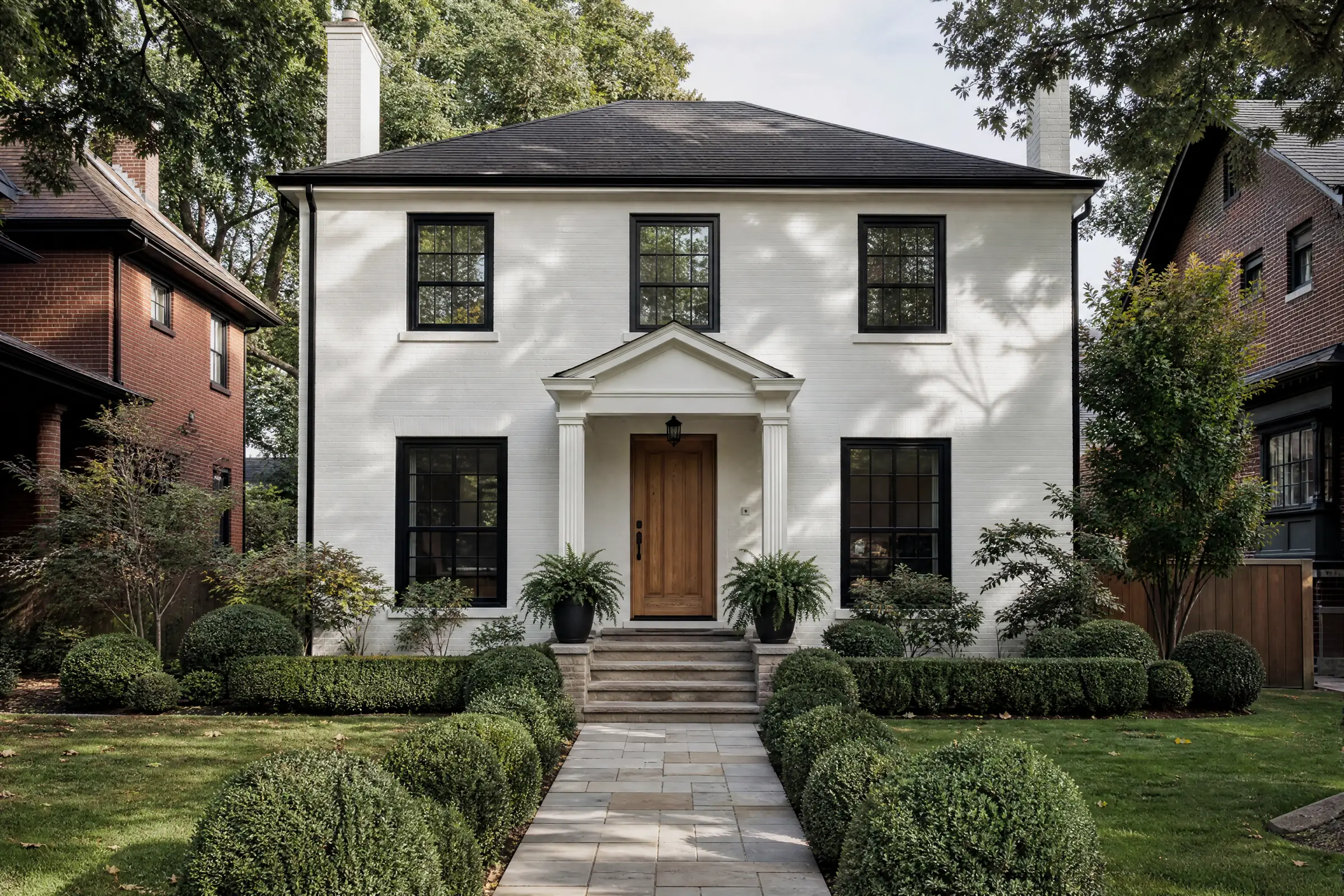
Exterior brick painting covers the masonry walls of a house and the details set into them: the brick faces, the mortar joints, the sills and lintels over windows and doors, and the porch walls and piers that frame an entrance. It can also take in a painted foundation band or a brick garden wall when they belong to the same colour scheme. Because brick is porous, the work is more than a colour change. Each wall is inspected, washed, repaired where needed and primed with a product made for masonry ahead of the finish coats, and the trim around it is finished to suit.
Most people who call us about brick want one of a few things. Some have a front that has been patched over the decades with bricks and mortar that never quite matched. Some have older red brick that looks dated next to new windows, a new roof or a modern entrance. Others are getting a house ready to list, or want the brick and the trim set into it to finally read as one scheme. A few have brick that was painted long ago and is now peeling, and they need the loose paint taken off and the wall recoated with the right system.
A good result is a wall that looks even from the street and up close. The colour is consistent across old and new brick, the mortar joints are fully covered rather than left as dark shadow lines, and the edges against windows, doors and trim are crisp. Just as important is what you cannot see: the coating lets water vapour leave the wall, so it does not blister or flake when moisture from inside the house or from a wet spring works its way outward. You also know which primer and paint are on the wall when it is time to recoat.
Planning starts at the free quote visit. We walk each wall with you, look at the brick faces and mortar, note any cracks, spalling or white salt deposits, and check for signs of trapped moisture such as damp patches or crumbling faces near downspouts. We also discuss colour and sheen, and you can try real sample pots on the brick before choosing. The itemized written quote then lists the cleaning, repairs, primer, paint and coats for every wall, along with the trim, so nothing on the wall is left unaccounted for. Before the first day, you know who is coming.
Brick walls and mortar joints
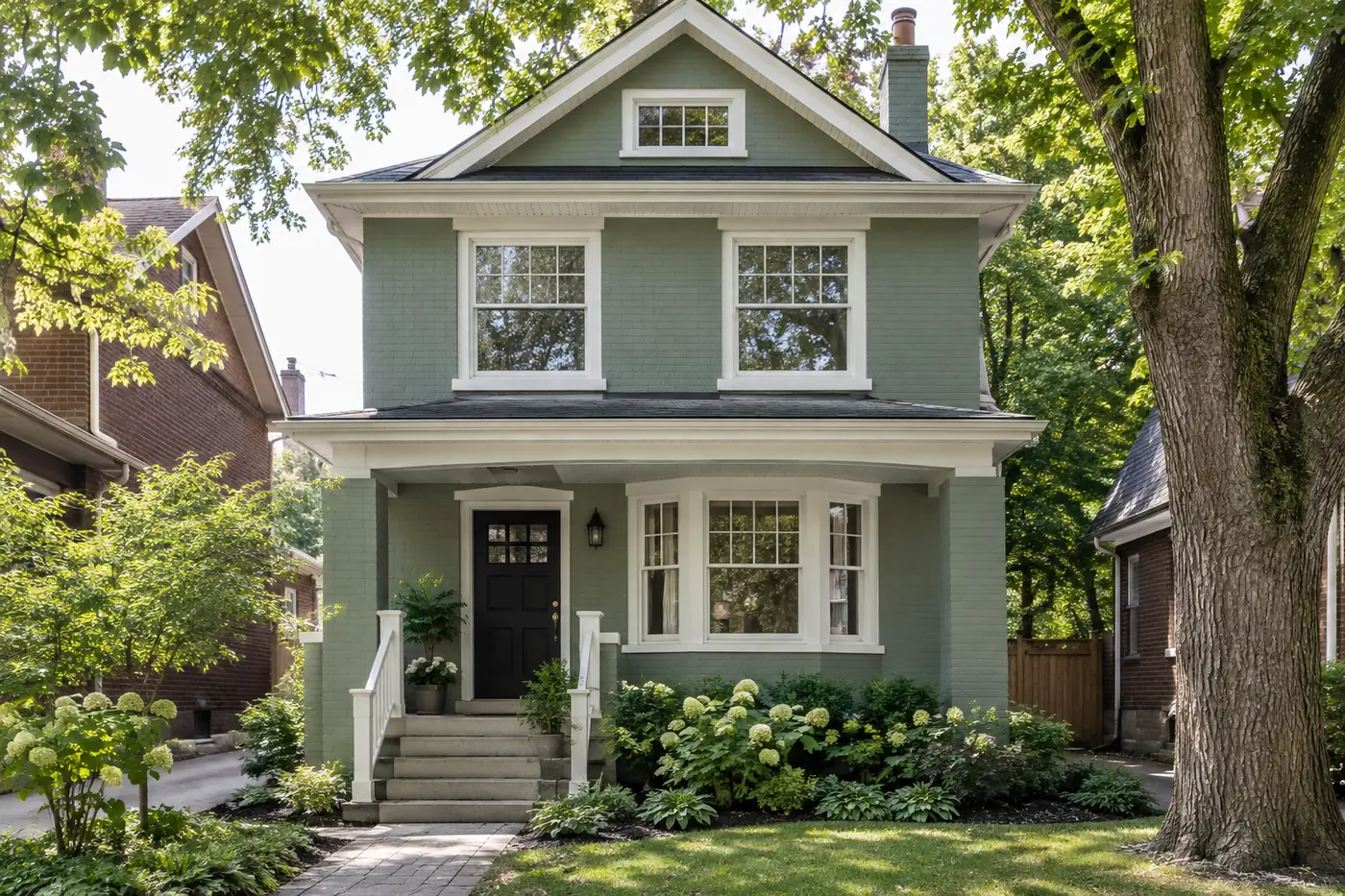
The main walls of the house, painted face and joint alike. Paint is worked into the recessed mortar lines by brush or roller, or sprayed and back-rolled, so every joint is covered and the wall reads as one even colour from the sidewalk.
Sills, lintels and trim
Stone or concrete sills, steel lintels over openings, and the wood or aluminum trim set into the brick. Each gets the primer that suits its material, then a finish that either matches the new wall colour or contrasts with it.
Porches, piers and chimneys
Brick porch walls, columns and the piers that hold up a porch roof are included when you want them. Chimneys are checked for condition and moisture first and painted only when the brick and the crown are sound and dry.
Previously painted brick
Brick that already carries old paint is scraped and brushed to remove anything loose, washed, and spot-primed where bare masonry shows. The finish coats then go over a sound base, so the new colour is not resting on paint that is already letting go.
How each brick surface is painted
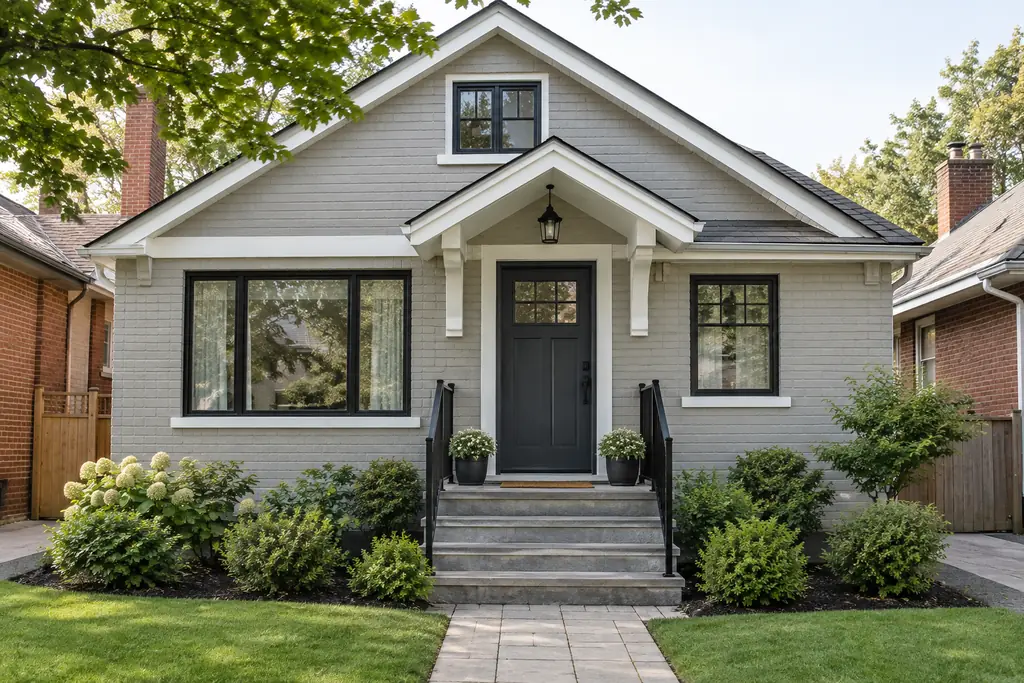
On the main walls, the work runs in a fixed order. Loose mortar dust, dirt and efflorescence are washed off, using a masonry cleaner and a low-pressure rinse where possible and stronger pressure only where buildup needs it, since high pressure can erode soft brick and joints. The wall is then left until it is properly dry, which in spring or fall can take longer than people expect. Cracks and open joints are patched, the wall is primed with an alkali-resistant masonry primer, and at least two finish coats follow, with full drying time between them.
Mortar joints and textured brick need more attention than flat siding. A roller alone tends to bridge across recessed joints and leave them thin, so the joints are cut in by brush first, or the paint is sprayed and then back-rolled to push it into the texture. On wire-cut or rough brick, the second coat is applied at a different angle from the first so pinholes fill. Around windows and doors, edges are cut by hand against the frames, and the caulking there is renewed where it has cracked so water does not get behind the paint.
Sills, lintels and trim are handled after the brick, so any overspray or roller spatter lands on surfaces that are still to be finished. Steel lintels are wire-brushed to remove rust and primed with a rust-inhibiting primer before they are painted. Concrete and stone sills are cleaned and primed with the same masonry primer as the walls. Wood trim is scraped, sanded and primed where bare. Finally, the whole elevation is checked in daylight from the street and up close, and any thin spots or missed joints are touched up before the coverings come off.
Reviews
What clients say
Why hire professionals
Why brick painting is a job for a professional
Brick looks tough, but it reacts badly to the wrong paint and the wrong preparation. Most failures on painted masonry trace back to moisture trapped behind a coating, salts left on the surface, or joints that were never properly covered. These are the parts of the work that need care and the right products.
Breathable coatings
A professional chooses a primer and paint that let water vapour pass out of the wall. Ordinary exterior paint can seal brick, and trapped moisture then pushes the coating off in blisters and flakes.
Moisture checked first
Damp patches, crumbling faces near downspouts and white salt staining all point to water in the wall. We check for them before quoting, because painting over a moisture problem hides it rather than fixing it.
Cleaning without damage
Brick and mortar can be eroded by too much water pressure. Cleaning is matched to the condition of the wall, so dirt and efflorescence come off without opening up the joints or scarring softer brick faces.
Coverage in the joints
Recessed mortar joints are where a rushed job shows first. Back-rolling, brushing and a roller with the right nap make sure the paint reaches into every joint and across the rough face of the brick.
Safe access to height
Upper walls, gables and chimneys on two- and three-storey houses need ladders or staging set up properly. The work is planned so every part of the wall is reached safely and painted to the same standard.
Our process
Our exterior brick painting process
Every brick job follows the same five steps, starting at the quote visit and ending with a last look around the house together. The order matters, because each stage depends on the one before it being finished properly and on the wall being fully dry.
Visit and colour choice
We look at the brick, mortar and trim with you, point out anything that needs repair first, and talk through colours. Real sample pots are brought along, so you can see a shade on your own wall in daylight.
Itemized quote
You receive a written quote that breaks the job down by wall: cleaning, repairs, primer, number of finish coats, and the trim, sills and lintels. Before day one, we tell you who is coming to the house.
Protect and clean
Windows, light fixtures, walkways, plants and garden beds next to the walls are covered. The brick is then washed to remove dirt, loose mortar dust and efflorescence, and left until it is completely dry.
Repair and prime
Cracks and open mortar joints are patched and allowed to cure. The whole wall is primed with a masonry primer, and steel lintels get a rust-inhibiting primer, so the finish coats bond evenly over old and new material.
Paint and tidy
At least two coats of breathable masonry paint go on, joints included, then the trim and details. The site is tidied every evening, and at the end we walk the walls with you before the coverings come off.
Ready to start?
Call (416) 710-4224 or send a few details and photos for a free, itemized quote.
Preparation
Preparing brick before any paint goes on
Inspecting the masonry
Each wall is checked for hairline and stepped cracks, spalling where the brick face has flaked away, and joints where mortar has crumbled. Problems are pointed out before the quote is final, and larger structural or repointing work is flagged for a mason rather than hidden under paint.
Removing efflorescence
The white, powdery salt that appears on brick is a sign that water has moved through it. It is brushed and washed off before priming, because paint applied over salt deposits loses its grip and the salts keep pushing through from behind.
Washing the walls
Dirt, mildew, cobwebs and loose mortar dust are washed off with a masonry cleaner and a controlled rinse. Pressure washing is used only where buildup needs it and kept gentle on older brick, so the faces and joints are not eroded during cleaning.
Drying time
Brick holds water long after the surface looks dry. After washing, the wall is left until it has dried right through, and painting waits for a dry spell after heavy rain, so moisture is not sealed into the masonry behind the new primer.
Patching and caulking
Cracks and open joints are filled with a masonry patching compound and given time to cure. Caulking around window and door frames is cut out and renewed where it has split, so water cannot run behind the paint at the edges.
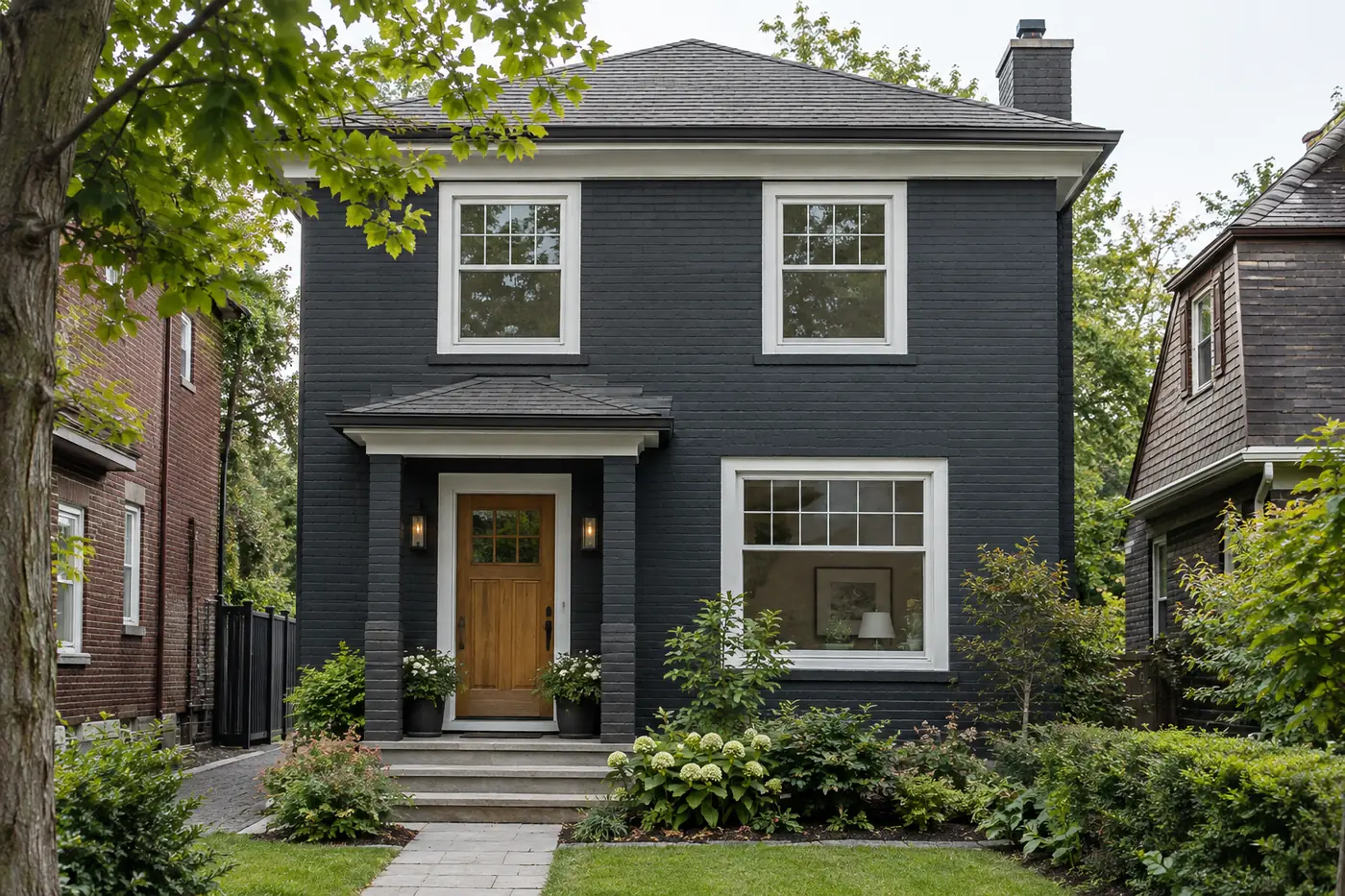
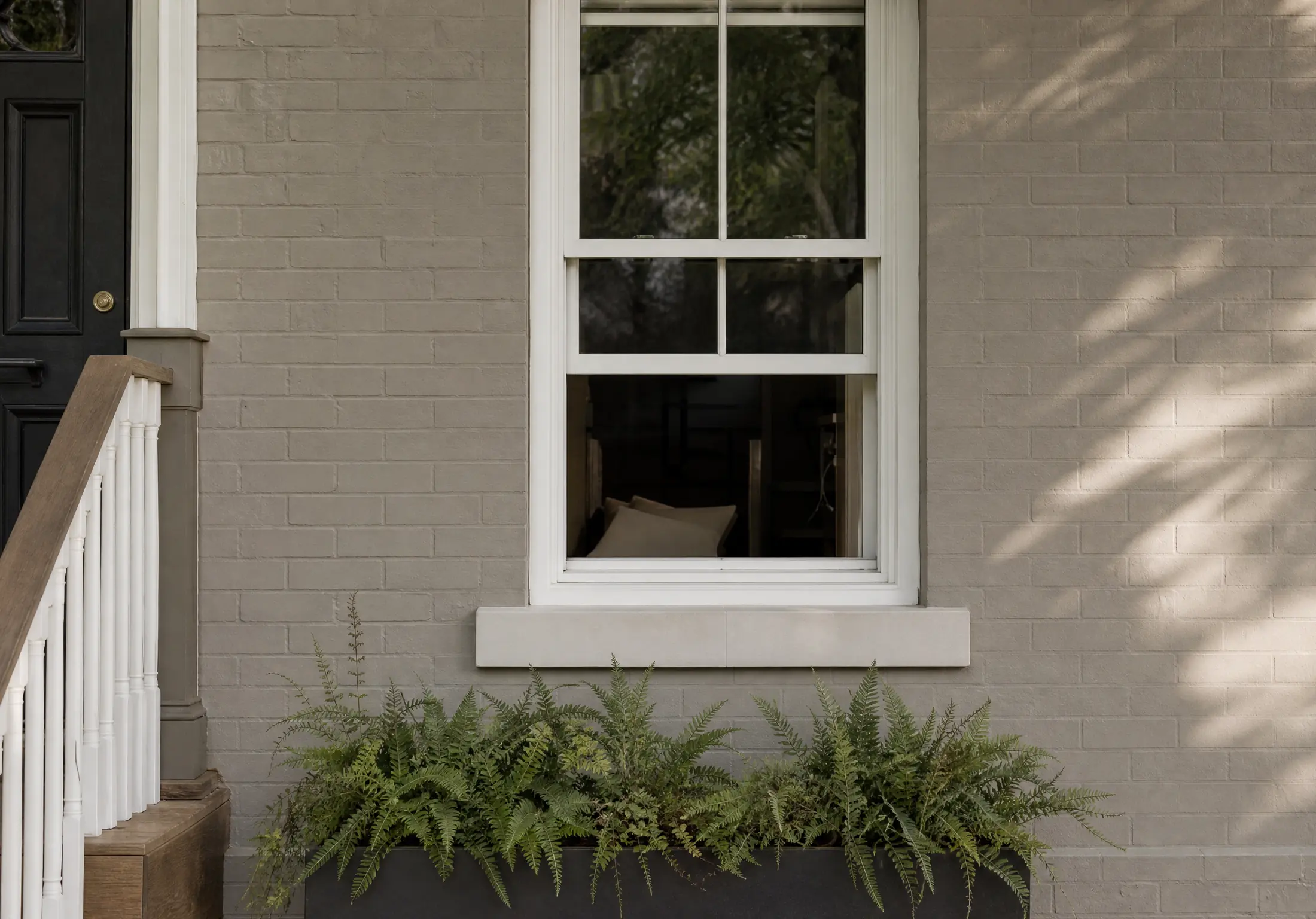
Products and finishes
Alkali-resistant masonry primer
Fresh mortar and patches are alkaline, which can break down ordinary primers. A masonry primer made to resist alkali seals the surface evenly, controls how much the brick absorbs, and gives the finish coats a uniform base over old brick, new patches and repaired joints.
Breathable acrylic masonry paint
The finish coats are a water-based masonry paint that lets vapour pass outward and is made to stay flexible through freeze and thaw. Zero‑VOC and low-odour versions are available if you are sensitive to smell or have people at home during the work.
Flat and low-sheen finishes
Most painted brick looks most natural in a flat or low-sheen finish, which hides the natural unevenness of the masonry and keeps the texture looking like brick. Higher sheens reflect light off every bump and joint, so they are usually saved for trim, lintels and railings.
Exterior enamel and metal primer
Trim, sills and steel lintels need a harder finish than the walls. Bare metal gets a rust-inhibiting primer, and wood and metal details get an exterior satin or semi-gloss enamel that sheds water and is easy to wipe clean around entrances and windows.
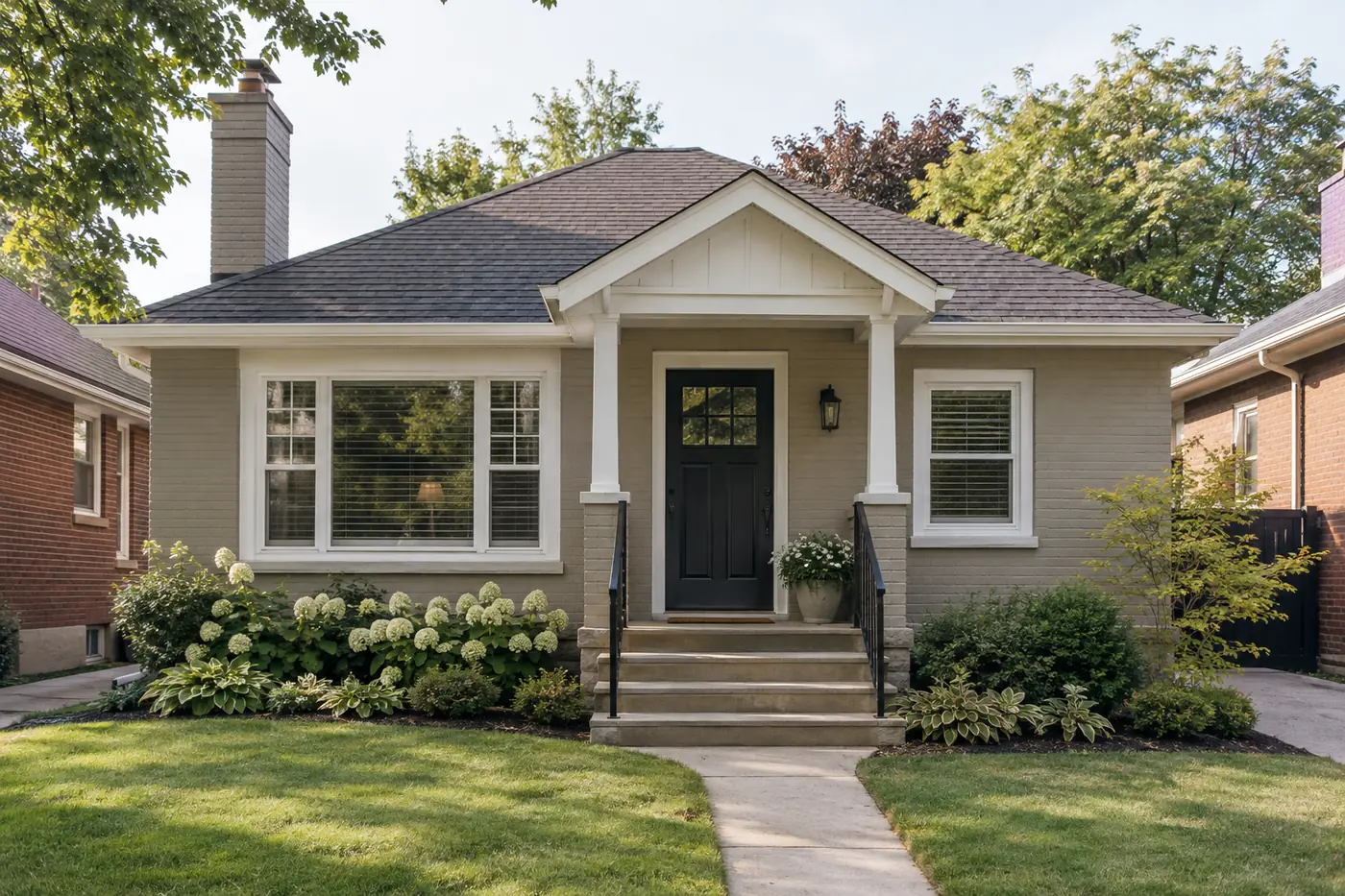
Service areas
Where we paint brick homes
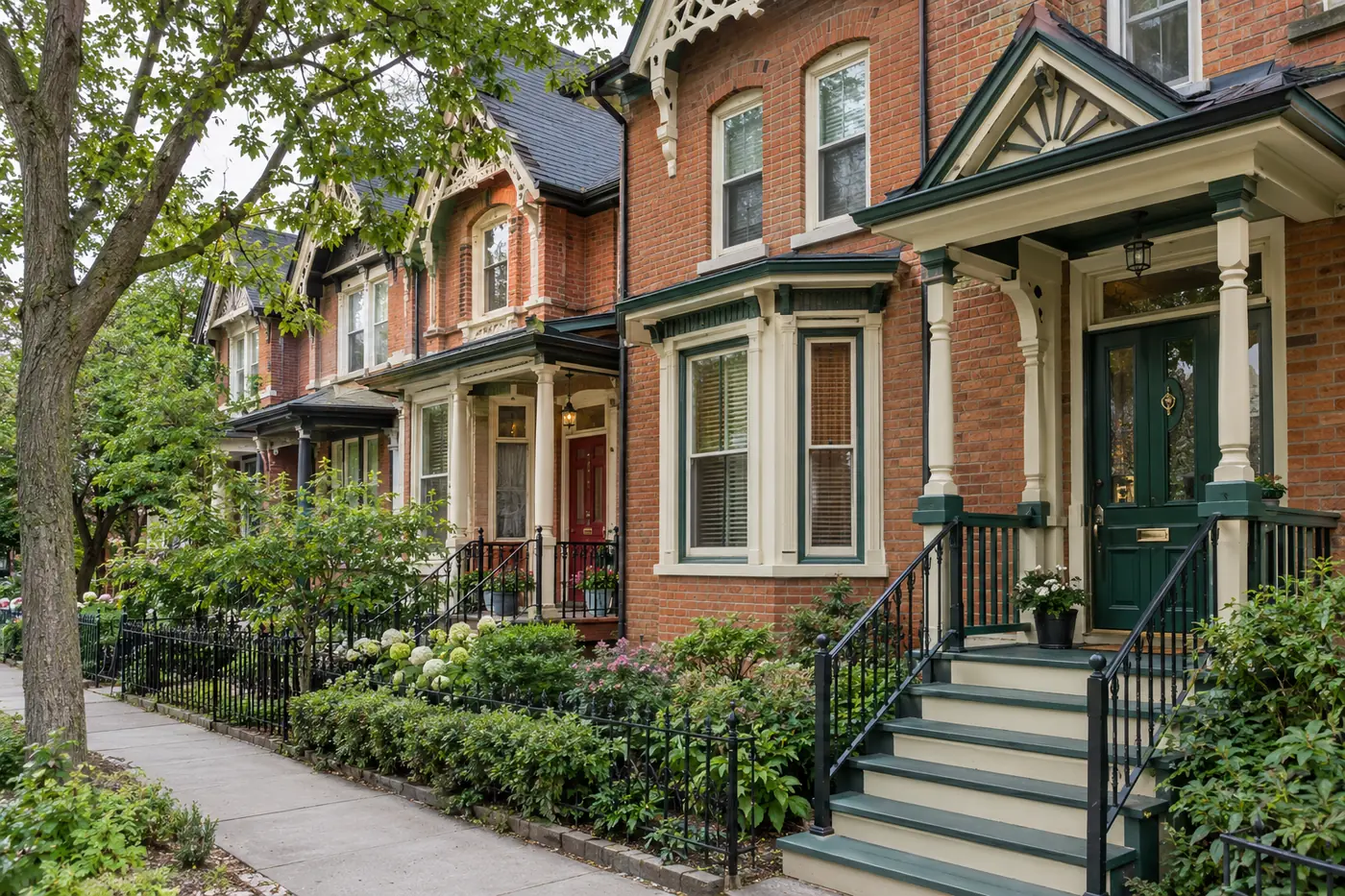
In Toronto, brick is the material of most older streets: Victorian and Edwardian semis and row houses in the east and west ends, postwar bungalows in North York and Scarborough, and the buff and red brick detached homes of the inner suburbs. Many have a century of repairs in their walls, so mismatched bricks and patched joints are common, and older soft brick needs gentle cleaning. Narrow side yards and shared walls on semis also shape how access and protection are planned before the first wall is washed.
Beyond the city, brick fronts are standard on subdivision homes in Peel Region, where Brampton and Mississauga streets often have brick across the front and around the garage. In York Region and Halton Region, larger two-storey houses mean higher walls and more trim. Older town centres in Durham Region, such as Whitby and Oshawa, have century brick alongside much newer builds. The method is the same everywhere: inspect, clean, dry, repair, prime and coat, with the scope set out on your written quote.
Brick in this climate
Frost, older brick and what paint has to handle
Winters here are hard on masonry. Brick soaks up rain and snowmelt, and when that water freezes inside the face it expands and can push off flakes of brick, which is the spalling you see on older walls. A coating that seals the brick makes this worse, because water that gets in through cracks or from inside the house cannot get out. That is why breathable masonry paint matters more here than in milder places, and why walls with active spalling are dealt with before they are painted at all.
Painting brick is outdoor work that needs dry walls and mild temperatures. Primer and paint each have a minimum air and wall temperature printed on the can, both while they go on and overnight while they set, so here the work is generally booked between late spring and early fall. Mornings with dew and evenings that turn cold shorten the working day in the shoulder seasons. If rain comes in, the schedule moves, because brick that has just been soaked needs time to dry again before primer can go on.
Much of the brick on older city streets is soft and laid in lime mortar, which is more vulnerable to harsh cleaning and sealing coatings than modern brick. Some streets also sit in heritage conservation districts, where changes to a front facade can need approval before work starts. If your house is in one of these areas, check with the City first; we can give you the colour and product details an application asks for. Brick that has never been painted is a bigger decision than a repaint, since it cannot easily be returned to bare brick.
- Look for damp patches, spalling or white salt staining on your walls
- Check whether your street is in a heritage conservation district
- Decide whether trim, sills and lintels change colour too
- Move plants, furniture and hoses back from the walls before work starts
- Book the work for the drier, milder months, not early spring
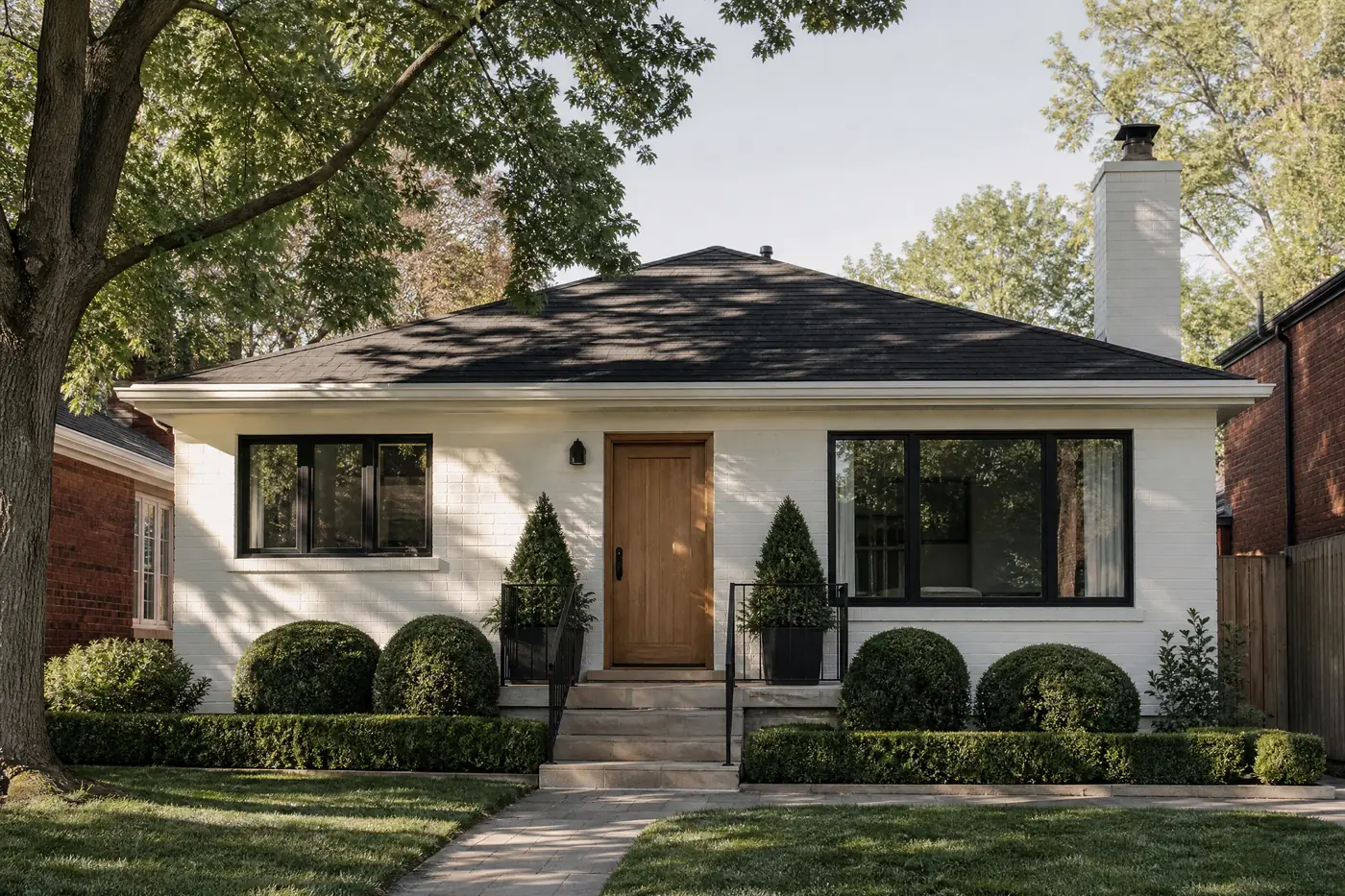
What changes the price of brick painting
The size of the walls is the starting point, but height and access often matter as much. A bungalow can be painted from ladders, while a three-storey semi with a tight side yard may need staging. The condition of the brick comes next: walls with heavy efflorescence, failing old paint or many cracked and open joints take more preparation. A colour change from dark red brick to a pale shade can also need more coverage than a repaint in a similar colour.
Details add up too. Each window opening, sill, lintel and length of trim is finished separately, and porches, piers and chimneys add their own surfaces. Brick that has never been painted takes more primer than a wall that already carries a sound coating. For a rough planning range, our painting cost calculator is a good start. The free, itemized written quote after a visit then lists every wall and detail, so you can adjust the scope before work begins.
Price it before anyone visits
Pick the rooms and the work in our cost calculator for a ballpark range in about a minute.
Then ask for a free quote: written, itemized and free to change before work starts.
Projects
Recent exterior brick painting projects
- Brick
- Downtown Toronto
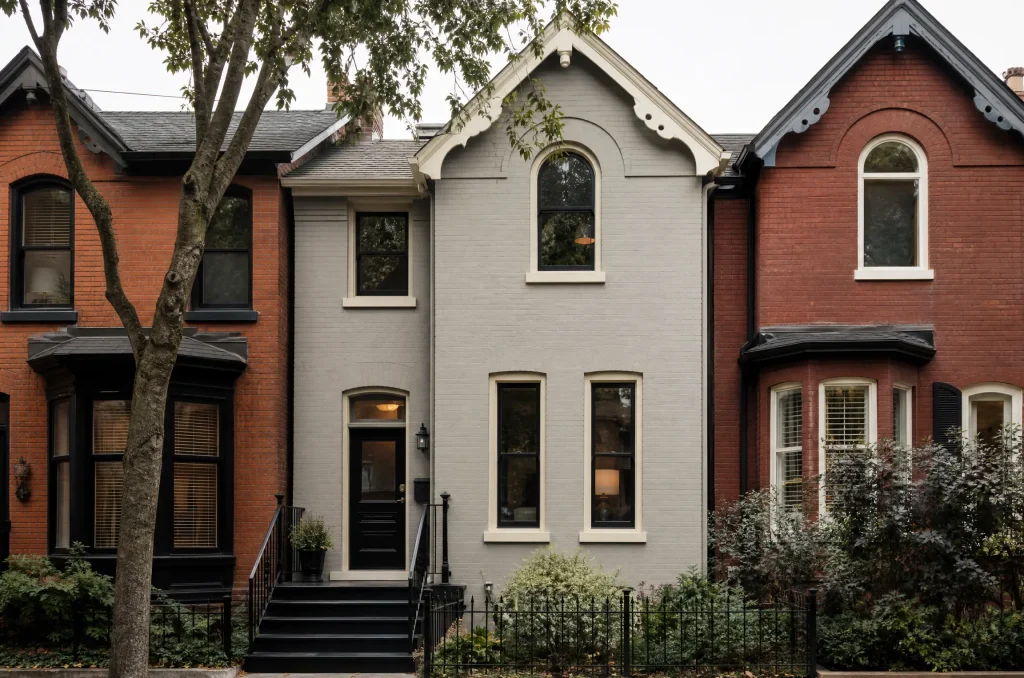
Peeling painted brick restored on a Cabbagetown Victorian row house
A Victorian row house in Cabbagetown: blistered paint wet-scraped by hand and worn joints brushed out, then coated in breathable mineral paint, deep brick red.
- Brick
- Etobicoke
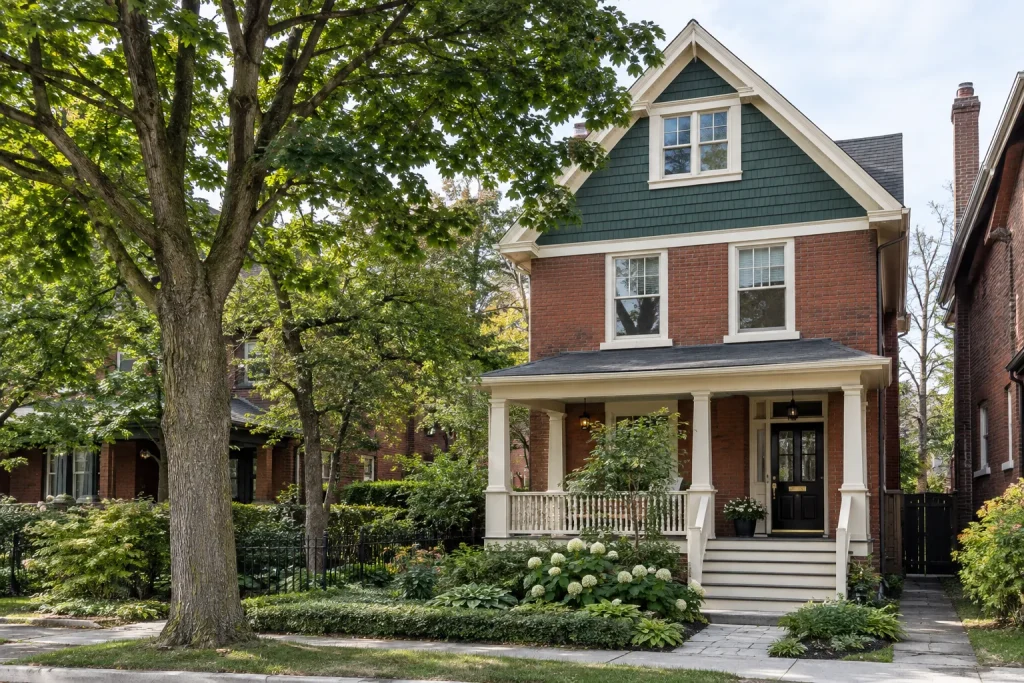
Mismatched addition brick stained to blend on a Kingsway home
A brick home in The Kingsway: orange addition brick cleaned and tones tested, then stained brick by brick to the original brown, joints tinted buff.
- Brick
- East York
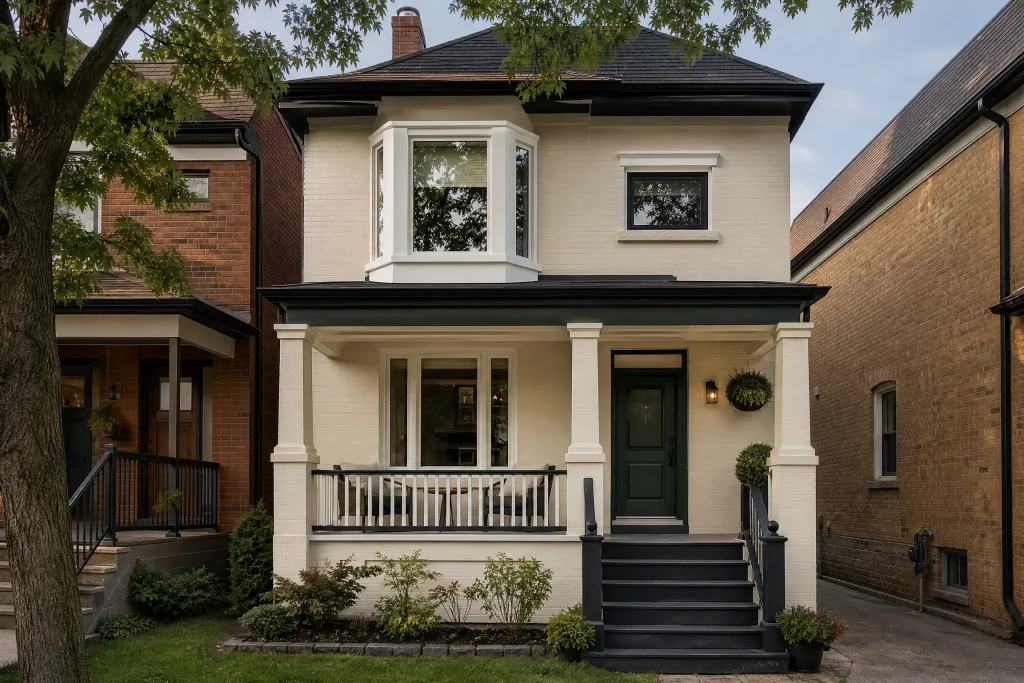
Chalky painted brick on a Pape Village semi refreshed in cream
A painted brick semi in Pape Village: chalky paint washed and loose flakes scraped, chalk bound with primer, then recoated in cream with black railings.
Resources
Painting Guides and Resources
- Guide
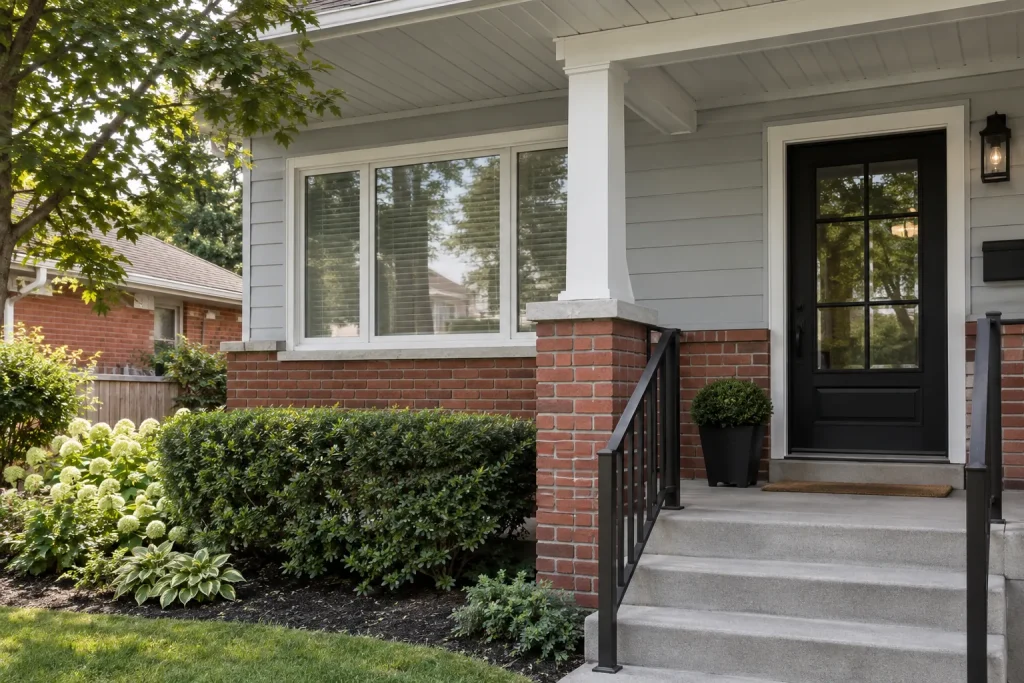
Painting aluminum siding or brick: what’s involved and when it makes sense
Many Toronto homes have aluminum siding, brick, or both. What painting each one involves, the questions to ask before you start, and when painting is the right call.
- Guide
When to paint your house exterior in Toronto
Temperature, humidity, dew and rain all decide how well exterior paint cures. How to pick the right season, and the right days, for an exterior repaint in Toronto.
Is it a bad idea to paint brick?
Not when it is done with the right products on sound, dry brick. Problems with painted brick almost always come from ordinary film-forming paint that traps moisture, or from painting over walls that are already damp or spalling. A breathable masonry primer and paint let water vapour escape. The real consideration is that painting brick is a long-term choice: once coated, the wall will need recoating over time and cannot easily go back to bare brick, so we talk that through at the visit.
Can brick that is already painted be repainted?
Yes. Old paint is checked for adhesion, and anything loose, flaking or blistered is scraped and wire-brushed off. The wall is then washed and bare patches of brick are spot-primed. If the old coating is a non-breathable paint, we discuss whether it can stay or should come off where moisture is a problem. Two finish coats of masonry paint then go on over the sound base, and the colour can change at the same time.
Do you repair cracks and mortar before painting?
Hairline cracks and small open joints are filled with masonry patching compound before priming, and those repairs are listed on your quote. Larger problems, such as loose bricks, deep spalling or walls that need full repointing, are a job for a mason. We point them out at the visit so they can be fixed first, because painting over failing masonry only hides the problem until it shows through again.
Do you spray or roll brick walls?
Both, depending on the wall. Brick has a rough face and recessed joints, so a roller alone can leave the joints thin. On large, open walls the paint is often sprayed and then back-rolled to push it into the texture. Around windows, doors and trim, edges are cut in by brush. Overspray is controlled by masking and by working with the wind, and neighbouring cars, fences and plants are covered.
Can you paint a brick chimney?
Often, yes, but chimneys are checked first. They take more weather than any other part of the house, and moisture problems tend to show up there before anywhere else. If the crown is cracked, the flashing is leaking or the brick is spalling, those repairs come first. A sound, dry chimney can be painted in the same colour as the walls or in a contrasting shade.
What do I need to do to get my house ready?
Not much. We handle the washing, repairs, masking and covering. It helps if you move patio furniture, planters, barbecues and hoses away from the walls, trim back shrubs that touch the brick, and keep windows on the work side closed while washing and spraying are under way. If you have pets, keep them inside during work hours. We let you know which walls are planned for each day.
Which areas do you cover for brick painting?
Brick houses anywhere in the city are within reach, as are those in the Peel, York, Halton and Durham suburbs. From our base at 18 King St E, we have been painting houses in the city and its surrounding towns since 2010. Send us a few photos of your walls, or book a visit, and we will tell you what the brick needs before you commit to anything.
Can the trim and sills be done at the same time?
Yes, and it usually makes sense to plan them together, since the colours need to work as a set. Window trim, sills, lintels and the brick porch piers can all be included on the same quote. Each detail gets the primer that suits its material, whether steel, stone, concrete or wood, then a finish that either matches the new wall colour or stands apart from it, and every item appears as its own line.
Free quotes across the GTA
Thinking about painting your brick?
Send us a few photos of the house or book a visit. We will look at the brick, the mortar and the trim, and give you a free, itemized written quote.