
Most people spend weeks choosing a colour and about ten seconds choosing the sheen. That is a shame, because sheen decides how a wall looks in daylight, how it hides the small dents every house has, and how well it stands up to a wet cloth. The same colour in matte and in semi-gloss can look like two different paints.
This guide explains what sheen actually is, how the common finishes compare, and which ones tend to work in each room of a typical Toronto house or condo.
What sheen means
Sheen is how much light a dried paint film reflects. A flat or matte paint scatters light, so the surface looks soft and even. A glossy paint bounces light back, so the surface looks brighter and harder, and it shows more of what is underneath it.
Two things follow from that, and they pull in opposite directions:
- Higher sheen is easier to clean. A smoother, harder film lets you wipe off fingerprints and splashes without leaving a dull patch.
- Higher sheen shows more flaws. Patches, roller marks, nail pops and slightly wavy drywall all catch the light. On an old plaster wall, a glossy finish can make a sound surface look rough.
Choosing a sheen is mostly a matter of deciding which of those matters more in a given room.
The common finishes, from flat to gloss
Manufacturers name their finishes differently, and one brand’s eggshell can be another brand’s low-sheen satin. Treat the names below as a scale, and look at a painted sample before you commit.
Flat and matte
The lowest sheen. Matte hides surface imperfections better than anything else and gives colour a rich, chalky depth. Traditional flat paint marks easily, but many current matte lines are made to be washable, so ask about the specific product rather than ruling matte out for busy rooms.
Eggshell
A slight glow, a little easier to wipe than matte, and still forgiving on imperfect walls. Eggshell is a common choice for living spaces where you want a soft look but expect the odd scuff.
Satin
A noticeable, pearly sheen. Satin cleans well and handles humidity better than the flatter finishes, which is why it shows up in kitchens, bathrooms and kids’ rooms. It is less forgiving of patched or uneven walls, so preparation matters more.
Semi-gloss and gloss
Hard, shiny and very easy to clean. These finishes are mostly used on trim, doors, cabinets and railings, the parts of a house that get handled, kicked and wiped. On a large wall, they highlight every bump.
Room by room
There are no fixed rules, but these pairings work in most homes.
Ceilings
Flat or a dedicated ceiling paint. Ceilings are lit at a low angle by windows and pot lights, which exaggerates any shine and any patch. A flat finish keeps them quiet. Bathrooms are the usual exception: a ceiling paint made for humid rooms, or a satin, copes better with steam.
Living rooms, dining rooms and bedrooms
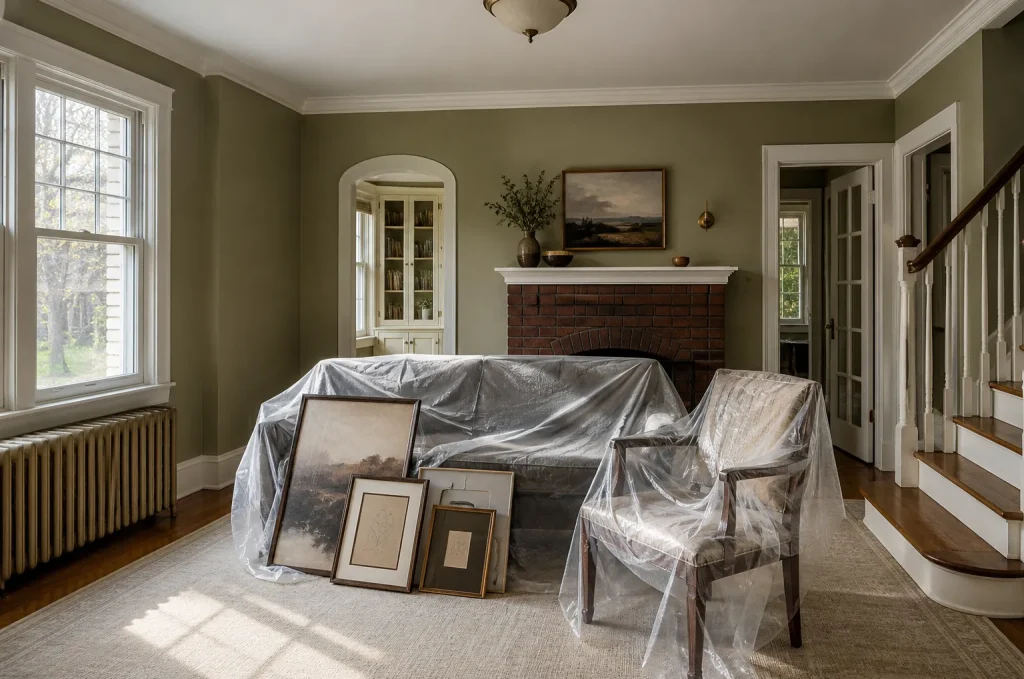
Matte or eggshell. These rooms have the largest wall areas and the most furniture shadows, so a low sheen hides more. If you have young children or pets, a washable matte or an eggshell gives you some room to wipe.
Hallways and stairwells
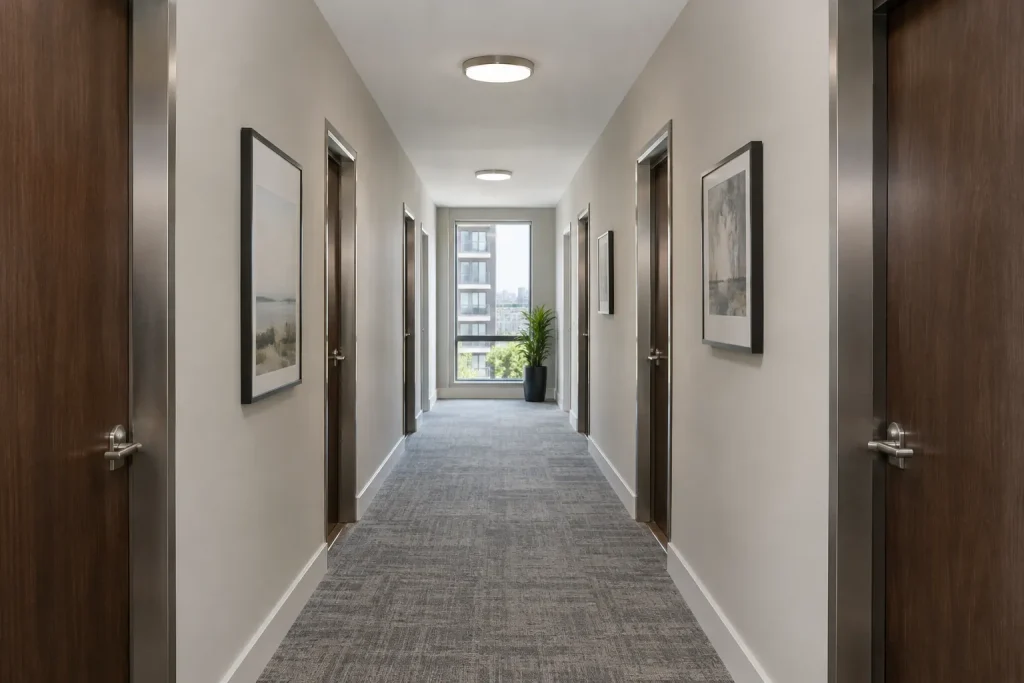
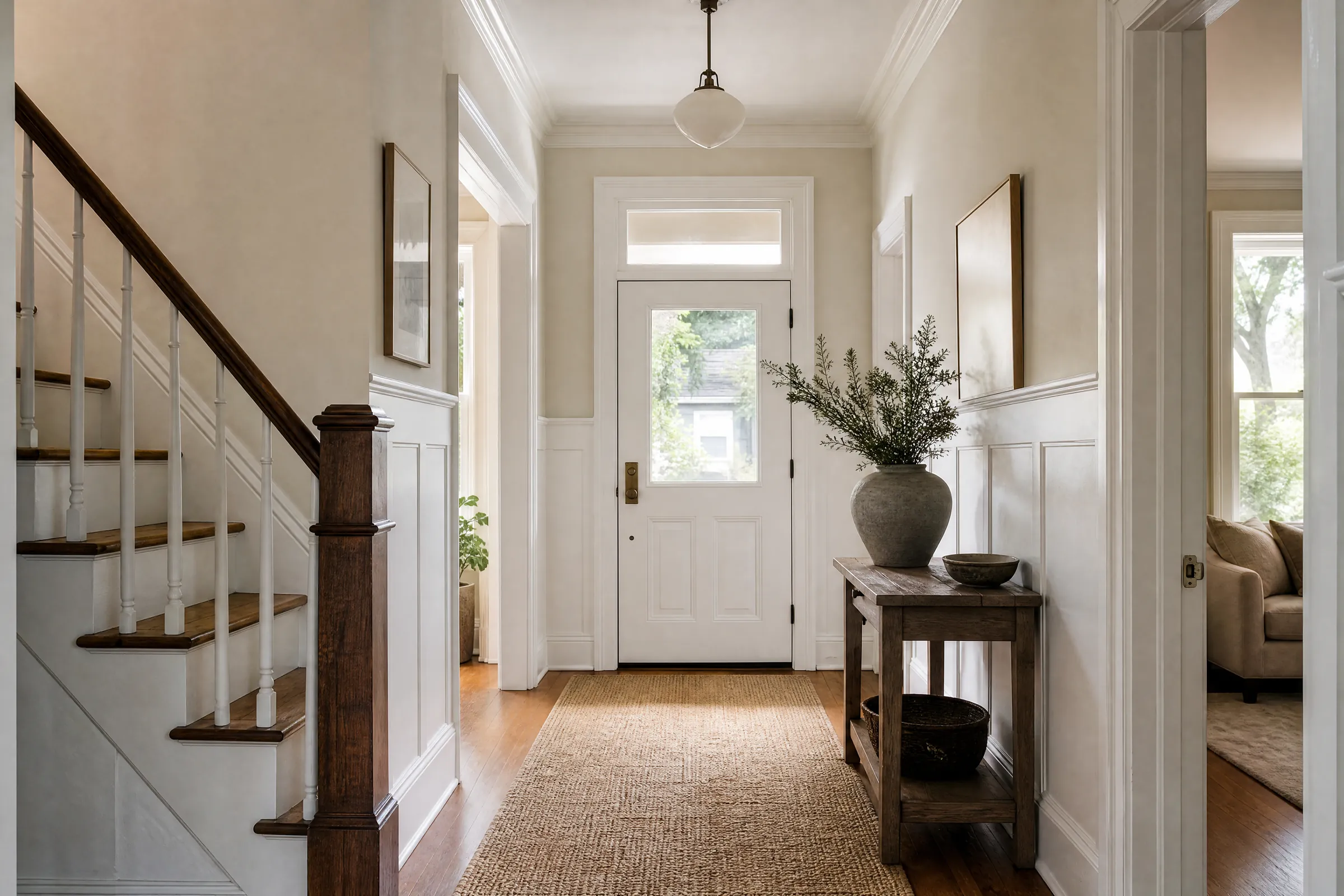
Eggshell or a scrubbable matte. Hallways take bags, hands, strollers and boots, and the walls are close enough to touch. A finish you can clean pays off here, but a stairwell wall is also long and lit from the side, so going too shiny will show every joint.
Kitchens
Satin or a washable matte made for kitchens. Grease and steam are the main enemies, and a finish that can be wiped down without burnishing is worth more than a perfectly flat look. Behind the stove and around the sink, the easier the cleaning, the better.
Bathrooms
Satin, or a bathroom-specific paint with mildew resistance. Humidity is the main problem, especially in bathrooms without a strong exhaust fan. Whatever the sheen, good ventilation does more for a bathroom finish than the label on the can.
Kids’ rooms and playrooms
Eggshell or satin, or a scrubbable matte if you prefer a flatter look. Crayon and sticky hands are a fact of life, and you want to be able to clean a wall without repainting it.
Basements
It depends on the space. A finished basement used as a family room can follow the living room rule. A laundry or utility area does better with satin, which handles moisture and cleaning.
Trim, doors and railings
Semi-gloss is the usual choice, with satin as a softer option if you do not like a lot of shine. Trim and doors take the most contact in the house, and a harder finish keeps them clean and protects the edges. Contrast also matters: a higher sheen on the trim than on the walls gives a crisp line where they meet.
Cabinets
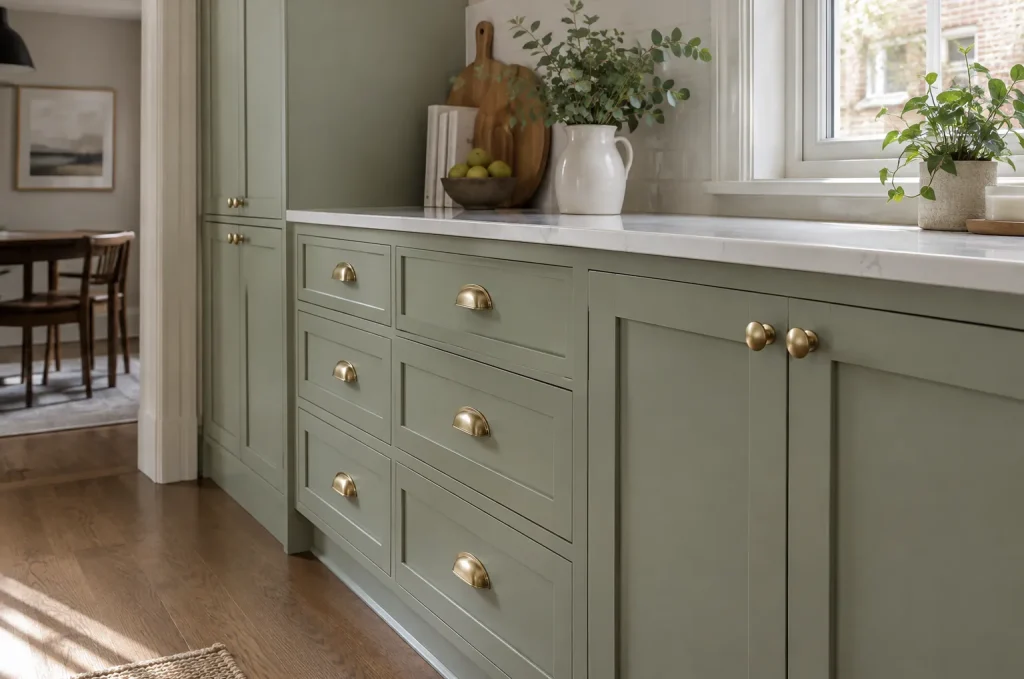
Semi-gloss or satin in a product made for cabinets or furniture. Cabinet paint has to cope with constant handling, so the type of paint and the preparation matter as much as the sheen. Our article on painting versus replacing kitchen cabinets goes through that process in detail.
Things that change the answer
The condition of your walls
If a room has a lot of patching, old plaster or a wavy drywall finish, lean flatter. If the walls are new and smooth, you can go a step up in sheen without regret. Repairs that are not primed can also “flash”, showing as dull or shiny spots through the finish, which is why patched areas are spot-primed before the finish coats.
Light
A room facing a big window or lit by pot lights close to the wall will show sheen more than a dim room. Look at a sample at the time of day you use the room most.
Colour
Dark, saturated colours show sheen differences, touch-ups and scuffs more than light colours. A deep navy in a high-traffic hallway needs a durable product; a white bedroom ceiling does not.
Touch-ups
Lower sheens touch up more invisibly. A touch-up on a semi-gloss wall often shows as a patch of different shine, while the same touch-up on matte usually disappears.
Sample before you decide
The most reliable way to choose is to see the colour and sheen on your own walls, under your own lighting. Paint a large sample, look at it in the morning and in the evening, and look at it from an angle as well as straight on.
All Painting offers a free colour consultation with real sample pots, so you can compare colours and finishes in the room before anything is booked. Our interior painting service covers walls, ceilings, trim and doors, with a minimum of two coats and Zero‑VOC or low-odour paints available if you are sensitive to smell. If your walls need patching first, our drywall repairs page explains how dents and cracks are filled and sealed before any colour goes on.
Ready to pick your finishes?
If you are planning a repaint and want help choosing colours and sheens, contact All Painting and ask for a quote. Quotes are free and itemized in writing, and every surface, colour and sheen is listed in writing before work starts.