
A multi-tenant office building downtown
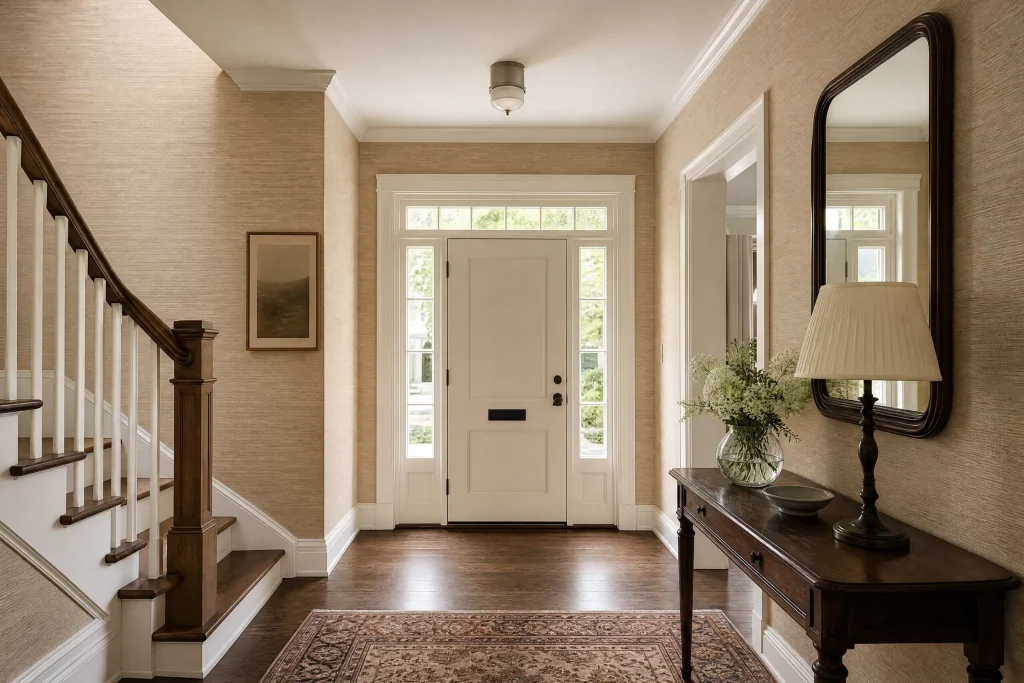
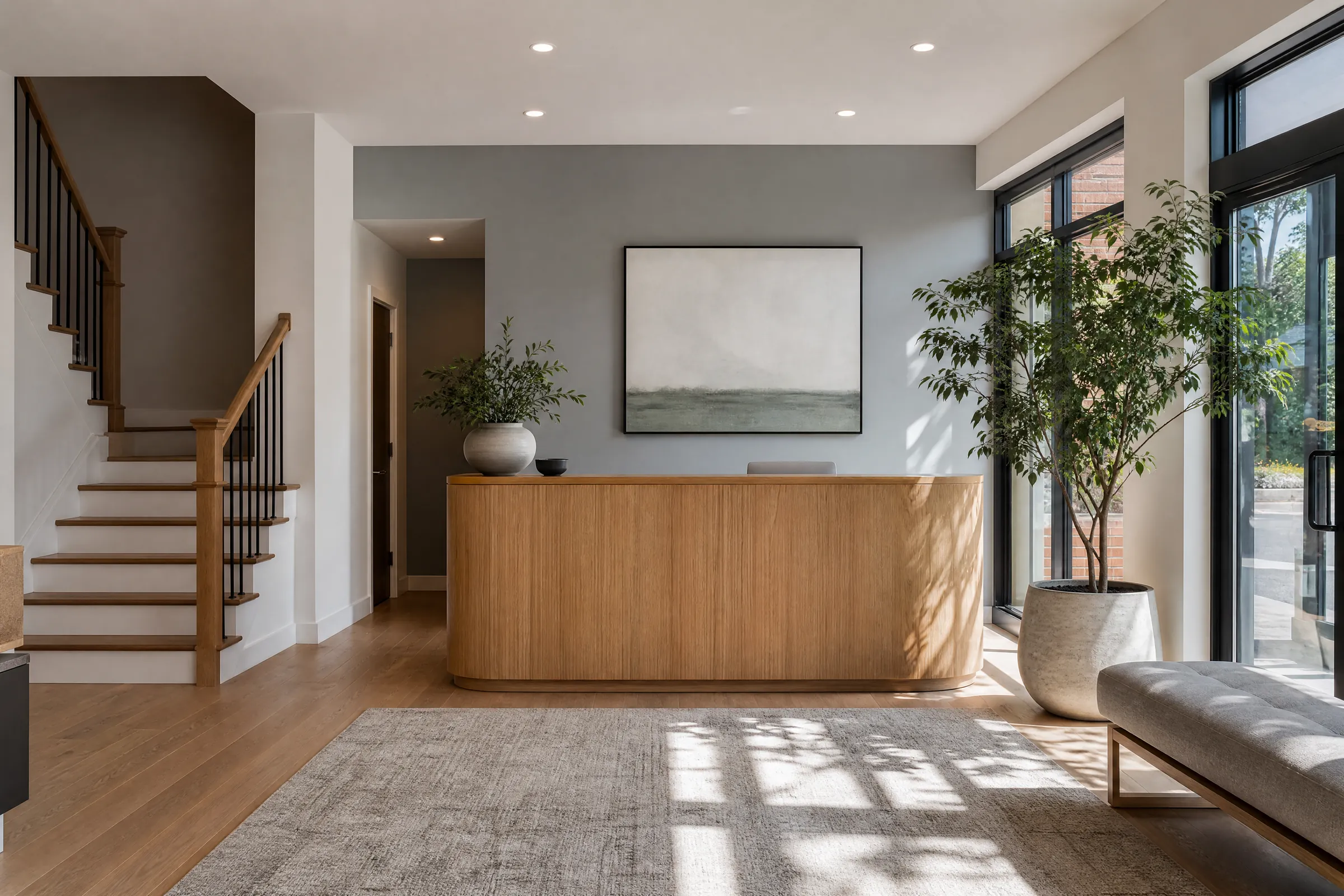
Downtown Oshawa has a working mix of shops, offices and business units, and this building is one of its mid-sized office blocks: several floors of tenants above a ground-floor lobby where brass elevator doors face the entrance, enclosed exit stairwells, and a parking level below grade for tenants. The goals for the common areas were plain: get rid of the lobby’s tired vinyl wallcovering, clean up the stairwells, and deal with the peeling paint on the parking level before another winter of salt.
Tenants keep office hours, so almost everything here was done on weeknight evenings and over weekends, when the lobby was quiet and the few cars left on the parking level could be covered in plastic sheeting.
What had gone wrong on each surface
The lobby wallcovering
A patterned vinyl covered the lobby walls. Its seams had lifted in several places, the corners by the entrance were torn from deliveries, and the pattern dated the whole space. Vinyl wallcovering can sometimes be painted over, but with open seams and torn corners the paint would only have shown every defect, so stripping it was the honest choice.
The stairwells
The stairwells had painted concrete block walls marked by shoulders, bags and the odd bicycle, and steel handrails and stringers worn down to bare metal where hands and feet hit them most. A few spots of rust had started on the stringers near the ground-floor doors, where people track in wet snow.
The parking level
This had the worst failure. A previous coat on the walls near the entry ramp was coming away in sheets, a sign it had gone on over concrete that was damp or dirty. Further in, the walls were dull grey and heavily marked, and the columns had no colour at all.
Prep work, area by area
Stripping and resetting the lobby walls
- Notices about evening access went up in the lobby beforehand, and we laid protection board across the lobby floor and wrapped the brass elevator doors, their frames and the call plates in low-tack film.
- The vinyl face layer was peeled off dry, leaving its paper backing on the wall. The backing was soaked with a wallpaper remover solution and scraped off with wide blades, working carefully so the drywall paper underneath was not gouged.
- Adhesive left on the walls was washed off with warm water and remover, then rinsed. Old paste left behind under latex paint tends to crack and craze, so this rinse was repeated until the wall no longer felt slick.
- Where the drywall face paper had been scuffed or lifted, the area was sealed with a shellac-based primer, which locks down any remaining adhesive and stops new compound from bubbling the paper.
- A thin skim coat of compound was then spread over the damaged areas, sanded and spot-primed, and the whole lobby got a coat of drywall primer so the finish would dry evenly over old and new surfaces.
Stairwell walls and steel
- Each stairwell was worked top to bottom, with one kept open at all times as an exit and signs posted at every landing door.
- Block walls were washed down with a degreasing cleaner, and the deeper scrapes were filled with a masonry patch.
- Handrails and stringers were scuff-sanded; the rust spots were wire-brushed to sound metal and spot-primed with a rust-inhibiting primer.
Testing and preparing the parking level
- All loose and flaking coating near the ramp was scraped off, and the edges of the remaining paint were sanded back so they would not show through as ridges.
- We checked the sound paint further in for adhesion by pressing tape firmly onto a scored area and pulling it off quickly. It stayed put, so that paint could be cleaned and recoated rather than stripped.
- To check for moisture coming through the concrete, we taped small squares of plastic sheet to the walls near the ramp overnight. They came up dry, which told us the earlier peeling was from poor prep rather than ongoing seepage.
- Every wall and column then had a scrub with concrete cleaner, a rinse and a drying period under fans, and bare concrete was primed with a masonry primer that tolerates the alkali in new and old concrete.
Finish coats on each surface
Lobby
Once the primer had dried, the lobby walls were cut in by brush around the brass frames, the directory and the light switches, then rolled with two coats of an eggshell acrylic in a warm taupe. We let each coat dry for the manufacturer’s stated recoat time before going on, which in a lobby with the heat turned down for the weekend meant watching the walls rather than the clock. The ceiling was in good shape and only needed a coat of flat white over a few water marks that were first sealed with a stain-blocking primer.
Stairwells
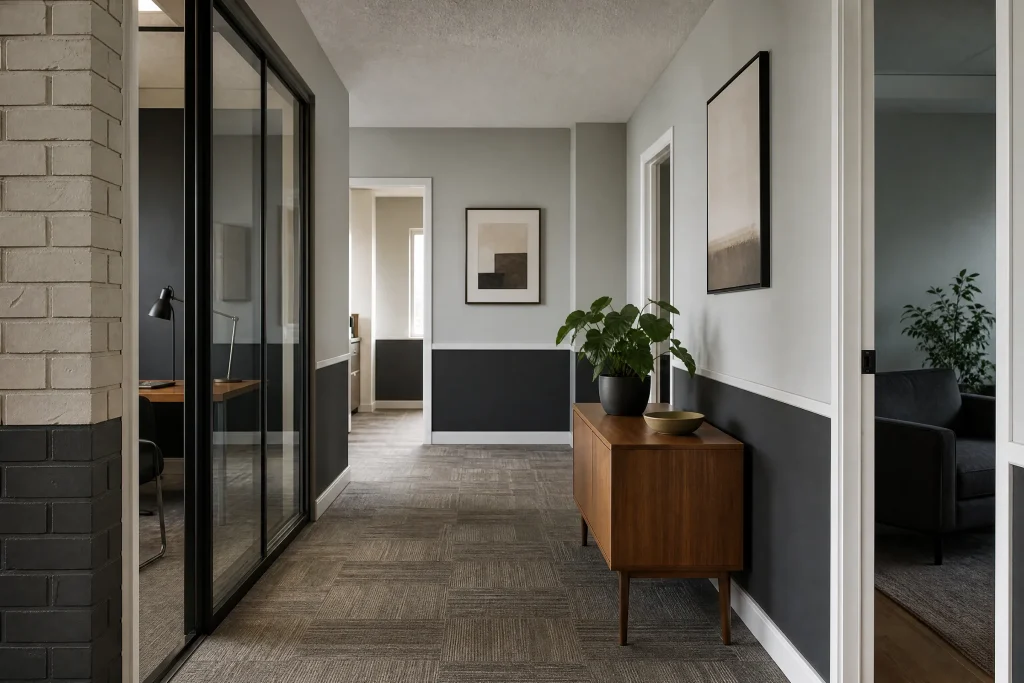
The block walls were rolled with two coats of a light grey acrylic in satin, a sheen that wipes clean easily in a space where people brush against the walls. The handrails and stringers were brushed with two coats of an industrial enamel in a dark charcoal, chosen so wear from hands and shoes would not show quickly.
Parking level
Every wall and column took two coats of a waterborne concrete acrylic, sprayed with an airless rig: white on the upper part, and a bright yellow band from the floor to about head height, so the columns and wall bases stand out to drivers. Waterborne products kept the odour down in the stairwells and lobby above, and fans moved air through the level while each coat dried.
Choosing the lobby colour
With the patterned vinyl gone, the owner wanted something calm that would not date as quickly. Through our free colour consultation, we brought sample pots of several warm neutrals and brushed large swatches onto the primed lobby walls next to the elevator doors. The lobby gets daylight only through its glass entrance doors, so we looked at the swatches once in the late morning with the door light at its strongest and once in the evening under the lobby’s own fixtures. Cooler greys looked flat beside the brass, and a pale beige looked washed out at night. The warm taupe held its depth in both conditions and makes the brass doors the focus of the room.
Handing the building back each morning
Tenants arrived every weekday expecting a usable building, so every evening shift ended with the lobby floor protection lifted and stored, film checked on the brass, the floor vacuumed and wet paint signs set out where needed. In the stairwells, drop cloths were removed so nothing could be tripped on in an emergency, and all tools and cans left the building or went into a locked room on site.
Upkeep for the owner
- Labelled touch-up cans for the lobby taupe, stairwell grey, charcoal enamel and parking yellow were left in the building’s storage room.
- Delivery carts are the main threat to the lobby corners. Clear corner guards beside the entrance are a simple way to protect the new walls.
- Have the parking level walls rinsed each spring to clear the winter’s salt from the yellow coating.
- If the stringers start showing bare steel again, sand and spot-prime those spots before rust sets in, then touch up with the enamel.
Why this approach works for downtown Oshawa buildings
Older commercial buildings in the core often carry wallcoverings and coatings from earlier renovations, and they sit through freeze-thaw winters with salt tracked in from the street. Working out what failed and why, rather than painting over it, is what keeps a repaint sound. Through our commercial painting service we schedule this kind of work for evenings and weekends so tenants keep their normal hours. All Painting has been at work in Toronto and the wider GTA since 2010, with many homes and businesses in Durham Region, and our painters in Oshawa work on shops, offices and rental homes alike.
To arrange a walk-through of your building, reach out here and you will get a written quote that itemizes each area.