
Choosing between solid vs semi transparent stain is one of the most consequential decisions a Toronto homeowner makes before a summer deck refresh, and it is one people almost always underestimate. The two finishes look similar in the can, but they behave completely differently once they hit pressure-treated pine, cedar, or an older GTA deck that has weathered a decade of freeze-thaw cycles and July humidity. Getting the solid vs semi transparent stain question right protects your boards, saves you money over a five- to ten-year horizon, and determines whether you will be recoating in two summers or seven. At All Painting, our crews stain hundreds of decks, fences, and railings across the Greater Toronto Area every warm season, and the same debate comes up on nearly every estimate. This guide walks through the real differences, the prep that actually matters, honest 2026 pricing, and how to pick the right product for your specific boards and exposure.
Before you buy a single can, it helps to understand that a deck stain is not simply paint for wood. Stains sit somewhere on a spectrum of pigment and film build, and where a product falls on that spectrum changes how it wears, how it looks, and how you will eventually have to maintain it. The solid vs semi transparent stain comparison is really a conversation about how much of the wood grain you want to see, how much UV protection you need, and how you want the deck to age. Let us break it down the way we would on a real GTA site walk.
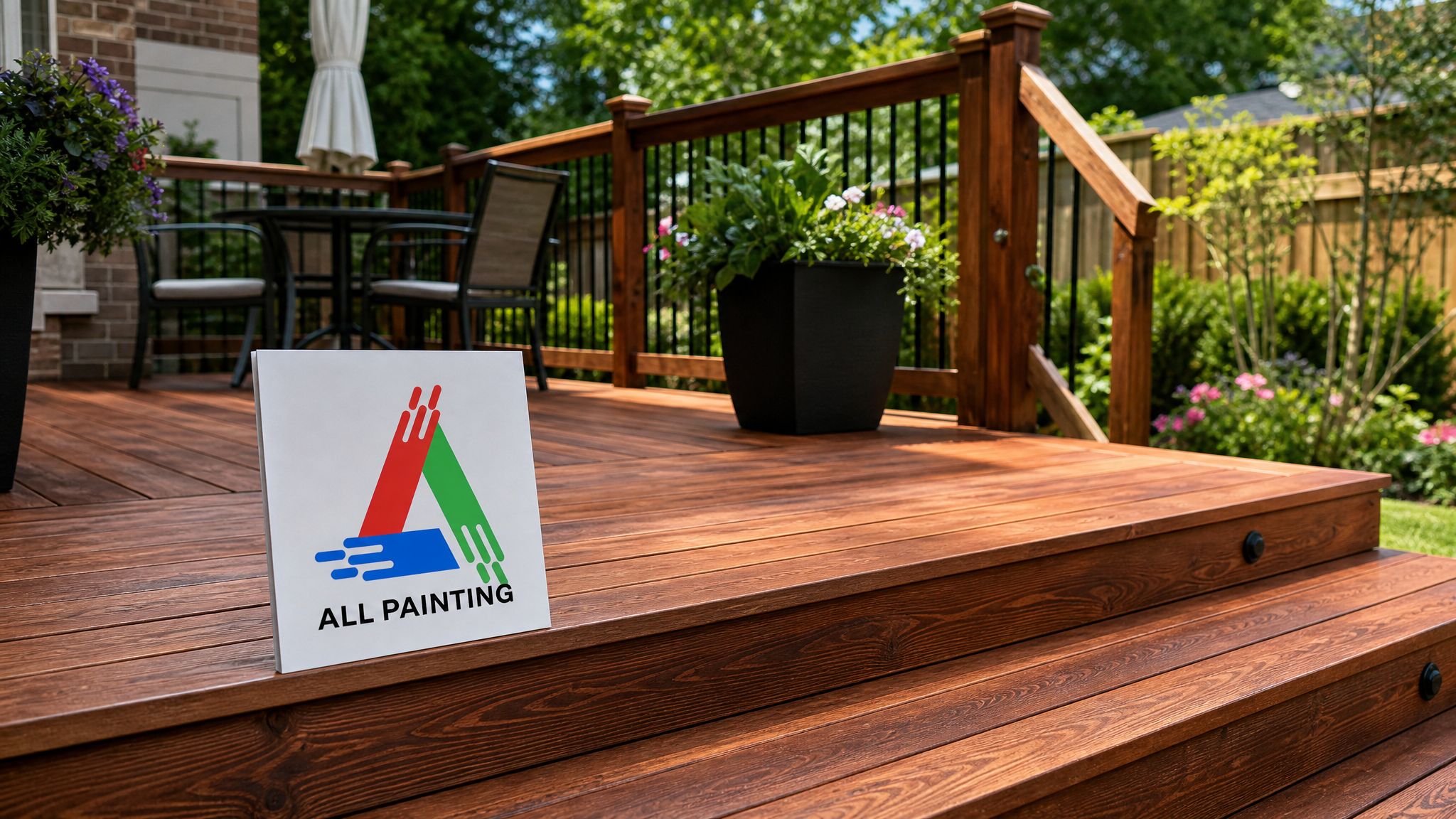
Solid vs Semi Transparent Stain: The Core Difference
The heart of the solid vs semi transparent stain decision comes down to pigment load and film build. A semi-transparent stain contains a modest amount of pigment suspended in a penetrating base. It soaks into the wood, colours it while still letting the grain, knots, and natural character show through, and leaves little to no surface film. A solid stain, by contrast, is closer to a thin exterior paint. It carries a heavy pigment load, hides the grain almost completely, and forms a durable film that sits on top of the boards. Both are legitimate choices, but they lead to very different maintenance lives.
Semi-transparent finishes are the classic “natural wood” look that most homeowners picture when they imagine a cedar or redwood deck. Because they penetrate rather than film, they tend to fade gradually and wear rather than peel, which makes recoating relatively painless. Solid stains deliver bold, uniform colour and the strongest UV and moisture protection, but because they form a film, they can eventually peel or flake if water gets underneath, and stripping a failed solid coat off a deck is genuinely laborious. When people ask us to settle the solid vs semi transparent stain argument in one sentence, we say this: choose semi-transparent when the wood is worth showing and you want easy upkeep, and choose solid when the wood is tired, mismatched, or you want maximum protection and colour that lasts.
| Characteristic | Semi-Transparent Stain | Solid Stain |
|---|---|---|
| Grain visibility | Grain and knots clearly show through | Grain hidden; opaque colour like thin paint |
| UV protection | Moderate; fades gradually | Highest; heavy pigment blocks sun |
| Film build | Minimal; penetrates the wood | Forms a surface film |
| Failure mode | Fades and wears thin | Can peel or flake if moisture intrudes |
| Recoat difficulty | Easy; clean and reapply | Harder; may need stripping or sanding |
| Best for | Newer cedar, quality wood, natural look | Older, weathered, or mismatched boards |
How Each Finish Performs on GTA Decks
Toronto and the surrounding GTA put deck finishes through a brutal cycle. Summers are hot and humid, with strong UV from June through August; winters bring repeated freeze-thaw that flexes boards and drives moisture into every check and end grain. That climate shapes how each finish holds up. A horizontal deck surface takes far more abuse than a vertical fence or railing, because it collects standing water, absorbs direct overhead sun, and gets walked on, dragged across, and rained on.
Semi-transparent stains on horizontal decking in the GTA typically look their best for two to four years before the colour softens and traffic lanes start to show. The upside is that when they wear, they wear evenly and thin, so a maintenance coat goes on cleanly after a wash. Solid stains on the same boards can last five to seven years on colour, but the film is more vulnerable on flat, water-collecting surfaces than it is on a fence. On vertical surfaces, both finishes last considerably longer because water sheds instead of pooling. This is exactly why many homeowners we work with land on a hybrid approach for their deck and fence staining project: a tougher solid or semi-solid on the deck floor and a semi-transparent on the railings and privacy fence where the wood grain adds warmth and the film risk is lower.
Exposure matters enormously. A shaded north-facing deck under mature trees holds any finish longer but is more prone to mildew and green growth. A fully exposed south- or west-facing deck bakes all afternoon and will chew through a semi-transparent coat faster. When our estimators assess a property, we factor in tree cover, sun orientation, board age, and wood species before recommending where each home should land on the solid vs semi transparent stain spectrum. The same logic guides our exterior painting recommendations, because decks, fences, siding, and trim all share the same harsh outdoor exposure.
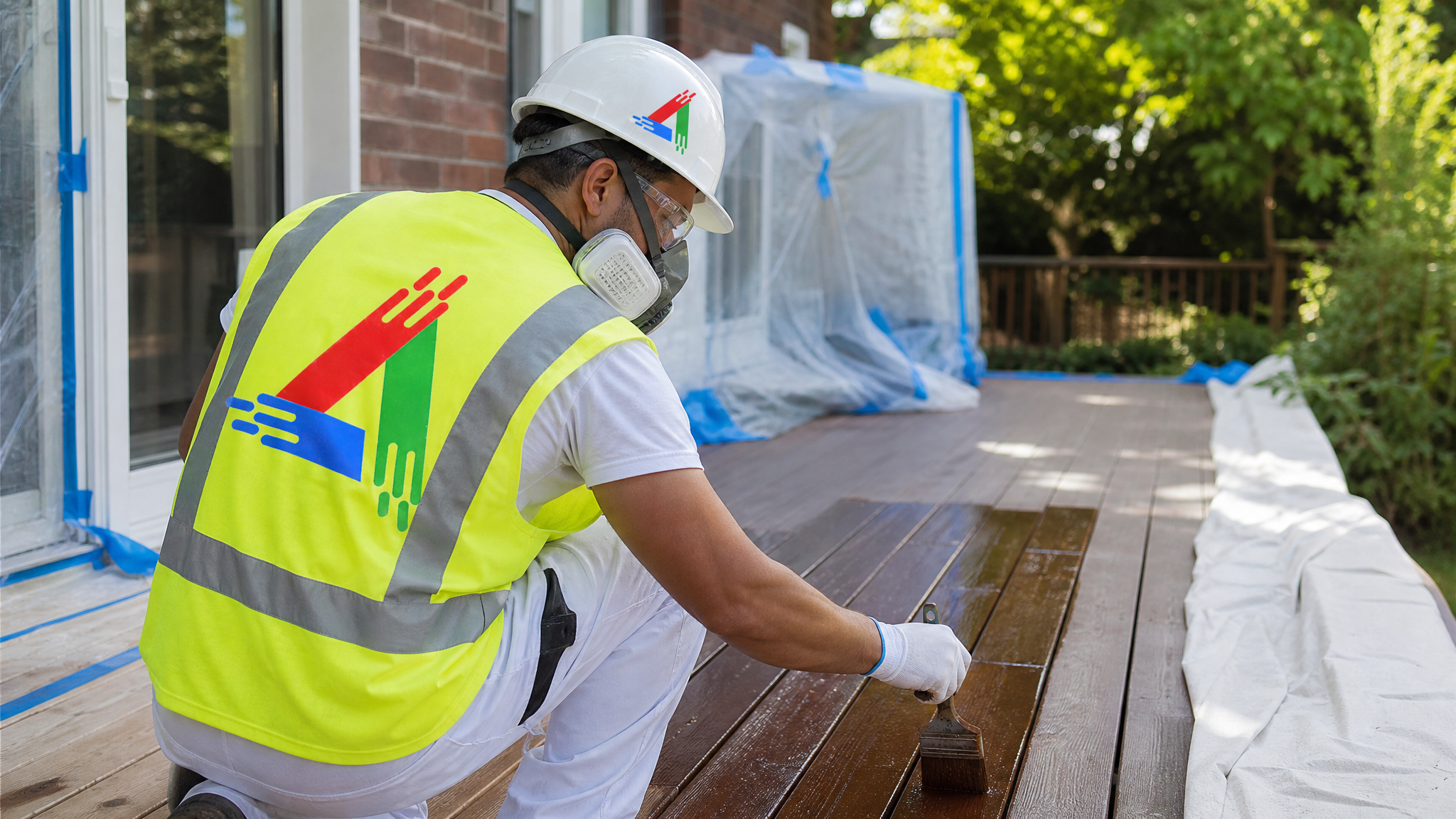
Prep Steps That Decide the Outcome
Here is the truth most product marketing skips: the finish you choose matters far less than the preparation underneath it. A meticulously prepped deck stained with a mid-grade product will outlast a premium stain slapped onto dirty, damp, or glossy boards every single time. Whether you go solid or semi-transparent, the prep sequence is what buys you those extra years. Our crews follow a disciplined routine on every deck, and it is the same discipline we bring to house painting projects across the GTA.
First, the deck is cleared and swept, and any protruding nails or lifted screws are reset. Next comes a thorough cleaning with a dedicated deck cleaner to lift dirt, grease, mildew, and greyed surface fibres. Where an old, failing film is present, we may need to strip or sand it back, especially before applying a new solid stain, because solid finishes need a sound surface to bond to. Brightening the wood restores its pH and opens the grain so the new stain penetrates evenly. Then, critically, the deck must dry fully. In GTA summer humidity, we look for boards to sit below roughly 15 percent moisture content, which usually means waiting 24 to 48 dry hours after washing. Staining damp wood is the single most common cause of premature failure we are called to fix.
Sanding rough or previously coated areas, spot-treating tannin bleed on cedar, taping off adjacent siding, and laying drop sheets over patios and gardens all follow. Only then does stain go down. This prep matters equally for solid and semi-transparent products, but solid stains are less forgiving of a poor surface because a film that cannot bond will peel. If your boards are badly weathered, splintering, or carry a patchy old finish, that condition often pushes the solid vs semi transparent stain decision toward solid simply because it hides the damage a semi-transparent finish would reveal.
| Prep Stage | What Happens | Why It Matters |
|---|---|---|
| Clear and inspect | Remove furniture, reset nails and screws | Prevents trip points and uneven coating |
| Clean | Apply deck cleaner, remove dirt and mildew | Stain cannot bond over grime or grey fibres |
| Strip or sand | Remove failing film, smooth rough boards | Solid stain needs a sound, bondable surface |
| Brighten | Neutralize pH, open the grain | Improves penetration and colour evenness |
| Dry | Wait 24-48 dry hours, verify moisture level | Damp wood is the top cause of early failure |
| Mask and protect | Tape siding, lay drop sheets | Keeps stain off patios, gardens, and walls |
Colour, Look, and Curb Appeal
Aesthetics drive a huge share of the solid vs semi transparent stain decision, and rightly so, because you look at your deck every day of the warm season. Semi-transparent stains showcase the natural beauty of wood. On quality cedar, they produce that rich, warm, grain-forward look that makes a backyard feel like a retreat. They come in tones from clear-ish honey and cedar through to rich walnut and grey, and because pigment is lighter, the wood’s own character always reads through. This is the finish of choice when you have invested in good boards and want them to show.
Solid stains behave more like exterior paint in terms of colour. They deliver flat, uniform, opaque colour in almost any shade, from deep charcoal and slate to classic barn red, taupe, or soft grey. They are the smart call when your deck is built from mismatched replacement boards, when the wood is stained or discoloured beyond rescue, or when you want the deck to coordinate tightly with your home’s trim and siding for a designed, cohesive exterior. Many homeowners updating their whole exterior colour scheme choose solid deck stain to match a fresh coat on their exterior brick painting or aluminum siding painting, tying the deck into the overall palette.
There is a middle option worth knowing about. Semi-solid stains sit between the two extremes, offering more colour and protection than a semi-transparent while still hinting at grain. For homeowners torn on the solid vs semi transparent stain question, semi-solid can be the practical compromise, particularly on a deck that is a few years old but not yet failing.
Cost, Timelines, and 2026 Pricing in Toronto
Budget is always part of the conversation. In 2026, professional deck staining in the GTA generally runs by square footage, with the finish type, board condition, and amount of prep driving the final number. The stripping and sanding required to switch from a failed solid stain to a fresh one, or to remove a peeling coat, is the single biggest cost variable. A clean recoat is far cheaper than a full strip-and-refinish. The numbers below reflect typical professional pricing for a standard residential deck; steep multi-level decks, extensive railings, and heavy prep push costs higher.
| Service Scope | Typical 2026 GTA Price Range | Notes |
|---|---|---|
| Semi-transparent recoat (clean deck) | $3.50 – $6.00 per sq ft | Wash, brighten, one to two coats |
| Solid stain application (clean deck) | $4.50 – $7.50 per sq ft | Heavier product, more coverage per coat |
| Full strip and refinish | $7.00 – $12.00 per sq ft | Strip old film, sand, brighten, restain |
| Fence staining (per side) | $2.50 – $5.00 per sq ft | Vertical surfaces wear slower than decks |
| Railings and spindles | Priced per linear foot | Labour-intensive detail work |
Timeline-wise, a typical single-level backyard deck is a two- to three-day job: one day for cleaning and prep, a drying window, then application. Solid stains often need the film to cure a bit longer before furniture returns, usually 24 to 48 hours before light foot traffic and longer before heavy use. Because summer is peak season across the GTA, we recommend booking early; July and August calendars fill quickly. If you are coordinating a deck refresh with interior work, our interior painting teams can run in parallel so your whole home project wraps in one window.
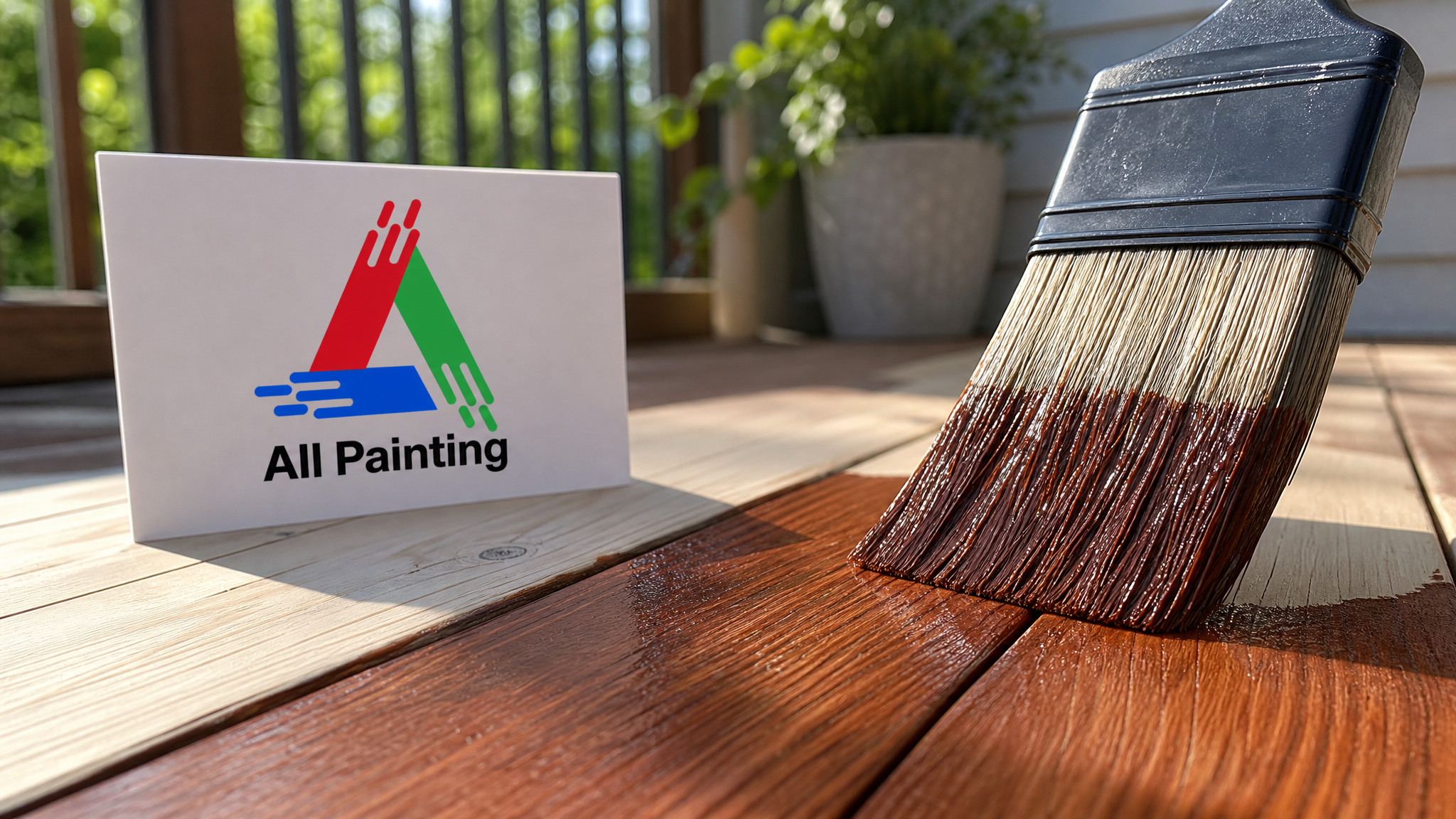
Which Finish Is Right for Your Deck?
By now the framework should be clear, but let us make it practical. Reach for a semi-transparent stain when your deck is built from quality wood in decent condition, when you love the natural grain, and when you value easy maintenance and are comfortable recoating every two to four years. Reach for a solid stain when your boards are older, weathered, mismatched, or previously painted, when you want maximum colour and UV protection, and when you would rather stretch to five to seven years between full refreshes and accept a more involved recoat when the time comes.
Consider a semi-solid or hybrid strategy when your deck falls in between, or when you want a durable film on the walking surface and a natural look on the railings and adjoining fence. And remember that the underlying wood, exposure, and prep quality influence longevity as much as the product tier itself. When homeowners cannot decide, we walk the deck with them, test the wood’s absorption, check the moisture, and make a recommendation grounded in that specific deck rather than a generic rule. The right answer to solid vs semi transparent stain is always the one that fits your boards, your exposure, and how you actually use the space.
The same expertise that guides deck decisions extends across our services. Whether you are staining a staircase, refreshing a fence, or updating your full exterior, the fundamentals of surface prep, product selection, and climate-appropriate application carry through. Homeowners in Mississauga and Oakville face the same GTA climate pressures on their decks as Toronto homeowners, and the same principles apply.
In the solid vs semi transparent stain debate, which one lasts longer?
Can I switch from semi-transparent to solid stain on my deck?
Does the solid vs semi transparent stain choice change how I maintain the deck?
Which finish shows the wood grain best?
Is solid stain better for older, weathered GTA decks?
When is the best time in Toronto to stain a deck?
Get Expert Advice on Solid vs Semi Transparent Stain Today
Still weighing the solid vs semi transparent stain decision for your own backyard? The team at All Painting will walk your deck, assess the wood, exposure, and condition, and recommend the finish that gives you the look and lifespan you want. From cleaning and prep through to the final coat, our crews handle deck, fence, and railing staining across the GTA with the same care we bring to every project. Read what your neighbours say on our reviews page, or learn more about us and our approach.
Call us today at (416) 710-4224 or request a free quote to get started.
All Painting proudly serves Toronto, Mississauga, Oakville, Markham, Burlington, Hamilton, Richmond Hill and the GTA.