
A lakeside home in Jackson’s Point
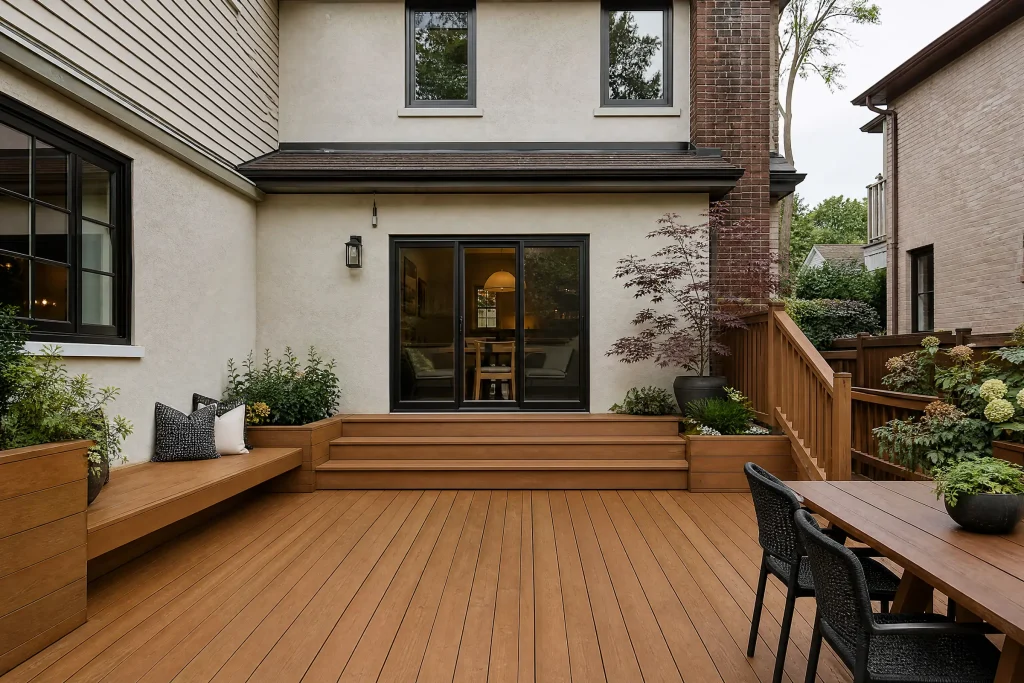
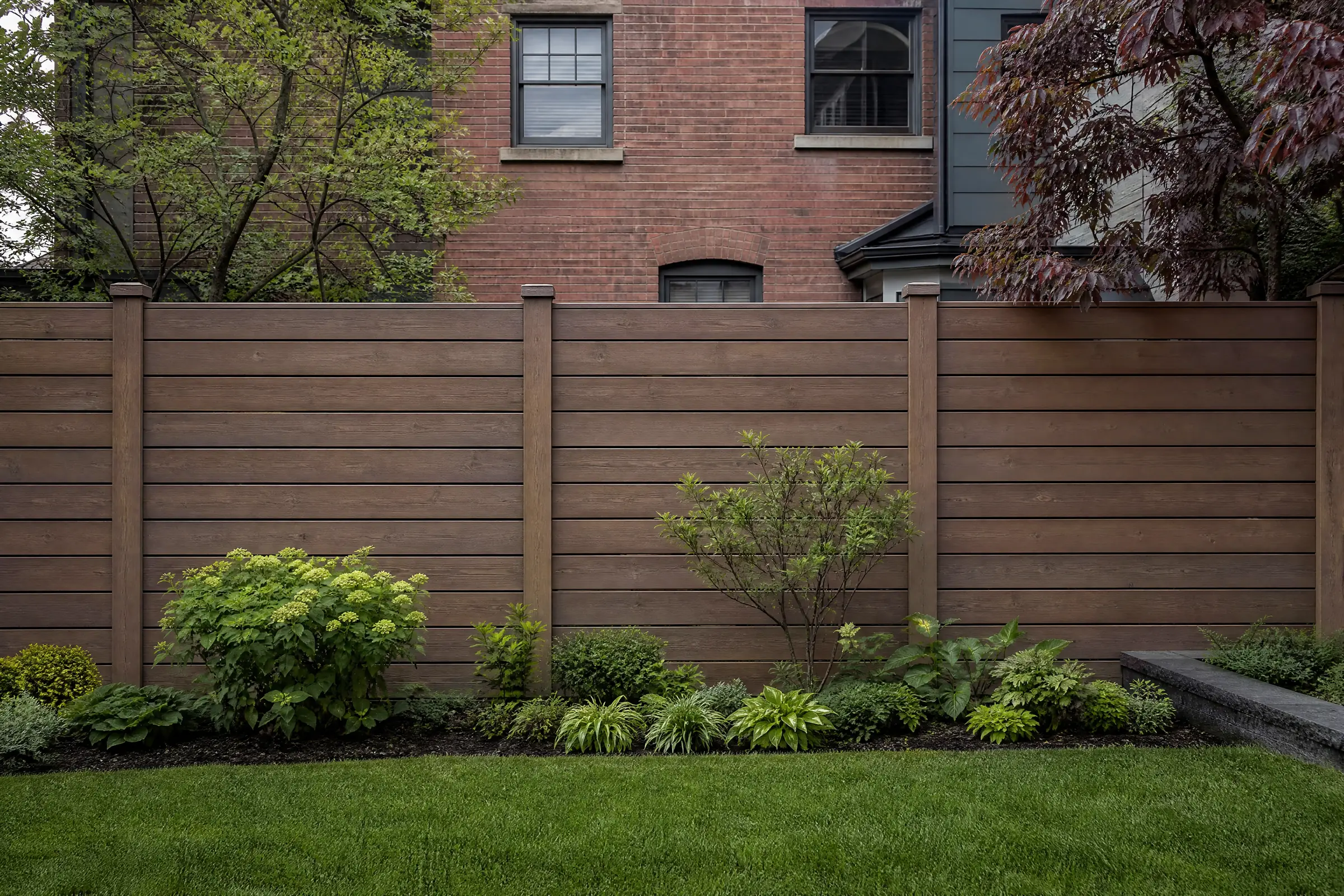
Georgina wraps around the south shore of Lake Simcoe, and between Keswick’s newer streets and the older shoreline communities, there are plenty of year-round houses within sight of the water. This one is a cedar-shingled two-storey home on a lakeside street in Jackson’s Point, with a wide lawn bordered by a long horizontal cedar fence that runs from the street toward the lake. Off the back of the house, a small deck steps down to the lawn with stained treads and white composite railings.
The owners had sealed the fence with a clear water repellent when it was built and had not touched it since. They asked us to bring the fence back to an even colour and protect it properly this time, and to refinish the deck stair at the same time.
Two sides of the same fence
A fence that runs toward a lake ends up weathering in two different ways, and this one showed it clearly.
- The side facing west, toward open water and the afternoon sun, had gone silver-grey. Run a hand over it and grey fibres came away, the sign that ultraviolet light had broken down the surface of the wood.
- The sheltered side, facing the house, still looked like cedar on the upper boards, but its lower boards were stained green-black with mildew and algae where shrubs held damp air against them.
- The top edges of the horizontal boards, which catch rain and hold snow, had small checks opening along the grain.
- The clear repellent had long since washed out. Water soaked straight into the wood in every test spot we tried.
The challenge was making two very different surfaces end up the same colour. A stain is partly transparent, so whatever colour the wood is underneath shows through. Staining over grey on one side and mildew on the other would have given a patchy, two-tone fence.
The deck stair was simpler: its treads were faded and grey in the middle, and the end grain on the stringers was soaking up water.
Bringing the wood back before any stain
Protection along the shoreline lawn
- Shrubs along the fence were tied back and wrapped in tarps and breathable cloths, and the lawn along the fence line was soaked with water first so any runoff would be diluted.
- We used cleaners that rinse out with water and kept rinse water away from the shoreline end of the lawn, directing it into the grass rather than letting it run toward the lake.
- The white composite railings and the house siding beside the stair were covered with plastic.
Restoring the grey side
- A wood restorer made to remove weathered grey fibres was brushed on in sections of a few boards at a time and left only for the short dwell the label calls for. Left too long, it darkens cedar.
- Each section was scrubbed along the grain and rinsed at low pressure with a wide fan tip held well back from the boards, so the soft cedar was not furred or gouged.
- An oxalic acid brightener followed, to neutralize the restorer and return the cedar to an even, warm colour.
Treating the mildew on the sheltered side
- The green-black areas were treated with a mildew wash for exterior wood, scrubbed and rinsed. Mildew left under stain keeps growing and shows through as dark spots.
- The same brightener was used here, so both sides of the fence finished the cleaning step at the same tone.
Sanding, drying and the checks on top
- Lake air keeps wood damp, so after cleaning the fence was left until a moisture tester showed it was dry through the board, not just on the face.
- Raised fibres across the whole fence were taken down with a random-orbit sander, with extra attention to the checked top edges so the stain could reach into the small cracks.
- On the deck stair, the treads were cleaned and brightened in the same way, and the end grain on each stringer was sanded fresh.
The stain and how it went on
Working with lake mornings
By the lake, dew sits on wood well into the morning. We did not start staining each day until a palm pressed on the boards came away dry, and we put the brushes down with enough of the afternoon left for the surface to set before the evening dew came back. Stain hit by dew before it sets can turn blotchy or wash out of the grain.
The fence
We used a semi-transparent stain with a waterborne alkyd base in a warm honey cedar tone, carrying enough pigment to stand up to the sun off the water. It was applied by brush, one board at a time along its full length, starting with the top edge of each board, which is the part that takes the most weather. Both faces of the fence received two coats. The second went on once the first had soaked in and dried for the period the maker recommends, and on the lake-facing side we flooded the top edges a little more generously to fill the small checks.
The deck stair
Treads and stringers took the same honey cedar stain, brushed on twice, so the stair and fence look like they belong together, and the freshly sanded stringer ends were saturated until they would take no more.
Why a honey tone, not grey
Some owners near the lake let cedar go grey on purpose, and we raised that option. These owners wanted the fence to look like new wood again. Using our free colour consultation, we brushed out sample tones on a section of the restored fence, on the lake side and on the house side, so they could compare them in the morning, when the house shades the fence, and in the late afternoon, when the sun drops over the lake and hits the boards directly. The clear and lightest tones looked almost invisible after restoration and would not have held back the sun. The darkest made the long fence feel heavy against the lawn. The honey cedar kept the wood looking like cedar in both lights.
Keeping the yard clean as we went
We worked section by section along the fence, so only a short stretch of lawn was covered at any time. Cloths came off the shrubs in the evening, rinse buckets were emptied onto the grass well back from the shore, stain-soaked rags were spread to dry and then sealed in a metal can, and the deck and walkway were swept before we packed up. Nothing was left out for the wind off the lake to carry.
What to watch on a lakeside fence
- The lake-facing side will wear first. Rather than restaining the whole fence, you can clean and recoat just that side when the colour starts to fade or water stops beading.
- Keep the shrubs trimmed back from the house side so air can move and the lower boards dry after rain.
- Brush snow off the top edges of the boards after heavy storms if you can; trapped snow and ice work into the checks.
- Rinse the fence with plain water once in spring to clear pollen and spider webs, which hold moisture against the stain.
- The leftover stain is labelled and should be kept somewhere it will not freeze.
Why this suits homes along Lake Simcoe
Around Georgina’s shoreline, wind drives rain into wood, the afternoon sun bleaches anything facing the water, and damp, shaded corners grow mildew. A fence or deck here needs its weathered layer removed and its mildew killed before stain goes on, and it needs a pigmented finish, not a clear one. That is the approach our deck and fence staining crews take on lake properties. Since 2010 we have looked after homes all over Toronto and the GTA, with many in the northern part of York Region, and you can see more about our Georgina painting services for cottages, lakefront homes and Keswick subdivisions.
If your fence or deck has gone grey or green, contact us to arrange a visit and a written quote, itemized by surface.