
Painting a condo unit is, in most ways, simpler than painting a house. There is no exterior, no ladders on the lawn, and the rooms are usually a manageable size. What makes a condo different is the building. Your unit sits inside a shared property with its own rules, its own staff and dozens or hundreds of neighbours, and the paint job has to fit around all of them.
Most condo painting delays have nothing to do with painting. They come from an elevator that was not booked, a contractor the concierge was not expecting, or a crew that arrived during hours when work is not allowed. This guide covers what to check with your building before work starts, so the first day runs smoothly.
Start with your building’s rules
Every condominium corporation has its own rules, usually set out in its declaration, by-laws and house rules, and often summarized in a renovation or contractor policy. Property management can tell you which apply to painting. Ask for the rules in writing and share them with your painter when you request a quote.
The questions below cover what most Toronto buildings care about.
Does the work need approval?
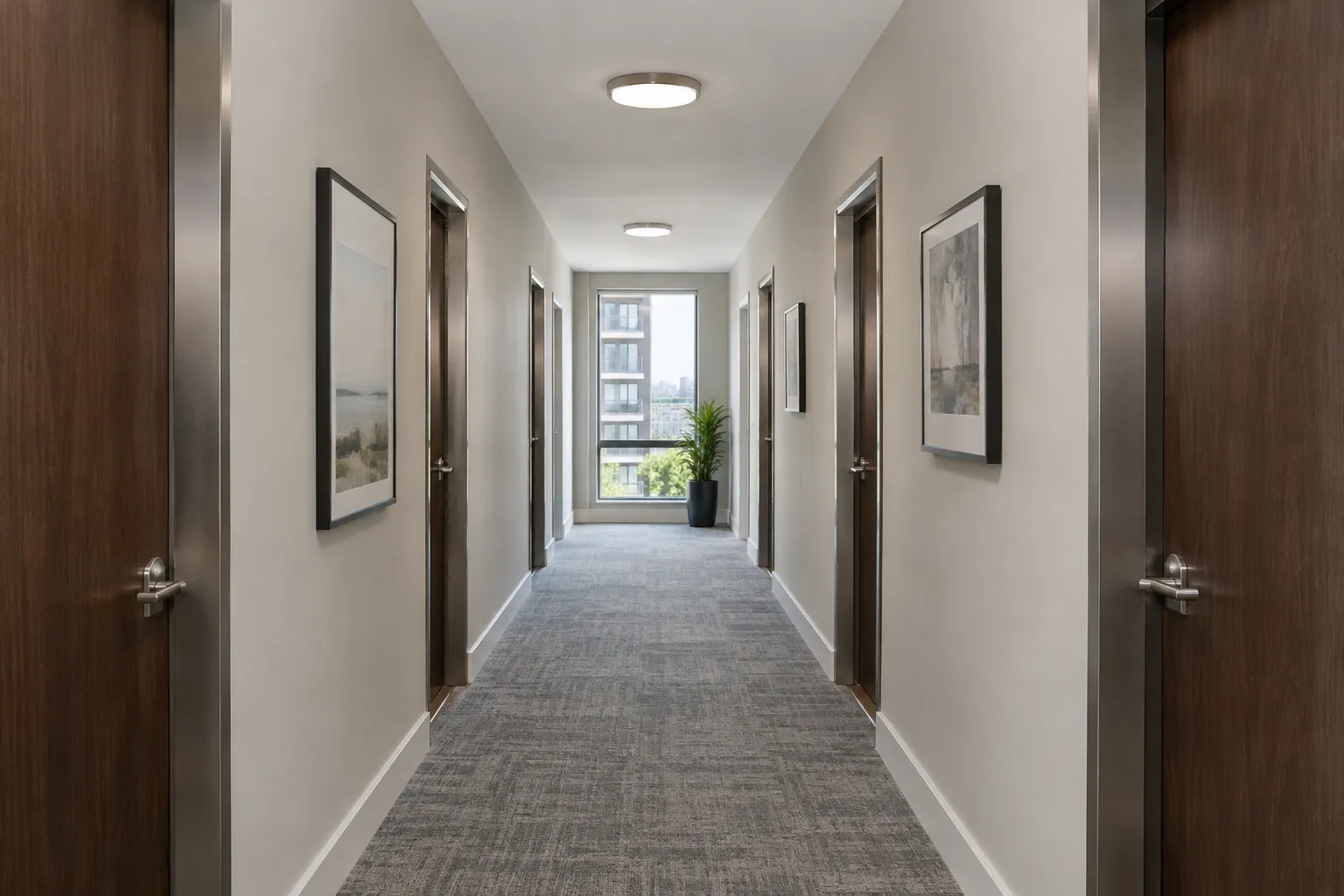
Repainting the inside of your own unit usually does not need formal approval, but some buildings ask owners to notify management of any contractor work. Anything that touches common elements is different. In many buildings the hallway side of your suite door, the corridor walls and balcony surfaces are common elements, and their colour is controlled by the corporation. Check before painting anything that faces a hallway or the outside.
What are the permitted work hours?
Most buildings limit contractor work, and noisy work in particular, to set hours on weekdays, and some restrict or prohibit work on weekends and holidays. Painting is quiet compared with renovation, but moving equipment and furniture is not. Your painter needs to know the start and finish times so the schedule fits inside them.
How do elevator bookings work?
Many buildings require a booking for a service elevator whenever contractors bring in equipment and materials. Some also require the elevator to be padded, and some charge a deposit or fee. Bookings can fill up, especially at the end of the month when people move, so book early and confirm the time with your painter.
Does management need a certificate of insurance?
It is common for property management to ask any contractor working in the building for a certificate of insurance before they are allowed in. Ask whether your building requires one and who it should be sent to, and pass that on when you book.
How do contractors check in?
Find out whether the crew should check in with the concierge or security, whether they need to be on a contractor list in advance, and whether they need to sign in each day. Give the concierge your painter’s name and the dates of the work.
Where can contractors park?
Parking is often the hardest part of a downtown condo job. Ask whether contractors can use visitor parking, whether a pass is needed, and whether there is a loading area for unloading. If there is no parking on site, your painter will need to plan around nearby options.
Where can paint waste go?
Leftover paint, rinse water and used materials should never go down a sink or into the building’s garbage chutes. A professional crew takes its waste away with it. If you are keeping leftover paint for touch-ups, store it inside the unit, not in a shared storage locker unless the building allows it.
Give notice early
Good notice makes everything easier. A simple plan:
- When you accept the quote, tell property management the dates and the scope of work.
- A week or so before, book the service elevator and confirm parking or loading.
- A few days before, send any documents the building has asked for and confirm the crew’s arrival time with the concierge.
- On the day, make sure someone can let the crew in, or arrange key access in advance.
If you rent your unit out, give your tenant proper notice as well, and agree on whether they will be home during the work.
Think about your neighbours
Paint odour can travel along corridors and through ventilation, and long days of contractors in the hallway are noticeable in a shared building. A few things help:
- Low-odour products. Zero‑VOC and low-odour paints cut down on smell inside the unit and in the hallway.
- Protected common areas. Corridors near your door, and the path to the elevator, should be protected while equipment comes and goes.
- A tidy route. Nothing should be left in the hallway, and the corridor should be left clean at the end of every day.
Inside the unit
Condo units have some quirks of their own:
- Concrete ceilings. Many units have a textured or painted concrete ceiling. Repainting it is possible, but it needs the right products and some care, so mention it when you ask for a quote.
- Smoke detectors and sprinklers. These must not be painted over. A good crew covers them during the work and uncovers them before leaving.
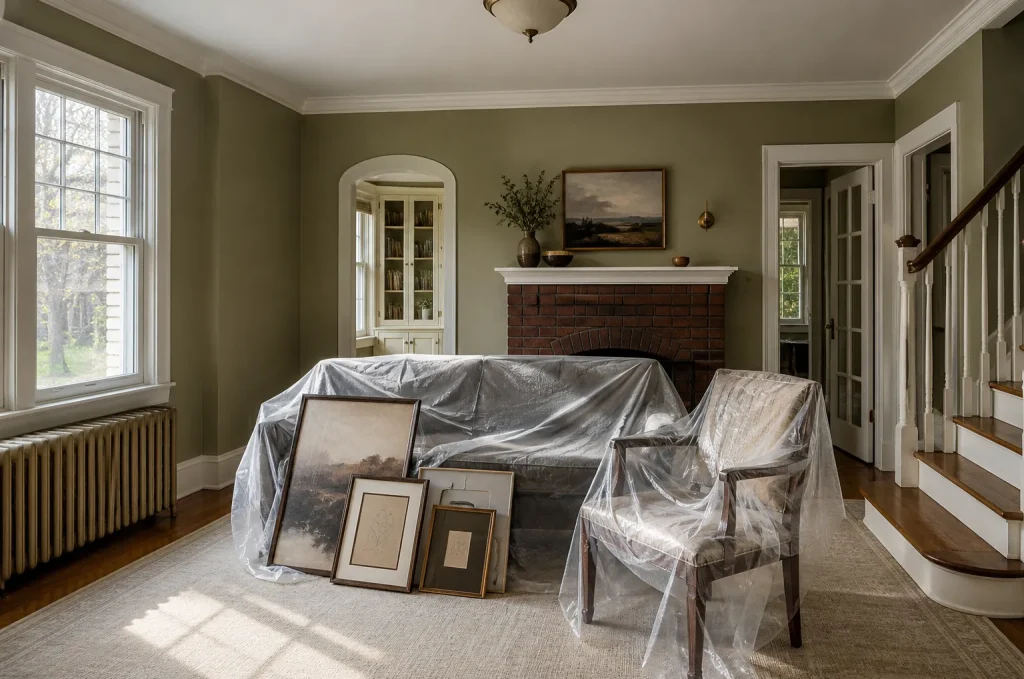
- Limited space. With less room to move furniture, rooms are usually painted in sequence, with furniture moved to the centre and covered. Clearing small items, valuables and wall art beforehand speeds things up.
- Windows and balconies. Window frames in many buildings are common elements or have specific finishes. Check before painting them.
How long does a condo repaint take?
It depends on the number of rooms, the condition of the walls and what is being painted. A single accent wall can be a short visit, while a whole unit with ceilings, trim and doors takes longer, especially if the walls need patching. Building hours also play a part. Your written quote should include the schedule, so you can book the elevator for the right days.
Getting a quote for a condo
For small jobs, such as an accent wall or one room, a few photos are often enough to quote. For a whole unit, a visit is better, so the painter can measure and check the surfaces. Either way, share your building’s rules up front.
Our condominium painting page explains how we schedule work around building rules and residents, and our interior painting page covers what is included in a typical repaint. For a quick ballpark before you call, the painting cost calculator gives a range for an interior repaint.
Planning a condo repaint?
Contact All Painting and tell us about your unit and your building’s rules. Quotes are free and itemized in writing, and we keep the site tidy every day, inside the unit and in the hallway.