
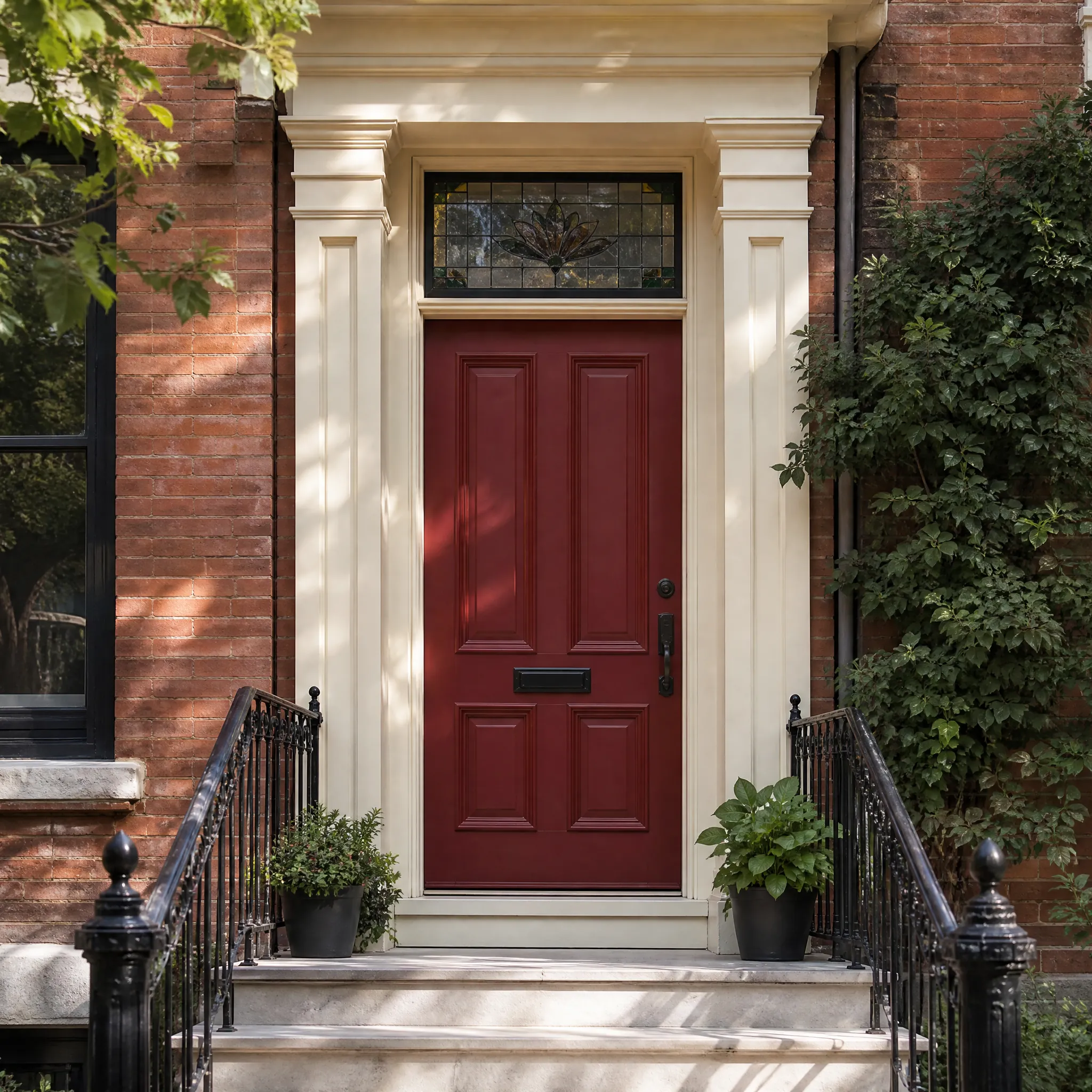
FRONT DOOR
REFINISHING a fresh finish for a welcoming entrance

- Free quotes
- Itemized written quote
- Since 2010
- Open 7 days
We take worn front doors back to a sound surface, repair what needs it, and refinish them in paint or stain, with proper drying between coats and the frame done to match.
Your entrance, redone
Front door refinishing for Toronto homes
Front door refinishing means stripping a tired entrance back to a sound surface and finishing it again. That can be a full repaint in a new colour, a refresh in the existing colour, or, on a wood door you want to keep natural, sanding back to clean wood and applying stain and a clear exterior coat. The door slab is only part of it. The frame, the brick mould around it, the threshold trim, sidelights, a transom above, and a storm door or screen door can all be refinished together, so the whole entrance looks like one finished piece.
Homeowners usually call about a front door for one of three reasons. The finish has failed, with cracks along the panel edges, peeling at the bottom rail or a faded, chalky outside face. The colour no longer suits the house after new windows, a new roof or new door hardware. Or the house is about to be listed and the entrance is the first thing buyers walk up to. Entry doors along a townhouse row can be refinished as a set as well, so that every unit along the row matches.
A good result looks close to factory-made. The paint lies flat with no brush ridges, drips at the panel corners or rough patches where old damage was filled. Edges are crisp against the glass and the weatherstripping, and the hardware sits on a clean finish rather than being painted around. On a stained door, the colour is even across the stiles and panels and the grain reads clearly. The door also has to keep working: it should close and latch smoothly, without paint sticking it to the frame on a humid day.
Planning starts with a free quote visit or a few clear photos of the door, inside and out. We check the material, the condition of the finish, any rot or rust, the glass, and how the door is hung. We discuss colour and sheen, and you can hold real sample pots against the door and the house before you decide. Your itemized written quote sets out the door, frame, sidelights and any extras, the prep, primer and coats, and how the opening will be kept secure while the work is under way.
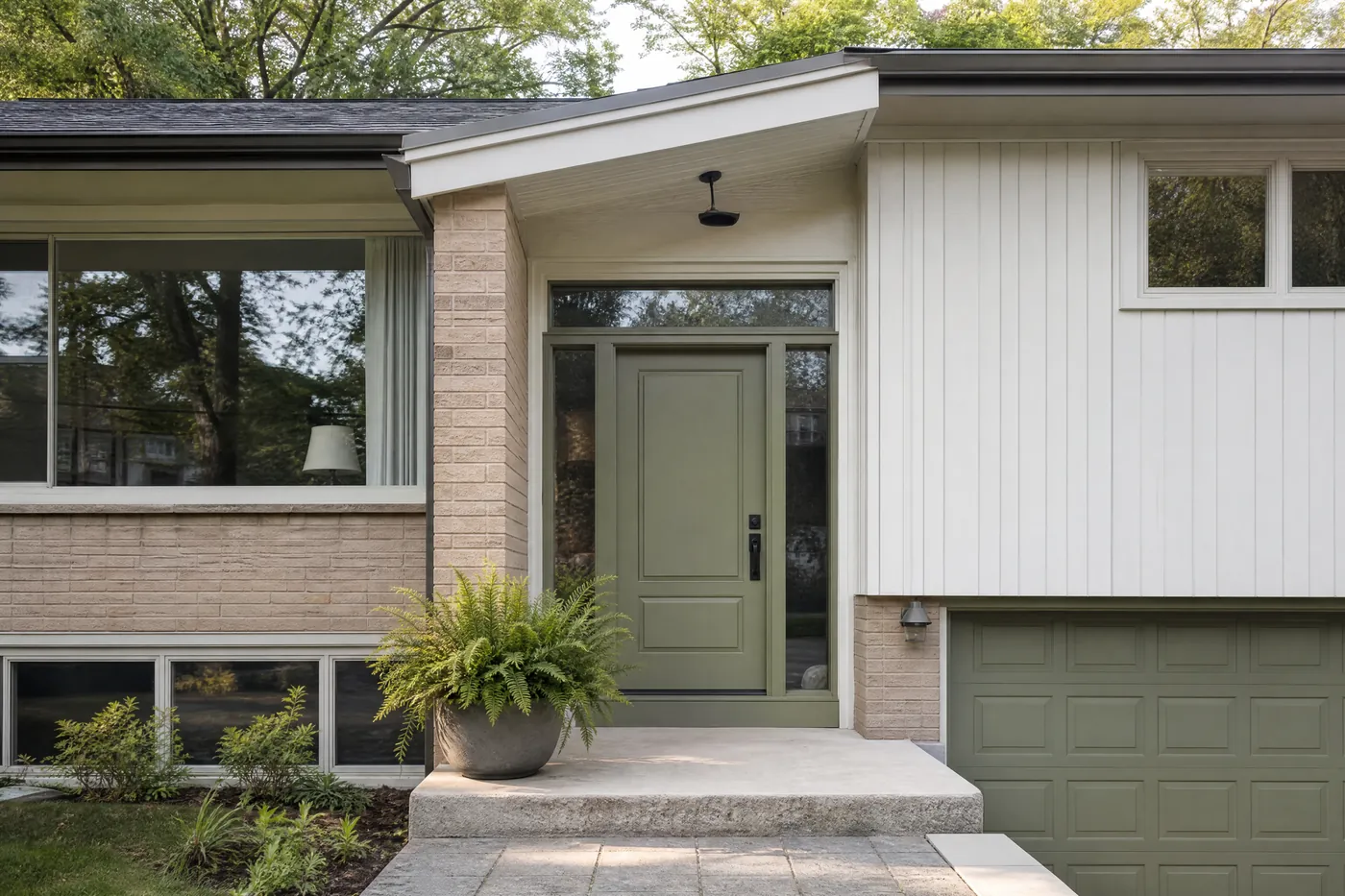
Wood doors
Solid wood and wood-veneer doors are sanded back, cracks and dents are filled with exterior wood filler, and soft spots near the bottom rail are dealt with. They are then primed and painted, or stained and sealed with a clear exterior finish if you want the grain to show.
Steel doors
Steel doors are cleaned, scuff-sanded and checked for dents and rust. Rust spots are sanded to bright metal and sealed with a rust-inhibiting primer ahead of the colour, so corrosion does not creep under the new paint from chips around the lock and handle.
Fibreglass doors
Fibreglass doors have a moulded grain and a slick factory skin. They are cleaned of wax and grime, lightly scuffed so the coating can grip, and finished with a product suited to fibreglass, either painted solid or stained to bring out the moulded grain.
Frames, sidelights and storm doors
The frame, brick mould, sidelights and transom are prepared and finished with the door, and caulking along the frame is renewed where it has cracked. Storm doors and screen doors in front of the main door can be added to the same quote.
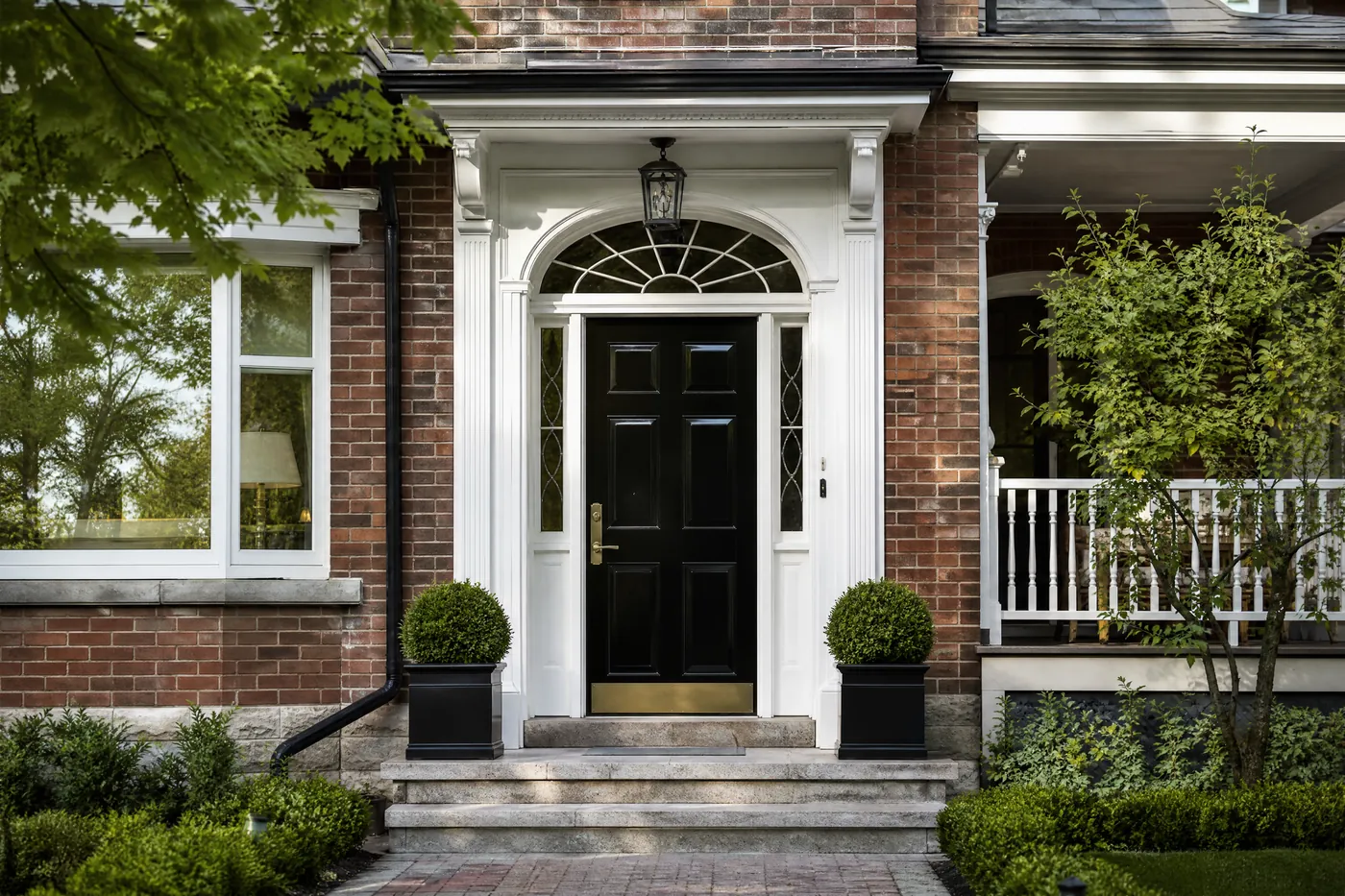
How each type of door is refinished
Most doors come off their hinges for the work. The hinge pins are tapped out, the door is lifted clear without scraping the floor or the threshold, and it is laid flat on padded stands in a clean, covered area, often a garage or the front hall. Working flat lets the paint level out instead of sagging on the vertical panels. Handles, locks, kick plates and knockers are removed and bagged. Hinges stay on the frame and are masked. While the door is down, the frame and opening are prepared at the same time.
On a wood door, the old finish is scraped where it is loose and sanded back until the surface is smooth and the edges of sound paint are feathered so they do not show. Dents and open joints are filled, and any bare wood is primed. On steel, the surface is scuff-sanded, rust spots are taken to bright metal and spot-primed, and dents are filled with a filler made for metal. Fibreglass is degreased and lightly scuffed only, because heavy sanding cuts through the moulded grain and leaves fuzzy patches.
The finish coats follow the panel layout of the door: recessed panels and their mouldings first, then the centre rails, the stiles and finally the edges. Working in that order keeps a wet edge so lap marks do not form, and it puts any drips on surfaces that are about to be painted. The door then gets no fewer than two finish coats, allowing the label's drying time between them, and the edges are kept thin so the door still closes. Once the final coat is hard enough, the hardware goes back on and the door is rehung and checked.
Reviews
What clients say
Why hire professionals
Why a front door is worth doing properly
A front door looks like a simple job, and a quick coat over the old finish is tempting. But doors are handled every day, take direct weather and are seen up close, so shortcuts in sanding, primer or drying time show quickly. These are the reasons to have it done carefully.
A finish seen up close
Visitors stand a step away from your door while they wait. Brush ridges, drips at the panel corners and paint on the hardware are obvious at that distance, so the door needs more careful sanding and application than a wall.
The right primer for the material
Wood, steel and fibreglass each need a different primer. Paint over the wrong one peels at the edges, rusts at chips on steel or lifts off the slick skin of a fibreglass door.
Moisture kept out
Once the finish cracks or peels, water gets into a wood door and swells the panels and rails. Refinishing seals the bare spots, the edges and the bottom rail before moisture causes damage that needs more than paint.
A door that still closes
Thick paint on the edges and the frame makes a door stick and can stop it latching. Edges and stops are kept thin, and the door is tested once it is rehung.
A door that locks each night
Your entrance stays secure throughout. The work is planned so the opening can be closed and locked at the end of each day, and you are told in advance how that will be handled.
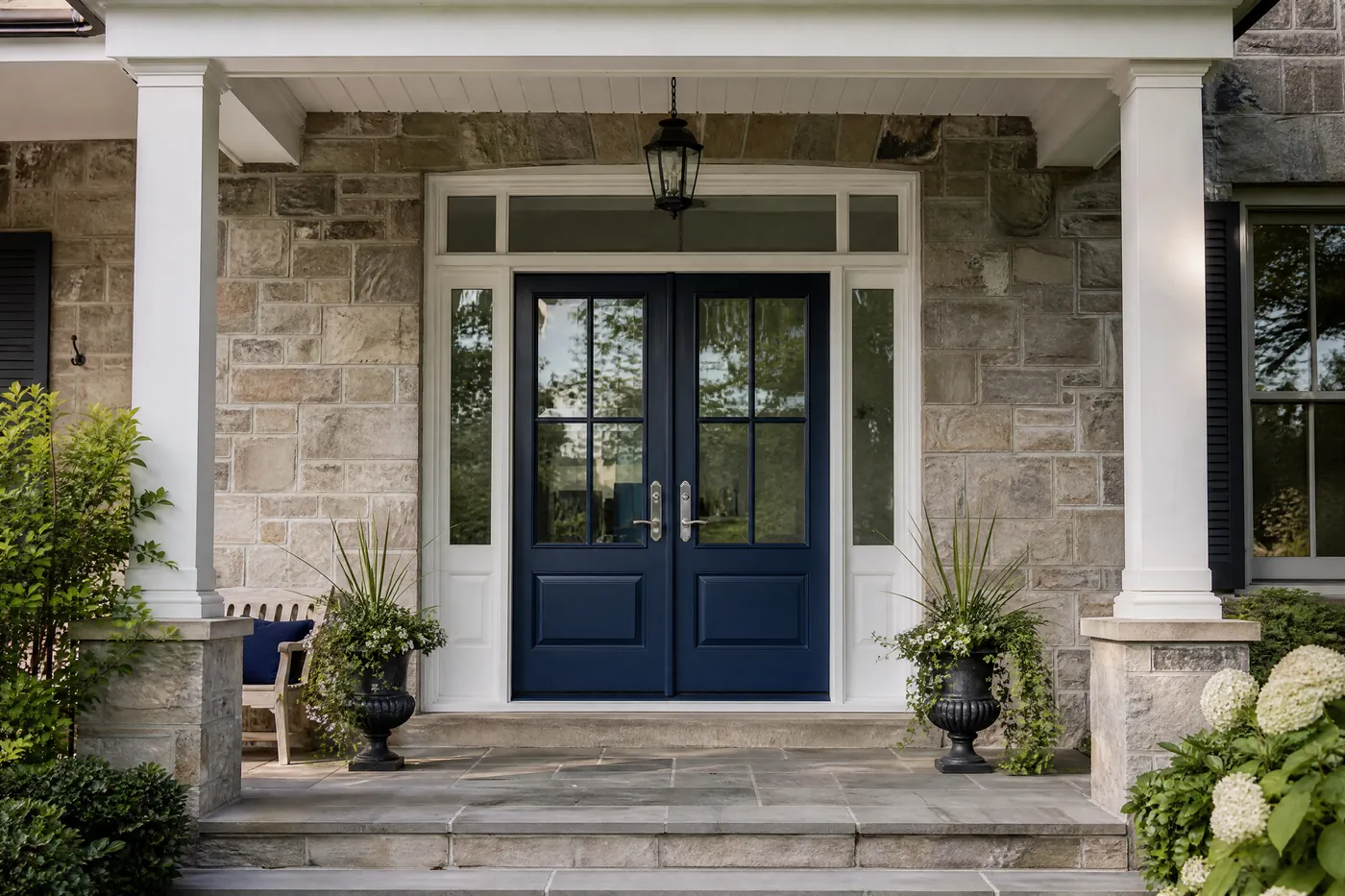
Our process
How we refinish your front door
Front door work follows five steps. The order is the same for wood, steel and fibreglass, but the prep, primer and finish change with the material, and the schedule allows the drying time each product needs.
Look and choose
We check the door, frame and glass, note any rot, rust or damage, and talk through colour, sheen and whether to paint or stain. Real sample pots let you judge a colour against your brick or siding in daylight.
Written quote
The free itemized quote lists the door, frame, sidelights, transom and any storm or screen door, with the prep, primer and number of coats for each. You know who is coming before work on the door starts.
Take down and protect
Hardware is removed, the door is lifted off its hinges and laid flat, and the floor, threshold, walls and nearby surfaces are covered. Glass and weatherstripping are masked so only the surfaces being refinished are exposed.
Sand, repair and prime
Loose finish is scraped, the door is sanded smooth, and dents, cracks or rust spots are filled or repaired. Bare wood or metal is sealed with whichever primer that material calls for, then sanded lightly once dry.
Coat, rehang and tidy
Two or more finish coats are applied, each allowed to dry before the next, then the hardware is refitted and the door is rehung, tested and adjusted. The work area is tidied each evening and cleaned at the end.
Ready to start?
Call (416) 710-4224 or send a few details and photos for a free, itemized quote.
Preparation
Getting a front door ready for its new finish
Checking for rot and rust
The bottom rail, the lower panels and the area around the glass are where wood doors rot first, and where steel doors rust from the inside out. These spots are probed and checked before quoting, so repairs are planned instead of discovered halfway through the job.
Removing hardware
Handles, deadbolts, kick plates, knockers and house numbers are taken off rather than masked, so the finish runs cleanly behind them. Each piece is bagged and labelled with its screws, and tarnished brass or worn hardware can be cleaned or replaced while it is off.
Sanding the old finish
Loose, cracked or blistered finish is scraped, and the whole door is sanded so the new coating has something to grip. On old varnish, sanding continues until the surface is dull and even, because gloss left on the door causes the new finish to peel.
Filling and repairing
Dents, gouges, screw holes from old hardware and small soft spots are filled with exterior-grade filler, then sanded flush. Open joints between the panels and the frame of the door are filled so water cannot sit in them and work into the wood.
Cleaning and degreasing
Doors collect hand grease around the handle and grime along the bottom. Every surface is washed and degreased after sanding, then wiped free of dust, because dirt and oil under the primer are a common reason a new finish fails at the handle.
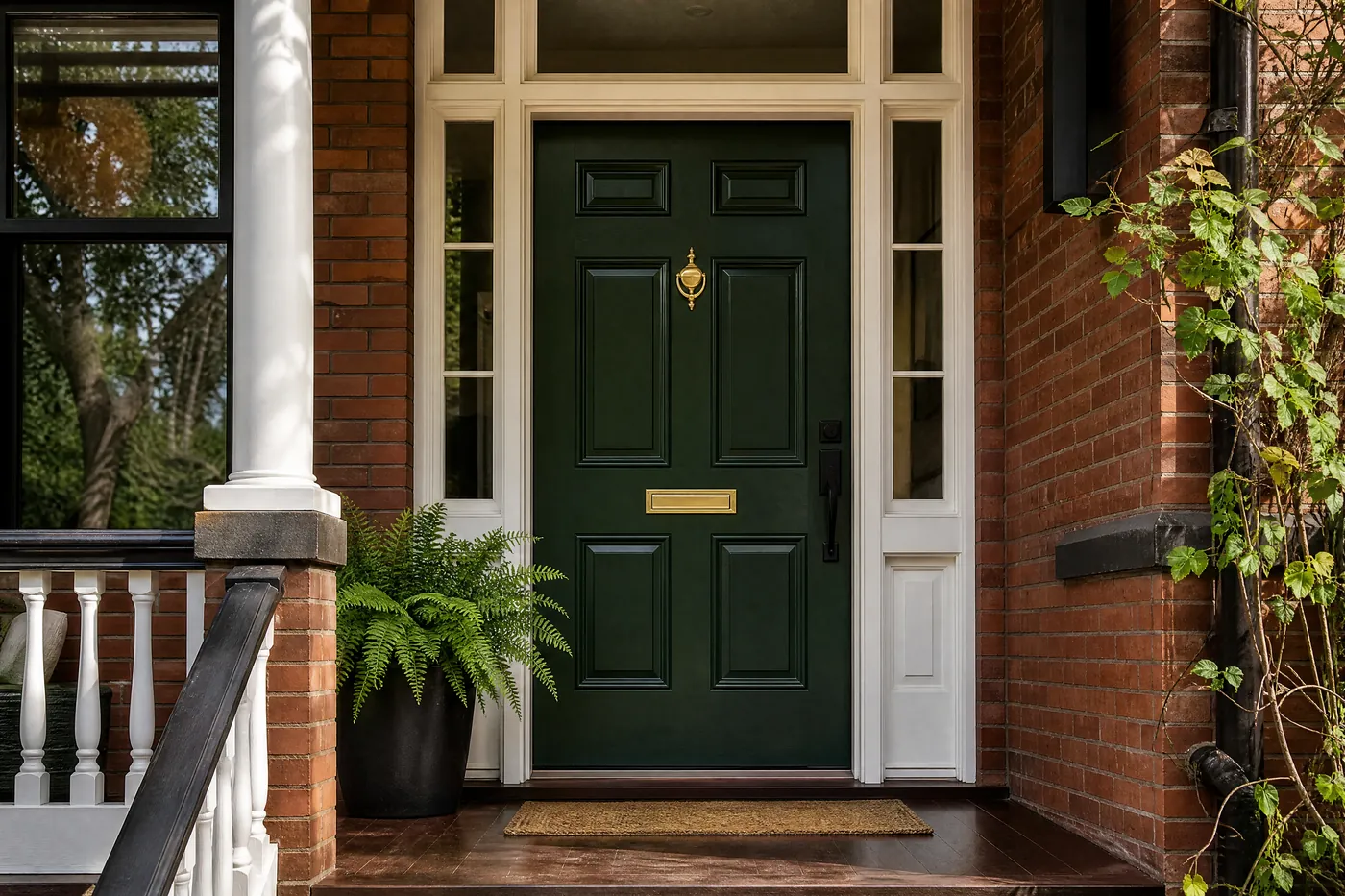
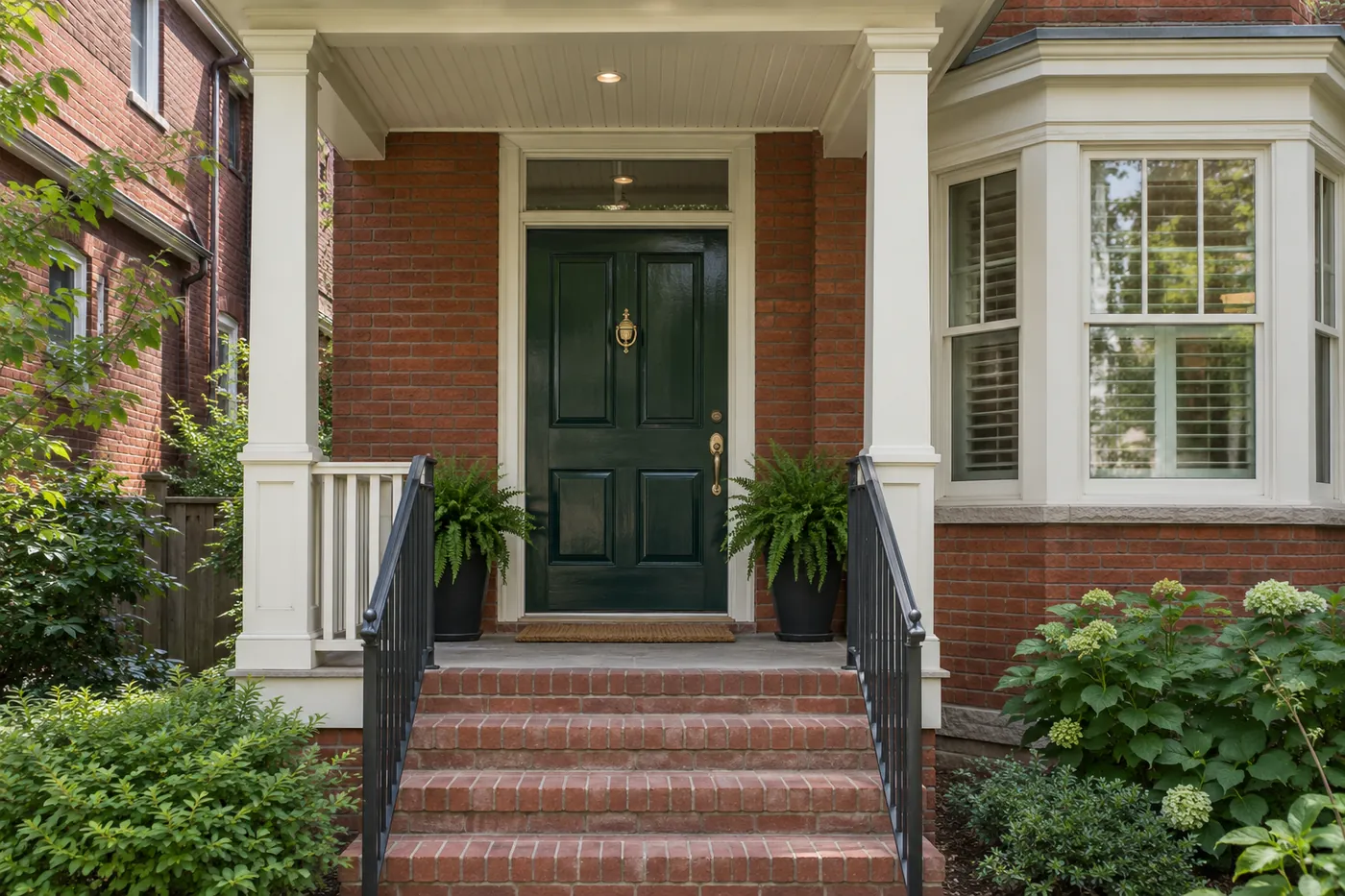
Products and finishes
Bonding and metal primers
Bare wood gets an exterior wood primer that seals the grain. Steel gets a rust-inhibiting metal primer on any bare spots, and fibreglass or old glossy finishes get a bonding primer made to grip slick surfaces, so each finish coat is anchored to the door.
Exterior door enamel
The finish coats are an exterior enamel that dries hard enough to take daily handling. Water-based enamels stay flexible as the door expands and contracts with the seasons, and we can use Zero‑VOC, low-odour enamel when the door is being finished inside your home.
Satin, semi-gloss and gloss
Satin hides small dents and brush marks well and suits most houses. Semi-gloss is easier to wipe clean and gives a crisper look on panel mouldings. High gloss gives a lacquered look on a traditional door but shows every flaw, so the prep has to be thorough.
Stain and clear exterior finish
Wood and fibreglass doors can be stained instead of painted. A penetrating or gel stain sets the colour, then a clear exterior finish with UV inhibitors goes over it to shield the stain from sun, which is the main cause of fading on stained doors.
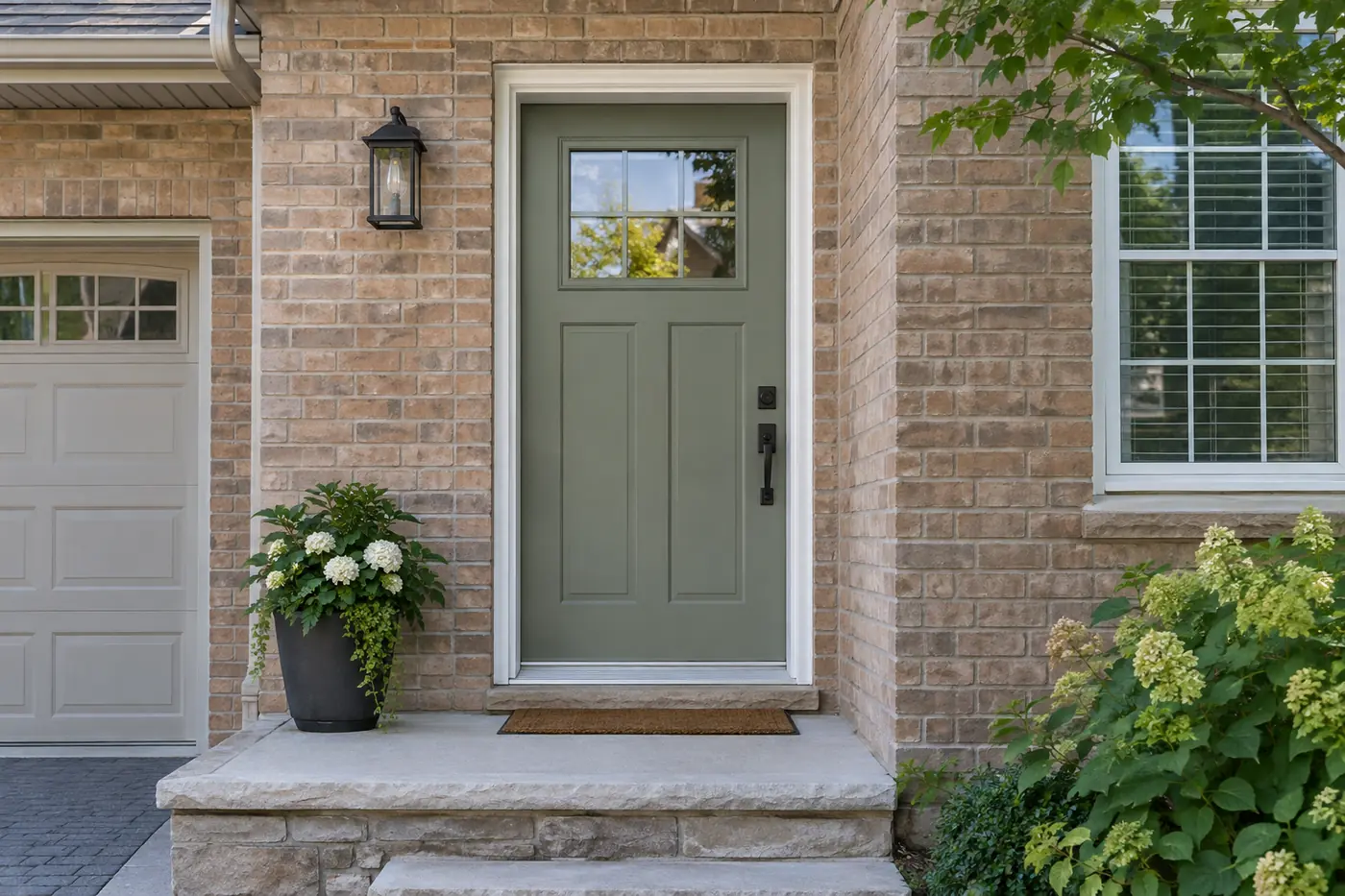
Service areas
Where we refinish front doors
Across Toronto, front doors vary as much as the houses they sit in. Victorian and Edwardian homes often have original wood doors with stained glass panels and heavy mouldings, many with decades of paint on them. Postwar bungalows usually have simpler wood or steel slab doors behind an aluminum storm door. Newer infill homes and townhouses tend to have fibreglass or steel doors with sidelights. Each type is prepared and primed differently, and older doors on deep porches can take more sanding and repair than their age suggests.
In the subdivisions of Peel Region and York Region, many homes have double entry doors with sidelights and a transom, which means more glass to mask and more surfaces to finish. Halton Region towns such as Oakville have a mix of heritage wood doors in their older cores and newer fibreglass entries. In Durham Region, steel doors on homes built in recent decades are common and often show rust along the bottom edge. The method adapts to the door rather than to the postal code.
Doors and the weather
What sun, rain and frost do to a door finish
A front door faces more weather than any other painted part of the house. Summer sun on a south or west-facing door heats the surface far above the air temperature, which fades colour and breaks down the finish, and dark colours get hotter still. In winter, snow piles against the bottom of the door, salt from the steps gets tracked against the threshold, and the door moves as it warms and cools. The bottom rail and the lower panels usually fail first, which is why they get the most attention during preparation.
Timing matters because the door has to be closed and secure every night. Exterior primers and enamels need mild air and surface temperatures to dry and cure, so outdoor door work is usually booked for the warmer stretch of the year, once nights stay mild. When the door comes off, the work can often move into the garage or a covered area, and in cooler months a door can sometimes be finished indoors where the temperature is steady. The schedule is set out ahead of time so you know when the entrance will be open and when it will be closed up again.
The city has a lot of older homes with original front doors, and some sit in heritage conservation districts where changing a door on the main facade may need approval. Refinishing an existing door in a suitable colour is usually simpler than replacing it. In condominium townhouses, the corporation often controls the colour of front doors, so check the rules before choosing. Older wood doors may also have lead in their earliest layers of paint, so we talk through with you how that old finish will be handled before any sanding starts.
- Check your condo or heritage rules before choosing a door colour
- Look closely at the bottom rail for soft wood or rust
- Decide whether sidelights, frame and storm door are included
- Plan another way in and out while the door is down
- Choose a colour that works with your brick, siding and trim
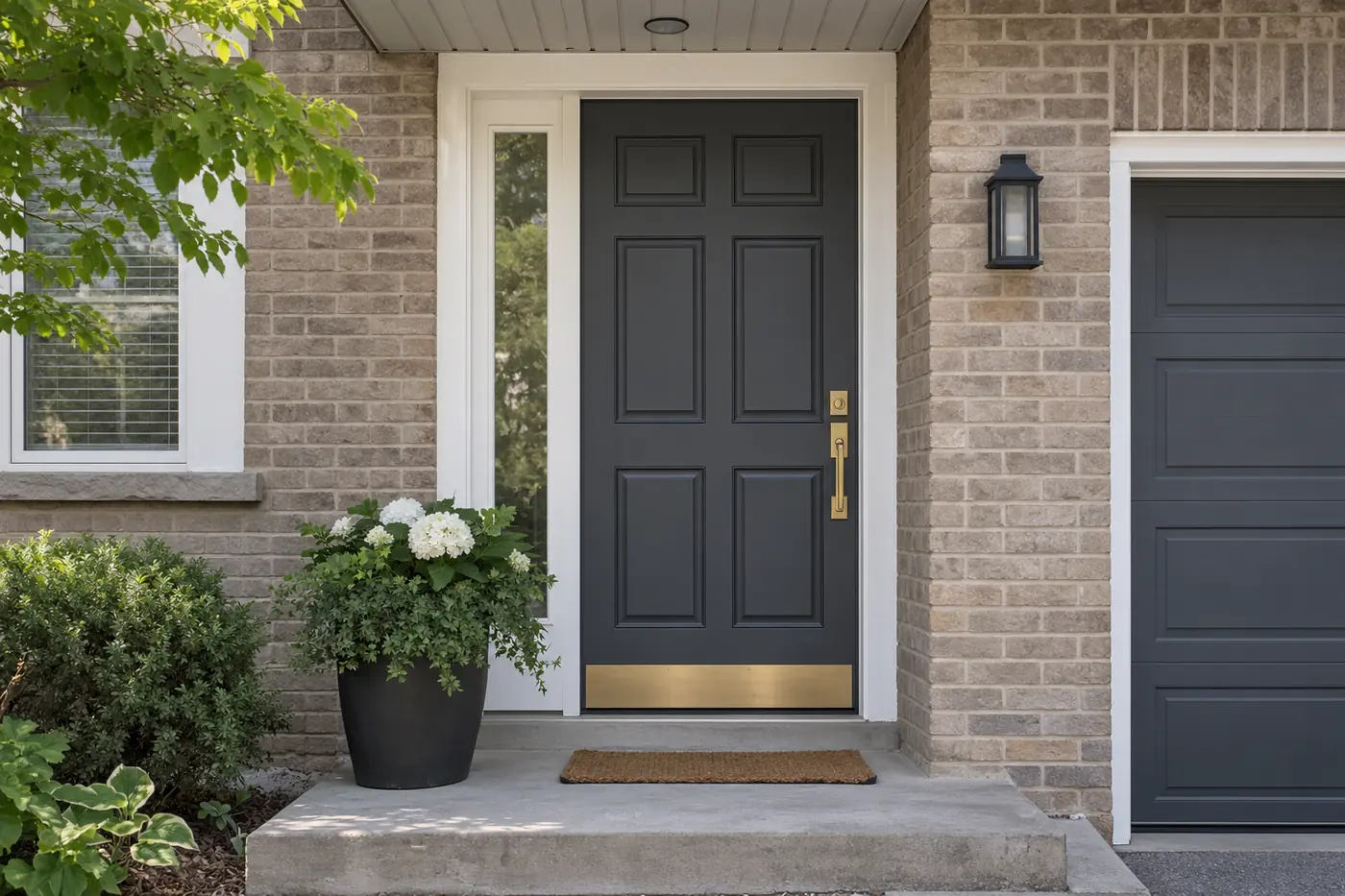
What changes the price of refinishing a front door
The door itself sets the starting point. A plain slab door with no glass is quicker to prepare than a six-panel wood door with deep mouldings or a door with decorative glass that has to be masked line by line. The condition matters next: a door with sound paint needs a scuff-sand and two coats, while one with peeling varnish, rot near the bottom or rust at the edges needs scraping, repairs and spot-priming before any finish goes on.
Everything around the door adds to the scope. Sidelights, a transom, the frame and brick mould, and a storm or screen door are each listed separately. A big colour change can need an extra coat to cover, and staining a wood door down to bare wood takes more sanding than painting it. For a planning figure, try our painting cost calculator, then book a visit for a free, itemized written quote.
Price it before anyone visits
Pick the rooms and the work in our cost calculator for a ballpark range in about a minute.
Then ask for a free quote: written, itemized and free to change before work starts.
What a repaint changes
Drag the handle, see the difference
A front entrance before and after: the faded door refinished in navy, and the peeling trim around it repainted white. Slide to compare.
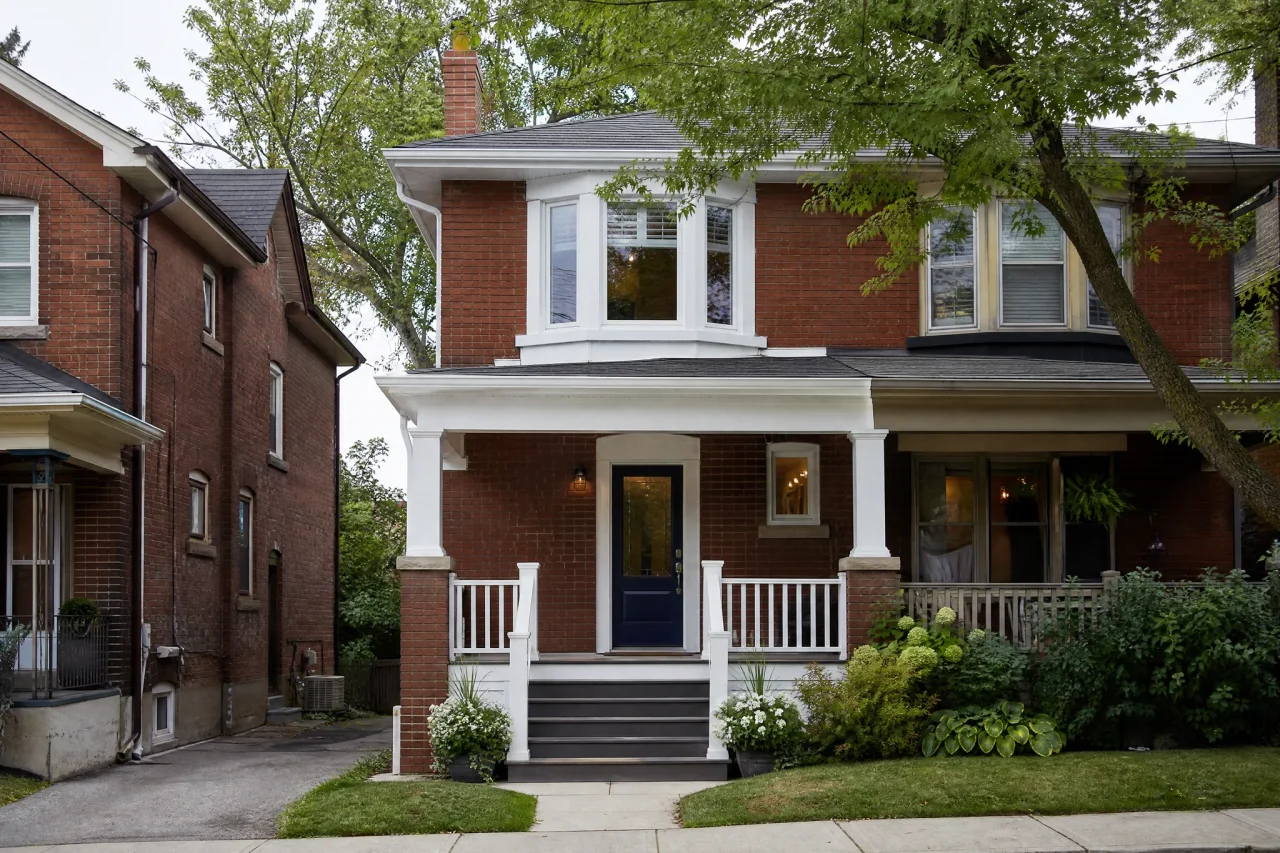
 Exterior trim and front door
Projects
Recent front door projects
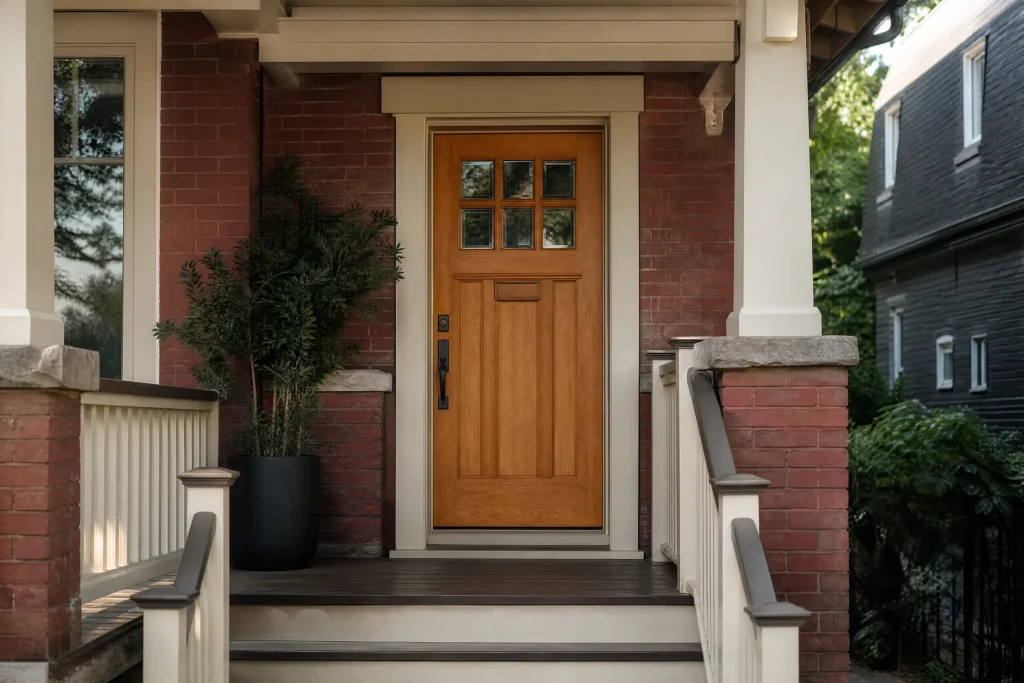
- Front door
- Brampton
Stained wood front door refinished on a Mount Pleasant porch
A solid wood front door in Mount Pleasant, Brampton: cracked, cloudy clear coat stripped and panels hand-sanded, then restained warm mid-brown under clear satin.
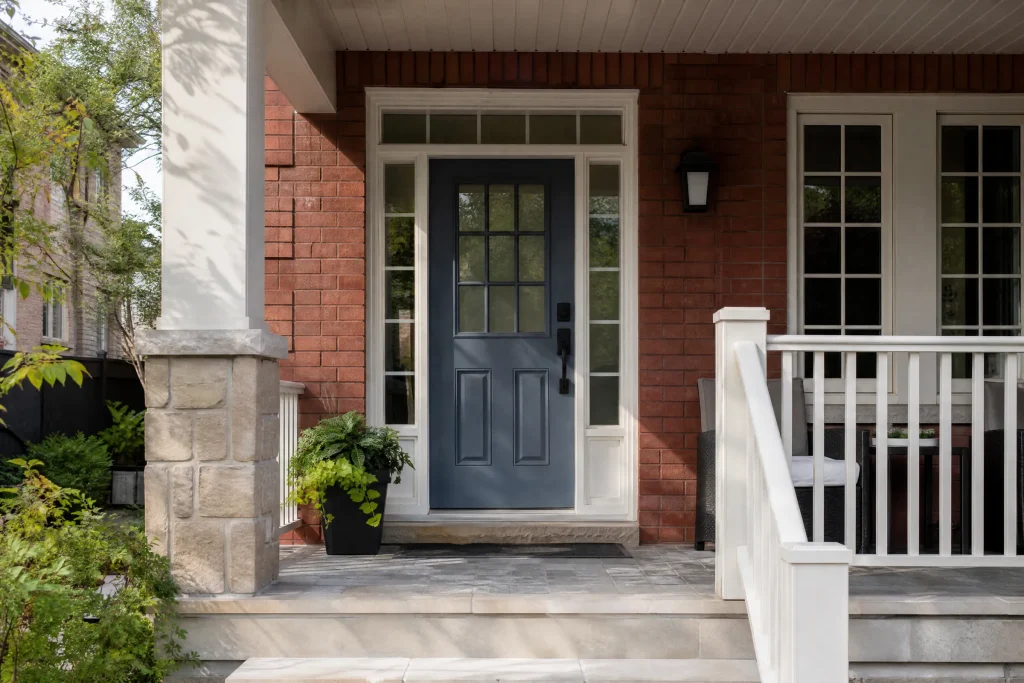
- Front door
- Markham
Fibreglass door and sidelight repainted charcoal in Berczy Village
A fibreglass front door and sidelight in Berczy Village: soft, tacky coating stripped and brickmould corner epoxy-repaired, then rolled and tipped in satin charcoal.
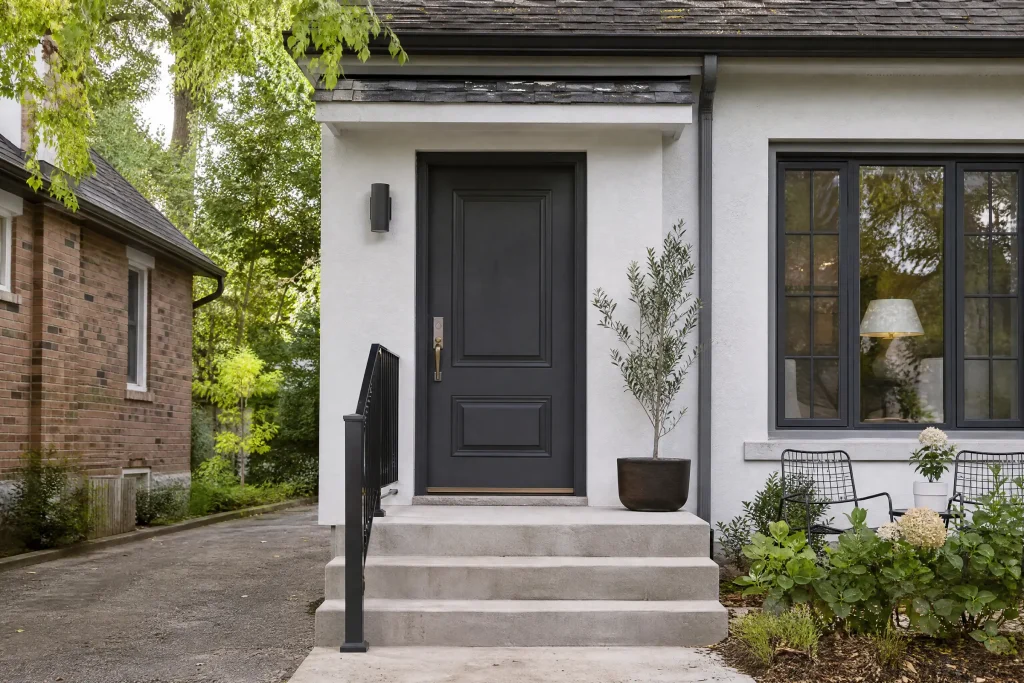
- Front door
- Richmond Hill
Wood front door cut back and glossed charcoal in Bayview Hill
A painted wood front door in Bayview Hill: peeling layers scraped, edges cut back to bare wood and alkyd-primed, then brushed in gloss charcoal.
Resources
Painting Guides and Resources
- Guide
When to paint your house exterior in Toronto
Temperature, humidity, dew and rain all decide how well exterior paint cures. How to pick the right season, and the right days, for an exterior repaint in Toronto.
How do I know when my front door needs refinishing?
Look at the outside face in good light. A finish that is cracked, dry, chalky, peeling or blistered has stopped protecting the door, and bare wood or metal showing at the edges or the bottom rail is a clear sign. If a wood door is left like that, moisture gets into the wood and the repair becomes bigger than a refinish. Fading on its own is cosmetic, but it usually means the finish is close to failing.
Can you match the colour my door has now?
Yes. If you like the current colour, we can match it from a clean, unfaded spot, such as the edge of the door or the inside of the frame, and mix paint to blend with what is already there. That is useful when only the outside face has faded or when the door has to match others on a townhouse row. You can also pick a new colour, and real sample pots help you see it on the door first.
Will my house be open while the door is off?
No. The work is planned so the entrance can be closed and locked at the end of every day. Depending on the door and the weather, it may be rehung each evening between coats, or the opening may be secured another way, and you are told which in advance. Many owners use a side or back door for the day while the front door is being worked on.
Can a steel front door be painted?
Yes. Steel doors take paint well once they are cleaned, scuff-sanded and primed where bare metal shows. Rust spots, usually along the bottom edge or around the lock, are sanded to bright metal and treated with a rust-inhibiting primer first. A dented steel door can be filled with a metal filler before painting. The finish is an exterior enamel, and dark colours on a sunny door are discussed because they get very hot.
Can you stain a fibreglass or wood door instead of painting it?
Yes. Wood doors are sanded back to clean, bare wood, then stained and sealed with a clear exterior finish so the grain shows. Many fibreglass doors have a moulded wood grain designed to take stain, and they are cleaned, lightly scuffed and stained with a product made for fibreglass. Stained doors need the clear topcoat renewed from time to time, especially on a sunny exposure.
Do you refinish the frame and sidelights as well?
Yes, and it is usually worth doing them together, since a fresh door in a weathered frame looks unfinished. The frame, brick mould, sidelights and transom are prepared and coated along with the door, and cracked caulking along the frame is cut out and replaced. Glass is masked carefully. The stops the door closes against are kept thin, so the refinished door still latches cleanly.
Can the storm door be refinished with it?
Yes. Aluminum, steel and wood storm doors that sit in front of the main door can go on the same quote, either in the same colour or in one that works with it. The storm door is cleaned, scuff-sanded and spot-primed where bare, and it also receives a minimum of two finish coats. Doing both together means one colour decision, one setup and an entrance that reads as a single piece.
Which areas do you serve for front door refinishing?
We refinish front doors throughout the city and out through Peel, York, Halton and Durham. All Painting has worked on homes in the area since 2010, and our office is downtown at 18 King St E. Send us a photo of the door inside and out, and we will tell you what it needs and give you a free quote.
Free quotes across the GTA
Ready to refinish your front door?
Send us a photo of the door, inside and out, or book a short visit. We will look at the material and its condition, then send a free quote, itemized line by line.