
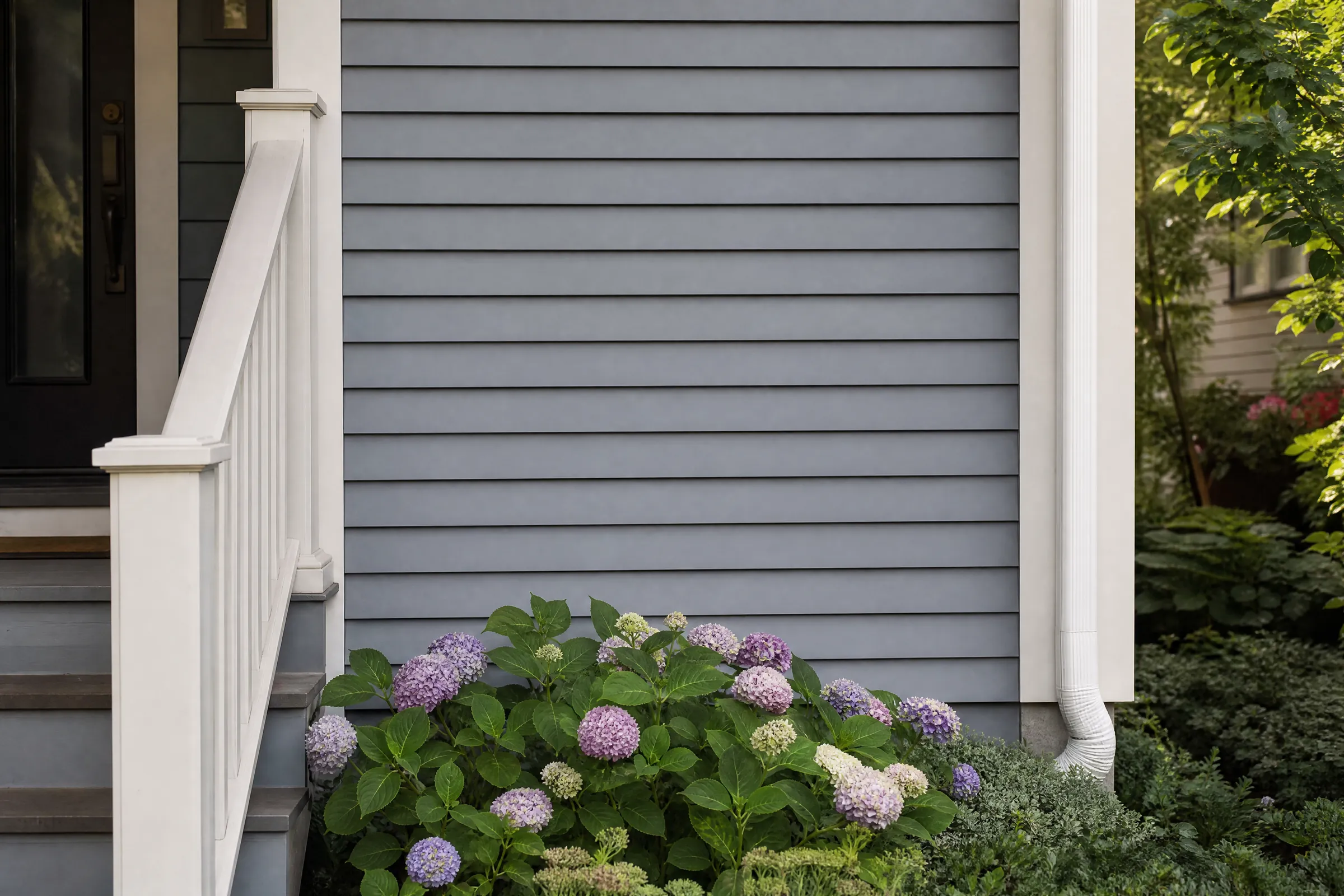
ALUMINUM
SIDING
PAINTING a fresh colour without replacing it

- Free quotes
- Itemized written quote
- Since 2010
- Open 7 days
Faded, chalky aluminum siding can take a new colour when the panels are still sound. We wash off the chalk, prime bare metal and apply at least two coats of exterior paint made for metal.
Siding, recoated
Painting faded aluminum siding in Toronto
Aluminum siding painting means cleaning, priming and recoating the metal panels already on your house rather than tearing them off. The work covers the horizontal or vertical siding itself and, if you want, the aluminum soffits, fascia, eavestroughs, downspouts and window capping that usually come with it. All Painting can change the colour completely or refresh the existing one. The panels, trim and flashing stay where they are, so there is no tear-off, no disposal of old material and no new installation, just a sound coating over metal that is still doing its job.
Most owners who ask have siding installed decades ago, now faded to a washed-out version of its original colour, with a chalky film that rubs off on a hand or a sleeve. Some are tired of an almond, harvest gold or brown that no longer suits the house. Others are preparing to sell, or have replaced windows and a roof and want the siding to look as current as the rest. Owners who like the house but not the cost and disruption of new cladding often see painting as the practical middle path.
A good result looks factory-even from the street. The colour is uniform across each wall, the sheen is consistent from panel to panel, and the lap lines where panels overlap are fully covered without drips collecting along the bottom edge. Up close, there is no chalk under the new paint and no peeling at scratches or nail heads. Trim and soffits sit crisply against the siding in their own colour or a matching one. Painting does not hide deep dents or loose panels, so those are dealt with or discussed before work starts.
Planning begins with a visit. We look at each wall, rub the panels to see how much chalk comes off, check for dents, loose pieces and bare metal, and measure the area to be painted. You receive an itemized written quote that lists the siding, trim, soffits and any extra areas, with the preparation and the number of coats for each. Sample pots are part of a free colour consultation, so shades can be tested against your roof and brick, and the start date is set around a dry stretch of weather.
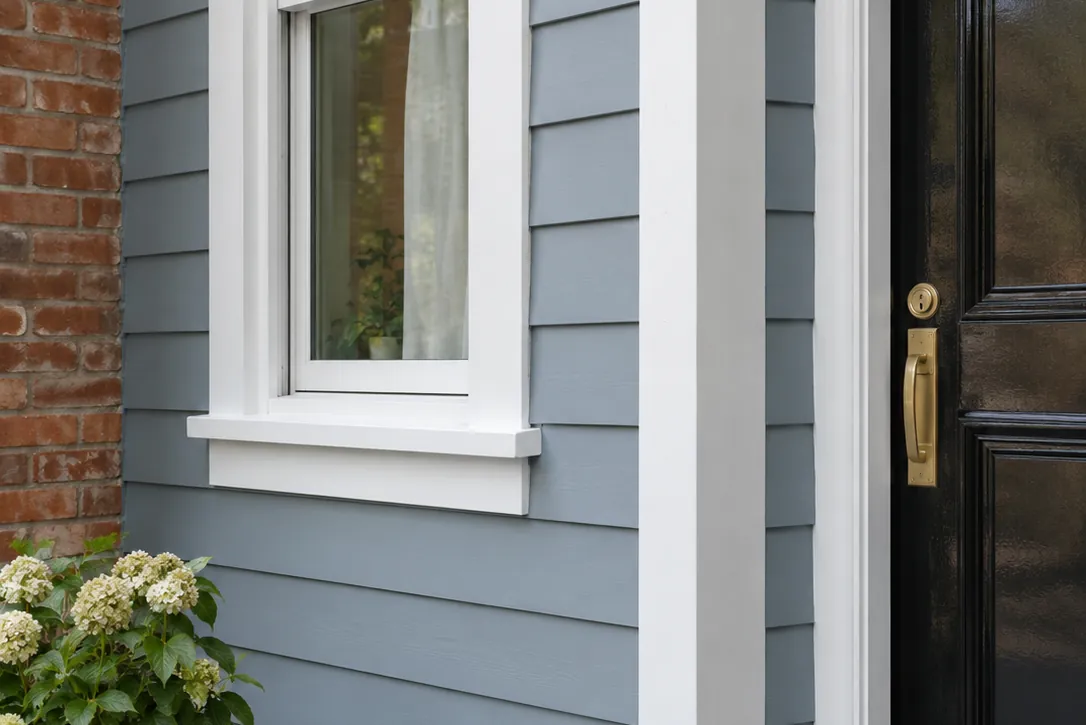
Chalk removal
Aging factory coatings break down into a fine powder. Each wall is washed with a cleaner suited to aluminum and rinsed thoroughly, then tested by hand to confirm the chalk is gone. Painting over chalk is the main reason new paint peels from metal siding.
Dents, scratches and loose panels
Loose panels are refastened, shallow dents are left smooth, and badly damaged pieces are flagged so you can source replacements before painting. Scratches and worn spots down to bare aluminum are sanded and primed with a primer made to grip metal.
Siding finish coats
At least two finish coats of a metal-friendly exterior acrylic are applied by sprayer, brush or roller, depending on the siding profile and what surrounds it. The paint is worked into lap joints and along the bottom edge of every panel.
Soffits, fascia and eavestroughs
Matching aluminum trim is prepared the same way and painted to match the siding or in a contrasting colour. Vented soffits are sprayed or rolled carefully so paint does not clog the vents, and eavestroughs are cleaned of grime before priming and coating.
How aluminum siding is painted
The process starts with cleaning, because aluminum siding fails at the surface, not underneath. Plants and walkways are covered, then each wall is washed from the bottom up with a cleaner that cuts the chalk and any mildew or traffic grime, then rinsed starting at the eaves so dirty water does not streak dry panels. Pressure is kept moderate so water is not forced behind the laps. After the siding dries, a hand rubbed across the panels should come away clean. If it does not, that section is washed again.
Next comes repair and priming. Panels that have slipped or rattle in the wind are refastened, and caulking around windows, doors and trim is cut out where it has cracked and replaced with a paintable sealant. Scratches, worn spots and any oxidized areas are sanded lightly, wiped clean and primed with a bonding primer made for aluminum. On siding where the old coating is heavily worn, the whole surface may get a primer coat. Masking covers windows, light fixtures, vents and the roof edge.
Finish coats go on once the primer is dry. Spraying gives an even film on long, uninterrupted walls, and each sprayed section is often back-brushed into the laps so no ridge is left unpainted. Near doors, decks and narrow side yards, brushing and rolling give more control. At least two coats are applied, with the recoat time on the label respected between them. Trim, soffits and fascia are painted last, so their colour line falls cleanly against the finished siding and any overspray is already behind us.
Reviews
What clients say
Why hire professionals
Why aluminum siding needs a painter who knows metal
Paint and aluminum get along only when the surface is clean, primed in the right places and coated with a product that moves with the metal. Most failures on painted siding trace back to skipped cleaning or the wrong primer, not to the finish coat.
Chalk tested before painting
We check every wall by hand after washing instead of assuming it is clean. Chalk left under the paint is invisible on the day and shows up later as flaking.
Primers that bond to aluminum
Bare and oxidized aluminum needs a bonding primer made for non-ferrous metal. Standard wood primers do not grip properly, so the right product is named on your quote.
Colour choices that suit metal
Very dark colours absorb heat and can make thin panels expand and ripple on sunny walls. We talk through shade choices for south and west elevations before you decide.
Even coverage at height
Two-storey walls, gables and eaves are reached with ladders and staging set up for siding, so the upper laps get the same coverage as the panels by the front steps.
Protection for the yard
Gardens, decks, windows, vehicles and walkways are covered before washing, overspray is controlled with masking and shields, and the site is cleared and swept before we go home.
Our process
Our aluminum siding painting process
Painting siding is mostly cleaning and preparation, with the finish coats at the end. These five steps cover the job from the first visit to the final walk-around of the property with you.
Free consultation
We visit to look at the siding, test how much chalk comes off, check panels for dents or damage and measure each wall. We answer questions about colour, sheen and what painting can and cannot fix.
Itemized quote
Your written quote lists the walls, trim, soffits and extra areas such as a garage or shed, with the preparation and the number of coats planned for each, letting you add or drop items before you book.
Site protection and washing
Landscaping, decks and windows are covered, then the siding is washed with a cleaner suited to aluminum, rinsed and left to dry. A hand test on each wall confirms the chalk is gone before any primer is opened.
Repairs and priming
Loose panels are refastened, cracked caulking is cut out and replaced, and scratches or bare metal are sanded and primed with a bonding primer. Windows, fixtures and vents are then masked before the finish coats.
Finish coats and walk-around
At least two coats are applied by sprayer, brush or roller, with trim and soffits last. When the paint is dry, the masking comes off and we go around the house with you to check every side.
Ready to start?
Call (416) 710-4224 or send a few details and photos for a free, itemized quote.
Preparation
Preparing aluminum siding so the paint holds
Chalk test
Before and after washing, a hand or a dark cloth is rubbed across the siding. Heavy powder on the cloth shows how far the factory finish has broken down and how much cleaning the wall needs. Painting starts only when the cloth comes away clean.
Washing and rinsing
A cleaner suited to aluminum is applied from the bottom of each wall up, scrubbed where grime is heavy, and rinsed from the eaves down. Pressure is kept low enough that water does not get forced behind the panels or into wall cavities.
Refastening and dent checks
Loose panels are fastened back in place so they do not shift and crack the new paint. Shallow dents are usually left alone because filler can pop out of flexing metal; badly creased or holed panels are pointed out for replacement first.
Caulking
Cracked caulking around window frames, door frames, corner posts and where siding meets trim is removed and replaced with a paintable exterior sealant. Sound joints stop water from getting behind the panels, and that matters more than the colour on them.
Masking and covering
Windows, light fixtures, house numbers, vents, roof edges and anything not being painted are masked with tape and paper or film. Plants are covered loosely so they can breathe, and drop sheets protect decks, walkways and driveways from drips and overspray.
Products and finishes
Bonding primer for metal
A bonding primer formulated for aluminum and other non-ferrous metals goes on any bare, scratched or oxidized areas, and over the whole surface where the factory coating is badly worn. It gives the finish coats a surface they can grip instead of slick metal.
Exterior acrylic for siding
The finish is an exterior acrylic latex made to bond to metal. It stays flexible as panels expand in summer sun and contract in winter cold, resists fading and cleans up with water. Two coats give full, even coverage over the old colour.
Satin and low-sheen finishes
Satin is the usual sheen for aluminum siding: it sheds dirt better than flat paint and hides small dents better than gloss, which highlights every ripple. Low-sheen finishes suit siding with more surface wear. Trim can take a slightly higher sheen for definition.
Heat-conscious colour choices
Darker colours absorb much more heat than lighter ones, which can make aluminum panels move on walls facing the afternoon sun. Mid-tone and lighter shades are the safer choice for siding, and some paint lines offer heat-reflective formulas for darker colours.
Service areas
Where we paint aluminum siding
In Toronto, aluminum siding is common on post-war bungalows and storey-and-a-half houses in the inner suburbs, often combined with brick on the lower walls. Many older semis and detached homes had their wood clapboard covered with aluminum during later renovations, and that siding is now faded but intact. Narrow side yards and tight lot lines mean sprayers are used carefully, with more brushing and rolling between houses. Laneway garages and backyard sheds are often clad in matching siding and can be painted at the same time.
Across Peel Region and Durham Region, many older neighbourhoods built from the 1960s through the 1980s still have their original aluminum siding, soffits and fascia. In York Region and Halton Region, it shows up in older town centres and on rural properties, while newer subdivisions lean toward vinyl. The approach does not change with the address or the age of the house: test the chalk, clean thoroughly, prime the bare metal and finish with a minimum of two coats.
Climate and timing
How heat and cold affect painted aluminum siding
Aluminum moves with temperature more than wood or brick, and our climate pushes it through a wide range. Summer sun heats south and west walls far above the air temperature, while winter nights drop well below freezing. A flexible exterior acrylic copes with that movement, but only if it is applied within the temperature range printed on the label and given warm, dry nights to cure. Painting is therefore scheduled from late spring to early fall, and hot afternoons on sunny walls are avoided so paint does not dry before it levels.
Moisture is the other concern. Morning dew sits on metal siding longer than on wood, so work starts once the panels are dry to the touch. Rain soon after coating can wash out fresh paint, so the forecast decides each day's plan. Over winter, ice and snow sliding off roofs dent lower panels and gutters, and road salt from driveways splashes onto siding near the ground. Those areas are checked closely at the quote, because they often need extra cleaning and spot priming before any colour goes on.
Aluminum was a popular way to cover older wood clapboard across the city for decades, so many homes here have it over original wood. If the aluminum is loose or damaged, the wood behind it may be exposed to moisture, so we note anything suspicious at the quote. Semi-detached homes often share a siding line with the house next door, and a colour change stops at the property line, which is worth discussing with your neighbour first. Some heritage districts guide exterior colours, so check before choosing a bold shade.
- Rub the siding and note how much chalk comes off
- Look for loose, cracked or badly dented panels to replace first
- Choose shades that suit sunny walls without overheating the metal
- Talk to semi-detached neighbours about where the colour change stops
- Clear barbecues, hoses and garden pots away from the siding
What changes the price of aluminum siding painting
The area of siding and the height of the walls set the base. A storey-and-a-half bungalow with easy access takes less ladder work than a two-storey house with gables and a steep backyard slope. Heavily chalked siding takes longer to clean, and walls with many scratches, bare spots or oxidized areas need more priming. Loose panels, cracked caulking and dents to be flagged add preparation time before any paint goes on.
Your choices shape the rest. Painting soffits, fascia, eavestroughs and window capping along with the siding adds surfaces, and a second colour for trim adds masking and cutting in. A big change from a dark colour to a light one, or the reverse, may need an extra coat. Garages and sheds with matching siding can be added as separate lines. Our painting cost calculator can give you a rough first figure for the siding ahead of the visit.
Price it before anyone visits
Pick the rooms and the work in our cost calculator for a ballpark range in about a minute.
Then ask for a free quote: written, itemized and free to change before work starts.
Projects
Recent aluminum siding painting projects
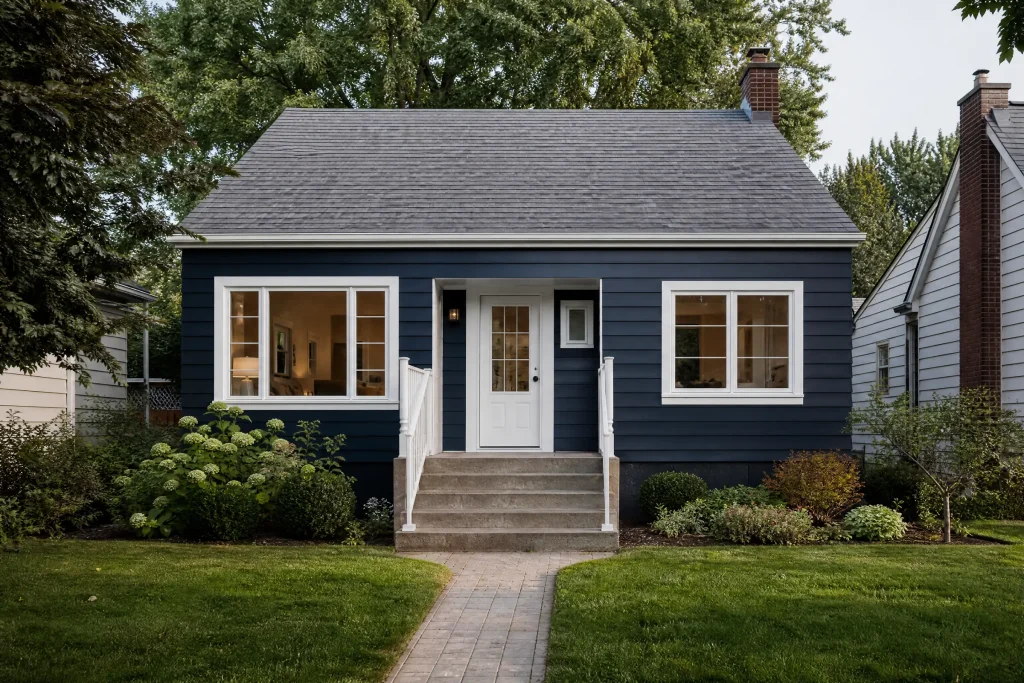
- Siding
- Scarborough
Failed paint stripped from aluminum siding on a Guildwood bungalow
A postwar bungalow in Guildwood, Scarborough: failed paint scraped off aluminum siding and white oxidation cleaned, then brushed and rolled golden yellow with white trim.
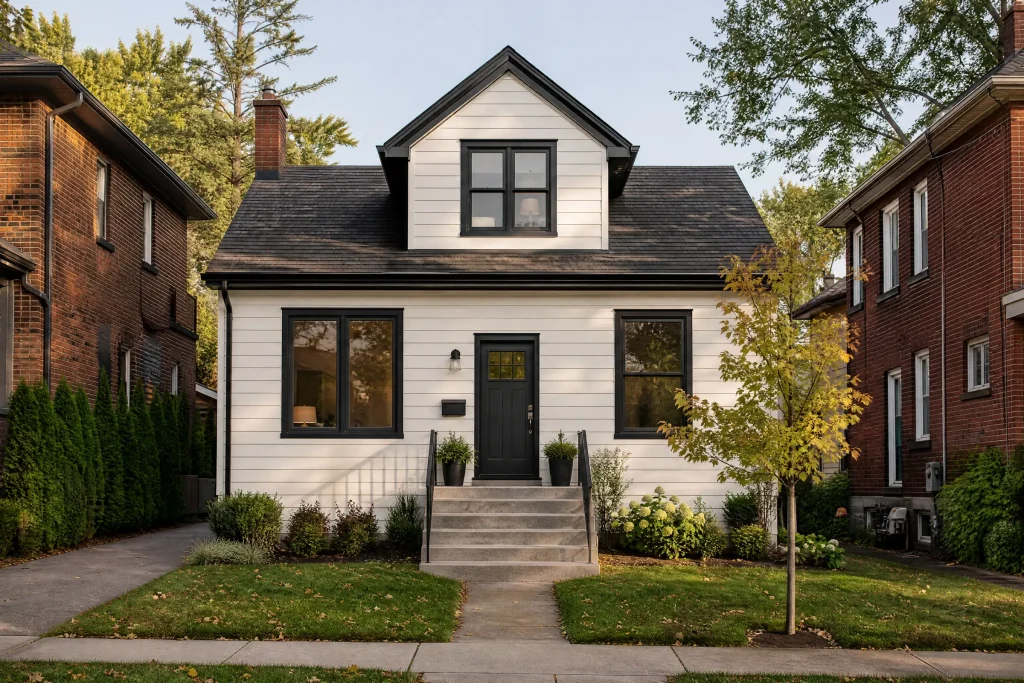
- Siding
- Aurora
Chalky yellow aluminum siding renewed on an Aurora two-storey
A two-storey with aluminum siding in Aurora: heavy chalk scrubbed off until a wipe test passed, then primed and sprayed soft yellow with white trim.
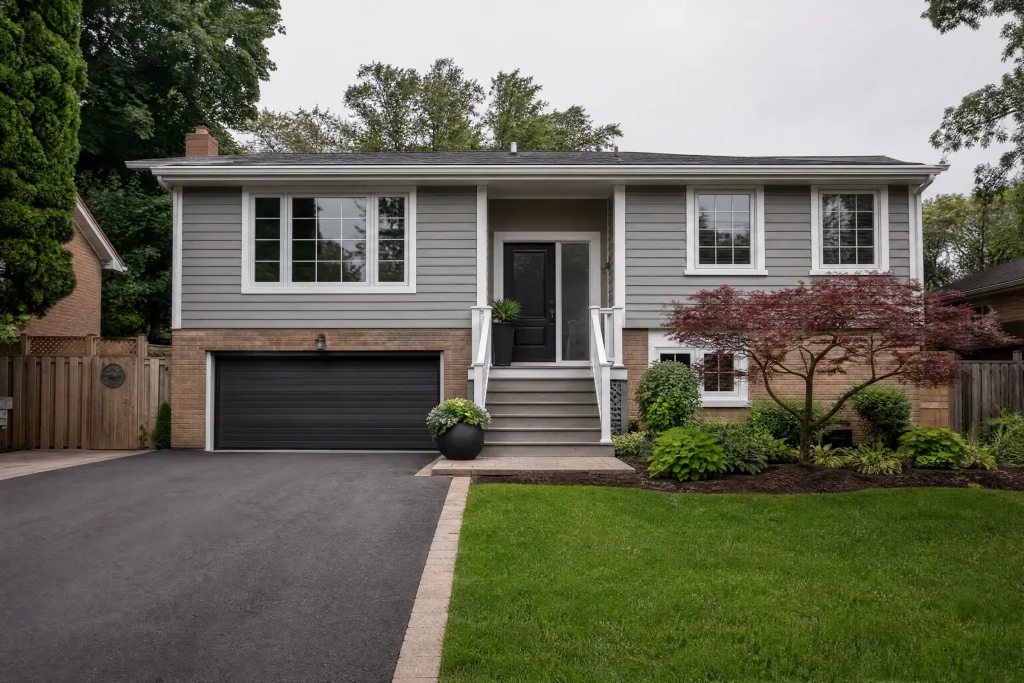
- Siding
- Pickering
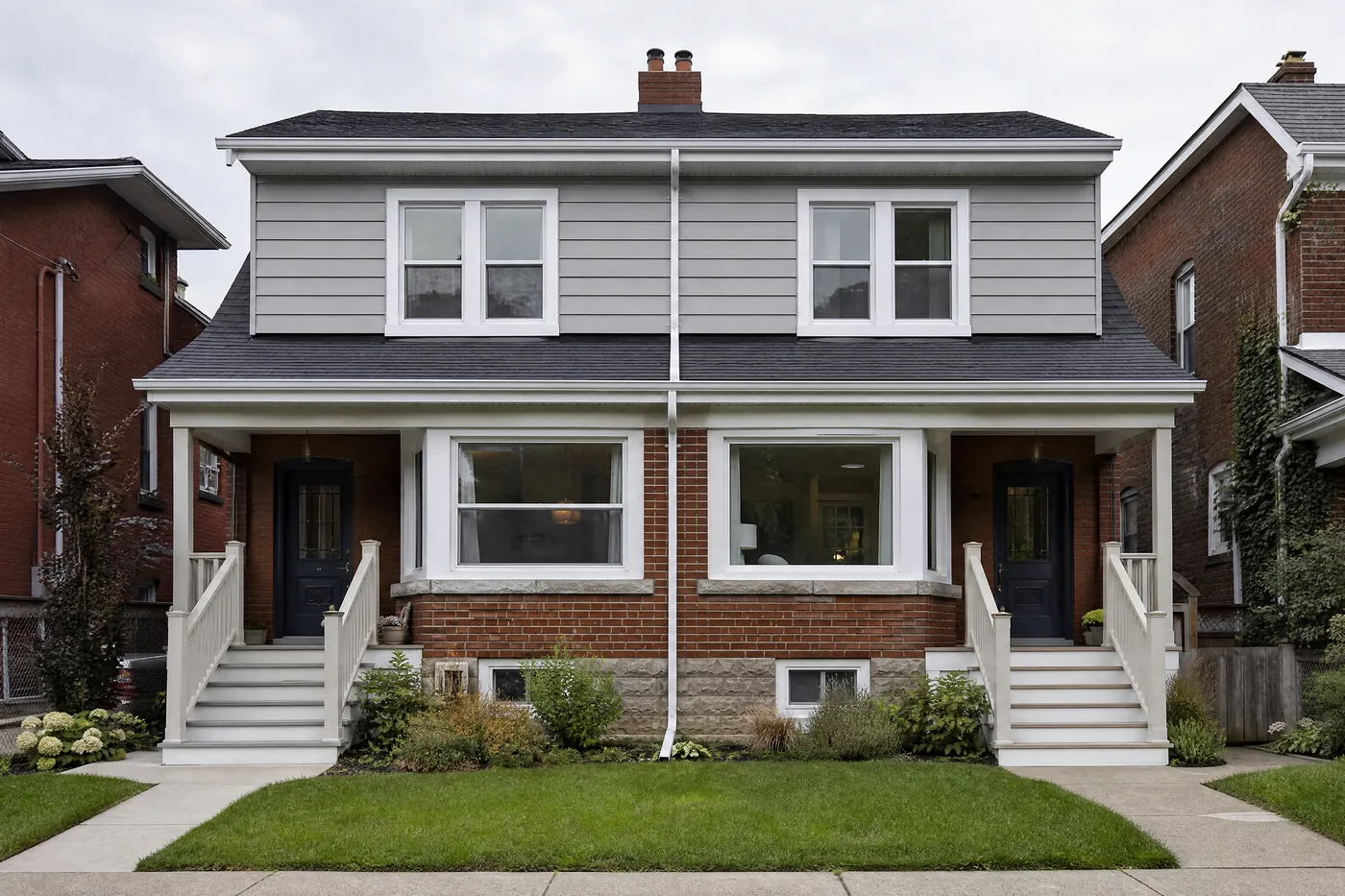
One half of a Bay Ridges semi: aluminum siding repainted pewter grey
A semi in Bay Ridges, Pickering: lake grime and mildew washed off the aluminum, metal bonding primer applied, then painted pewter grey with white soffits.
Resources
Painting Guides and Resources
- Guide
Painting aluminum siding or brick: what’s involved and when it makes sense
Many Toronto homes have aluminum siding, brick, or both. What painting each one involves, the questions to ask before you start, and when painting is the right call.
- Guide
When to paint your house exterior in Toronto
Temperature, humidity, dew and rain all decide how well exterior paint cures. How to pick the right season, and the right days, for an exterior repaint in Toronto.
Can aluminum siding really be painted?
Yes, as long as the panels are firmly attached and the surface is prepared properly. The chalk that forms on old factory finishes has to be washed off completely, bare metal needs a coat of bonding primer, and the finish coats need to be an exterior acrylic suited to metal. Done in that order, aluminum siding takes paint well and can be recoated in a completely new colour.
Why does painted siding sometimes peel?
Peeling almost always comes from what was under the paint, not the paint itself. Chalk left on the panels, grease or grime, or a primer that does not bond to aluminum will let the new coating lift. Thorough washing with a hand test on each wall, a bonding primer on bare spots and a minimum of two finish coats give the paint a sound base to hold on to.
Is painting a better choice than replacing the siding?
When panels are straight and firmly attached, painting is usually the simpler option: the siding, trim and flashing stay in place, and there is no tear-off, disposal or new installation. Replacement makes more sense when panels are badly dented, cracked or loose across large areas, or when you also want new insulation behind the cladding. We tell you what we see at the visit so you can weigh both.
Can I change the colour of my siding completely?
Yes. Painting is the point where you can move away from an older almond, brown or faded blue to a new scheme, and change trim, soffits and fascia at the same time. Very dark shades absorb heat and can make panels move on sunny walls, so they are discussed carefully. Real sample pots, brought along to a free colour consultation, let you compare shades against your roof and brick.
Do you spray or brush the siding?
Both, depending on the wall. Spraying gives an even film on long, open runs of siding, and sprayed areas are usually back-brushed into the laps. Near decks, doors, neighbours and cars, brushing and rolling give more control and avoid overspray. Whichever method is used, windows, fixtures and plants are masked and covered first, and the siding receives a minimum of two coats.
Can vinyl siding be painted too?
Some vinyl siding can be painted, using paint made for vinyl in shades that do not absorb too much heat. Dark colours on vinyl can make panels warp, so the choice of colour is narrower than with aluminum. Vinyl also needs thorough cleaning first, as it holds grime and mildew in its texture. We look at the siding at the visit and tell you whether painting suits it.
What should I do before the painters arrive?
Clear grills, garden furniture, pots and hoses from along the siding, trim back any shrubs pressing against the walls if you can, and leave gates unlocked. Please leave an outside tap and a power outlet available, and keep nearby windows shut. You do not have to stay home while we work, and you will know who is coming before the job begins.
Which areas do you serve for aluminum siding painting?
We paint aluminum siding on houses, garages and backyard sheds in every part of the city and in the neighbouring regions of Peel, York, Halton and Durham, and have done so since 2010, with 18 King St E as our home base. Quotes cost nothing, and for a garage, shed or single wall, a few photos of the siding can be enough for us to price it.
Free quotes across the GTA
Get a free quote for your siding
Send photos of each side of the house or book a visit, and we will test the siding and send an itemized written quote for every wall.