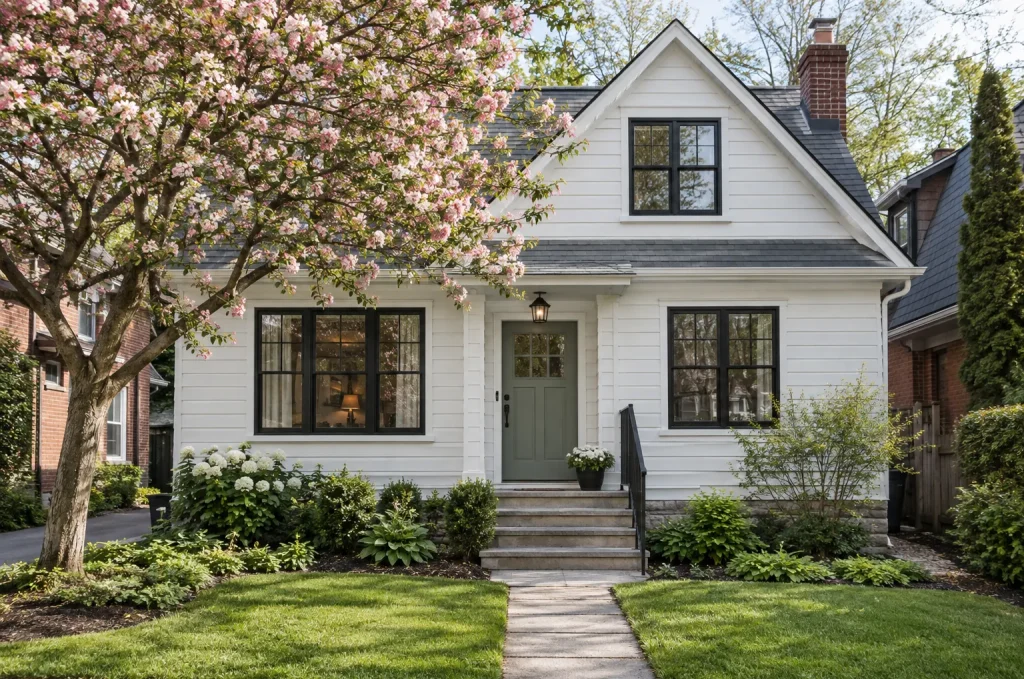

Drive through almost any Toronto neighbourhood and you will see the same two materials again and again: aluminum siding, added to many older homes decades ago, and brick, on everything from Victorian semis to postwar bungalows. Both last a long time, and both can start to look dated or worn. Painting is one way to change that, but the two materials behave very differently, and the decision deserves some thought.
This article explains what painting each surface involves, when it makes sense, and the questions to ask before you commit.
Aluminum siding
Why aluminum siding gets painted
Aluminum siding was sold with a baked-on factory finish. Over time, that finish fades and starts to chalk, leaving a powdery residue that comes off on your hand. The siding itself is often still sound. Painting gives it a new, even colour and a fresh protective coat without the cost and disruption of tearing it off and replacing it.
When it makes sense
Painting aluminum siding is usually worth considering when:
- The panels are mostly straight and well attached. Paint changes colour, not shape. Dents, loose panels and gaps stay visible.
- The problem is fading or chalking. These are exactly what a repaint fixes.
- You want a different colour. Painting is the simplest way to change the colour of siding you otherwise like.
If many panels are badly dented, missing or coming loose, or if there are moisture problems behind the siding, repairs or replacement come first.
What the job involves
- Washing. The siding is washed thoroughly to remove chalk, dirt and mildew. This is the most important step. Paint applied over chalk sits on a powdery layer instead of bonding to the metal, and it will not last.
- Checking the surface. Once the siding is dry, a simple test helps: rub a clean cloth over it. If it still comes away white, more cleaning is needed.
- Spot priming. Any area where bare metal shows, through scratches or worn spots, is primed with a primer suited to metal so the finish bonds and the metal is protected.
- Trim and details. Soffits, fascia, window trim and corner pieces are cleaned and prepared along with the siding. Failing caulking around windows and doors is replaced.
- Finish coats. An exterior paint suited to metal siding is applied in at least two coats, in suitable weather.
Choosing a colour
A few practical points apply to siding colours. Darker colours absorb more heat from the sun, and a strong, glossy finish can make small dents and waves in the panels more obvious. Lower-sheen finishes tend to be more forgiving. It is worth looking at a sample on a sunny wall before deciding.
Brick
Why brick is a bigger decision
Brick is different from siding in one important way: once it is painted, going back is very difficult. Removing paint from brick is slow, messy and can damage the surface of the bricks. So the first question is not how to paint brick, but whether to.
Brick also needs to breathe. Masonry walls absorb moisture from rain and from inside the house, and that moisture needs a way out. A paint that traps it can lead to peeling, flaking, and in cold weather, damage to the face of the bricks as trapped water freezes and thaws.
When painting brick makes sense
Painting brick is a reasonable choice when:
- The brick has already been painted and the old paint is failing or the colour is dated. Repainting painted brick is a maintenance job, not a new commitment.
- The brick is mismatched or patched, for example after an addition or repairs, and a single colour would tie it together.
- You want a significant change in style and accept that it is long-term.
It may not be the right choice when the brick is in good condition and you like its natural colour, or when the wall has moisture problems that have not been solved.
Questions to ask first
- Is the mortar sound? Crumbling or missing mortar should be repaired before any coating goes on.
- Are there signs of moisture? White, salty deposits on the face of the brick (efflorescence), damp patches or spalling bricks point to water problems that paint will not fix and may make worse.
- Is the house heritage-designated? If your home is designated or in a heritage conservation district, changes to the exterior may need approval from the City of Toronto. Check before you plan the work.
- What finish do you want? Besides conventional masonry paint, there are breathable mineral and masonry stains that colour the brick with less of a painted look. Your painter can explain the trade-offs.
What the job involves
- Inspection. The walls are checked for loose mortar, cracks, moisture and any old coatings.
- Cleaning. The brick is cleaned to remove dirt, efflorescence and loose material, then left to dry thoroughly. Masonry holds water, so drying time matters.
- Repairs. Any mortar repairs are completed and given time to cure before painting.
- Priming where needed. A masonry primer suited to the surface may be applied, depending on the product system.
- Finish coats. A breathable masonry paint is applied in at least two coats, working the paint into the texture of the brick and the mortar joints.
Brick and siding together
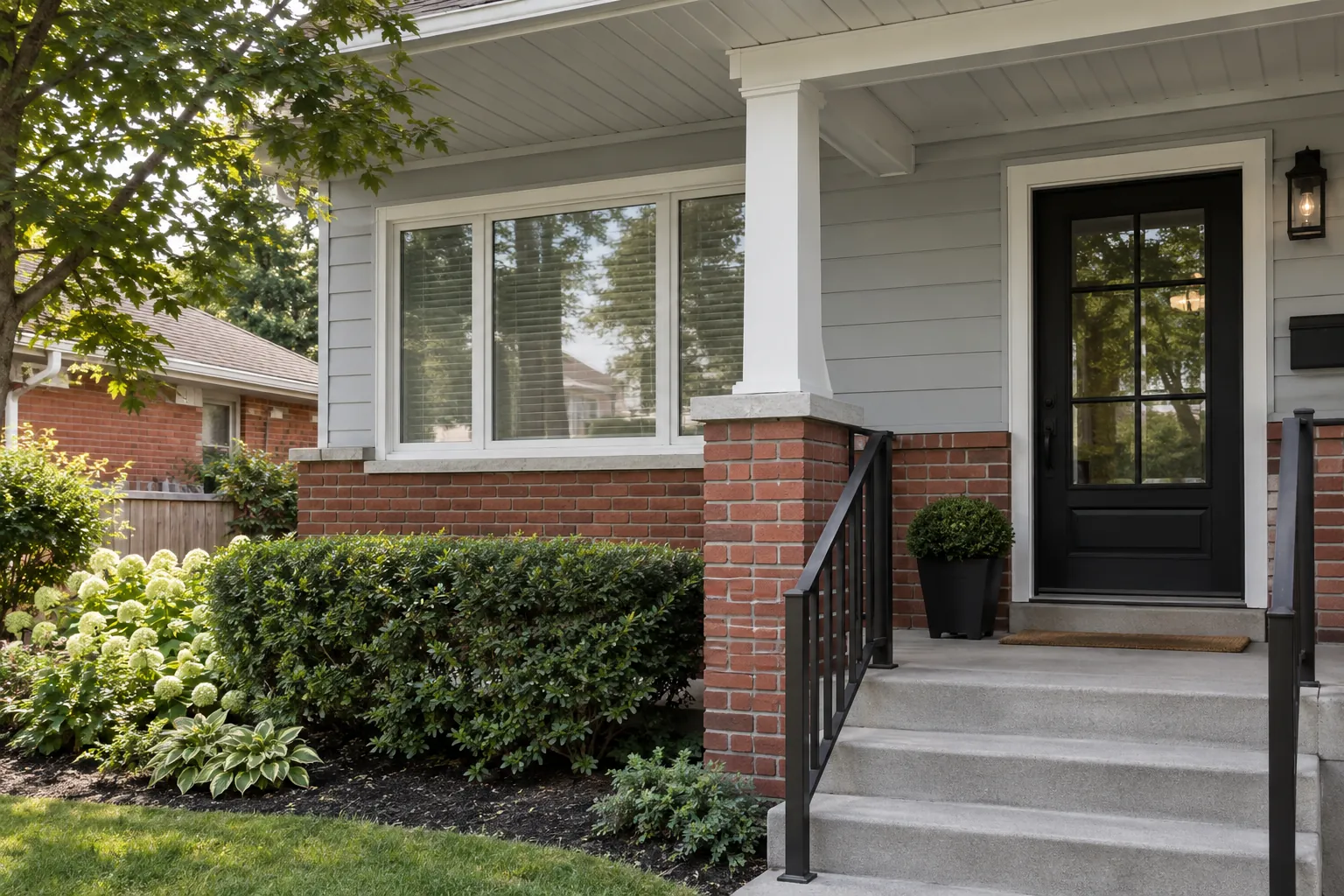
Many Toronto homes have brick on the lower floor and siding above, or brick at the front and siding at the back. Painting the siding and trim while leaving the brick natural is often the simplest way to refresh the whole exterior, and it keeps the brick’s character. Choosing a siding and trim colour that works with the existing brick tone is the key decision, and sample boards held against the brick help.
Timing
Both materials need suitable weather: dry surfaces, and temperatures that stay within the paint manufacturer’s limits during application and curing. Our guide on when to paint your house exterior in Toronto covers this in more detail.
Learn more or get a quote
See our aluminum siding painting and exterior brick painting pages for how we handle each surface, and exterior painting for trim, soffits and doors.
Not sure which way to go?
Contact All Painting for a free visit and an itemized written quote. We will look at the siding or brick, tell you what preparation it needs, and help you decide whether painting is the right call for your home.