
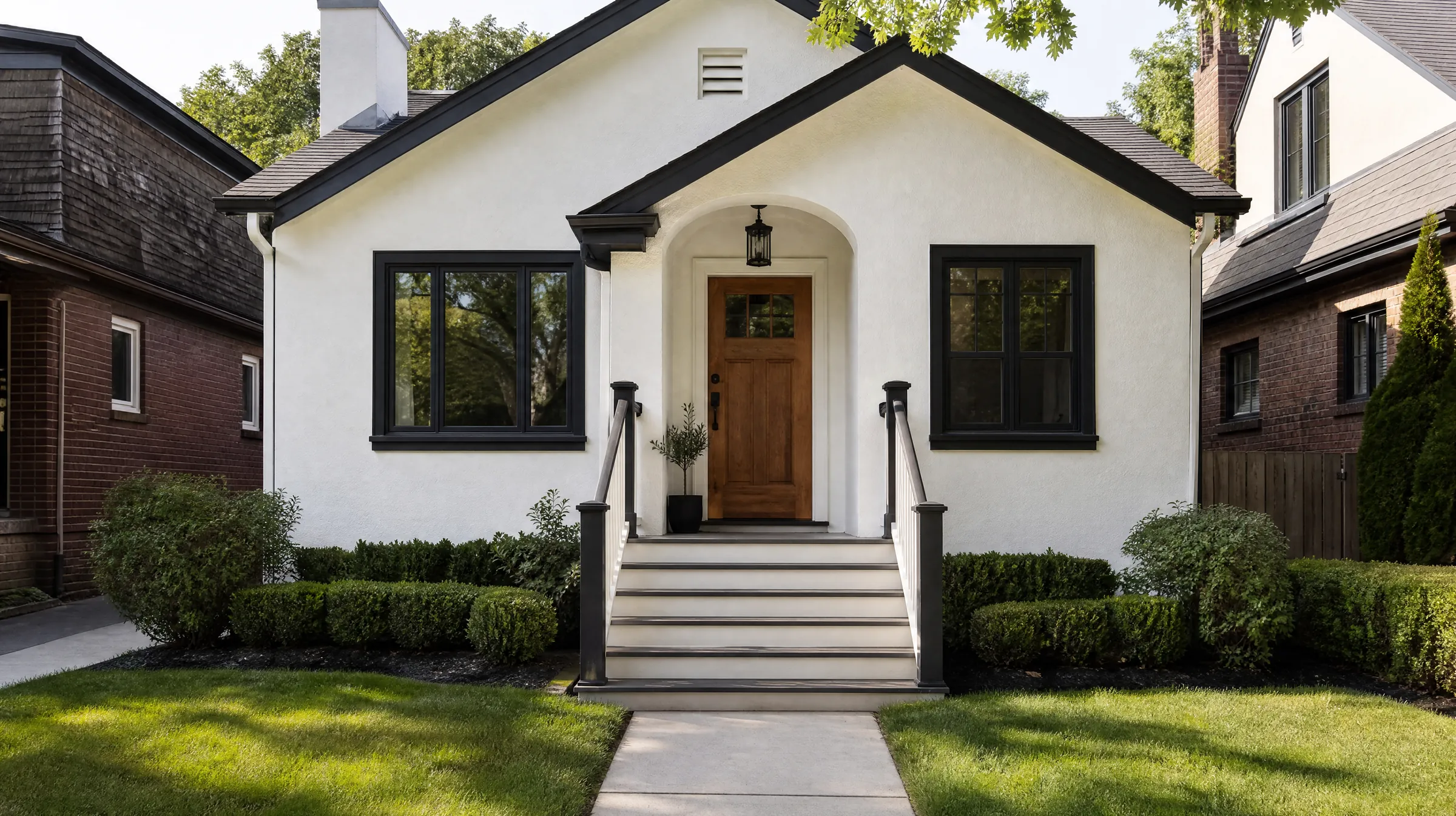
EXTERIOR
PAINTING a fresh exterior, properly prepared

- Free quotes
- Itemized written quote
- Since 2010
- Open 7 days
We wash, scrape, caulk and prime your siding, trim, stucco and doors before any colour goes on, then finish them in at least two coats on days when the weather lets the paint bond properly.
Outside the house
Exterior painting in Toronto, from siding to trim
Exterior painting covers every painted surface on the outside of a house: wood and aluminum siding, stucco walls, brick that has already been painted, window and door trim, soffits, fascia, eavestroughs, front and garage doors, porch ceilings, railings and shutters. All Painting takes on full repaints where everything is recoated in one scheme, and partial jobs where only the weathered parts are done, such as a sun-beaten south wall or a peeling porch. Each material is primed according to what it is made of. Most of the work happens before the paint is opened.
Owners call when the paint starts to fail in visible ways: peeling on the window sills, chalky siding that leaves powder on a hand, bare wood showing through on the fascia, or caulking that has cracked away from the trim. Others are planning a sale and want the front of the house to look cared for, or have just bought an older home whose colours they never liked. Some are replacing windows or a roof and want the surrounding trim to match. Landlords also book us to refresh rental houses between leases.
A good exterior job is measured in two ways. From the street, colour lines are crisp where siding meets trim, the sheen is even across each wall, and there are no drips, missed spots or roller marks catching the evening sun. Up close, the paint is tight against the surface, joints are sealed, and every bare patch has been primed. That second test matters more, because paint that looks fine but sits on chalk, dirt or loose old coatings starts lifting once it has been through a few freeze-thaw cycles.
Planning starts on a walk around the house. We look at each wall and surface, note peeling, rot, open joints and chalking, and check how high the walls run and how ladders or staging will reach them. You get an itemized written quote listing each surface, the preparation it needs, the products and the coats. We bring sample pots to a free colour consultation, so you can judge choices on your own walls in daylight. Once you approve, we set a start window around the forecast and tell you who is coming.
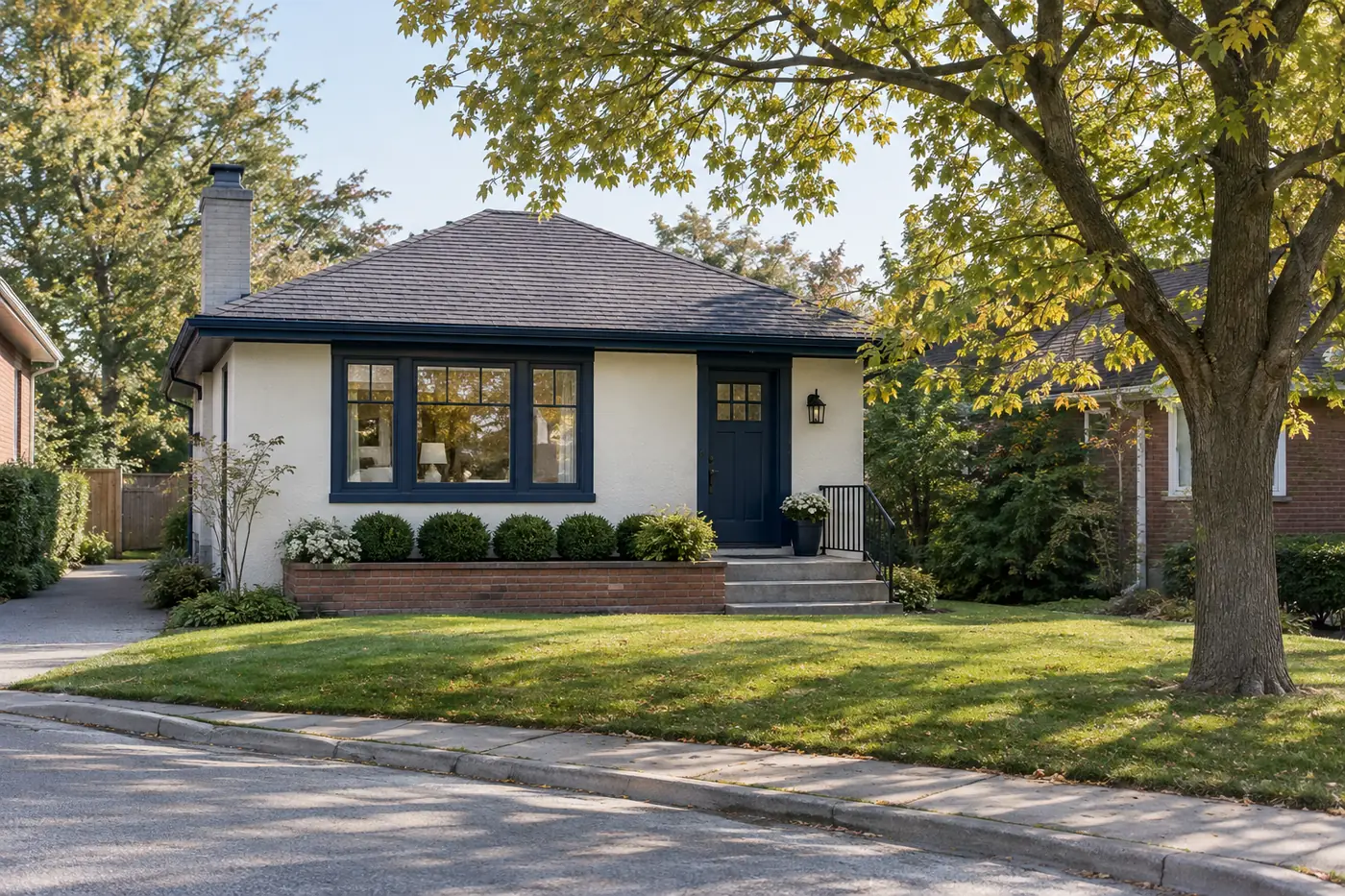
Full exterior repaints
Siding, trim, soffits, fascia, eavestroughs, doors and railings are prepared and painted in one coordinated scheme. Doing it all at once keeps the colours consistent around the whole house and means every surface starts its next weathering cycle from the same sound coating.
Partial repaints
When only part of the house has failed, we work on that part alone: window trim, a porch, a weathered elevation or the fascia. New paint is matched to the existing colour as closely as possible, or the section is repainted from one edge to the next.
Stucco and masonry surfaces
Stucco and previously painted brick are washed, cracks are filled with a flexible patch, and walls are coated with a breathable masonry paint that lets trapped moisture escape. The rough texture is worked from several directions so paint reaches every pocket in the surface.
Doors, garages and accents
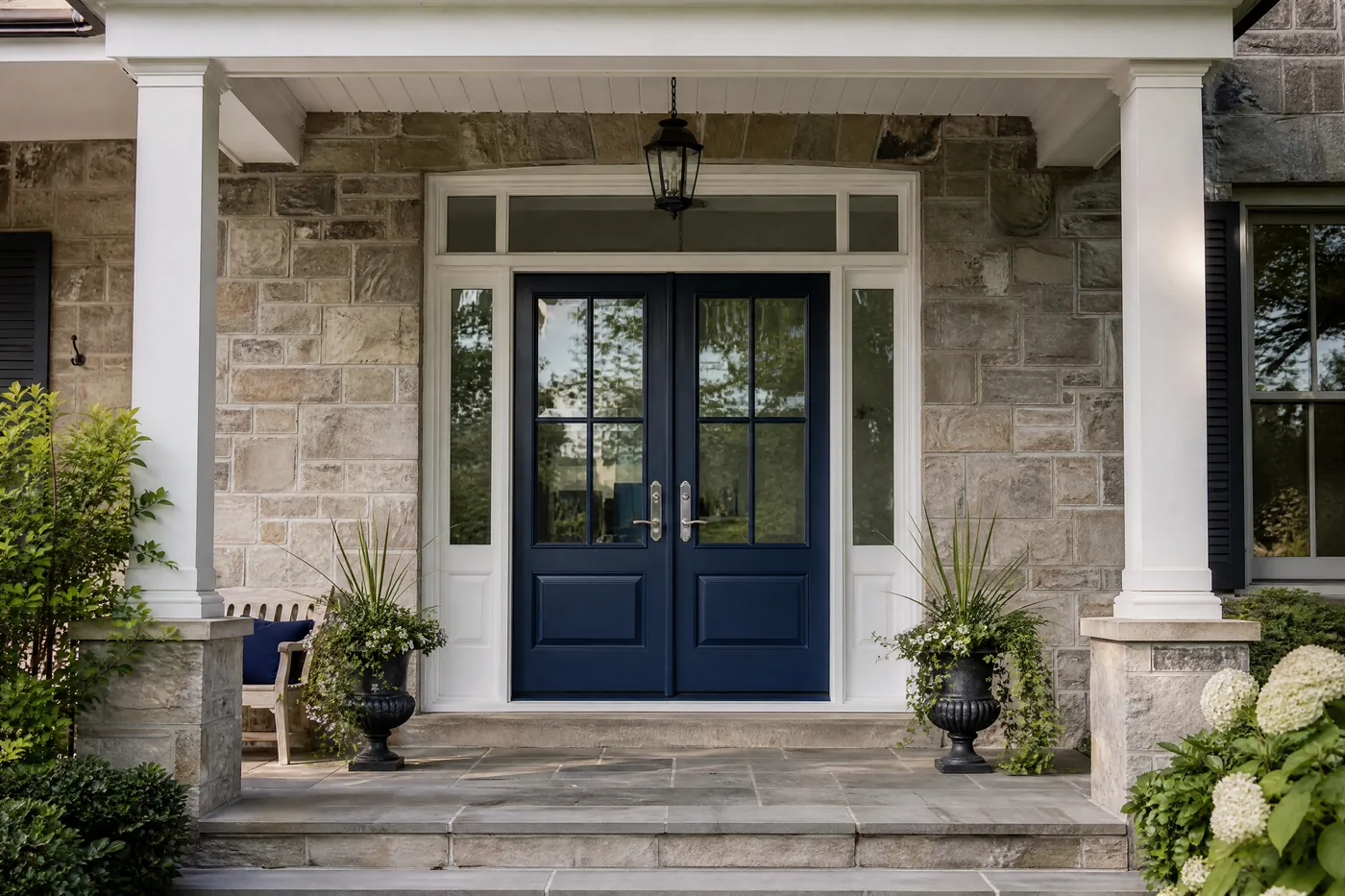
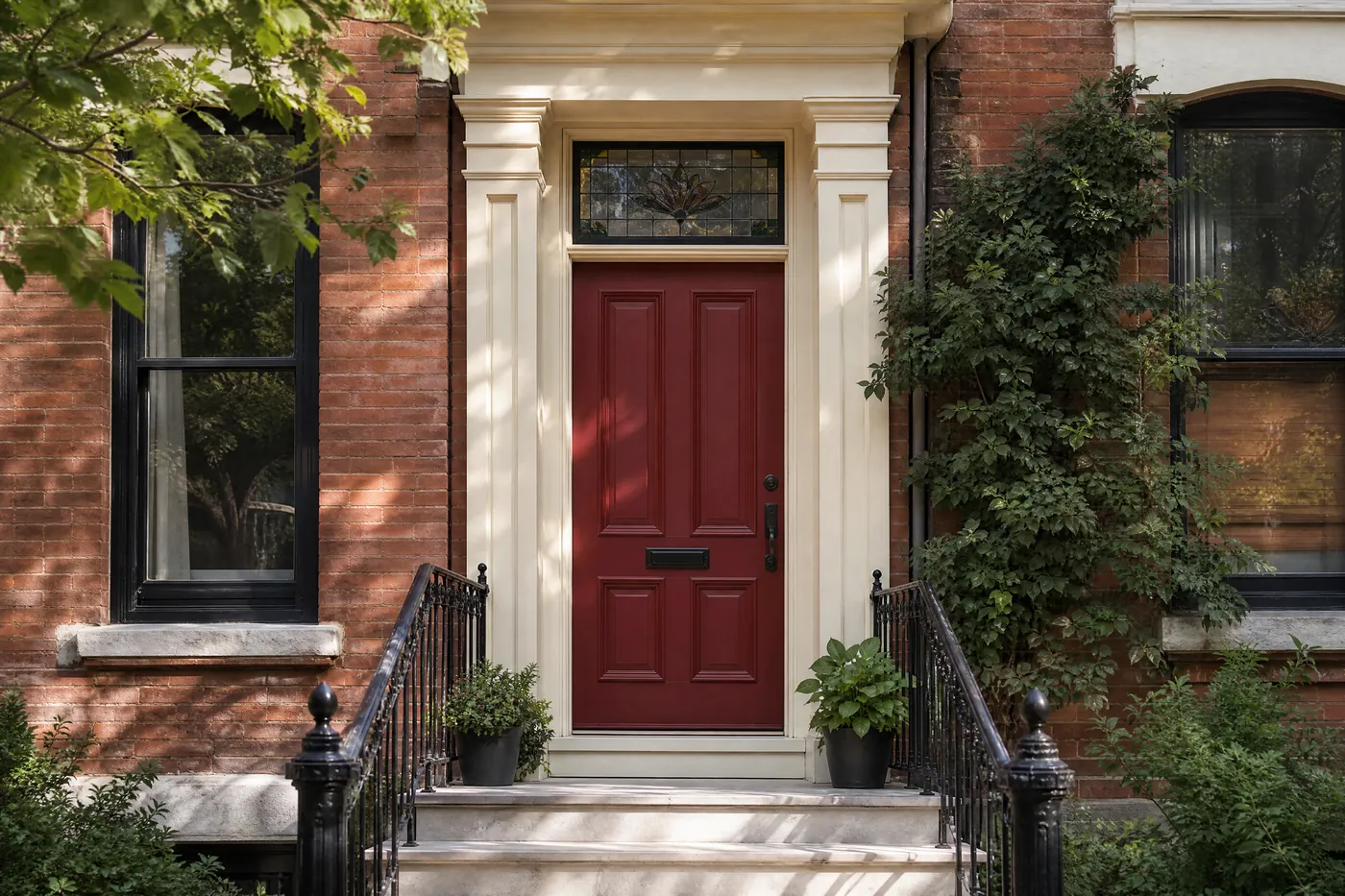
Front doors, garage doors, shutters and window frames can be painted in a contrasting accent colour or matched to the trim. Metal and wood are each sanded and primed with a suitable product, and hardware is removed or masked before the exterior enamel goes on.
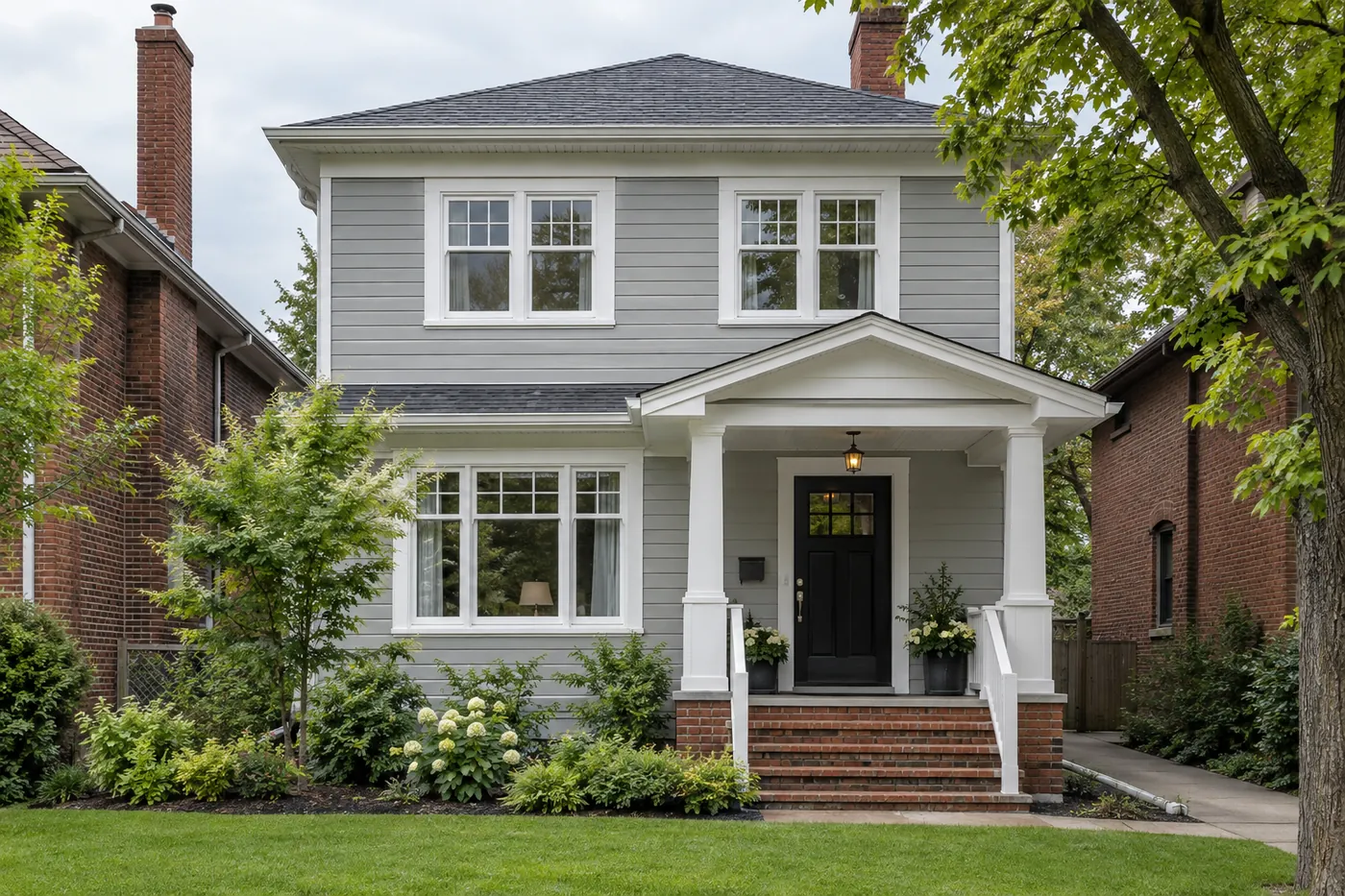
Exterior painting surface by surface
Wood siding and trim are worked from the eaves down. After washing and drying, loose paint is scraped off down to paint that is well bonded, and the edges are feathered smooth so they will not show as ridges under the new coat. Soft or split wood is pointed out; small rotted sections can be cut out and replaced with minor carpentry, while larger rot is flagged before painting. Bare wood gets an exterior primer, open joints are filled with paintable exterior caulk, and two finish coats go on by brush and roller so the paint is worked into the grain.
Aluminum siding is washed thoroughly to remove the chalky residue that forms as factory coatings age, then checked with a wipe test before any scratches down to bare metal are primed. Vinyl siding can take paint formulated for vinyl, provided the colour is light enough not to overheat and warp the panels. Steel railings and garage doors are wire-brushed to remove rust, primed with a rust-inhibiting metal primer and finished in an exterior enamel. Sprayers can be used on long siding runs, with careful masking of windows and roofs.
Stucco and painted brick are washed at a pressure that will not damage soft mortar or break up the surface. Hairline cracks are filled with an elastomeric patch, and loose areas are scraped and spot-primed with a masonry primer. Finish coats use a breathable acrylic masonry paint, applied by thick-nap roller or sprayer and back-rolled into the texture. Unpainted brick needs its own assessment before paint is considered, because the right system depends on how the wall handles moisture, and that check is written into the quote.
Reviews
What clients say
Why hire professionals
Why exterior painting is worth handing to painters
Exterior paint fails from the bottom of the process up: poor washing, skipped primer, painting in the wrong conditions. A professional painting team brings the time, access equipment and product knowledge to do each step properly, on walls you would rather not climb. You can read about our team before anyone sets up a ladder.
Safe access at height
Second-storey walls, gables and dormers are reached with properly set ladders, stabilizers and staging where needed, so the far corners get the same preparation as the walls near the ground.
Products matched to each surface
Wood, aluminum, stucco, steel and painted brick each need a different primer and finish. The quote names the system planned for every surface instead of one paint for the whole house.
Weather-aware scheduling
Paint goes on only when air and surface temperatures, humidity and the forecast fall within the product's limits. If rain or a cold night is coming, we adjust the plan and let you know.
Preparation done in full
Washing, scraping, sanding, caulking and spot priming take most of the time on an exterior. Skipping them is the shortcut behind early peeling, so they are listed as their own lines on your quote.
A tidy yard throughout
Plants, walkways, cars and windows are covered before work starts, paint chips from scraping are collected, and ladders and drop sheets are packed away when we finish for the evening.
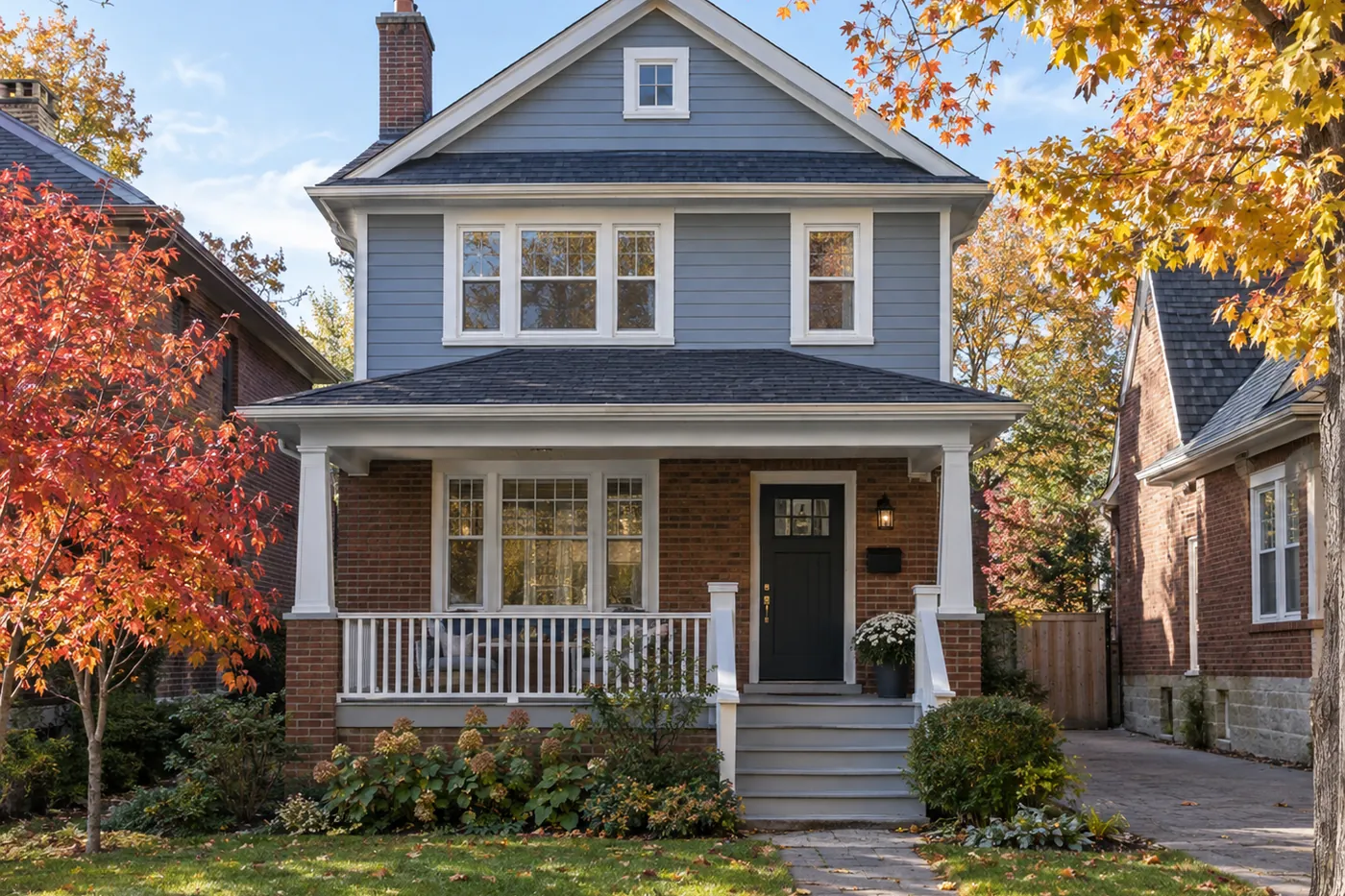
Our process
Our exterior painting process, step by step
An exterior project runs in a fixed order so that each layer goes onto a clean, dry base. The steps below take a house from the first walk-around to the last coat of paint.
Walk-around and quote
We walk around the house, measure the walls and trim, note the condition of each surface and look at access. A free, itemized written quote follows, and smaller jobs can often be quoted from photos.
Colour and scheduling
Testing colours costs nothing: we bring real sample pots to a colour consultation to try on the house in daylight. Once you approve the quote, the start is set around the forecast and you know who is coming.
Protection and washing
Gardens, walkways, decks, cars and windows are covered first. Walls and trim are then washed to lift dirt, pollen, mildew and chalk, and they are given time to dry fully before any scraping or sanding begins.
Repairs and priming
Loose paint is scraped, edges are sanded smooth, failed caulking is cut out and replaced, small areas of rot are repaired, and every bare or patched spot is primed with a product suited to the material.
Finish coats and walk-through
At least two finish coats go on by brush, roller or sprayer, with proper recoat times. When the last coat is dry, we walk around the house with you, fix anything you spot and clear the site.
Ready to start?
Call (416) 710-4224 or send a few details and photos for a free, itemized quote.
Preparation
Preparing a house exterior for new paint
Washing
Siding, trim and soffits are washed to lift dirt, pollen, mildew and chalk that would stop new paint from bonding. Pressure is adjusted to the surface, gentler on soft wood and stucco, and the house is left to dry thoroughly before the next step starts.
Scraping and sanding
Loose or blistered paint is scraped off until what remains holds firmly to the surface. Edges are feathered with sandpaper so the old paint line does not show through, and glossy areas are scuffed so the new coating has something to hold on to.
Caulking and sealing
Cracked caulking around windows, doors, trim joints and siding ends is cut out and replaced with a paintable exterior sealant. Sealing these joints stops rain and melting snow from getting behind the siding, protecting the wood under the paint as much as the paint itself.
Minor carpentry
Small sections of soft or split trim, sills and fascia can be cut out and replaced with new wood, or filled with an exterior-grade wood filler when the damage is shallow. Larger structural rot is pointed out at the quote visit so you can plan around it.
Spot priming
Bare wood, exposed metal, filled areas and stains are primed before any finish coats. Primers are chosen for the surface: a bonding primer for glossy old coatings, a rust-inhibiting primer for steel, and a stain-blocking primer over tannin bleed on cedar.
Products and finishes
Exterior acrylic latex
The main finish on most siding and trim is a durable exterior acrylic. It stays flexible as the house expands in summer heat and contracts in the cold, resists fading, and lets small amounts of moisture vapour pass out of the wall instead of blistering.
Masonry and elastomeric coatings
Stucco and painted brick take a breathable masonry paint. Where fine cracks keep reopening, an elastomeric coating that stretches over hairline movement is an option, though it suits sound, dry walls only. The quote says which coating is planned for each masonry surface.
Exterior enamels for doors and metal
Front doors, garage doors, railings and trim that are touched and knocked often get a harder exterior enamel. Over steel, a rust-inhibiting primer goes underneath. The tougher film resists scuffs and cleans easily, which is why it suits the places hands and boots reach.
Sheen choices outside
Flat and low-lustre finishes hide surface flaws on wide siding walls. Satin is a common middle ground for siding because it sheds dirt. Semi-gloss on trim and doors adds definition and wipes clean. Zero‑VOC and low-odour options exist for exterior products as well.
Service areas
Where we paint house exteriors
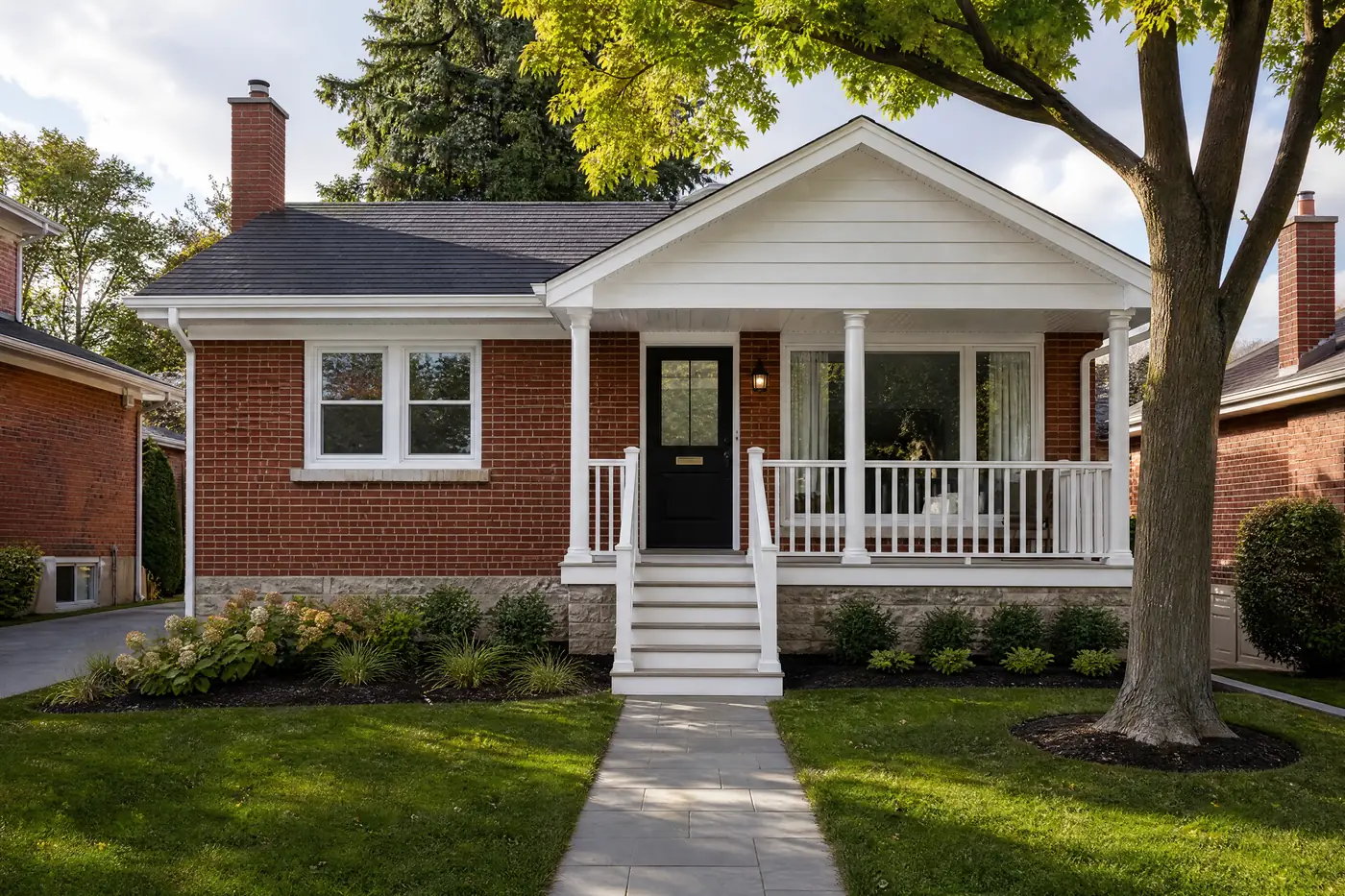
Across Toronto, exteriors vary street by street. Victorian and Edwardian semis in older neighbourhoods carry decorative wood trim, porches and gables that need careful hand work, while post-war bungalows mix brick with aluminum or wood siding. Narrow lots and shared side yards make access planning part of the quote, and laneway garages often get painted along with the house. Stucco is common on renovated infill homes, and many downtown properties have painted brick fronts that need recoating as the old paint wears.
In Peel Region and York Region, from Mississauga to Markham and Richmond Hill, many subdivision homes combine brick fronts with vinyl or aluminum siding, fascia and garage doors that fade at the same rate. Halton Region, from Oakville to Burlington, has older lakeside streets with wood siding and newer suburbs with stucco accents. In Durham Region, wide open lots mean more wind and sun on exposed walls. Wherever the house sits, the preparation and products are chosen for what it is actually made of: wood, metal, stucco or painted brick.
Weather and timing
How the weather shapes an exterior paint job
Exterior painting here runs through the warmer months, from late spring into early fall. Most exterior products need air and surface temperatures above a minimum printed on the label, and they need that warmth overnight too, since a cold night can stop a fresh coat from curing. Heavy dew in spring and fall delays the morning start until surfaces are dry, and rain in the forecast can move a working day. We plan each elevation around the sun, so walls are painted after the dew lifts and before direct heat makes paint dry too fast.
The freeze-thaw cycle is the hardest test for exterior paint. Water gets into any open joint or crack, freezes, expands and forces the coating off the surface, which is why caulking and priming matter so much. South and west walls take the most sun and fade first; north walls stay damp longer and grow mildew. Wind off the lake near the shoreline and road salt splashed onto lower walls and garage doors add their own wear, so each elevation is assessed separately at the quote.
Older housing in the city brings its own considerations. Older houses can have lead in the lower layers of paint on trim and siding, so before any scraping or sanding we go over with you how that old paint will be dealt with. Heritage properties can have rules about colours and materials, and some neighbourhoods have committees that guide exterior changes. Semi-detached and row houses share walls and trim lines with neighbours, so where your property ends, and where the new colour stops, is agreed with you, and ideally with the neighbour, before work starts.
- Note which walls peel or fade first and mention them at the quote
- Check heritage or committee rules before choosing a new colour
- Agree on shared trim and wall lines with semi-detached neighbours
- Arrange access to an outdoor tap, a power outlet and side yards
- Move patio furniture, planters and decorations clear of the walls
What changes the price of an exterior repaint
Size is only the starting point. A two-storey house with dormers and gables needs taller ladders or staging and more time per wall than a bungalow of similar floor area. The material matters: aluminum and stucco call for different cleaning and primers than wood. Condition matters most of all, because heavily peeling trim, failed caulking and rot repairs take far longer than washing and recoating sound paint. The number of colours and the amount of fine trim, such as shutters, brackets and spindles, also add time.
Choices you make shape the quote too. Changing to a very different colour can call for an extra coat, and adding the garage, a shed or the porch ceiling widens the scope. Every surface and step appears as its own line on your itemized written quote, so you can trim or add items before booking. To sketch a ballpark before anyone walks the property, our painting cost calculator gives you a starting figure for the outside of the house.
Price it before anyone visits
Pick the rooms and the work in our cost calculator for a ballpark range in about a minute.
Then ask for a free quote: written, itemized and free to change before work starts.
What a repaint changes
Drag the handle, see the difference
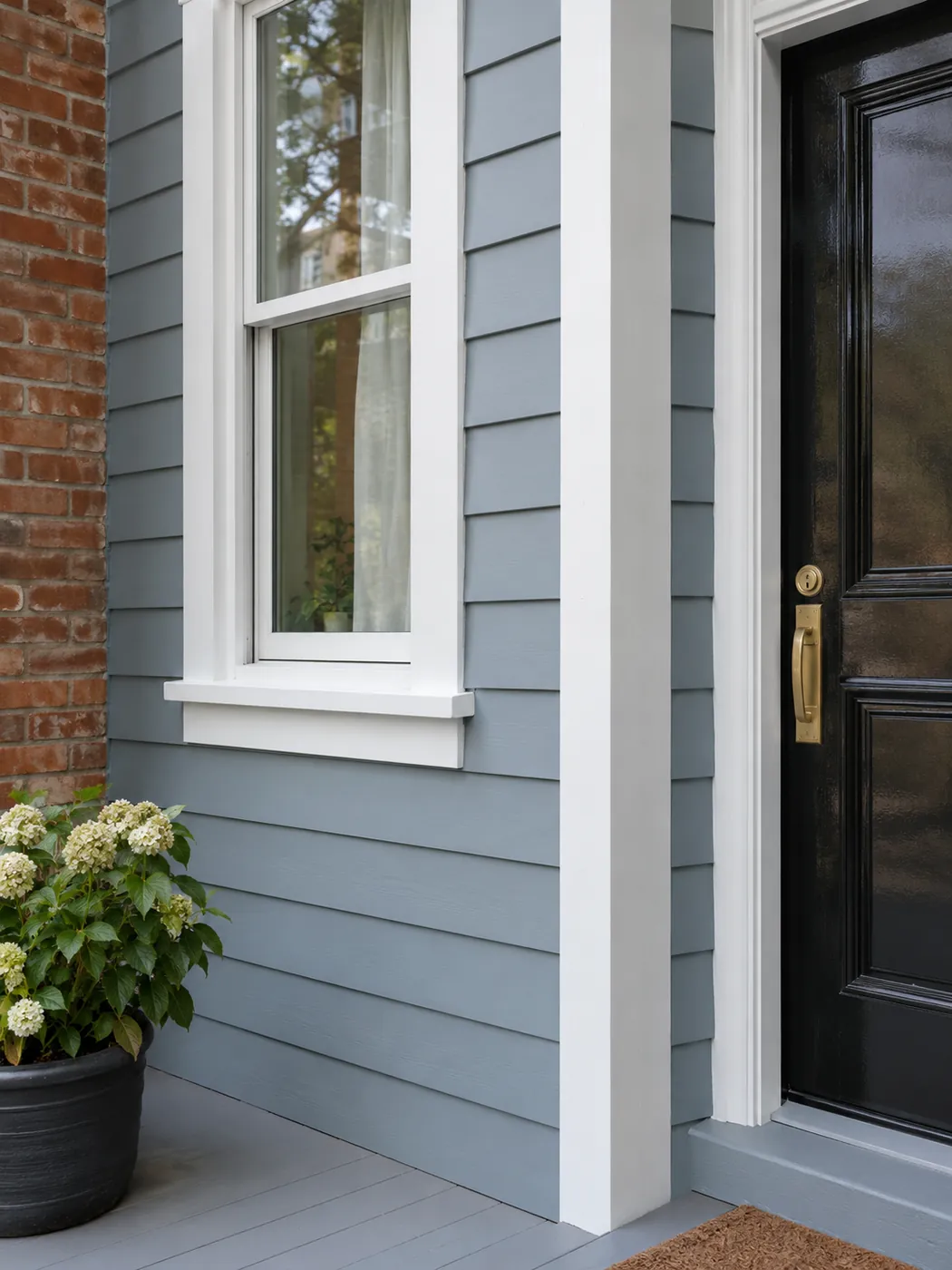
A brick house before and after: peeling trim scraped and repainted white, and the front door in navy. Slide to compare.
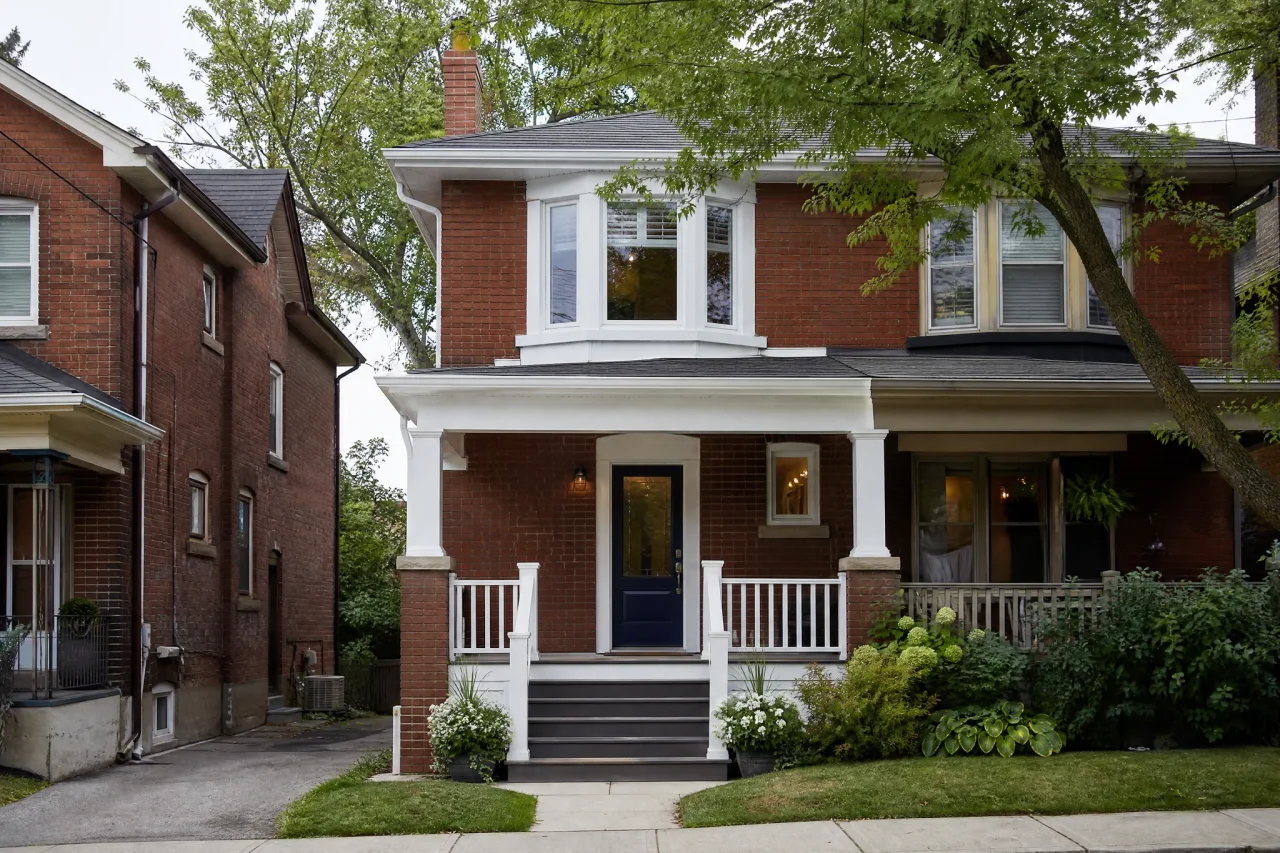
 Exterior trim and front door
Projects
Recent exterior painting projects
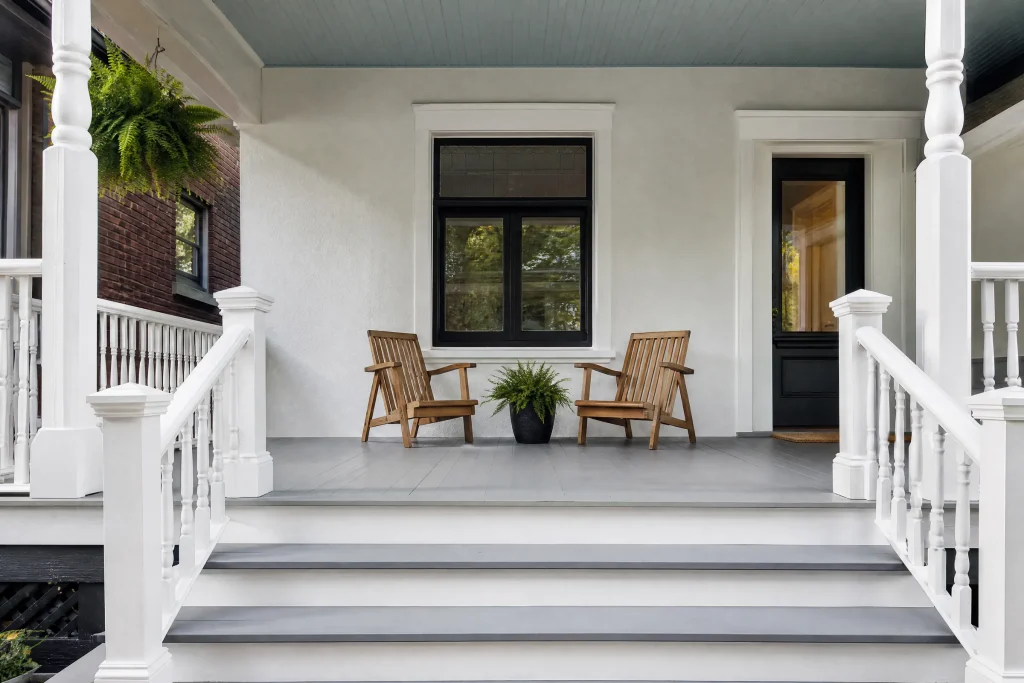
- Exterior
- Oakville
Pale yellow clapboard repainted blue-green near Bronte, Oakville
A clapboard storey-and-a-half in Bronte, Oakville: loose layered paint wet-scraped over ground sheeting, then repainted dark blue-green below and white above, replacing pale yellow.
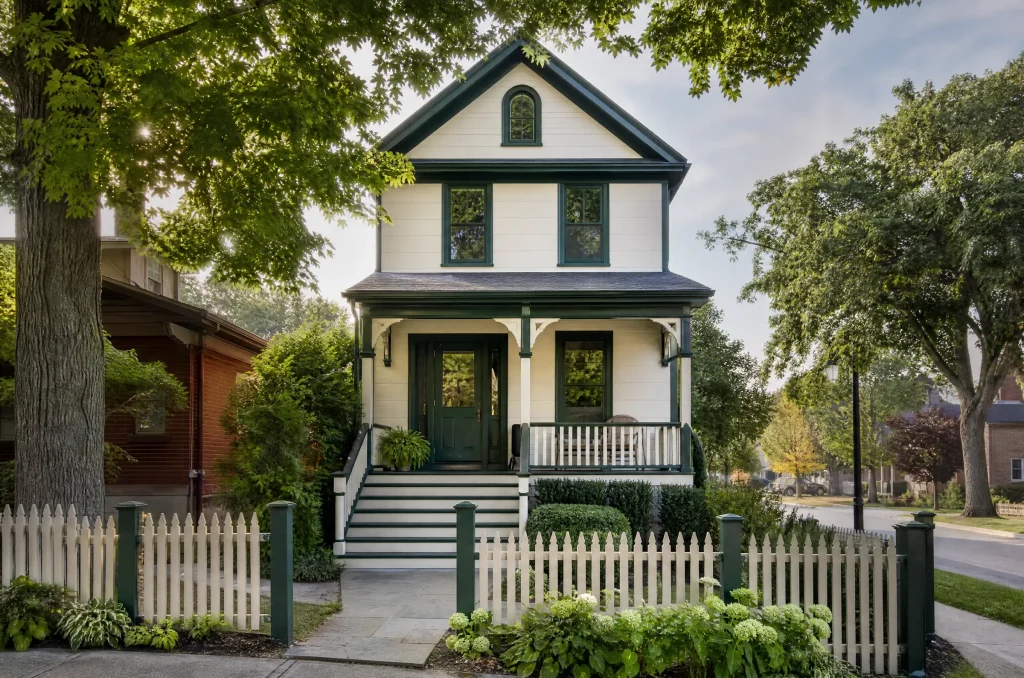
- Exterior
- Whitby
Cedar shingle gables and sash windows repainted in downtown Whitby
A house in downtown Whitby: sash windows reglazed and cedar shingles primed against tannin bleed, then white lap siding, warm grey gables and black sashes.
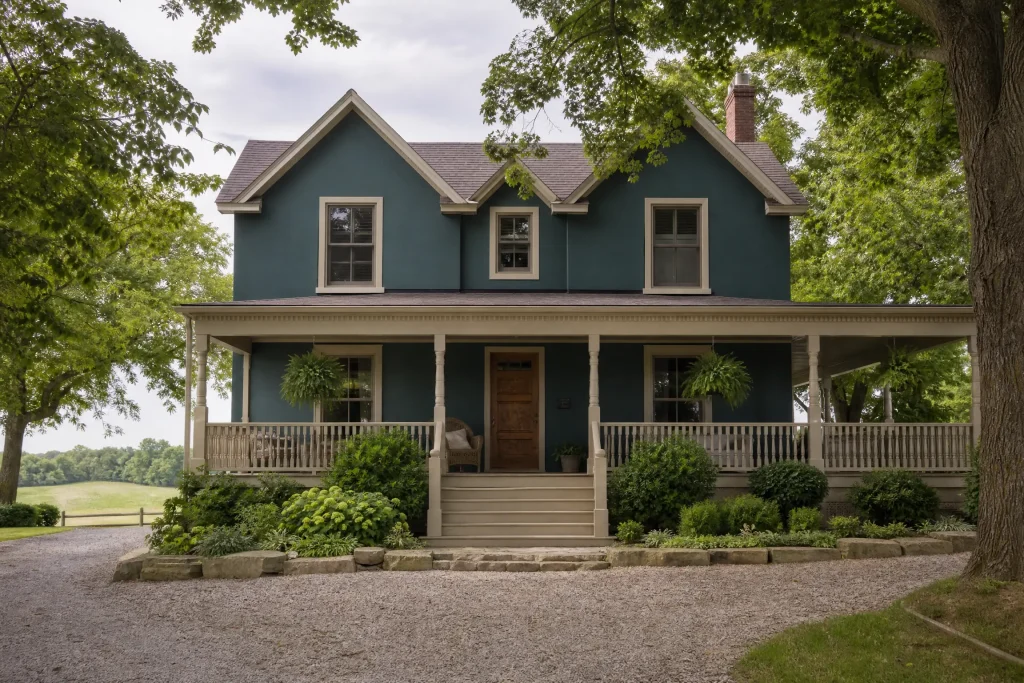
- Exterior
- Caledon
Deep teal stucco and porch repaint on a Caledon East country home
A stucco country home in Caledon: chalk washed off, algae treated and cracks patched, then painted deep teal with a warm beige and cream porch.
Resources
Painting Guides and Resources
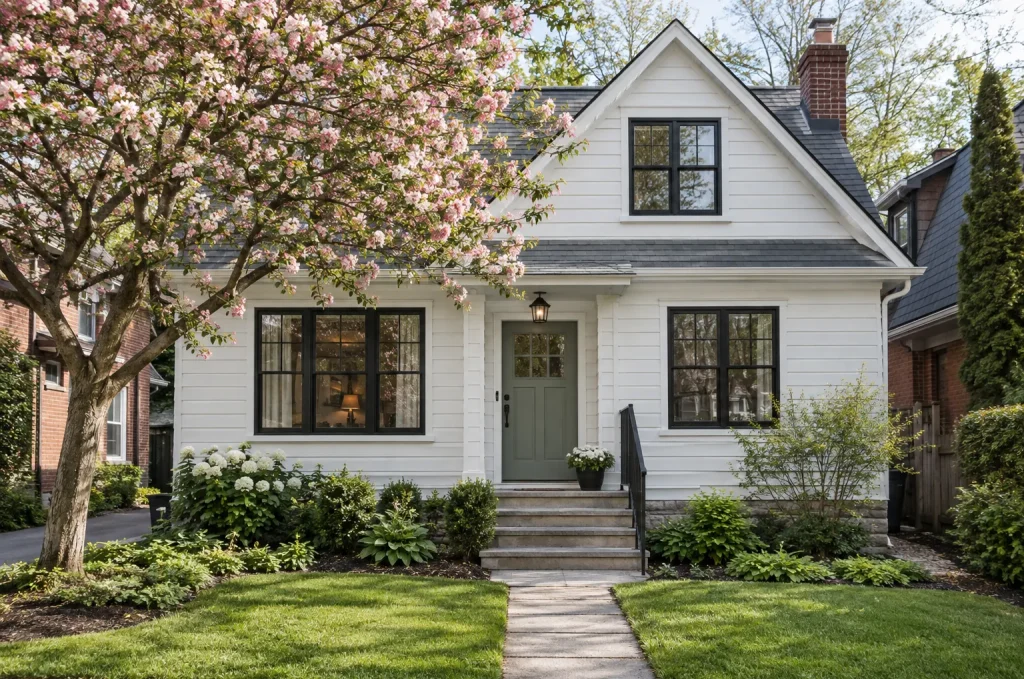
- Guide
When to paint your house exterior in Toronto
Temperature, humidity, dew and rain all decide how well exterior paint cures. How to pick the right season, and the right days, for an exterior repaint in Toronto.
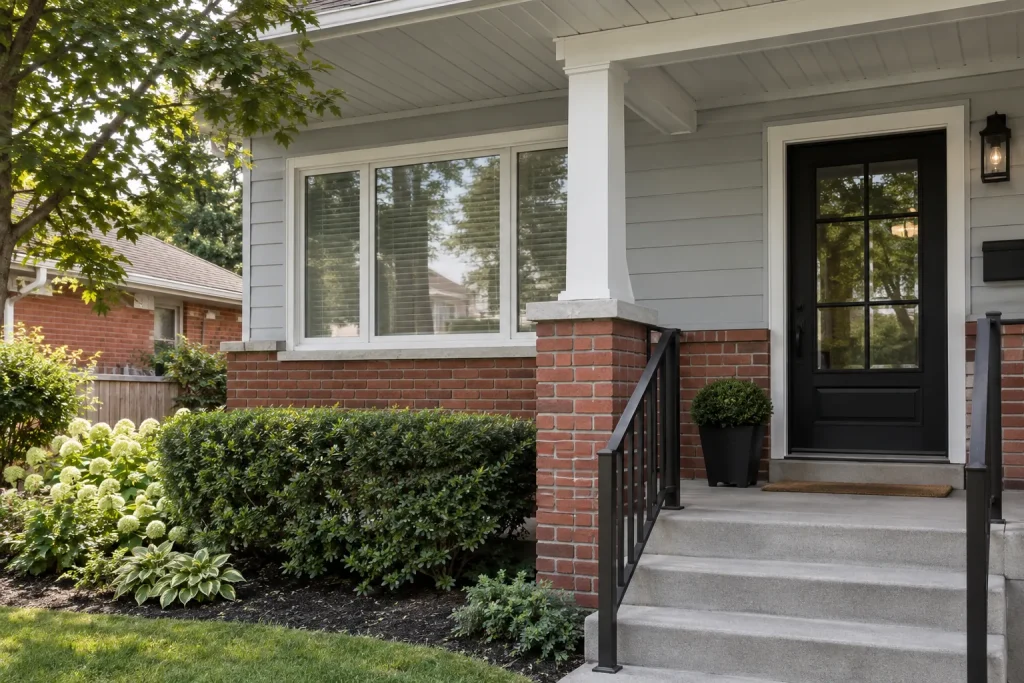
- Guide
Painting aluminum siding or brick: what’s involved and when it makes sense
Many Toronto homes have aluminum siding, brick, or both. What painting each one involves, the questions to ask before you start, and when painting is the right call.
When should I book exterior painting?
The painting season here stretches from late spring into early fall, while surfaces are dry and temperatures stay within the range printed on the paint label, including overnight. Calendars for the warmer months fill early, so asking for a quote in winter or early spring gives you more choice of start dates. A cool, dry stretch in late fall can still work for small jobs, depending on the product.
How long does an exterior paint job take?
It depends on the size of the house, the condition of the surfaces, the amount of trim, how much access equipment is needed and, above all, the weather. Preparation usually takes more time than painting. Your written quote outlines the work for each surface, and we let you know when rain or cold moves a working day so you can plan around the new date.
What do I need to do before you start?
Move patio furniture, planters, barbecues, decorations and anything hanging on the walls a few steps away from the house, and park cars clear of the walls. We will need water from an outside tap and an electrical outlet, and windows near the work should stay closed while we wash and paint. We take care of washing, scraping, repairs and covering your plants and walkways.
Do I need to be home while you paint?
No. Most exterior work goes ahead while you are at work or away, as long as gates are unlocked and we can reach the tap and power. We confirm the plan for each day with you ahead of time, and you know who is coming before the job starts. A short walk-through together at the end lets you check the finished work.
Can you paint stucco and aluminum siding?
Yes. Stucco is washed gently, cracks are patched with a flexible filler, and the wall is coated with a breathable masonry paint worked into the texture. Aluminum siding is cleaned of its chalky residue, bare metal is primed, and an exterior acrylic suited to metal goes on in at least two coats. Vinyl siding can be painted with products made for vinyl, in colours that do not overheat the panels.
How do you choose exterior colours that suit the street?
Start with what will not change: the roof, brick or stone, windows and any existing trim. Then look at the houses on either side, so your choice fits the street while still feeling like yours. Very bold or trendy shades can date quickly, so many owners keep siding neutral and use a contrasting colour on the door, shutters or trim. Ask for the free colour consultation: the sample pots we carry let you view each option on the wall in daylight.
Will you repair rotten wood before painting?
Small areas of rot on trim, sills and fascia can be cut out and replaced or filled with an exterior wood filler as part of the preparation. That kind of minor carpentry is listed on the quote. Larger structural damage, such as rotten posts, beams or sheathing, is outside a painting job, so we point it out early and you can have it repaired before painting starts.
Which areas do you serve for exterior painting?
We paint house exteriors all over the city, and in Peel, York, Halton and Durham beyond the city line. All Painting has been taking on exterior work here since 2010, working out of 18 King St E. Quotes are free, and for something small, such as a front porch or a set of window frames, clear photos let us get a quote started.
Free quotes across the GTA
Book a free quote for your exterior
Tell us which surfaces need work, send a few photos or book a walk-around, and you will receive an itemized written quote covering every wall and trim line.