
A brick semi on an older East York street
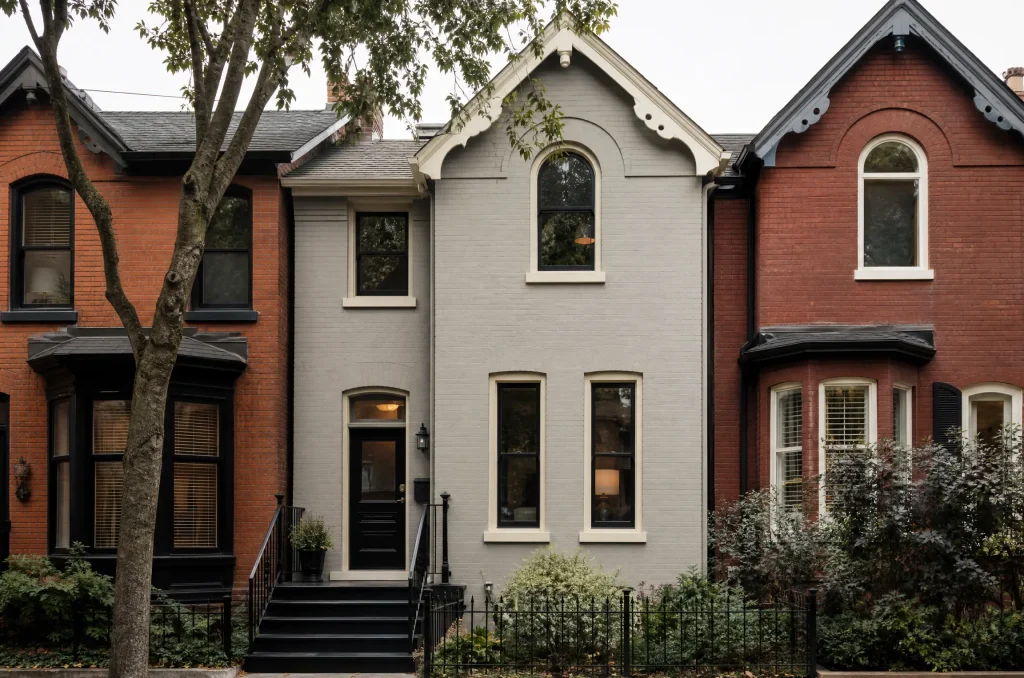
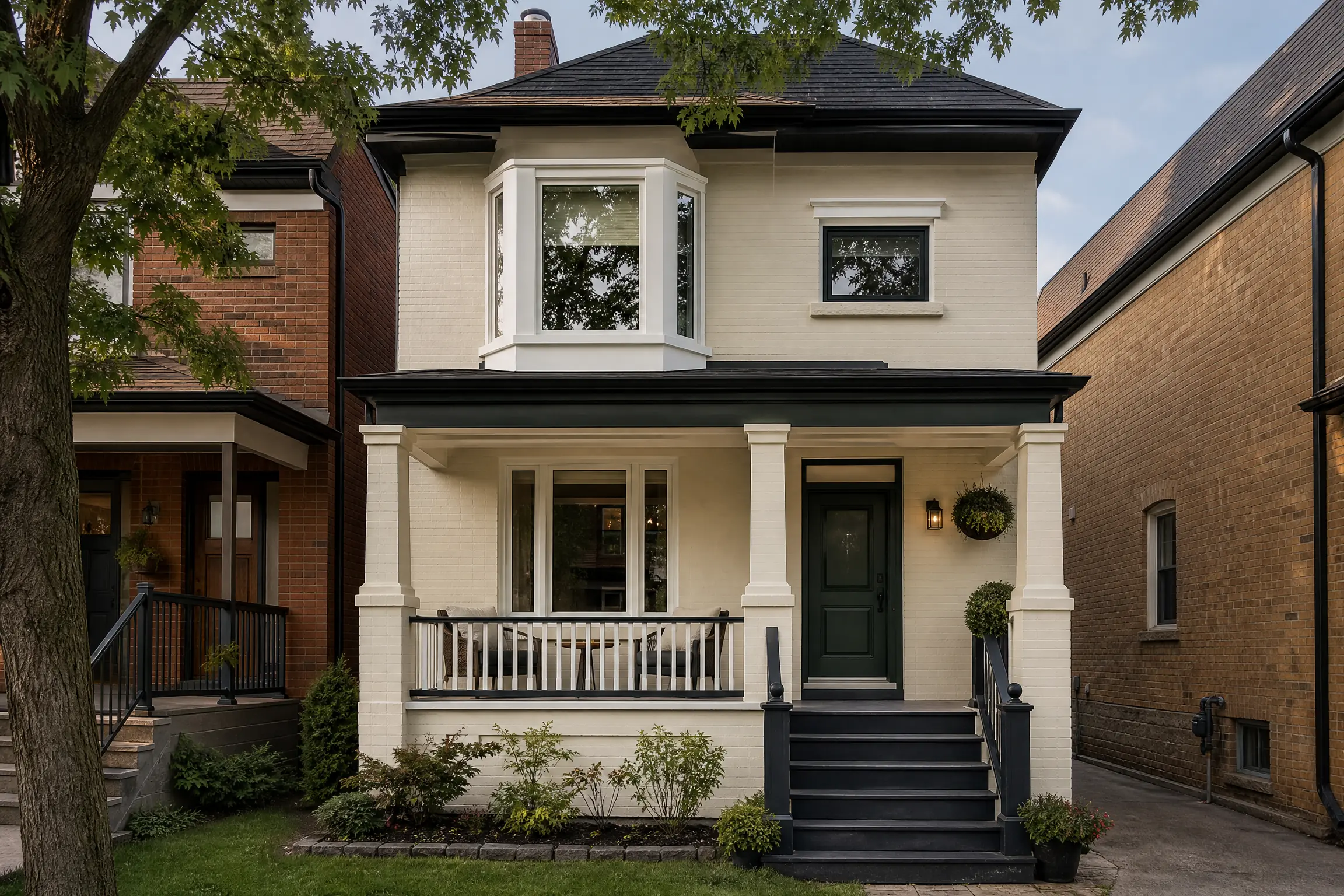
The streets around Pape Village are lined with compact brick bungalows, storey-and-a-half homes and semis from the 1920s to the 1940s. This house is the south half of a two-storey brick semi, with a shared front porch: two front doors side by side, separated by a central brick pier, with black iron railings along the steps and the porch edge.
A previous owner had painted the brick white, and the neighbours had at some point painted their half white too. Years later, the owners’ side had faded to a dull, chalky off-white, while the neighbours’ half had been repainted more recently and looked brighter. The owners wanted their half painted again, in a colour of their own that would still sit well beside the white next door.
What the old paint was doing
A palm wiped across the wall came away white. That chalk is what is left when the binder in exterior paint breaks down in sun and weather, and new paint will not bond to it. Beyond the chalk:
- Fine cracks ran through the paint along many of the mortar joints, where the old coating had been too brittle to move with the brick.
- On the porch piers and the lowest courses of the wall, the paint was flaking, helped along by splash from the porch floor and road salt carried in on boots.
- Dark mildew spots dotted the north-facing side of the house, which is shaded by the neighbour’s house next door.
- The iron railings had layers of old paint, several of them lifting, with rust showing at the joints and where the posts enter the porch floor.
Sharing a porch with the neighbours
The tricky part of a semi is the line between the two halves. On this house it falls through the middle of the shared central pier. We met with both households before starting and agreed that the paint would stop where the owners’ wall meets the central pier, and that the pier itself would stay in its existing white as a neutral divider. They also saw the colour sample on the brick before any coat went on.
Testing and preparing the brick
- Dust control. Old exterior paint on a house of this age comes away as dust and brittle chips, so every bit of scraping was done the careful way: surfaces misted first, drop sheets underneath, smoothing done with hand pads rather than a power sander, and chips swept up and bagged each day.
- Washing. The brick was washed with an exterior house wash, using a mildew cleaner on the north side, scrubbed by hand and rinsed with a gentle stream of water. Washing removes most of the chalk; what is left is dealt with by the primer.
- Adhesion check. Once the wall was dry, strips of clear packing tape were pressed onto the paint at several spots and pulled off sharply. Where paint came away on the tape, it was too weakly bonded to stay; where the tape came off clean, it could be painted over.
- Scraping. Loose paint was scraped off the porch piers, the lower courses and the edges of every crack until the remaining paint held firm. On the piers this exposed a fair amount of bare brick.
- Joints. We checked the mortar on the piers as the scraping went; where it was shallow near the top, those joints were made sound and allowed to cure before any primer went on.
Primer chosen for chalk
Bare brick on the piers took a spot coat of masonry primer first. The whole wall, painted and bare alike, then received a chalk-binding exterior masonry primer. This type of primer penetrates the slightly chalky surface left after washing and locks it down, so the new paint bonds to a firm base rather than a powdery one. Without it, the new coat could have peeled in sheets within a few seasons.
Protection
Drop sheets covered the porch floor, the front steps and the narrow garden beds. Windows, both front doors, the painted porch ceiling and the light fixtures were masked. Masking film was taped over the central pier and over the neighbours’ wall for a few courses beyond it.
Painting the brick
The upper part of the front and the open side wall were sprayed with a small airless sprayer on calm days, with spray shields at the edges, and each section was back-rolled with a thick-nap roller straight after, so the paint went into the joints and the rough brick faces. Close to the neighbours’ half and around the porch, we did not spray at all: everything there was rolled and brushed. The final edge against the pier was cut in by hand along the corner joint.
Two coats of exterior acrylic masonry paint went on in a low sheen, each in dry, mild weather, the second after the label’s recoat time had passed. Acrylic masonry paint stays flexible, which helps it move with the brick instead of cracking along the joints as the old coating had.
Restoring the iron railings
The railings were scraped and wire-brushed to remove all loose paint and rust, paying attention to the scrollwork and the joints, where rust tends to start. Bare metal was primed immediately with a rust-inhibitive alkyd primer. The whole railing was then brushed with two coats of black semi-gloss exterior alkyd enamel, which levels out well on metal and stands up to the scuffs railings take. The joint where each post meets the porch floor was sealed so water cannot sit around it.
Why cream
The owners wanted their half to look cared for and distinct, not like a mismatched white. We brought sample pots of a soft cream, a warm white and a pale stone grey to our free colour consultation and brushed them on the primed brick near the pier, right beside the neighbours’ white. The owners checked them in the bright morning sun that reaches the porch and again in the evening.
The warm white looked like a dirty version of the neighbours’ white, which was exactly the effect they wanted to avoid. The pale grey looked cold. The cream sat beside the white as a clearly separate choice, warm but light, and with the black railings it gives the porch a classic look.
Leaving the porch usable
Both households needed to get to their front doors every day, so the porch was never blocked. At the end of every working day, drop sheets were shaken out and folded, scraped chips swept and bagged, the sprayer cleaned and stored, and the steps left clear. Masking stayed only where the next coat needed it.
The finished front
The owners’ half is now a soft, even cream, the brick’s texture and its mortar lines still visible through it. The paint stops cleanly at the shared pier, which stays white between the two halves, and the black railings run crisply along both steps.
Upkeep for painted brick
- Rinse the north side gently each spring to keep mildew from taking hold.
- Keep an eye on the porch piers and lower courses, where splash and salt hit hardest. Small flakes are easy to touch up if caught early.
- Touch up chips in the railing paint quickly, before rust can start underneath.
- We left the cream, the primer and the black enamel in labelled cans downstairs for small repairs.
Why this approach suits East York houses
A great many 1920s to 1940s bungalows and semis in East York and Leaside have painted brick, and much of it was painted with whatever was on hand at the time. When that paint turns chalky or cracks, washing, testing adhesion and using a primer made for chalky surfaces matters more than the topcoat. On semis, the dividing line deserves a conversation with the neighbours first. That is how we handle painted brick exteriors in this part of the city; the East York page covers the wider housing mix, from storey-and-a-half homes to the towers of Thorncliffe Park. We have been painting homes around Toronto since 2010. To have your painted brick looked at, book a visit; washing, scraping, primer, coats and railings will appear as separate lines on a written quote.