
A seasonal cottage on the east shore of Lake Simcoe
This one-storey cottage sits on a treed lot along the lakeshore near Beaverton, in the township of Brock, with a lawn and a deck stepping down toward the water. It is used from spring through fall, and the owners drive up from the city on weekends. Unlike the wood-clad cottages around it, this one was covered in aluminum siding at some point in its life, with aluminum soffits, fascia and eavestroughs to match. The siding was a faded pale green; the owners wanted a soft grey with white trim, to look fresher from the water and the road.
Because they were at the cottage only on weekends, the work was scheduled for weekdays, and they would not be there to see it day to day.
What the walls were showing
We walked the cottage with the owners before quoting and photographed each wall, so we could refer back to the same pictures later. Lakeside and shaded walls each had their own problems.
Loose and rattling panels
On the lake side, which takes the wind off Lake Simcoe, several panels had worked loose at the nailing strip. They rattled in a breeze, and some had lifted enough at the bottom to let rain blow in behind. Paint does nothing for a loose panel; they had to be fastened first.
Rust streaks
Below a few spots on the end walls ran thin orange-brown streaks. The siding had been patched in the past with steel nails, which had rusted and bled down the face of the panels. Rust stains bleed through paint, and the nails would keep rusting.
Sap, nests and webs
The back wall faces a stand of pines. It had small hardened beads of sap scattered over the lower panels, a layer of pollen and needle dust, and, under the eaves and in corners, old insect nests and spider webs with their droppings. None of these will take paint.
Working on an empty cottage
An empty cottage brings its own planning. Water had to come from the outdoor tap, which the owners turned on for us; access was by a lockbox key for the shed; and any decision that came up mid-week, such as whether to paint the small aluminum shed door to match, was settled with a phone call rather than on the spot.
The factory finish
The green coating itself was intact but faded and chalky on the south and lake sides. There was no bare metal and no corrosion on the aluminum.
Repairs and preparation, wall by wall
- Protection. Ground sheets were laid along each wall and over the stone path, windows were filmed, and the deck was covered where it meets the house. The outdoor furniture was stacked under the deck.
- Refastening. Loose panels were gently pushed back into place and refastened through the nailing strip with aluminum siding nails, left very slightly proud so the panels can still expand and contract with temperature. Aluminum nails were used deliberately: steel fasteners rust and also react with aluminum, which is how the rust streaks started.
- Removing the steel nails. The rusted nails from old repairs were pulled with a flat bar and replaced with aluminum nails, and the old holes were sealed with a dab of paintable sealant.
- Rust streaks. The stains were treated with a rust-stain remover suited to painted metal, then rinsed. Faint shadows that remained were spot-primed with the bonding primer before the full prime coat, so they would not show.
- Sap. Pine sap was softened with a mild citrus solvent and wiped off before washing, since water alone smears it.
- Nests and webs. Old, empty nests and webs were brushed out of the eaves and corners.
- Washing. Every wall, soffit and eavestrough face was scrubbed with a general siding cleaner on long-handled brushes and rinsed with a garden hose from the eaves downward, keeping the spray angled low to protect the laps. The chalky lake-side walls got a second scrub.
- Priming. When everything had dried, all siding and trim received a coat of aluminum bonding primer.
Painting the cottage
Wind across the lake made spraying impractical, and with the lake and the neighbours’ cottages so close, we did not want paint mist travelling. The whole cottage was painted by brush and roller. A roller with a cover made for siding reached into the panel profile, and the bottom edge of each panel was brushed first so it was fully coated.
- Siding: driftwood grey in a low-lustre acrylic, applied as two full coats.
- Soffits, fascia and eavestrough faces: white semi-gloss, two coats, with the soffit vents brushed lightly so the perforations stayed open.
- Window and door trim and the corner posts: the same white, two coats.
Painting started each morning once the dew had burned off the lake-side walls, and no wall saw its second coat before the recoat interval on the label had run out. On windy afternoons we moved to the sheltered side of the cottage.
Picking a grey for the lake
The owners wanted a grey that would look at home among the pines and against the water. During the free colour consultation, held on a weekend while they were at the cottage, we painted a few greys from sample pots on primed boards and stood them on the lawn facing the house, then looked at them from the dock in the morning and again before supper. A cool grey looked blue in the reflected light off the lake, and the darkest disappeared under the trees. A warm driftwood grey, with a little beige in it, held up both close to the house and from the water.
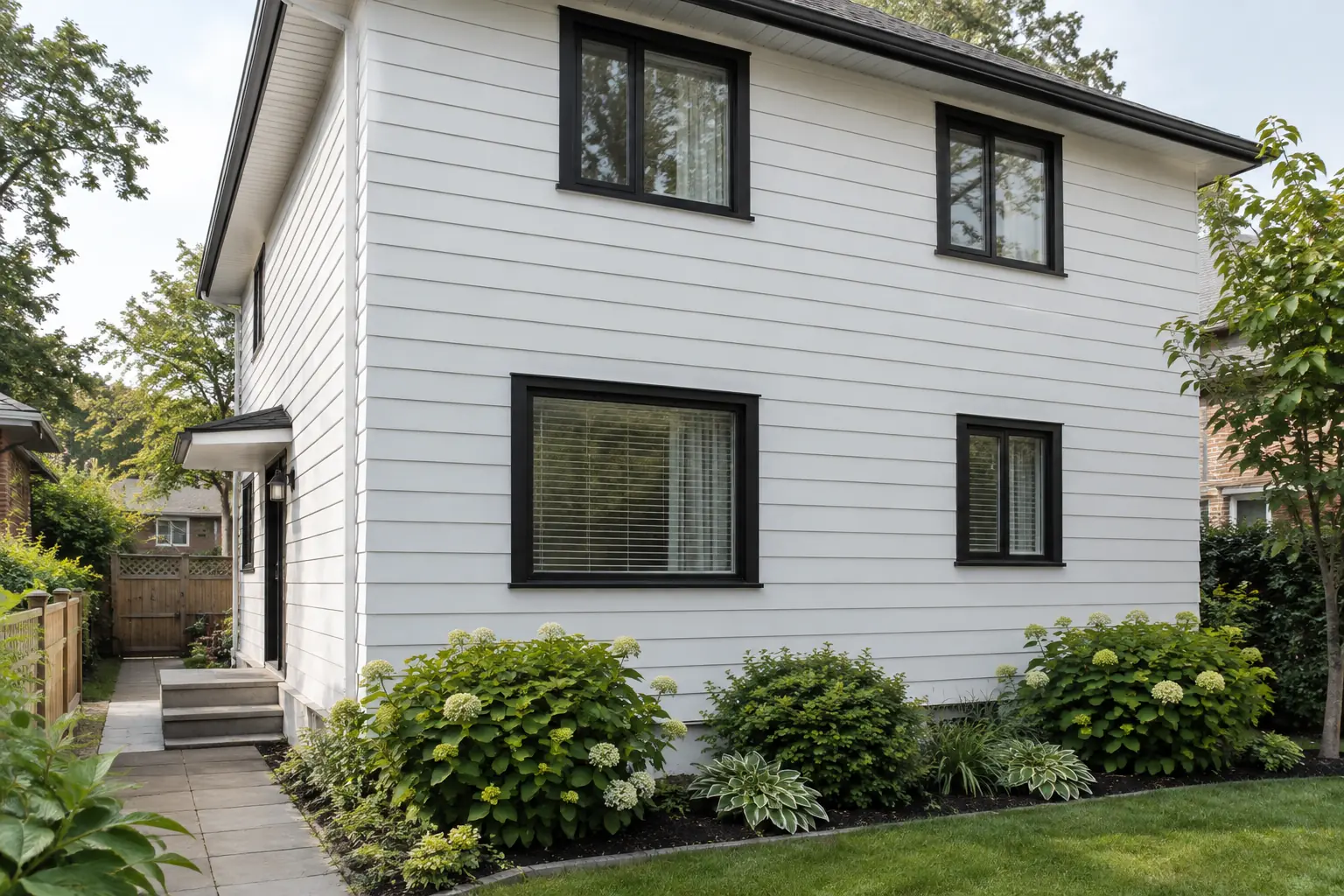
Seen from the dock, the cottage now has even driftwood grey walls with bright white soffits and eavestroughs along the roof line and white trim around each window.
Leaving things tidy while the owners were away
With nobody home during the week, everything was put away each evening: ladders laid down and locked to the deck railing, paint and cleaners stored in the shed, ground sheets cleared of debris and folded. Before leaving we also made sure the outdoor tap was shut off and the shed locked again. When the final coat was dry, we peeled the window film, swept the stone path and the furniture went back on the deck.
Caring for a painted cottage
- At the start of each season, walk around the cottage and listen for rattling panels after a windy day; a loose panel caught early is a quick fix.
- Wipe off pine sap while it is fresh, with a mild solvent and a soft cloth, rather than scrubbing hard.
- Rinse the lake-side walls in spring to remove winter grime and spray residue.
- Use only aluminum nails for any future siding repairs, to avoid new rust streaks.
- Touch-up cans of the driftwood grey and white were left on a shelf in the shed, each one labelled.
Why this suits cottages in Brock
Lake Simcoe’s east shore is windy, and cottages near Beaverton take that wind and spray for months at a time, then sit through freeze-thaw winters. Painted aluminum holds up well there, as long as the panels are tight, the stains and sap are gone, and the primer is right for the metal. For cottages that are empty during the week, a clear written scope agreed in advance means decisions do not have to wait for the owners to drive up. That is the approach behind our aluminum siding painting for cottages and farmhouses across Durham Region. Since 2010 we have looked after houses and cottages throughout the GTA and beyond, with at least two finish coats each time.
If your cottage siding has faded or the panels have started to rattle, write to us to arrange a visit on a day you are there, and the quote that follows will be written and itemized.