
Understanding the real kitchen cabinet painting Toronto cost in 2026 is the first step toward a kitchen refresh that looks custom without the price tag of a full renovation. Across Toronto, Mississauga, Oakville, Burlington and the wider GTA, homeowners are discovering that professionally sprayed cabinets can transform a dated kitchen for a fraction of what new cabinetry or even refacing would run. This guide breaks down current pricing, the exact spray-finish process used by experienced crews, realistic timelines, and a head-to-head comparison with refacing and replacement so you can decide what makes sense for your home and budget.
Cabinet painting is one of the highest-return projects in residential repainting because the boxes themselves are usually still structurally sound. The doors, drawer fronts and frames simply carry a worn, yellowed or outdated finish. Replacing the colour and sheen with a durable factory-grade coating delivers a dramatic visual change while keeping the existing layout, hardware locations and footprint intact.
What Drives Kitchen Cabinet Painting Toronto Cost in 2026
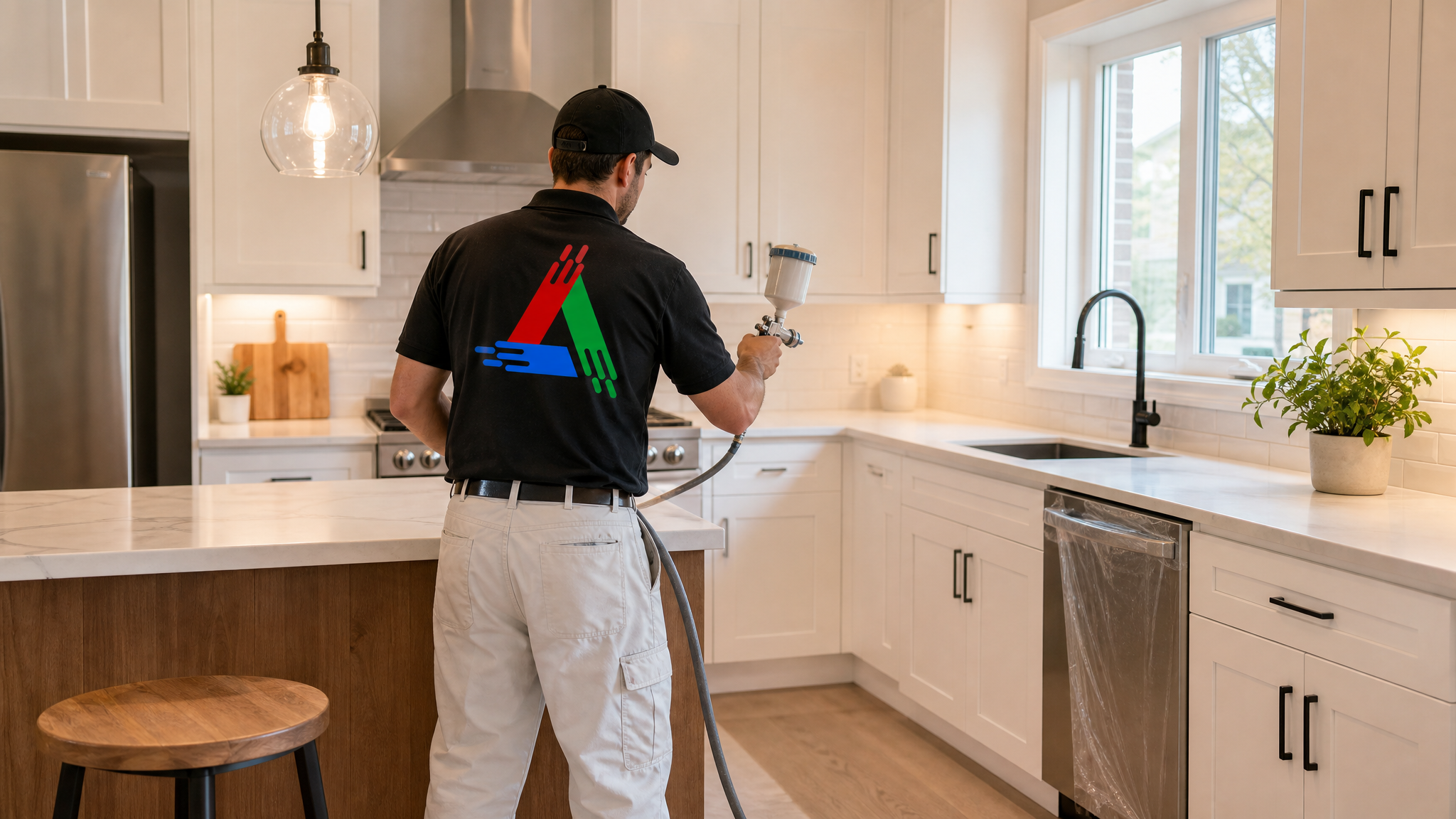
The total kitchen cabinet painting Toronto cost depends far more on door count, condition and finish system than on square footage. A small galley kitchen with 15 doors and 6 drawers will cost less than a large open-concept kitchen with an island, pantry and 40-plus components. Labour is the dominant factor because the bulk of the work is in meticulous cleaning, sanding, priming and multiple thin coats, not in the paint itself.
Material quality also matters. A waterborne alkyd or a two-component urethane enamel costs more per litre than a basic latex, but it cures to a hard, washable, furniture-grade finish that resists the daily abuse a kitchen sees. Cutting corners on coatings is the single most common reason a DIY cabinet project peels within a year. Professional crews such as the team at All Painting spray these premium products in a controlled, dust-managed setting for an even, brush-mark-free result.
| Kitchen Size | Approx. Doors + Drawers | 2026 Price Range (CAD) | Typical Timeline |
|---|---|---|---|
| Small / galley | 15 to 25 pieces | $2,800 to $4,200 | 4 to 5 days |
| Medium / L-shaped | 26 to 40 pieces | $4,200 to $6,500 | 5 to 7 days |
| Large / open concept | 41 to 60 pieces | $6,500 to $9,500 | 7 to 10 days |
| Luxury / island + pantry | 60+ pieces | $9,500 to $14,000+ | 10 to 14 days |
These ranges reflect on-site work plus an off-site spray booth or a sealed in-home spray station. Expect to pay at the higher end for raised-panel or detailed Shaker doors, heavy grease removal, or colour changes that require extra coats for full coverage.
Detailed Cost Breakdown by Line Item
Transparency helps you compare quotes fairly. Reputable GTA painters itemize their work rather than quoting a single vague number. The table below shows how a typical medium-kitchen project allocates the kitchen cabinet painting Toronto cost across the major phases.
| Line Item | Share of Total | What It Covers |
|---|---|---|
| Prep and degreasing | 20 to 25% | Cleaning, label/hardware removal, deglossing, repairs |
| Sanding and priming | 15 to 20% | Scuff-sanding, bonding primer, stain blocking |
| Spray finishing | 30 to 35% | Two to three thin enamel coats, light sanding between |
| Materials and coatings | 10 to 15% | Primer, enamel, abrasives, masking, plastic |
| Reassembly and protection | 10% | Rehanging, hardware reinstall, alignment, cleanup |
Add-ons can shift the budget. Replacing hinges or installing new soft-close hardware, swapping knobs and pulls, filling old hardware holes, or adding crown moulding will each carry their own line item. If your cabinets are thermofoil or laminate rather than wood, a specialized bonding primer is mandatory, which slightly raises material cost but is non-negotiable for adhesion.
The Professional Cabinet Painting Process Step by Step
The quality of a sprayed cabinet finish is decided almost entirely during preparation. A disciplined process is what separates a finish that lasts a decade from one that chips at the first dish-towel snag. Here is how an experienced crew approaches it.
1. Documentation and removal. Every door and drawer front is numbered and photographed so it returns to its exact original position. Hinges, knobs and pulls are removed and bagged. Boxes that stay in place are masked off from countertops, backsplash and flooring with plastic and tape.
2. Degreasing. Kitchen surfaces accumulate invisible cooking grease that destroys paint adhesion. Surfaces are scrubbed with a degreaser and rinsed before any sanding begins.
3. Sanding and repair. All surfaces are scuff-sanded to give the primer a mechanical key. Dents, dings and worn edges are filled and sanded smooth. Open grain on oak is sometimes filled for a glass-smooth modern look.
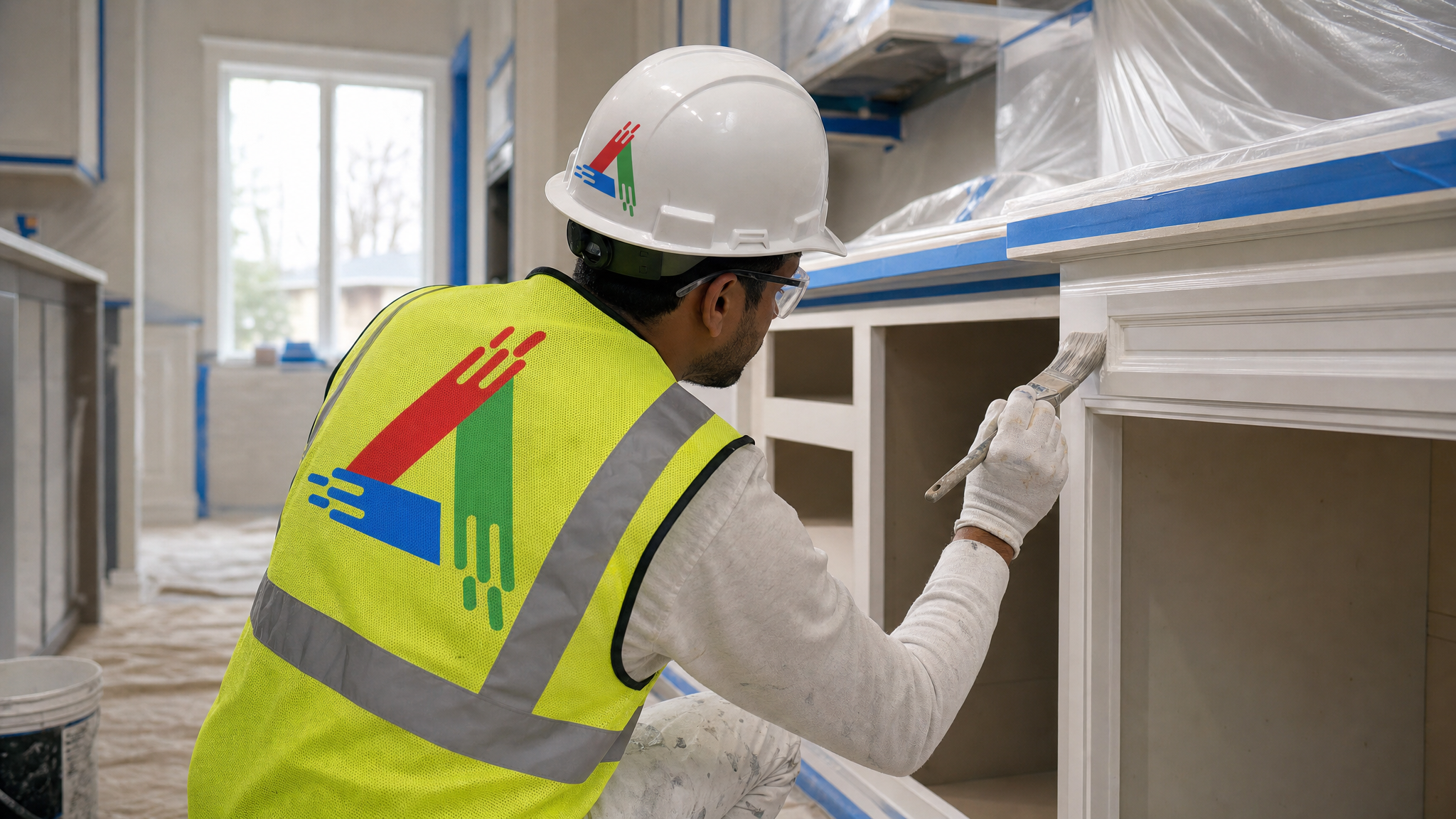
4. Priming. A high-adhesion bonding primer is applied, often tinted toward the final colour. For honey oak or tannin-prone woods, a stain-blocking primer prevents bleed-through that would yellow a white finish.
5. Spray finishing. Doors are sprayed off-site or in a sealed station, laid flat and racked to cure dust-free. Two to three thin coats of waterborne enamel are applied, with a light sand between coats for a uniform, ultra-smooth result no brush can match.
6. Curing and reassembly. Enamel needs time to harden. Crews allow proper cure before rehanging doors, reinstalling hardware and adjusting hinges so every door closes square. The same standards apply to related projects such as staircase painting and staining and interior painting throughout the home.
Painting vs. Refacing vs. Replacement: An Honest Comparison
Cabinet painting, refacing and full replacement solve different problems at very different price points. Painting changes colour and finish on your existing boxes and doors. Refacing keeps the boxes but installs brand-new doors, drawer fronts and a veneer skin over the frames. Replacement tears everything out for new cabinetry.
| Option | Typical GTA Cost (Medium Kitchen) | Timeline | Best For |
|---|---|---|---|
| Cabinet painting | $4,200 to $6,500 | 5 to 7 days | Sound boxes/doors, colour update |
| Refacing | $9,000 to $18,000 | 1 to 2 weeks | Dated door style, good boxes |
| Full replacement | $22,000 to $45,000+ | 4 to 8 weeks | Layout change, damaged boxes |
| New custom cabinetry | $40,000 to $80,000+ | 8 to 12 weeks | Gut renovation, premium finish |
Painting wins on cost and speed when your cabinet boxes and door fronts are solid and you mainly dislike the colour or sheen. Refacing makes sense when you also want a new door profile, such as moving from raised panel to flat-slab, but the boxes are in good shape. Replacement is justified only when you are changing the layout, the boxes are water-damaged or particleboard is crumbling, or you want a completely different storage configuration. For many GTA kitchens built in the 1990s and 2000s, the boxes are perfectly serviceable and painting delivers 80 percent of the visual impact at 20 percent of the cost.
Durability, Colours and What to Expect Long Term
A properly sprayed waterborne enamel will not feel like a wall paint. Once fully cured over two to three weeks, it forms a hard, washable surface that handles fingerprints, splashes and routine wiping. High-touch zones around the sink, stove and trash pull-out are the first to show wear, which is why those areas benefit most from a urethane-fortified coating.
Colour trends in 2026 favour warm whites, soft greiges, deep forest and navy on islands, and two-tone schemes that pair a darker base with lighter uppers. Matte and low-sheen finishes hide minor imperfections and read as more contemporary, while a satin sheen cleans more easily. The same crews that handle your cabinets can coordinate wall colours for a cohesive result, and many homeowners pair a cabinet refresh with popcorn ceiling removal or a broader house painting refresh to modernize the whole space at once.
| Coating Type | Durability | Best Use | Relative Cost |
|---|---|---|---|
| Standard latex | Low | Not recommended for cabinets | $ |
| Waterborne alkyd enamel | High | Most residential kitchens | $$ |
| Two-component urethane | Very high | Heavy-use / high-traffic kitchens | $$$ |
| Conversion varnish | Highest | Spray-shop / commercial grade | $$$$ |
To protect your investment, avoid harsh solvent cleaners, wipe spills promptly, and use bumpers on door edges. With reasonable care, a quality finish should look excellent for eight to twelve years before it needs a refresh. Whether you are updating a condo galley kitchen, a Mississauga family home or an Oakville estate, the work follows the same disciplined standards used across our condominium painting and commercial painting projects.
How to Choose the Right Toronto Cabinet Painter
Not every painter is set up for cabinet work. Spraying requires equipment, a clean curing space and experience with bonding primers and enamels. When comparing quotes, look beyond the bottom-line price and ask the right questions.
Confirm that doors are sprayed rather than brushed and rolled, that the crew degreases and uses a bonding primer, and that the coating is a furniture-grade enamel rather than ordinary wall paint. Ask how doors are cured and whether the work happens off-site or in a sealed in-home station. Request photos of recent kitchens and check that the estimate itemizes prep, priming, finishing and reassembly. A vague single-number quote often hides skipped prep steps. For exterior or specialty surfaces, the same diligence applies whether you are considering exterior brick painting or deck and fence staining.
A reputable contractor will also be candid when painting is not the right call. If your boxes are failing or you want a layout change, an honest crew will tell you refacing or replacement is the better long-term value rather than painting over a problem.
Get an Accurate Kitchen Cabinet Painting Toronto Cost Quote Today
Every kitchen is different, so the most reliable way to understand your true kitchen cabinet painting Toronto cost is an on-site assessment that counts your doors and drawers, evaluates the existing finish, and recommends the right coating system. The professionals at All Painting have refreshed kitchens across Toronto, Mississauga, Oakville, Burlington and the GTA with durable, sprayed, furniture-grade finishes, and can walk you through whether painting, refacing or replacement is the smartest choice for your home. Learn more about our dedicated service on the kitchen cabinet painting page.
Call us today at (416) 710-4224 or request a free painting quote to schedule your in-home consultation and detailed written estimate.
All Painting proudly serves homeowners across Toronto, Mississauga, Oakville, Burlington and the GTA with professional cabinet, interior and exterior painting.