
If you own a home in Toronto or anywhere across the Greater Toronto Area, one of the most common questions we hear as the weather warms up is simple: how often to stain a deck so it actually stays protected. The honest answer is that most GTA decks need a fresh coat of stain every two to three years, but the real timeline depends on the type of wood, the finish you chose last time, how much direct sun and rain the surface takes, and how well the deck was prepared before the previous coat. Getting the schedule right is the difference between a deck that looks rich and inviting all summer and one that turns grey, splinters, and eventually needs full board replacement. In this guide we break down exactly how often to stain a deck in our climate, how to read the warning signs, what proper preparation looks like, and what a professional refinish costs in 2026.
Toronto is a punishing environment for exterior wood. Our summers deliver strong UV, humidity, and sudden thunderstorms, while the freeze-thaw cycle at the shoulders of the year works moisture deep into the grain. A deck that might hold its finish for four years in a mild, dry climate will often need attention far sooner here. Understanding how often to stain a deck in this specific locale is what keeps homeowners from wasting money on premature recoats or, worse, letting the wood degrade past the point where staining alone can save it.
How Often to Stain a Deck in the Toronto Climate
The baseline rule most GTA homeowners can rely on is that a deck should be re-stained every two to three years. That said, knowing precisely how often to stain a deck means looking past the calendar and reading the wood itself. A horizontal deck surface that bakes in full afternoon sun and sheds rain will wear its finish far faster than a shaded, covered porch. Softwoods like pressure-treated pine and cedar drink up stain and lose it quickly, while denser hardwoods can stretch the interval a little longer. The finish type matters just as much: a thin, transparent stain may only last a single season on a high-traffic surface, whereas a quality semi-transparent or semi-solid product can hold two to four years.
A reliable field test is to splash a cup of water onto the deck boards. If the water beads up and sits on the surface, the stain is still repelling moisture and you can wait. If the water soaks straight into the wood and darkens it, the protective film has failed and it is time to re-stain. Running this test each spring takes thirty seconds and gives you a far more accurate reading than guessing. Combined with a visual check for fading, this simple habit answers the question of how often to stain a deck for your particular boards better than any generic number ever will.
| Deck Type / Exposure | Typical Re-Stain Interval | Key Factor |
|---|---|---|
| Pressure-treated pine, full sun | Every 1-2 years | Soft wood, heavy UV wear |
| Cedar deck, mixed sun and shade | Every 2-3 years | Natural oils fade over time |
| Hardwood (ipe, mahogany) | Every 2-4 years | Dense grain holds finish longer |
| Covered or shaded porch | Every 3-4 years | Reduced rain and UV exposure |
| Vertical fence boards | Every 3-5 years | Less foot traffic and pooling |
Signs Your Deck Is Overdue for a Fresh Coat
Even if you are tracking the calendar, your deck will tell you when it needs help. Fading is the first and most obvious sign; a stain that once glowed with warm colour flattens into a dull, washed-out grey as the pigments break down under UV. The second sign is water absorption, which you can confirm with the bead test described above. The third is surface roughness: as the finish thins, individual wood fibres lift and the boards begin to feel rough or splintery underfoot, especially uncomfortable for bare feet in summer.
Other red flags include visible cracking or checking in the boards, blotchy patches where the stain has worn unevenly, and the early appearance of black or green mildew, which thrives once the water-repellent barrier is gone. If you spot any of these, the deck is past due and continuing to wait only adds preparation work later. For homeowners weighing a broader refresh, this is often the moment they also look at their exterior painting and overall house painting to keep the whole property looking cohesive from the street.
What Proper Deck Preparation Looks Like
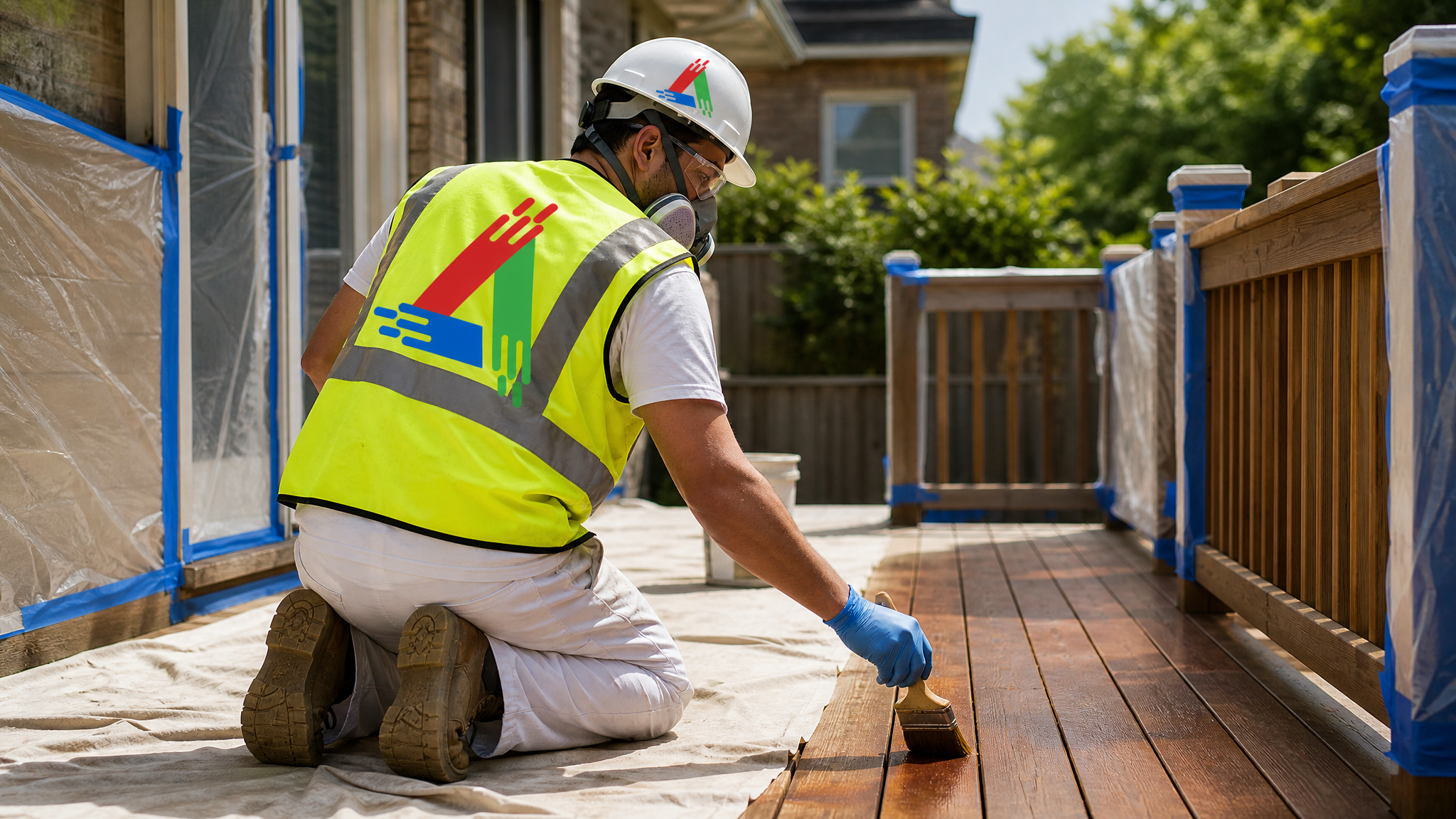
The single biggest factor in how long a finish lasts, and therefore how often to stain a deck, is the quality of the preparation before the stain ever touches the wood. Applying fresh stain over a dirty, glossy, or failing old finish is a waste of product and time; it will peel and fail within a season. Proper preparation begins with a thorough cleaning to strip dirt, pollen, algae, and old flaking stain. For decks with a film-forming finish, this often means sanding the boards down to bare, open wood so the new stain can penetrate.
Next comes brightening, which neutralises the cleaner and restores the wood’s natural pH so the new stain absorbs evenly. Any protruding nails or screws are set, rough spots are sanded, and the boards are allowed to dry completely, usually 48 hours of dry weather in a Toronto summer. Skipping the drying step is one of the most common homeowner mistakes; stain applied over damp wood cannot bond and will fail early. Because this stage is labour-intensive and easy to get wrong, many homeowners simply contact a professional deck and fence staining crew who handle the cleaning, sanding, and drying as part of the service.
| Preparation Step | Purpose | Time Required |
|---|---|---|
| Deep cleaning / wash | Remove dirt, algae, pollen, loose stain | 2-4 hours |
| Sanding to bare wood | Open grain for stain penetration | 3-6 hours |
| Wood brightener application | Neutralise pH, even out absorption | 1 hour + dwell time |
| Setting fasteners, spot repairs | Smooth surface, prevent snags | 1-2 hours |
| Drying window (dry weather) | Ensure wood is ready to bond | 24-48 hours |
Choosing the Right Stain and Finish
The finish you select directly determines how often to stain a deck going forward, so it is worth understanding the categories. Transparent and clear sealers show off the natural grain beautifully but offer the least UV protection, meaning yearly reapplication. Semi-transparent stains add pigment that blocks UV while still letting the grain show through; they are the most popular choice for cedar decks and typically last two to three years. Semi-solid and solid stains carry the most pigment and last the longest, three to five years, but they hide more of the wood grain and can be prone to peeling if the surface below is not properly prepared.
Oil-based penetrating stains soak into the wood and tend to wear gracefully, fading rather than peeling, which makes future recoats simpler. Water-based products offer easier cleanup, lower odour, and strong colour retention. For most GTA backyard decks we recommend a quality semi-transparent oil or hybrid stain, applied in the warm, dry stretch of summer when the wood is fully dry and temperatures sit comfortably between 10 and 30 degrees Celsius. Applying in direct midday heat can cause the stain to flash-dry before it penetrates, so early morning or late afternoon in the shade produces the best result.
DIY Versus Hiring a Professional in the GTA
Staining a small, low deck is a manageable weekend project for a confident homeowner, provided you are willing to do the cleaning and drying properly. The risks with a do-it-yourself approach are almost always in the preparation: rushing the drying window, applying too thick a coat, or missing the failing old finish underneath. Any of these shortcuts shortens the lifespan of the job and changes how often to stain a deck from every few years to every single season.
Professional crews bring commercial cleaning equipment, sanders, and the experience to match the right product to your specific wood and exposure. They also protect surrounding surfaces, siding, and plantings with drop sheets and masking, and they apply the stain evenly so there are no lap marks or blotches. For larger decks, elevated structures, or homes where the deck connects to painted railings and trim, the efficiency and finish quality of a professional usually justify the cost. The same team that stains your deck can often coordinate related work such as staircase painting and staining or interior refreshes, keeping one accountable contractor across the whole property. You can read genuine homeowner feedback on our reviews page and learn more about us before you decide.
What Deck Staining Costs in Toronto in 2026
Pricing for professional deck staining in the GTA depends on the deck’s size, its condition, the amount of preparation required, and the product selected. As a rough 2026 guide, a straightforward refinish of a well-maintained deck runs roughly 2.50 to 4.50 dollars per square foot, while a neglected deck that needs full stripping and sanding can climb to 5 to 8 dollars per square foot because of the added labour. A typical 300-square-foot backyard deck therefore lands somewhere between 750 and 2,400 dollars depending on its state.
Understanding these numbers reinforces why staying on schedule matters. A deck maintained on the right interval needs only light cleaning and a fresh coat, keeping costs at the low end. Let the wood degrade and you pay for intensive stripping, sanding, and sometimes board replacement. In other words, knowing how often to stain a deck and acting on it is the cheapest form of deck care there is. Homeowners across the region, from Mississauga to Oakville to Markham, book their staining in early summer to lock in dry weather and protect the wood before the harder wear of late season.
| Deck Condition | Prep Needed | 2026 Cost per Sq Ft | 300 Sq Ft Estimate |
|---|---|---|---|
| Well-maintained, on schedule | Clean and recoat | $2.50 – $4.50 | $750 – $1,350 |
| Moderately faded | Wash, light sand, recoat | $3.50 – $5.50 | $1,050 – $1,650 |
| Neglected, greyed | Full strip and sand | $5.00 – $8.00 | $1,500 – $2,400 |
| Damaged boards present | Repair plus refinish | Quote required | Varies |
How to Make Your Deck Stain Last Longer
Once you have invested in a fresh finish, a few simple habits stretch the interval between coats and reduce how often to stain a deck over the years. Sweep debris off the boards regularly so leaves and dirt do not trap moisture against the wood. Rinse the deck a couple of times each summer to clear pollen and grime before they embed. Move planters and furniture occasionally so the sun and stain wear evenly rather than leaving pale rings and dark shadows. Trim back overhanging branches that keep sections damp and encourage mildew.
Address small issues early: a light maintenance coat on the highest-traffic zones, such as stair treads and the area near the door, can refresh the busiest boards without redoing the entire deck. This spot-maintenance approach is exactly how experienced homeowners keep a deck looking new while minimising full refinishes. The same principle of proactive upkeep applies across a property, whether it is interior painting touch-ups or exterior wood care, and it consistently costs less than waiting for a full failure.
How often to stain a deck in Toronto specifically?
Does the type of stain change how often to stain a deck?
Can I stain over old stain or do I need to strip it?
What time of year is best to stain a deck in the GTA?
How much does professional deck staining cost in 2026?
What happens if I wait too long between coats?
Schedule Your Deck Staining This Summer With All Painting
Knowing how often to stain a deck is only useful when you act on it, and the warm, dry days of a Toronto summer are the perfect window to protect your outdoor wood. All Painting brings professional preparation, the right stain for your specific deck, and a clean, even finish that stands up to our demanding GTA climate season after season.
Call us today at (416) 710-4224 or request a free quote to get started.
All Painting proudly serves Toronto, Mississauga, Oakville, Markham, Burlington, Hamilton, Richmond Hill and the GTA.