
A wooden deck is one of the most enjoyable features a Toronto home can have, but our climate is unusually hard on exposed lumber. Between humid July afternoons, sudden summer downpours, harsh UV exposure, and the freeze-thaw cycles that arrive every autumn, unprotected wood breaks down faster here than in almost any other part of the country. That is exactly why deck sealing toronto homeowners invest in each season is not a cosmetic afterthought but a genuine preservation strategy. A properly sealed deck resists water penetration, blocks the sun’s greying effect, and can add many years to the life of your boards. In this guide, the team at All Painting explains how professional deck sealing works, why it matters so much in the Greater Toronto Area, what it costs in 2026, and how to keep your outdoor living space looking beautiful for the long term.
What Deck Sealing in Toronto Actually Means
When people talk about deck sealing toronto professionals perform, they are usually referring to the application of a protective coating that penetrates or films over the wood to keep moisture out and slow down natural weathering. Sealing and staining are often bundled together, and for good reason: a quality penetrating stain seals the wood while also adding colour and UV protection in a single system. The goal is to create a barrier that stops rain, dew, and melting snow from soaking into the grain, because water is the single greatest enemy of any wooden deck.
Left untreated, exposed wood in the GTA absorbs and releases moisture repeatedly. That constant swelling and shrinking is what causes cracks, splinters, warping, and the loosening of fasteners. Sealing dramatically reduces how much water the wood takes on, which in turn keeps the boards dimensionally stable. Think of it the same way you think of painting the outside of your home: the coating is not just about looks, it is a shield. Our crews approach deck work with the same discipline we bring to exterior painting in Toronto, because the underlying enemy, water and sun, is identical.
There is an important distinction to understand. A clear sealer protects against moisture but offers little defence against ultraviolet light, so wood underneath will still turn grey over time. A semi-transparent or solid stain that also seals will hold back both water and UV, which is why most Toronto homeowners are best served by a combined stain-and-seal product rather than a bare clear coat. The right choice depends on your wood species, the age of the deck, and how much of the natural grain you want to keep visible.
Why Toronto’s Climate Makes Sealing Non-Negotiable
The Greater Toronto Area subjects outdoor wood to a punishing annual cycle. Summers bring intense UV radiation and high humidity, while the shoulder seasons deliver heavy rain. Then winter arrives with repeated freeze-thaw events, where water that has soaked into the wood expands as it freezes and pries the fibres apart from the inside. A deck that is not sealed is essentially defenceless against this sequence.
UV damage is often underestimated. On a bright July day, the sun’s rays break down lignin, the natural compound that binds wood fibres together and gives fresh lumber its warm tone. As lignin degrades, the surface turns silvery grey and becomes rough. A pigmented sealing stain acts like sunscreen, absorbing and reflecting UV so the wood keeps its colour and structural integrity far longer. This is the same principle that protects a painted house exterior in Toronto from fading.
Moisture is the more destructive force over the long run. When water sits on unsealed boards, it feeds mildew and mould, encourages rot at the ends and joints where end grain is exposed, and accelerates the corrosion of screws and nails. A sealed surface causes water to bead and run off rather than soak in, keeping the wood dry and the fasteners sound. In a region where a summer thunderstorm can dump many millimetres of rain in an hour, that beading action is doing real work every single week.
| Weather Factor | Effect on Unsealed Wood | How Sealing Helps |
|---|---|---|
| Summer UV exposure | Greying, surface roughening, colour loss | Pigment blocks UV and preserves tone |
| Rain and humidity | Swelling, mildew, rot at joints | Water beads off, grain stays dry |
| Freeze-thaw cycles | Cracking, splitting, cupping | Reduced water uptake limits expansion |
| Foot traffic and abrasion | Splinters, worn walking paths | Coating adds a durable wear layer |
| Standing snow and ice melt | Deep saturation, board warping | Sealed surface sheds meltwater |
The Professional Deck Sealing Process Step by Step
A lasting result depends far more on preparation than on the coating itself. When our crews handle deck sealing toronto projects, roughly two-thirds of the labour goes into getting the wood ready before a drop of sealer is applied. Skipping prep is the number one reason a DIY seal job peels within a year.
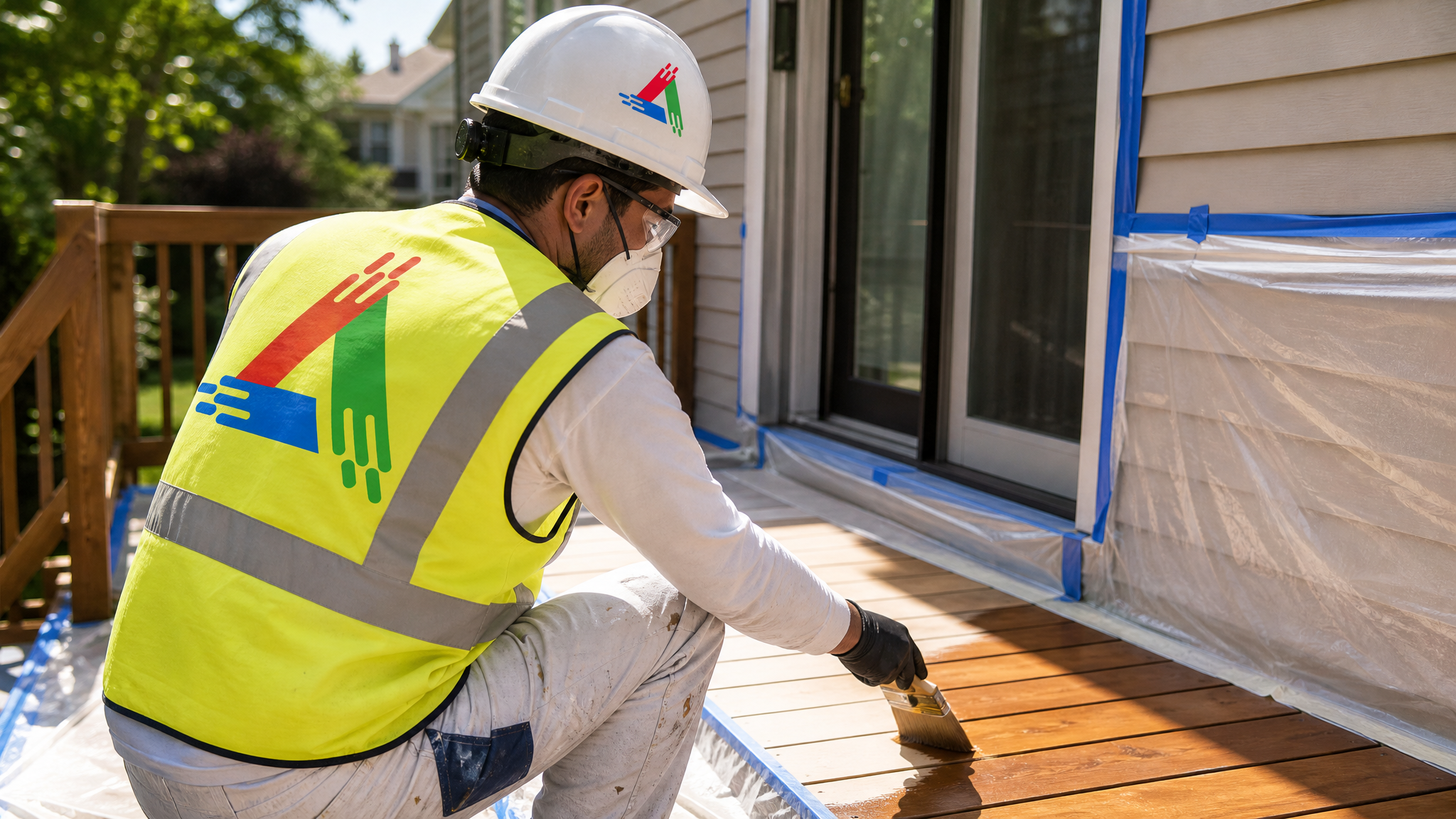
The process begins with a thorough cleaning. We remove furniture and planters, sweep away debris, and clear the gaps between boards. Old, failing coatings are stripped, and the deck is washed with a wood-appropriate cleaner to lift dirt, mildew, tannin stains, and grey oxidised fibres. Pressure washing is done carefully and at controlled pressure, because too much force gouges soft cedar and pine, raising a fuzzy grain that ruins the finish.
Once clean, the wood must dry completely. This is where Toronto’s summer works in our favour: warm, sunny July weather lets a washed deck reach the correct moisture content in one to three days, whereas a damp spring can stretch that to a week. Sealing wet wood traps moisture inside and guarantees failure, so we test the boards before proceeding. Next comes sanding to knock down raised grain, splinters, and rough patches, followed by masking off adjacent siding, railings, and any nearby surfaces. This attention to protecting surroundings is the same care our painters use on interior projects; you can see the standard on our interior painting jobs. Finally, the stain-sealer is applied evenly with brushes, pads, and rollers, working with the grain and maintaining a wet edge to avoid lap marks. For a deep, even finish we typically apply two coats, respecting the product’s recirculation and dry times.
Choosing the Right Sealer and Finish for Your Deck
Not every product suits every deck, and the GTA market offers a confusing range of options. The main categories are clear penetrating sealers, semi-transparent stains, and solid-colour stains, each with a different balance of protection and appearance. Understanding the trade-offs helps you get the result you actually want rather than a finish you regret a year later.
Clear and toned penetrating sealers soak into the wood and let the natural grain show through fully. They give the most authentic wood look but need reapplication most often, typically every year or two, because they carry little or no pigment for UV defence. Semi-transparent stains add colour while still showing grain and texture; they are the most popular choice for cedar and pressure-treated decks because they balance beauty and durability, usually lasting two to three years in Toronto conditions. Solid-colour stains behave almost like paint, hiding the grain but delivering the longest UV protection and the most uniform appearance, ideal for older or weathered decks where the wood is no longer attractive on its own.
Oil-based products penetrate deeply and are excellent for rich, warm tones, while modern water-based formulas cure faster, clean up easily, and meet tighter environmental standards. Wood species matters too: western red cedar and pressure-treated pine, the two most common deck materials in the GTA, each accept stain differently. Newer pressure-treated lumber in particular must weather for several weeks to months before it will absorb a sealer properly. If your project also involves fencing, the same product logic applies, and our dedicated deck and fence staining service in Toronto covers both in one visit for a consistent look.
| Finish Type | Appearance | Typical Lifespan (GTA) | Best For |
|---|---|---|---|
| Clear penetrating sealer | Natural wood, no colour | 1 to 2 years | New premium wood you want left natural |
| Toned sealer | Slight tint, grain visible | 1 to 2 years | Light UV protection, natural look |
| Semi-transparent stain | Colour with grain showing | 2 to 3 years | Cedar and pressure-treated decks |
| Solid-colour stain | Opaque, grain hidden | 3 to 5 years | Older, weathered or repaired decks |
| Oil-based penetrating stain | Rich, warm tone | 2 to 4 years | Deep grain penetration and richness |
How Much Does Deck Sealing Cost in Toronto in 2026
Pricing for deck sealing toronto homeowners can expect in 2026 depends on the size of the deck, its condition, the amount of prep required, and the product chosen. Most professional jobs are quoted either by the square foot or as a flat project price after an on-site assessment. As a general guide, expect a range of roughly 3.50 to 7.00 dollars per square foot for a full clean, prep, and two-coat seal, with more for extensive stripping or repairs.
A small balcony or landing of around 100 square feet often lands in the 500 to 900 dollar range, while a typical mid-sized backyard deck of 300 to 400 square feet commonly runs between 1,200 and 2,400 dollars. Larger multi-level decks, or those with intricate railings, built-in benches, and spindles, take more labour and therefore cost more because every vertical surface must be coated by hand. Decks that have never been sealed, or that have a failing old coating requiring complete stripping, sit at the higher end because of the extra preparation.
It helps to view sealing as recurring maintenance rather than a one-time expense. Reapplying a maintenance coat every two to three years is far cheaper than replacing rotted boards or rebuilding a deck that has been left unprotected. A deck rebuild can easily cost ten to twenty times the price of a seal, which is why regular sealing is one of the highest-return maintenance tasks a homeowner can budget for. Homeowners across the GTA, from our Mississauga painters service area to our Oakville painters clients, ask us to fold deck sealing into a broader exterior refresh for exactly this reason.
Timeline, Weather Windows, and What to Expect
Most residential deck sealing projects in the GTA are completed within one to three days, weather permitting. The bulk of that time is preparation and drying, not the sealing itself. A straightforward mid-sized deck in good condition can often be cleaned, dried, and sealed within a two-day window during warm summer weather, while a large or heavily weathered deck needing full stripping may take three or four days.
Summer is the ideal season for this work, and July is close to perfect. Sealers cure best when temperatures sit between roughly 10 and 30 degrees Celsius with low humidity and no rain in the forecast for at least 24 to 48 hours after application. Our warm, dry summer stretches provide the most reliable curing conditions of the year, which is why demand for deck sealing peaks now. We do avoid applying sealer in direct, blazing midday sun on the hottest days, because a surface that is too hot causes the product to flash off before it can penetrate, so timing within the day matters as much as the season.
After the final coat, the deck needs time to cure before normal use. Foot traffic is usually fine within 24 to 48 hours, but returning heavy furniture and planters should wait a little longer to avoid marking the fresh finish. We always leave clients with clear guidance on when the space is ready. Because we schedule and protect a job site with the same rigour our crews bring to commercial painting in Toronto, homeowners can plan their summer entertaining around a precise, reliable timeline.
Maintaining Your Sealed Deck for the Long Haul
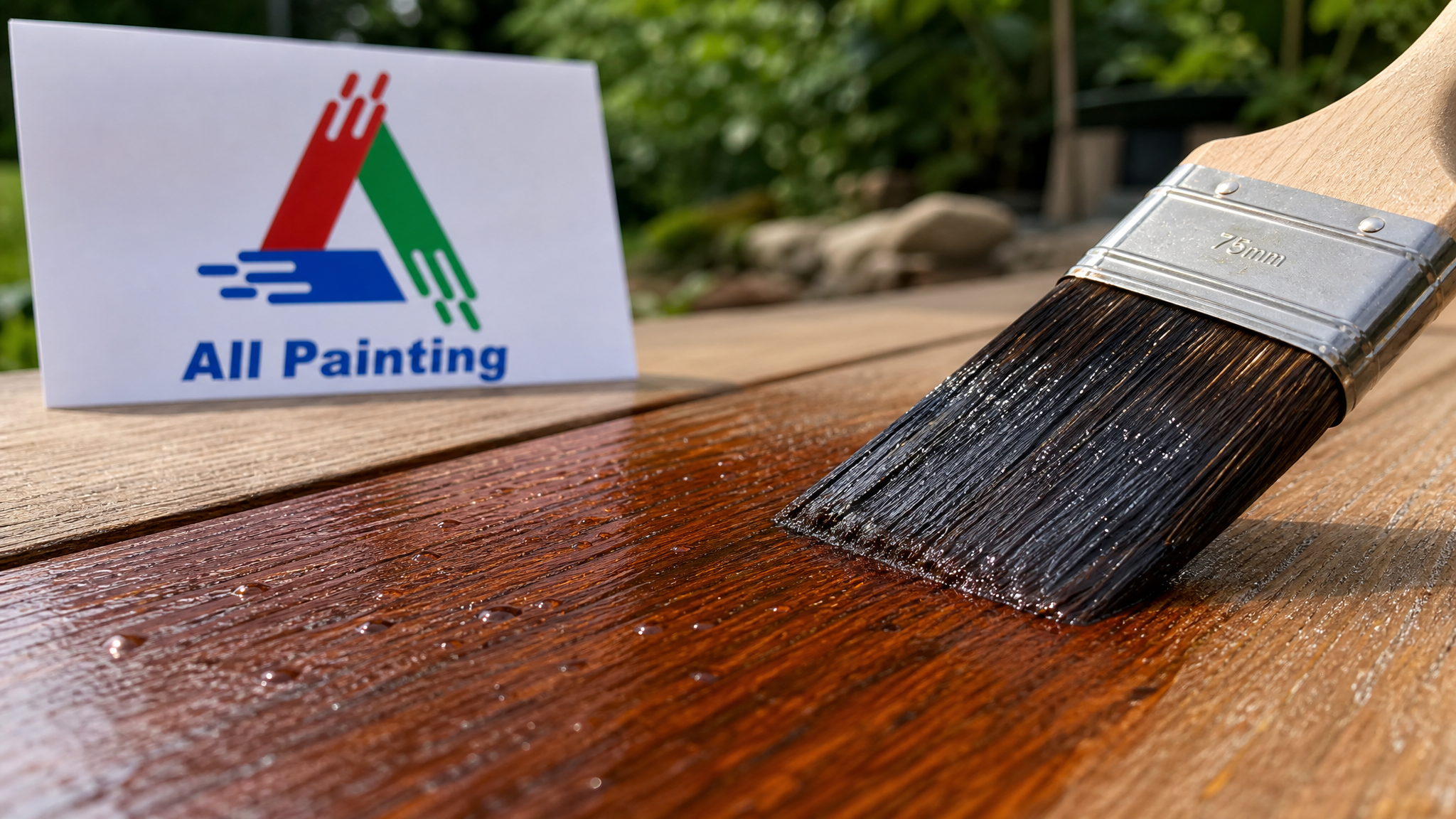
A professional seal is the start of the relationship, not the end. To get the full lifespan out of any deck sealing toronto project, a little seasonal upkeep goes a long way. The single most valuable habit is keeping the surface clean: sweep off leaves, dirt, and organic debris regularly, because trapped moisture under a pile of wet leaves is where rot and mildew begin. A gentle wash once or twice a season removes the grime that would otherwise wear at the coating.
Watch for the early signs that a maintenance coat is due. When water stops beading and instead soaks into the boards, or when the colour begins to fade and lighten, the sealer is telling you it is nearing the end of its protective life. Catching this early means you can apply a fresh maintenance coat over sound existing finish, which is quick and inexpensive, rather than waiting until the coating fails completely and a full strip-and-reseal becomes necessary. Inspecting the deck each spring and again in late summer is a simple routine that pays for itself.
Small repairs also matter. Reset any popped fasteners, sand out new splinters, and address any board that is starting to cup or crack before the problem spreads. Placing planters on feet rather than flat on the boards, and moving furniture occasionally so the whole surface weathers evenly, both help the finish last. When it is finally time for a full refresh, the same crew that maintains your home’s paintwork can renew the deck in the same visit for a coordinated exterior. Clients from our Markham painters and Burlington painters service areas frequently bundle deck maintenance into their regular exterior schedule for convenience.
| Maintenance Task | Recommended Frequency | Why It Matters |
|---|---|---|
| Sweep off debris and leaves | Weekly in season | Prevents trapped moisture and mildew |
| Gentle wash | 1 to 2 times per season | Removes grime that wears the coating |
| Water-bead test | Each spring and late summer | Signals when a maintenance coat is due |
| Inspect fasteners and boards | Twice per year | Catches splits and rot early |
| Maintenance seal coat | Every 2 to 3 years | Restores protection before failure |
Why Hire a Professional Instead of Doing It Yourself
Deck sealing looks simple on a store shelf, but the difference between a professional result and a weekend attempt shows up within a single Toronto winter. The most common DIY mistakes are inadequate cleaning, sealing wood that is still damp, applying too much product so it puddles and stays tacky, and choosing the wrong sealer for the wood species. Any one of these leads to peeling, blotchy colour, or a finish that fails long before its expected lifespan.
A professional crew brings commercial-grade cleaners and strippers, moisture meters to confirm the wood is ready, the right application tools for an even coat, and the experience to read each deck’s condition and history. We also protect your home and landscaping properly, masking siding, glass, and plants so there is no overspray or drips on surfaces that should stay clean. That is the same protective discipline we apply on delicate interior work such as staircase painting and staining, where clean lines and surface protection are everything.
Beyond the finish quality, hiring a professional saves you the physical labour of prep, the cost of buying or renting equipment, and the risk of an expensive mistake on a large deck. Our team can also spot early structural issues, such as soft boards or failing fasteners, and flag them before they become safety problems. The result is a deck that not only looks better but genuinely lasts longer, protecting the investment you made in your outdoor space. To see how homeowners rate our work, browse our customer reviews or learn more about our company.
How often should deck sealing in Toronto be redone?
Is summer a good time for deck sealing in Toronto?
What is the difference between deck sealing and staining?
How much does deck sealing in Toronto cost in 2026?
Can a new deck be sealed right away?
Will deck sealing prevent all cracking and splitting?
Schedule Your Toronto Deck Sealing Today
Protecting your outdoor space is one of the smartest maintenance decisions you can make this summer, and expert deck sealing toronto homeowners trust is exactly what All Painting delivers. Our experienced crews handle every step, from careful cleaning and prep to a flawless, long-lasting finish, so you can enjoy a beautiful, weather-resistant deck for years to come.
Call us today at (416) 710-4224 or request a free quote to get started.
All Painting proudly serves Toronto, Mississauga, Oakville, Markham, Burlington, Hamilton, Richmond Hill and the GTA.