
Choosing the best deck stain for a Toronto backyard is one of the most consequential decisions a homeowner makes about their outdoor living space, and it is also one of the most misunderstood. Every summer we get calls from Etobicoke, North York and Mississauga homeowners whose decks looked fantastic for one season and then peeled, greyed or blotched the next. Nine times out of ten, the problem was not the wood and it was not the weather. It was the wrong product, applied at the wrong time, over a surface that was never properly prepared. This guide walks you through exactly how our crews think about deck staining in the Greater Toronto Area, what the best deck stain actually is for our specific freeze-thaw climate, and how to get a finish that still looks intentional three, four and five summers from now.
July is the ideal window to tackle this project. Warm, dry stretches let stain cure properly, humidity is manageable in the morning hours, and you get maximum use of the finished deck before the season winds down. At All Painting, deck and fence work is one of our busiest summer services, so the recommendations below come from hundreds of GTA decks rather than a manufacturer’s brochure.
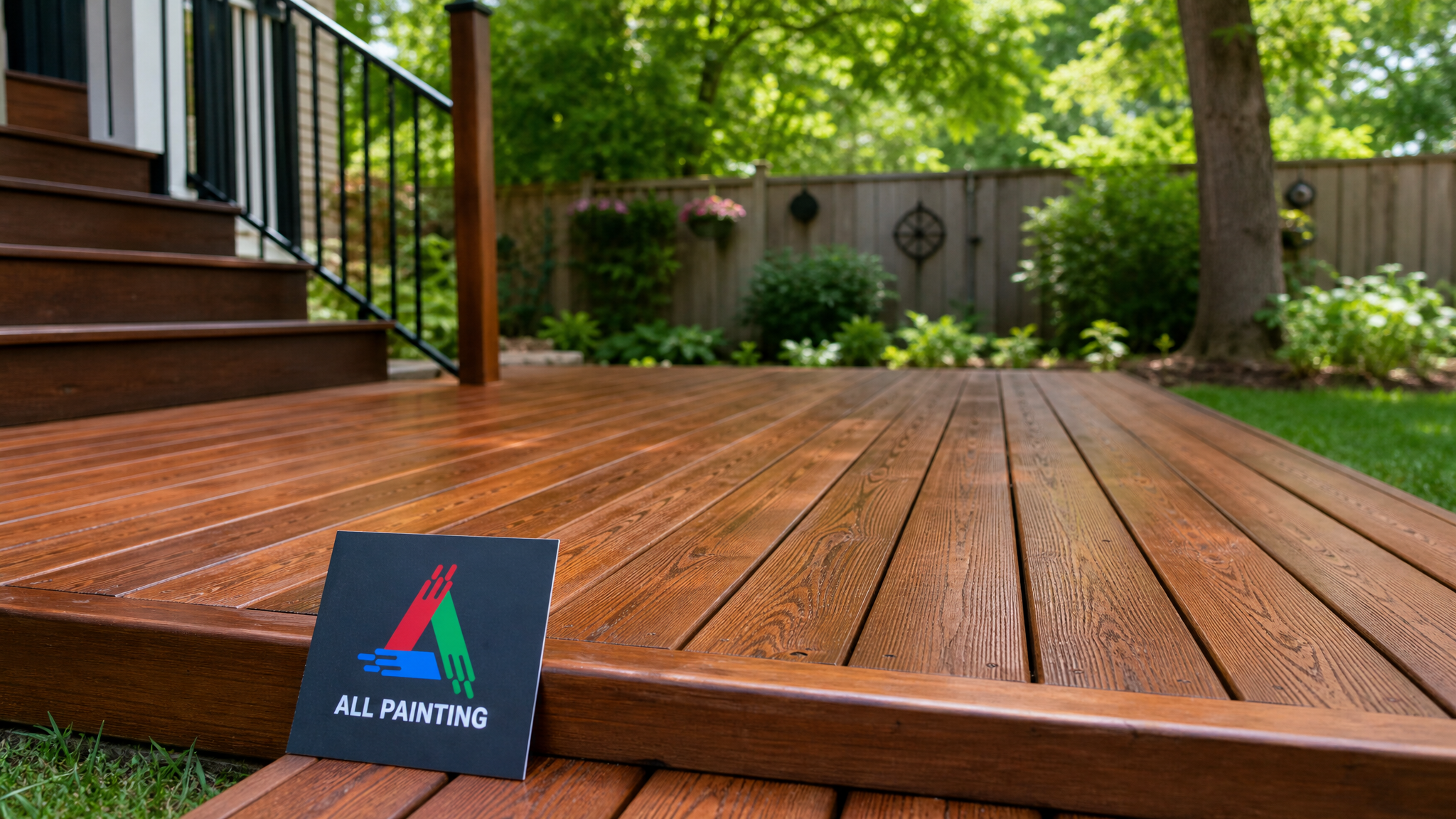
Why the Best Deck Stain for Toronto Is Not the Same as Everywhere Else
Toronto and the surrounding GTA put deck surfaces through a brutal annual cycle, and picking the best deck stain means picking a product engineered for that cycle rather than a generic warm-climate coating. Our decks bake under intense July and August sun, sit through humid summer nights, absorb autumn rain, then endure repeated freeze-thaw swings where trapped moisture expands and contracts inside the wood fibres. A film-forming coating that performs beautifully in a dry, stable climate will often crack and peel here because it cannot flex with wood that is constantly swelling and shrinking.
That is why our crews lean heavily toward penetrating and semi-transparent stains for most GTA decks rather than thick, paint-like deck coatings. A stain that soaks into the wood moves with the wood. When it wears, it fades gracefully and can be recoated without stripping. A heavy film coating, by contrast, fails at the surface, and once it starts peeling your only real option is a full and expensive strip-back to bare wood. For the majority of Toronto homeowners, the best deck stain is one that protects from within the grain, not one that sits on top like armour that will eventually crack.
Wood species matters too. Pressure-treated pine is the most common GTA decking material, followed by western red cedar, then premium hardwoods like ipe and mahogany on higher-end builds. Composite boards do not take stain at all. Each of these substrates behaves differently, and matching the product to the material is half the battle. If your deck ties into other exterior surfaces, coordinating the finish with your broader exterior painting palette keeps the whole property looking cohesive.
The Five Stain Types, Ranked by How They Perform Here
Homeowners often ask us for the single best deck stain, but the honest answer is that the right choice depends on your wood, your maintenance appetite and the look you want. Broadly there are five categories, and understanding the trade-offs is the fastest way to a smart decision. Below is how each type actually performs on real GTA decks over multiple seasons.
| Stain Type | Opacity | Typical GTA Lifespan | Best For | Recoat Difficulty |
|---|---|---|---|---|
| Clear / Water-Repellent Sealer | None (natural) | 1 season | Brand-new premium hardwood | Very easy |
| Transparent / Toner | Very light tint | 1-2 seasons | New cedar, showing full grain | Easy |
| Semi-Transparent | Medium, grain visible | 2-4 seasons | Most GTA decks, cedar & pine | Easy to moderate |
| Semi-Solid | High, grain faint | 3-5 seasons | Older or weathered decks | Moderate |
| Solid / Opaque | Full, hides grain | 3-5 seasons (film risk) | Badly weathered or previously painted decks | Difficult (may need strip) |
For a typical pressure-treated or cedar deck in Toronto, we recommend a semi-transparent oil-modified or hybrid stain as the best deck stain balance of protection, longevity and easy maintenance. It penetrates enough to shield the wood from UV and moisture, shows off the grain that made you choose real wood in the first place, and recoats without the dreaded strip-back. Solid stains have their place on old, splintered or previously painted decks where you are essentially hiding damage, but they carry the same peeling risk as paint and should be chosen with eyes open.
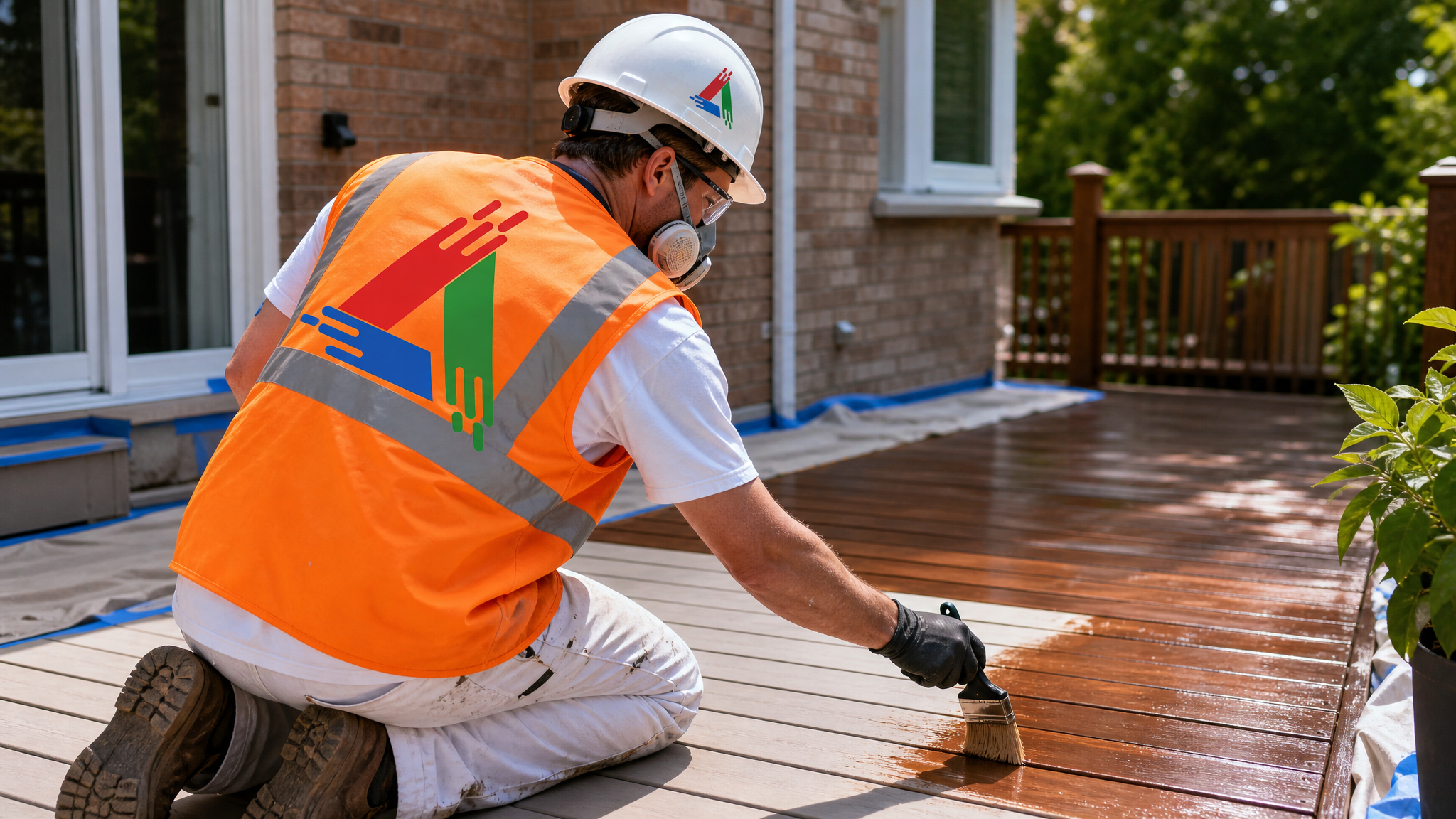
Oil-Based, Water-Based or Hybrid: The Debate That Actually Matters
Once you have settled on opacity, the next question is the base chemistry, and this is where a lot of well-meaning DIY projects go sideways. Each base has genuine strengths, and the best deck stain for your project depends on which trade-offs you are willing to accept.
Oil-based stains penetrate deepest, condition the wood beautifully and are very forgiving to apply because they dry slowly and blend without lap marks. Their drawback is longer cure times, a stronger odour, and in some formulations a tendency to encourage mildew in shaded, damp corners. They remain a favourite of ours for cedar and for horizontal surfaces that take a beating from foot traffic.
Water-based (acrylic) stains have improved enormously and now offer excellent UV resistance, faster dry times, low odour and easy soap-and-water cleanup. They tend to hold colour longer than oil in direct sun, which matters on south-facing GTA decks. The catch is that they are less forgiving during application, showing lap marks if you stop mid-board or work in direct afternoon heat.
Hybrid or oil-modified stains try to capture the penetration of oil with the colour retention and low odour of water-based products. For many Toronto decks this is the sweet spot, and it is increasingly what our crews reach for on 2026 projects. The same care and material logic applies whether we are staining a deck, a fence, or a set of exterior stairs, which is why our deck and fence staining service treats these as one connected system.
| Property | Oil-Based | Water-Based Acrylic | Hybrid / Oil-Modified |
|---|---|---|---|
| Wood penetration | Excellent | Moderate | Very good |
| UV colour retention | Good | Excellent | Excellent |
| Dry / recoat time | Slow (24-48h) | Fast (2-4h) | Moderate (4-12h) |
| Odour & cleanup | Strong / solvent | Low / water | Low-moderate / water |
| Application forgiveness | High | Lower (lap marks) | Moderate-high |
Preparation Is 80 Percent of the Result
We tell every client the same thing: the best deck stain in the world will fail over bad prep, and a mid-range stain over excellent prep will outlast it every time. Preparation is where professional and DIY results diverge most sharply, and it is the least glamorous part of the job. Here is the sequence our crews follow on a Toronto deck.
Assessment and repair. We start by walking the deck for popped fasteners, soft or rotting boards, protruding nails and loose railings. Structural issues get addressed first, because there is no point coating a board that needs replacing. Any splinters get sanded, and gaps that trap debris get cleared.
Cleaning and brightening. Every deck gets a proper cleaning to remove the grey, weathered surface layer, mildew, pollen and old failing finish. On previously stained decks this may involve a dedicated stripper. We follow with a wood brightener that neutralises the cleaner and reopens the grain so the new stain can penetrate evenly. Skipping the brightening step is a leading cause of blotchy, uneven colour.
Sanding and drying. Where needed we sand horizontal surfaces to knock down raised grain and give a smooth, splinter-free finish. Then we wait. Wood must be dry, ideally with moisture content under about 15 percent, before staining. In Toronto’s humid summer that can mean waiting two to three clear days after cleaning or rain. Staining damp wood traps moisture and guarantees premature peeling. This same discipline around surface prep is exactly what carries over into our interior work, where careful drywall repairs underpin a flawless painted finish indoors.
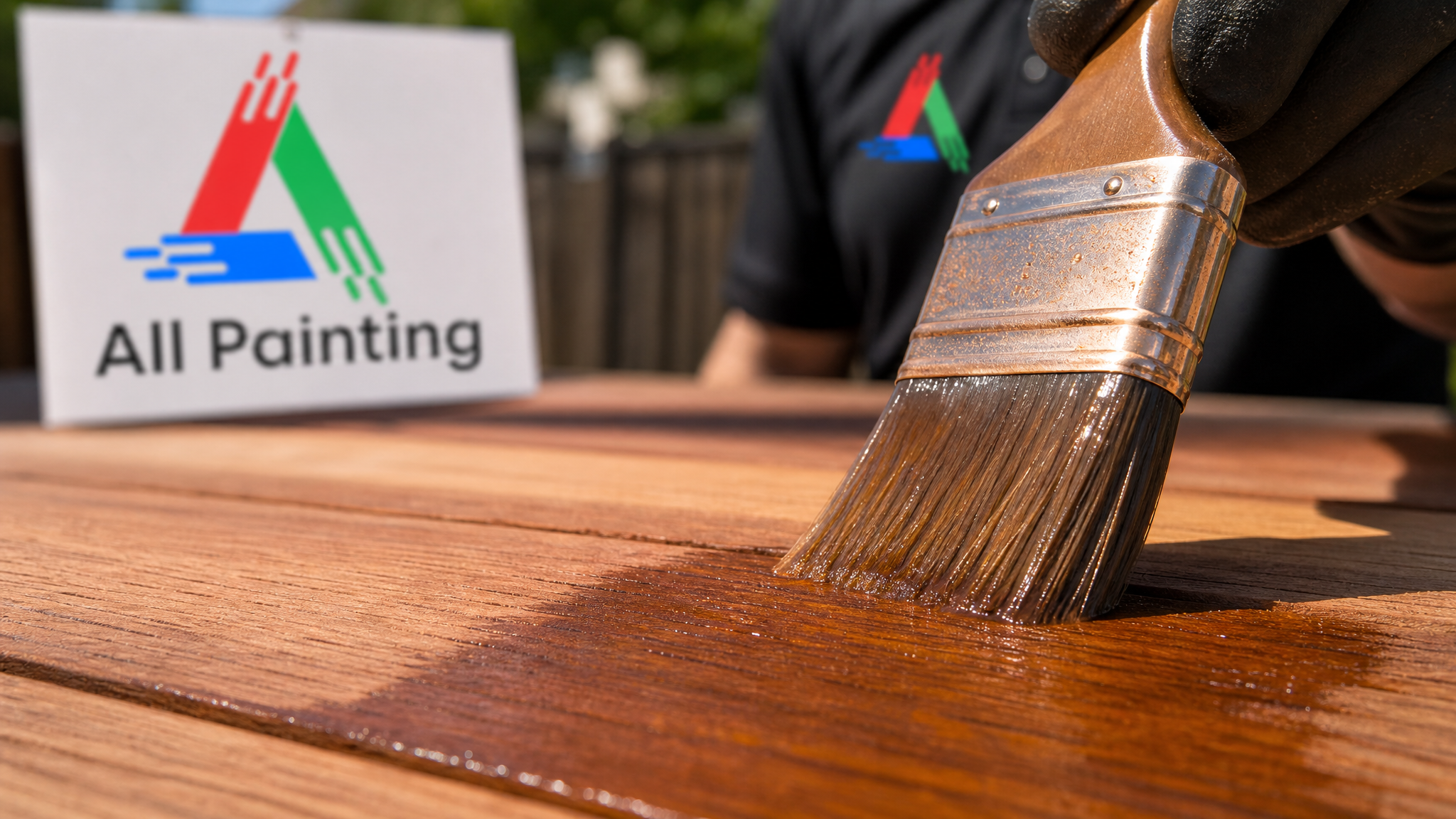
How We Apply Stain for a Finish That Lasts
Application technique separates a deck that looks hand-crafted from one that looks patchy, and even the best deck stain rewards a disciplined method. Our crews work in the cooler morning hours during a July heat wave, never in direct blazing sun, because a surface that is too hot flash-dries the stain before it can penetrate, causing lap marks and poor absorption.
We stain along the length of each board, maintaining a wet edge and completing full boards end to end rather than stopping in the middle. This eliminates the overlap streaks that plague DIY jobs. On railings, spindles and vertical surfaces we adjust the coat weight because vertical wood absorbs less and can drip or run. We apply the number of coats the specific product calls for, and crucially we avoid over-applying, since excess stain that cannot penetrate sits on the surface, stays tacky and eventually flakes.
Between the deck surface and adjacent siding, brick or stucco, we mask and protect thoroughly. Stain over-spray or drips on a brick foundation or aluminum panel are difficult to remove, so the same protective discipline we use on an exterior brick painting or aluminum siding painting job applies to deck staining as well. Cutting-in cleanly around posts and against the house is where a steady professional hand shows.
2026 Deck Staining Costs and Timelines in the GTA
Budget is always part of choosing the best deck stain, so here is a realistic picture of what deck staining costs across Toronto and the surrounding cities in 2026. Prices vary with deck size, condition, the amount of prep required, the number of coats and whether railings and stairs are included. These figures reflect professional service with proper prep and quality materials, not a one-coat spray-and-go.
| Deck Size / Scope | Typical 2026 Price Range | Estimated Timeline | What’s Included |
|---|---|---|---|
| Small deck (up to 200 sq ft) | $650 – $1,100 | 1-2 days | Clean, brighten, 1-2 coats surface |
| Medium deck (200-400 sq ft) | $1,100 – $2,200 | 2-3 days | Full prep, railings, stairs, coats |
| Large deck (400-700 sq ft) | $2,200 – $3,800 | 3-4 days | Full prep, repairs, railings, coats |
| Deck restoration (stripping old finish) | $3,500 – $6,000+ | 4-6 days | Strip, sand, brighten, full recoat |
| Fence staining (per linear section) | $8 – $16 / sq ft | Varies | Clean and stain, both sides where accessible |
Timelines stretch when weather intervenes. Because wood must be dry before staining and stain must cure before rain, a two-day job can become a four-day job around a summer thunderstorm. We build that flexibility into every schedule. Homeowners in Mississauga, Oakville and Markham often bundle deck staining with other summer exterior work, which can reduce mobilisation costs and get everything done in one visit.
Maintenance: Making the Best Deck Stain Last Even Longer
A quality stain job is not fully passive. A few small habits dramatically extend the life of the finish and delay the next full recoat. First, keep the deck clean through the season by sweeping off leaves, pollen and standing debris that trap moisture and breed mildew. Second, rinse the surface periodically and address any spills promptly, especially barbecue grease and planter runoff, which can stain and degrade the finish.
Watch the high-traffic zones. Doorways, stair treads and the path between the door and the barbecue wear first. A light maintenance recoat of just those areas every couple of seasons can keep the whole deck looking uniform and postpone a full re-stain. When the water no longer beads on the surface and instead soaks straight in and darkens the wood, that is the deck telling you it is time for a refresh coat. Catching it at that stage means a simple clean-and-recoat rather than a full strip.
Finally, choose colour with the long game in mind. Mid-tone browns, warm cedars and semi-transparent greys hide wear and fade more gracefully than very light or very dark extremes, which show every scuff and water spot. Our estimators are happy to help you settle on a colour that flatters your home and ages well, the same way we advise on palettes for house painting projects across the GTA. You can see how past clients rate our work on our reviews page.
What is the best deck stain for a Toronto climate?
How long does the best deck stain last in the GTA?
Should I use oil-based or water-based deck stain?
Can you stain a deck in Toronto summer humidity?
Do I need to strip my old deck stain first?
How much does professional deck staining cost in 2026?
Get the Best Deck Stain and Finish for Your GTA Deck
Your deck is an extension of your home, and the right stain protects that investment while making your backyard a place you actually want to spend summer evenings. The team at All Painting brings the prep discipline, product knowledge and application skill that separate a deck that lasts from one that peels by next spring. We will assess your wood, recommend the best deck stain for your specific deck and budget, and deliver a finish built for Toronto’s demanding climate.
Call us today at (416) 710-4224 or request a free quote to get started.
All Painting proudly serves Toronto, Mississauga, Oakville, Markham, Burlington, Hamilton, Richmond Hill and the GTA.