
A weathered deck is one of the most visible signs of wear on a Toronto home, and few exterior surfaces take a harder beating than the boards you walk on every summer. Between freeze-thaw winters, blazing July sun, spring rain, and the constant foot traffic of barbecue season, the average GTA deck loses its protective finish within two to three years. That is where professional deck restoration toronto homeowners rely on becomes essential. Deck restoration is the complete process of cleaning, repairing, sanding, and re-staining a tired deck so it looks and performs like new again, and doing it correctly is the difference between a surface that lasts a decade and one that greys out and splinters within a season. At All Painting, we have restored hundreds of decks across the Greater Toronto Area, and this guide walks you through exactly why a proper checkup and restoration matters, what the process involves, and what you should budget for in 2026.
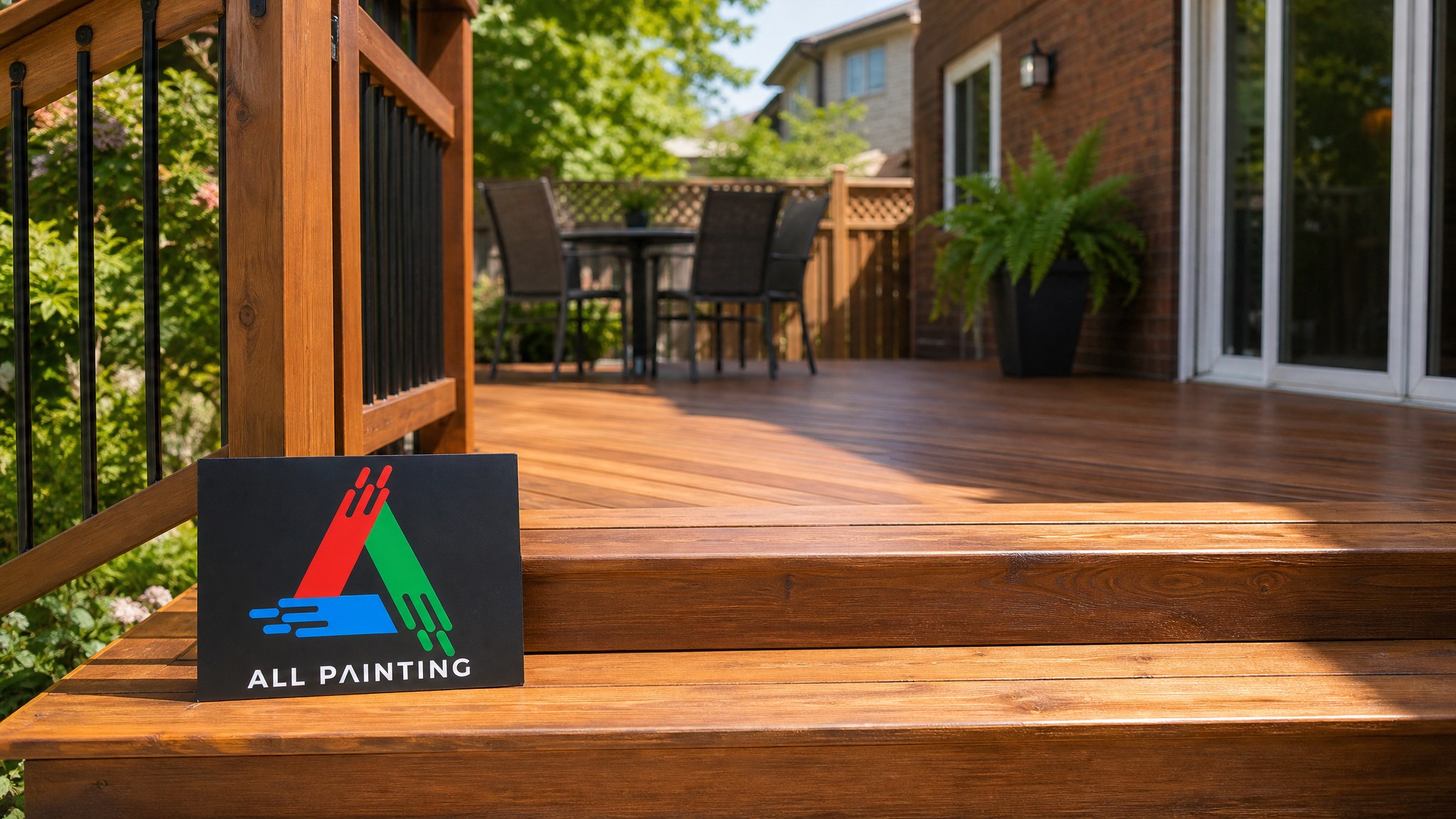
Why Deck Restoration Toronto Homeowners Need Starts With a Checkup
The single most overlooked step in caring for an outdoor deck is the annual inspection. Most homeowners only think about their deck when the boards have already turned silver-grey, the stain is peeling in sheets, or a nail head has popped and snagged a bare foot. By that point the damage has usually progressed further than the surface suggests. A proper deck restoration toronto checkup catches problems while they are still cheap to fix. Our crews look for cupping and warping in the boards, cracked or split lumber, loose fasteners, soft or spongy spots that signal rot, mildew and algae growth in shaded areas, and the condition of the existing finish. A deck that gets a checkup every spring or early summer will almost always outlast one that is ignored until it fails.
Toronto’s climate is uniquely hard on wood. Our winters drive moisture deep into the grain, then freeze it, expanding micro-cracks with every cycle. Our summers, especially a hot July like this one, bake the surface with UV radiation that breaks down lignin, the natural glue that holds wood fibres together. The result is a surface that fades, roughens, and eventually splinters. Restoration reverses that damage, and a checkup tells you whether your deck needs a light refresh or a full strip-and-stain. Because this is exterior work, it pairs naturally with other services such as exterior painting and deck and fence staining, and many homeowners tackle all of it in one warm-season visit.
Signs Your Deck Is Overdue for Restoration
Knowing when to act saves money and prevents the kind of structural decay that turns a cosmetic project into a rebuild. Some warning signs are obvious, while others hide until a board fails underfoot. The most reliable field test is the water test: sprinkle water on the boards, and if it soaks in rather than beading up, the finish has failed and the wood is drinking in moisture unprotected. Any of the following symptoms means your deck is a candidate for restoration this summer.
| Warning Sign | What It Means | Urgency |
|---|---|---|
| Grey, silvered boards | UV damage has broken down the surface fibres and the finish is gone | Moderate |
| Peeling or flaking stain | The old coating has failed and is no longer bonding to the wood | Moderate to high |
| Water soaks in, does not bead | No water repellency remains; wood is absorbing moisture | High |
| Splinters and rough texture | Fibre breakdown that will worsen and become a safety hazard | High |
| Soft or spongy spots | Early or advanced wood rot requiring board replacement | Urgent |
| Black mildew or green algae | Trapped moisture in shaded areas feeding fungal growth | Moderate |
If you spot two or more of these signs, it is time to book a professional assessment. Ignoring them does not just cost you curb appeal; it shortens the structural life of the deck. A deck that could have been restored for a modest fee often becomes a partial rebuild once rot spreads through the joists, which is a far more expensive and disruptive project.
The Professional Deck Restoration Process Step by Step
Successful deck restoration toronto projects follow a disciplined sequence, and skipping any step compromises the finish. Homeowners who attempt a quick re-stain over a dirty or unsanded surface almost always see the coating fail within a year. Here is how our crews approach a full restoration.
1. Inspection and repairs. We begin by walking the entire deck, replacing any rotted or badly split boards, re-setting or replacing loose fasteners, and countersinking any popped nails. Structural integrity comes before anything cosmetic.
2. Cleaning and stripping. We apply a professional-grade deck cleaner or stripper suited to the existing finish. This lifts old failing stain, dirt, mildew, and the grey oxidized surface layer. On badly weathered decks we follow with a brightener that neutralizes the cleaner and restores the wood’s natural pH and tone.
3. Sanding. Once the boards are dry, we sand the surface to open the grain, remove raised fibres, and smooth away splinters. This is the step most DIY projects skip, and it is the single biggest factor in how well the new stain adheres and how smooth the deck feels underfoot.
4. Drying. Wood must be dry before staining. In a warm, dry Toronto July this can mean 24 to 48 hours after washing; in humid or damp stretches we use a moisture metre to confirm the wood is below roughly 15 percent moisture content before we coat it.
5. Staining and sealing. Finally we apply the chosen stain and sealer, working with the grain and back-brushing to drive product into the wood rather than leaving it on the surface. Proper application technique is what separates a finish that lasts three or four years from one that peels by next spring.
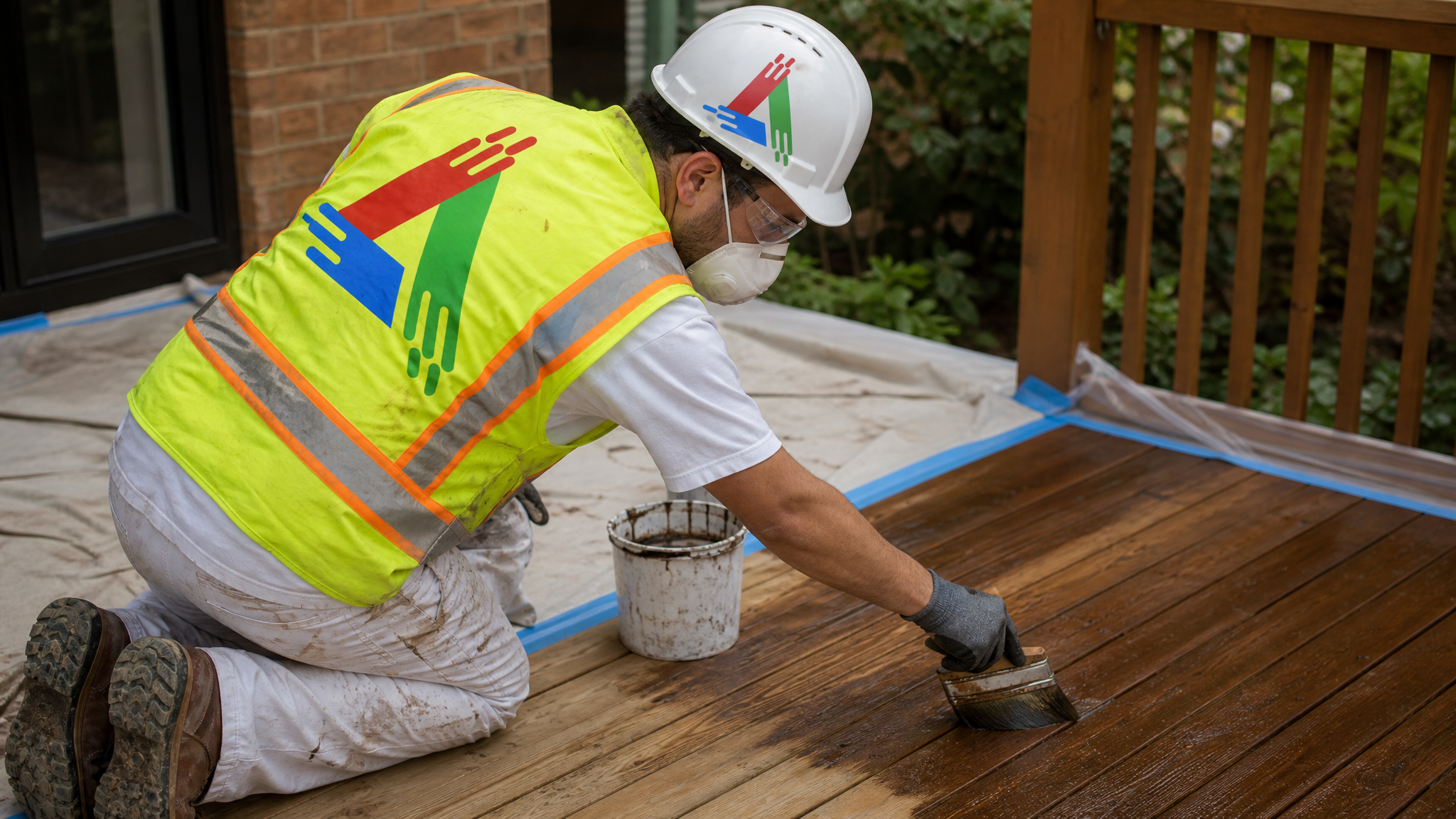
Choosing the Right Stain and Finish for a Toronto Deck
The finish you choose has an enormous effect on how your restored deck looks and how long it lasts. There is no single best product; the right choice depends on the age of the wood, how much sun the deck gets, and the look you want. In general, the more pigment a stain contains, the more UV protection it provides and the longer it lasts before needing a refresh. That is why a clear sealer, while it shows off the wood grain beautifully, needs recoating far more often than a solid stain. The table below breaks down the common options our clients weigh during a restoration.
| Finish Type | Appearance | UV Protection | Typical Lifespan (GTA) |
|---|---|---|---|
| Clear sealer | Natural wood, no colour change | Minimal | 1 to 2 years |
| Toner / transparent stain | Slight tint, full grain visible | Low to moderate | 2 years |
| Semi-transparent stain | Rich colour, grain still shows | Good | 3 to 4 years |
| Semi-solid stain | Deep colour, muted grain | Very good | 4 to 5 years |
| Solid / opaque stain | Paint-like, hides grain | Excellent | 5 to 7 years |
For most Toronto and GTA decks we recommend a quality semi-transparent or semi-solid stain. It offers the best balance of natural appearance and durability, holds up to our freeze-thaw cycles, and re-coats cleanly without heavy stripping down the road. Oil-based penetrating stains excel on older, thirsty cedar and pressure-treated lumber, while modern water-based hybrids offer easier cleanup, low odour, and excellent colour retention. During a checkup we test the wood and recommend the product best matched to your specific boards and exposure. If your deck project is part of a broader refresh, our team also handles related exterior work like brick painting and aluminum siding painting so your whole exterior is coordinated.
2026 Deck Restoration Pricing in the GTA
Cost is the first question most homeowners ask, and the honest answer is that it depends on the size and condition of the deck. A small, well-maintained deck that needs only a clean and re-coat sits at the low end, while a large, badly weathered deck requiring stripping, extensive board replacement, and sanding costs considerably more. As a rough guide, professional deck restoration toronto pricing in 2026 runs roughly $3 to $8 per square foot depending on scope. The table below outlines realistic ranges we see across the GTA this year.
| Deck Size | Service Scope | Typical 2026 Range | Timeline |
|---|---|---|---|
| Small (up to 200 sq ft) | Clean, light sand, re-stain | $700 to $1,400 | 1 to 2 days |
| Medium (200 to 400 sq ft) | Strip, sand, stain, minor repairs | $1,500 to $2,800 | 2 to 3 days |
| Large (400 to 600 sq ft) | Full strip, sand, repairs, stain | $2,800 to $4,500 | 3 to 4 days |
| Extra-large / multi-level | Complete restoration with board replacement | $4,500 and up | 4 to 6 days |
Several factors move a project within these ranges: the number of boards that need replacing, whether an old failing finish must be fully stripped versus simply cleaned, the type of stain chosen, railings and stairs that add labour-intensive surface area, and access challenges on elevated or multi-level decks. A professional quote after an on-site checkup is always more accurate than an estimate over the phone, and we provide those quotes free. Restoration is nearly always a fraction of the cost of building a new deck, which is why catching problems early through regular checkups pays for itself many times over.
Why Summer Is the Ideal Time for Deck Restoration in Toronto
Timing matters more than most homeowners realize. Stains and sealers cure best in warm, dry conditions, which makes a Toronto July close to ideal for deck restoration toronto work. Warm daytime temperatures between roughly 15 and 30 degrees, low humidity, and long daylight hours all help the wood dry quickly after cleaning and allow the stain to penetrate and cure fully before the next rain. Applying stain in cold or damp conditions traps moisture and leads to blotching, poor adhesion, and premature failure, which is why we avoid late-fall coating whenever possible.
There is a sweet spot even within summer. We avoid staining in direct, blazing midday sun on the hottest days because the surface can flash-dry the stain before it soaks in, leaving lap marks and uneven colour. Our crews plan the coating stage for cooler morning or evening hours, or work on the shaded side first and follow the shade around the deck. Booking early in the season also means your deck is protected and beautiful for the full stretch of barbecue and patio weather rather than sitting torn up during the months you most want to use it. Homeowners who combine outdoor and indoor projects often schedule interior painting for the cooler shoulder seasons and reserve summer for exterior work like decks and house painting.
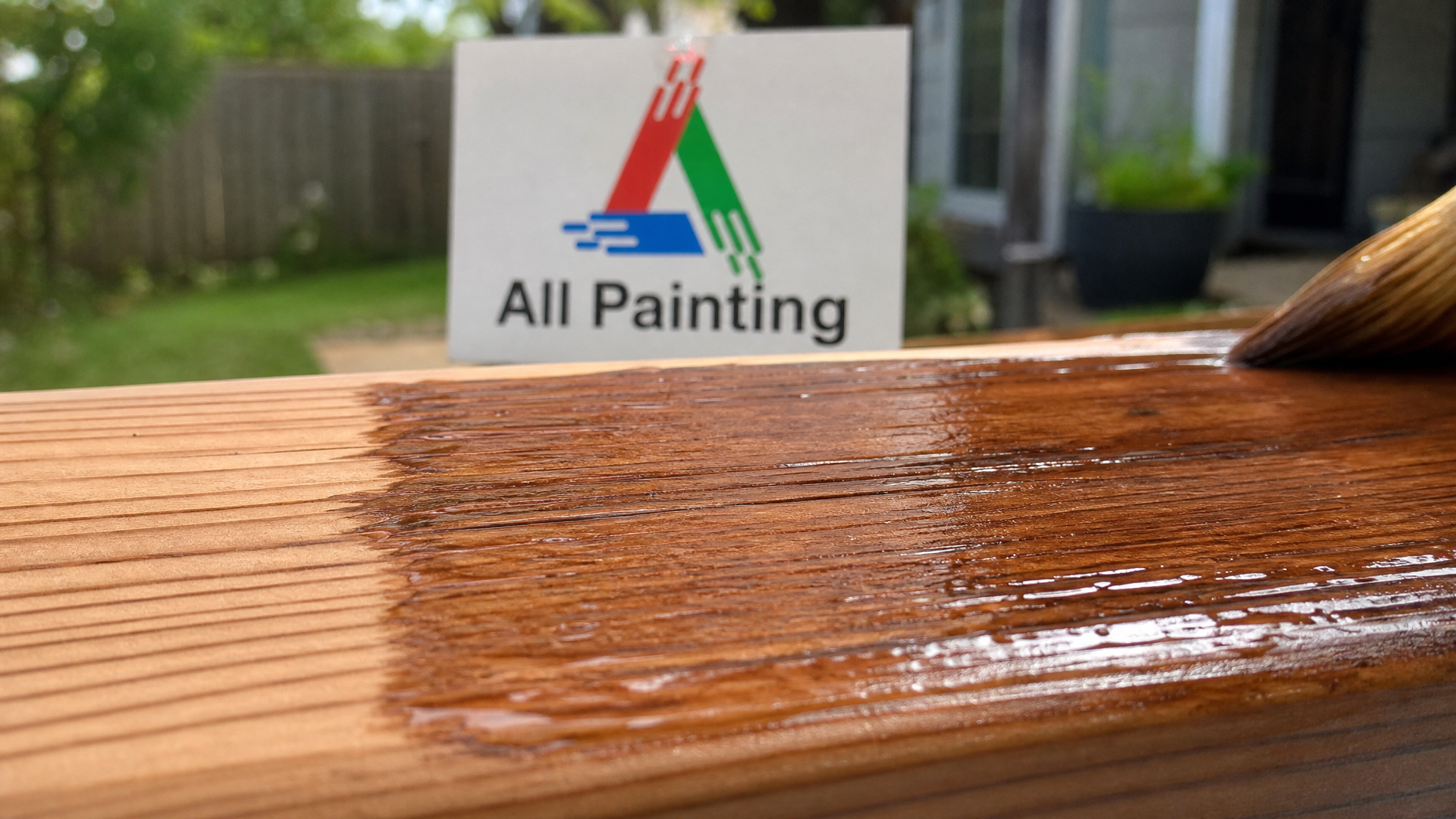
Maintaining Your Restored Deck Year After Year
Restoration is not a one-and-done event; it is the reset point for an ongoing maintenance cycle. The homeowners who get the longest life out of their decks are the ones who treat them the way they treat any painted or stained surface, with a light annual review and a periodic refresh coat. A restored deck that is swept regularly, kept clear of standing planters and wet leaves, and given a maintenance re-coat every few years can easily last fifteen to twenty years without major intervention.
The most important habit is the annual checkup that this whole guide is built around. Each spring or early summer, walk your deck, run the water test, look for any peeling or greying, check the fasteners, and probe any shaded spots for softness. Catch a small issue and it is a quick spot-fix; ignore it and it becomes a full restoration or worse. Keeping the surface clean between coats also matters enormously, because dirt and organic debris hold moisture against the wood and accelerate finish breakdown. When the water test shows the finish weakening, that is the signal to book a maintenance re-coat before the wood is exposed and greying again. This same disciplined maintenance mindset applies across every surface in a home, from a stained deck to a painted staircase to your kitchen cabinets.
All Painting serves homeowners well beyond the city core, and our deck restoration crews regularly work in surrounding communities. Whether you need Mississauga painters, Oakville painters, or Markham painters, the same standards, products, and process apply. You can see what past clients say on our reviews page or learn more about us and our approach to exterior work.
How often does a deck restoration Toronto homeowners rely on need to be repeated?
How much does deck restoration Toronto pricing run in 2026?
Is summer really the best time for deck restoration?
Can a badly weathered grey deck actually be restored?
What is the difference between deck restoration and just re-staining?
Do you restore decks outside the city of Toronto?
Book Your Deck Restoration Toronto Consultation Today
A tired, greying deck does not have to be replaced; in most cases it can be brought back to life for a fraction of the cost with a professional restoration. The team at All Painting combines careful checkups, thorough prep, and premium stains to deliver a deck that looks stunning and stands up to Toronto weather for years. Summer is the perfect window, so now is the time to protect your outdoor space before another season of sun and rain takes its toll.
Call us today at (416) 710-4224 or request a free quote to get started.
All Painting proudly serves Toronto, Mississauga, Oakville, Markham, Burlington, Hamilton, Richmond Hill and the GTA.