
A worn, scuffed staircase drags down an entire entryway, and in most Toronto and GTA homes the stairs are the first thing a visitor sees. Professional staircase and railing painting Toronto homeowners invest in does more than freshen a colour: done correctly, it rebuilds a durable, abrasion-resistant surface on the highest-traffic woodwork in the house. This 2026 guide covers realistic refinishing costs, the full prep-to-cure process, the products that actually survive daily foot traffic, and the durability you should expect from a properly executed job across Toronto, Mississauga, Oakville, Burlington and the surrounding region.
Stairs are unforgiving. Treads take direct shoe contact, handrails collect skin oils and hand pressure, and balusters and stringers absorb scuffs from shoes, vacuums and moving furniture. That is why staircase work demands tighter prep, harder coatings and longer cure times than ordinary wall painting. Cutting corners shows within months.
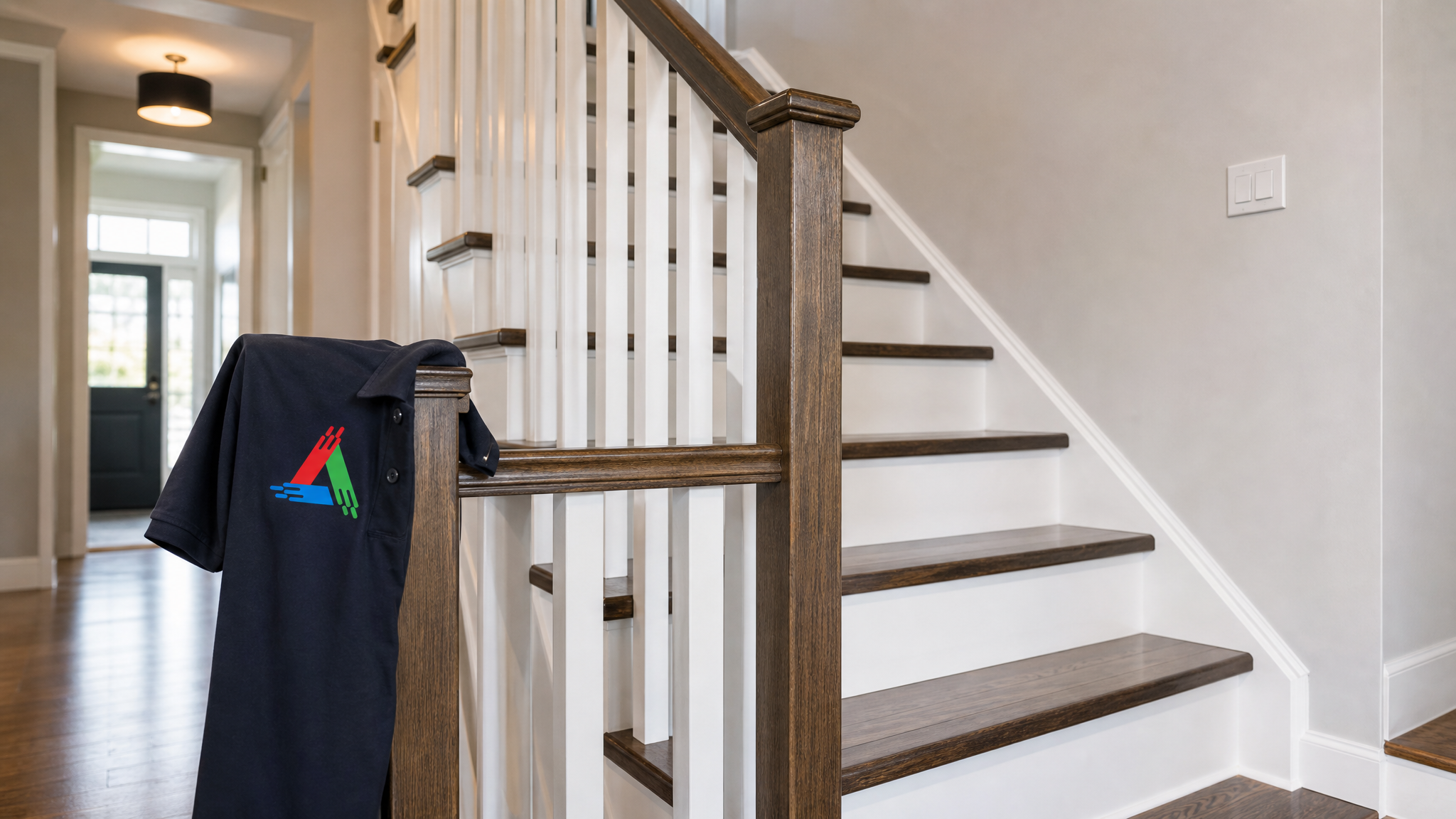
What Staircase and Railing Painting Toronto Homeowners Actually Get
When you book professional staircase and railing painting Toronto contractors handle, you are paying for a multi-stage refinishing system rather than a single coat of paint. The scope typically separates the staircase into distinct surfaces, each with its own product and approach. Risers and stringers usually take a durable trim enamel. Handrails and newel posts often get the hardest-wearing coating because they are touched constantly. Treads are the trickiest element: bare wood treads may be stained and clear-coated, while painted treads need a specialised floor or porch enamel that resists foot abrasion.
Most GTA homeowners pursue one of three outcomes. The first is a full repaint of an already-painted staircase, refreshing colour and repairing chips. The second is converting stained or varnished wood to a painted finish, which requires aggressive deglossing and bonding primer. The third is a two-tone refinish, the most popular look in 2026, pairing stained or dark treads and handrails with crisp white risers and balusters. Each path carries a different labour load, which is the single biggest driver of cost.
| Staircase Component | Recommended Finish | Why It Matters |
|---|---|---|
| Treads (painted) | Floor/porch enamel | Withstands direct foot abrasion and grit |
| Treads (wood look) | Stain + commercial clear coat | Shows grain, resists wear without peeling |
| Risers and stringers | Waterborne alkyd trim enamel | Hard, washable, holds crisp edges |
| Handrail and newels | Urethane-modified enamel or hardwax oil | Resists hand oils, pressure and scuffing |
2026 Staircase Refinishing Costs in the GTA
Pricing for staircase and railing work in Toronto in 2026 is driven by the number of treads, the railing system, the existing finish, and whether you want a single colour or a two-tone result. A standard straight staircase of 12 to 14 steps with a basic painted railing is far cheaper than a curved or open-riser staircase with spindle-heavy railings, which can hold dozens of individually hand-cut balusters.
The ranges below reflect typical 2026 GTA pricing for professional work that includes proper sanding, priming, multiple finish coats and cleanup. Prices climb in core Toronto and premium areas of Oakville and Burlington where access and protection of finished floors add labour.
| Project Type | Typical 2026 Cost (CAD) | Timeline |
|---|---|---|
| Repaint existing painted railing only | $450 – $900 | 1 day + cure |
| Full straight staircase, single colour | $1,200 – $2,400 | 2 – 3 days |
| Two-tone refinish (stained treads, painted risers) | $2,600 – $4,800 | 3 – 5 days |
| Curved or open-riser staircase, full refinish | $4,500 – $8,500+ | 5 – 8 days |
A few factors push a quote toward the top of these ranges. Stripping old varnish or multiple paint layers adds hours of hand work. Repairing loose balusters, squeaky treads or split handrails is carpentry that precedes painting. And protecting adjacent hardwood, carpet and walls in an open stairwell takes meticulous masking. If you are budgeting a wider refresh, pairing the staircase with broader interior painting in Toronto often lowers the per-surface cost because the crew is already mobilised and protecting the space.
The Professional Refinishing Process Step by Step
Durability on a staircase is built in the prep, not the topcoat. The visible colour is the last ten percent of the job. The following sequence is what separates a finish that lasts a decade from one that chips within a season.
Assessment and repair. The crew inspects every tread for movement, every baluster for looseness, and the handrail for stability. Squeaks get screwed and glued, gaps get filled, and any rot or split wood is addressed before a brush touches the surface.
Cleaning and degreasing. Handrails in particular carry years of skin oil and hand cream. These are washed with a degreaser so the primer can bond. Skipping this is the number one reason handrail paint peels.
Sanding and deglossing. Every surface is sanded to break the existing sheen and create tooth. Glossy varnished wood is the hardest case and may need both chemical deglossing and mechanical sanding. Dust is fully removed before priming.
Priming. A bonding or stain-blocking primer is applied to all painted surfaces. On bare or previously stained wood, a high-adhesion primer is non-negotiable. This is also where knots and tannin bleed are sealed.
Finish coats. Two to three coats of the appropriate enamel go on with light sanding between coats. Treads receive the hardest floor-grade product. Each coat needs proper dry time, which is why a quality staircase job is measured in days, not hours.
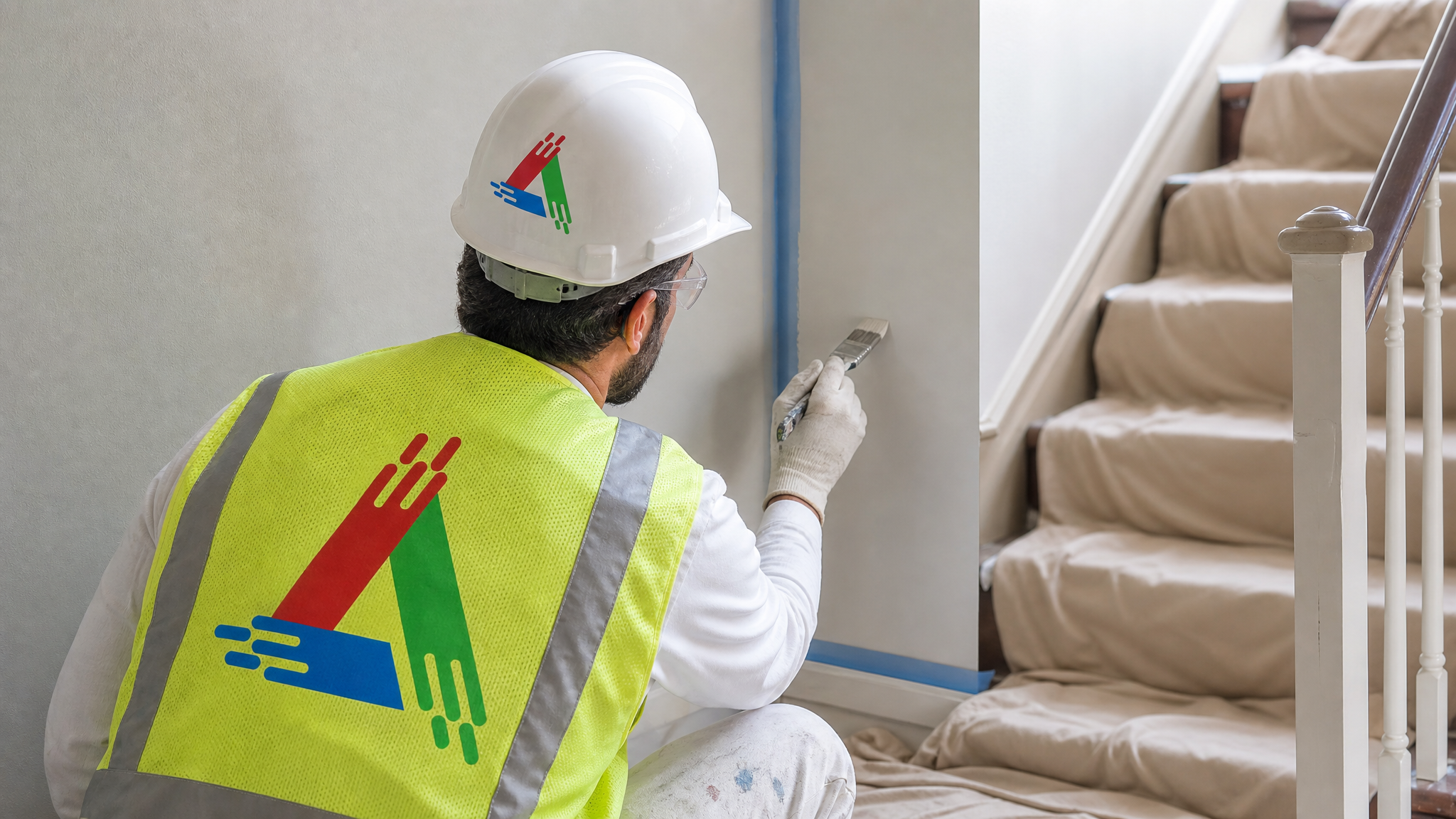
Choosing Colours and Finishes That Last
The most durable staircase finishes in 2026 are waterborne alkyd and urethane-modified enamels. These products flow and level like traditional oil paint but cure to a hard, scratch-resistant film without the yellowing and strong odour of solvent-based alkyds. For wood-look treads, a commercial-grade waterborne floor finish or a penetrating hardwax oil delivers the best balance of grain visibility and abrasion resistance.
Sheen matters as much as product. Higher sheen is harder and more washable but shows every imperfection in the underlying wood. Most GTA homeowners land on a satin or semi-gloss for risers and balusters, and a slightly tougher finish on the handrail. Flat finishes have no place on a staircase: they mark instantly and cannot be wiped clean.
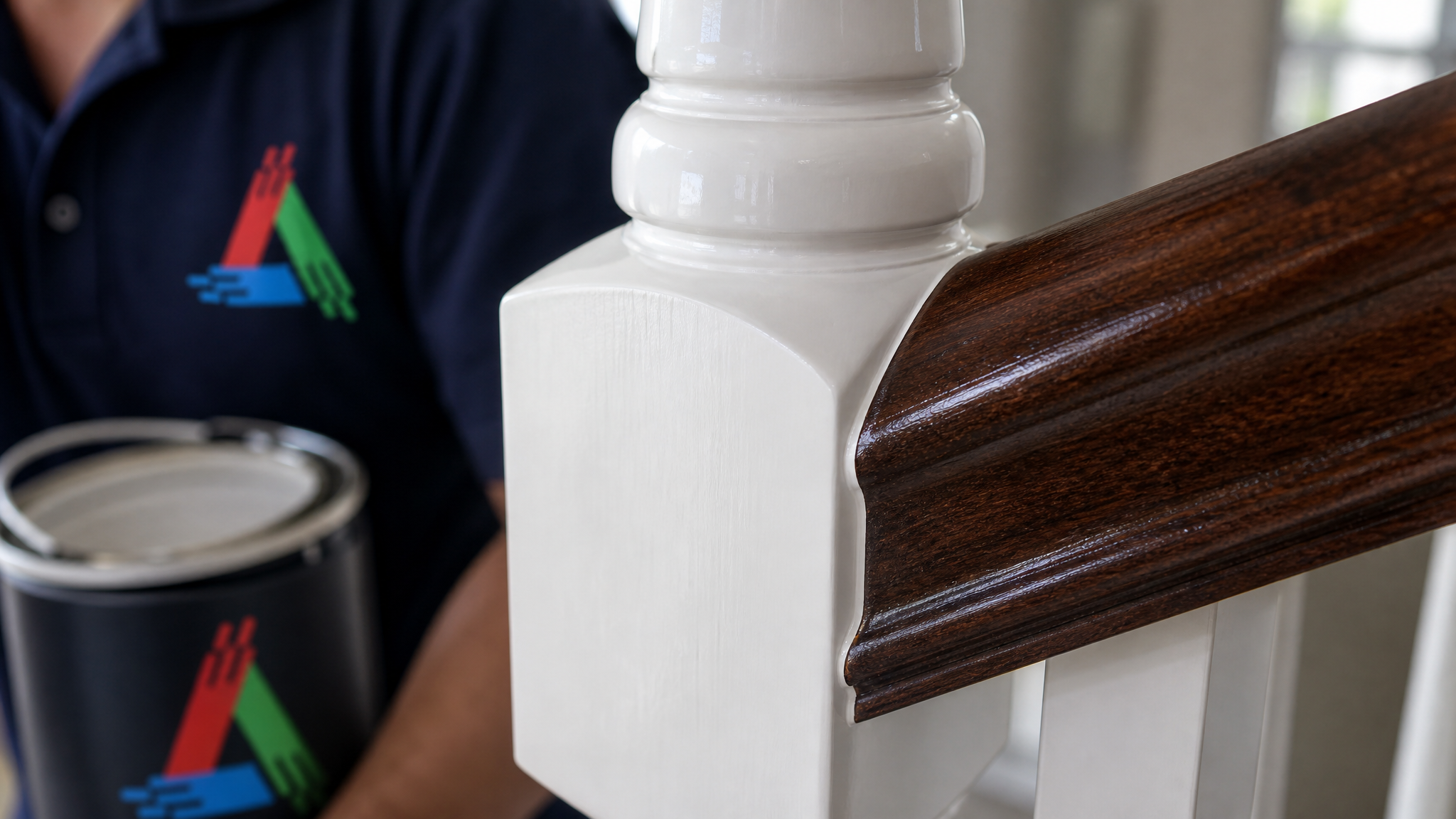
Colour-wise, the two-tone look continues to dominate Toronto interiors. Crisp white risers and balusters paired with a warm walnut or near-black handrail and treads reads clean and contemporary, and it hides scuffs better than an all-white scheme. The same enamels used here are the ones that perform on kitchen cabinet painting in Toronto, which is another high-touch surface where a hard, self-levelling finish is essential.
| Finish Type | Durability | Best Use on Stairs |
|---|---|---|
| Waterborne alkyd enamel | Very high | Risers, stringers, balusters |
| Urethane-modified enamel | Highest for trim | Handrails and newel posts |
| Waterborne floor finish | Highest for treads | Painted or stained treads |
| Hardwax oil | High, repairable | Natural wood-look treads |
Durability, Cure Time and Living With Fresh Stairs
The hardest thing about refinishing stairs is that you still have to use them. A professional crew manages this by working in halves or leaving every other tread usable, but the coatings still need time to cure. Dry to touch is not the same as cured. Most waterborne enamels are walkable in socks within 24 hours but do not reach full hardness for 7 to 14 days, and you should keep shoes, pets and dragged furniture off freshly painted treads during that window.
Expect a properly refinished painted staircase to hold up for 8 to 12 years on risers and balusters, with handrails and treads being the first surfaces to show wear at the 5 to 8 year mark depending on traffic. Stained-and-clear-coated wood treads in a busy home may need a maintenance recoat sooner. The good news is that a well-built finish recoats easily because the bonding layers are already in place.
| Surface | Cure to Full Hardness | Realistic Lifespan |
|---|---|---|
| Risers and balusters | 7 – 10 days | 8 – 12 years |
| Handrails | 7 – 14 days | 5 – 8 years |
| Painted treads | 10 – 14 days | 5 – 7 years |
| Stained wood treads | 7 – 14 days | 4 – 8 years (recoatable) |
DIY Versus Hiring a Professional Painter
Stairs are one of the few interior projects where the gap between DIY and professional results is dramatic, and where DIY mistakes are expensive to undo. The challenge is not applying paint; it is the prep, the masking of finished floors, the bonding chemistry on glossy wood, and managing cure time on a surface the household cannot avoid. A peeling handrail or chipped treads usually trace back to inadequate degreasing, no bonding primer, or walking on the finish too soon.
Professional crews also bring the right product matrix: floor-grade enamels for treads, urethane-modified coatings for handrails, and spray or fine-brush application on intricate balusters that a roller cannot reach cleanly. If your project extends beyond the stairs, a single contractor can coordinate the staircase with house painting in Toronto or a dedicated staircase painting and staining service so finishes match and timelines align. The same team that handles a stairwell can also tackle popcorn ceiling removal overhead during the same mobilisation.
The honest verdict: a confident DIYer can repaint a simple painted railing on a weekend. A full two-tone refinish, a curved staircase, or any conversion of varnished wood to paint is a job where professional prep pays for itself in years of added durability.
How much does staircase and railing painting in Toronto cost in 2026?
How long does a staircase refinishing project take?
Can you paint over varnished or stained stairs?
When can I walk on my stairs after painting?
What is the most durable finish for staircases and railings?
Do you serve Mississauga, Oakville and Burlington as well as Toronto?
Book Expert Staircase and Railing Painting Toronto Trusts
A staircase is the hardest-working woodwork in your home, and it deserves a refinishing system built for the abuse it takes. All Painting delivers durable, two-tone and single-colour staircase finishes with the prep, bonding primers and floor-grade enamels that keep them looking sharp for years across the GTA.
Call us today at (416) 710-4224 or request a free painting quote to get a fixed price and timeline for your staircase and railing refinish.
All Painting proudly serves Toronto, Mississauga, Oakville, Burlington and the GTA with expert interior, exterior and specialty painting services.