
Every summer, homeowners across the Greater Toronto Area step onto a tired, greying deck and face the same decision: refresh it with a solid coat of paint, or bring the wood back to life with a penetrating stain. The deck painting vs staining question is one of the most common ones we field at All Painting, and the honest answer is that it depends on your deck’s age, the wood species, how much foot traffic it sees, and the look you want to live with for the next several years. Getting this choice right the first time saves you money, protects your investment, and keeps your outdoor space looking sharp through Toronto’s punishing freeze-thaw cycles. This guide walks you through everything we have learned finishing hundreds of GTA decks, so you can make a confident decision before the crew ever arrives.
Whether you own a pressure-treated pine deck in Mississauga, a cedar structure in Oakville, or a composite-and-wood hybrid in Markham, understanding the real trade-offs behind deck painting vs staining is the foundation of a finish that lasts. Let’s break it down the way we would during an in-person consultation.
Deck Painting vs Staining: Understanding the Core Difference
At its simplest, the deck painting vs staining decision comes down to how the finish interacts with the wood. Paint forms a film that sits on top of the surface, creating a hard, opaque, coloured skin. Stain, by contrast, penetrates into the wood fibres, colouring the timber while allowing the natural grain and texture to show through. That single structural difference drives every other consideration, from durability to maintenance to the way water behaves on the surface.
Paint gives you an unlimited colour palette, a uniform appearance, and excellent coverage over old, weathered, or previously painted boards. It hides imperfections beautifully. The trade-off is that because paint sits on the surface, it is vulnerable to peeling, cracking, and blistering, especially on horizontal walking surfaces that collect standing water, ice, and UV exposure. Once paint starts to fail on a deck floor, the repair is labour-intensive because you must scrape and sand away the failing film before recoating.
Stain works with the wood rather than against it. A quality penetrating stain repels water, blocks UV damage, and resists mildew while letting the deck breathe. When stain wears, it fades gradually rather than peeling in sheets, which means recoating is usually a simple clean-and-reapply job rather than a full strip-down. For most Toronto decks that see bare feet, patio furniture, and barbecues all summer, stain is the finish we recommend, though there are important exceptions we cover below. Our full deck and fence staining service is built around exactly these penetrating finishes.
How Toronto’s Climate Shapes the Decision
You cannot have an honest deck painting vs staining conversation in the GTA without talking about our weather. Toronto decks endure brutal freeze-thaw cycling, where moisture seeps into the wood, freezes, expands, and thaws repeatedly through the shoulder seasons. This movement is the single biggest enemy of any deck finish. A film-forming paint that cannot flex with the wood will eventually crack and let water underneath, where it becomes trapped and accelerates rot.
Summer brings intense UV exposure and heat, which is why July and August are actually the ideal months to refinish a deck. Warm, dry conditions let stain penetrate deeply and cure fully, and they give paint the clean, dry substrate it needs to adhere. We always advise homeowners to book warm-season work when the boards have had several dry days to shed moisture. Applying any finish to damp wood is a recipe for early failure regardless of which product you choose.
Because horizontal deck surfaces take the worst of the sun, rain, and traffic, penetrating stains generally outperform paint on the deck floor itself. Many GTA homeowners land on a smart hybrid approach: stain the walking surface and paint the vertical railings, posts, and skirting where a film finish is far more durable. This is the same logic we apply on exterior painting projects across the city, matching the finish to how each surface is actually used.
Cost Comparison: Deck Painting vs Staining in 2026
Budget is often the deciding factor, so let’s put real 2026 GTA numbers on the table. Pricing depends on deck size, condition, wood type, and how much prep the surface needs, but the ranges below reflect what Toronto-area homeowners can realistically expect for professional work including materials and labour.
| Finish Type | Typical GTA Cost (per sq ft) | Average 300 sq ft Deck | Expected Lifespan |
|---|---|---|---|
| Solid-colour stain | $3.50 – $5.50 | $1,050 – $1,650 | 4 – 6 years |
| Semi-transparent stain | $3.00 – $5.00 | $900 – $1,500 | 2 – 4 years |
| Deck paint (premium) | $4.50 – $7.00 | $1,350 – $2,100 | 3 – 5 years (floor) |
| Hybrid (stained floor, painted rails) | $4.00 – $6.00 | $1,200 – $1,800 | 4 – 6 years |
On paper, semi-transparent stain looks like the cheapest option, and for the initial application it often is. But the real cost of any deck finish is measured over a decade, not a single season. Paint carries a higher recoating cost because failing film must be scraped and sanded, while stain recoats are quick. When you weigh the full lifecycle, the deck painting vs staining math frequently favours stain for the walking surface, even though the sticker prices are close. During a free on-site quote we measure your actual square footage and factor in prep, so the number you receive reflects your specific deck rather than a generic estimate.
The Prep Work That Makes or Breaks Any Deck Finish
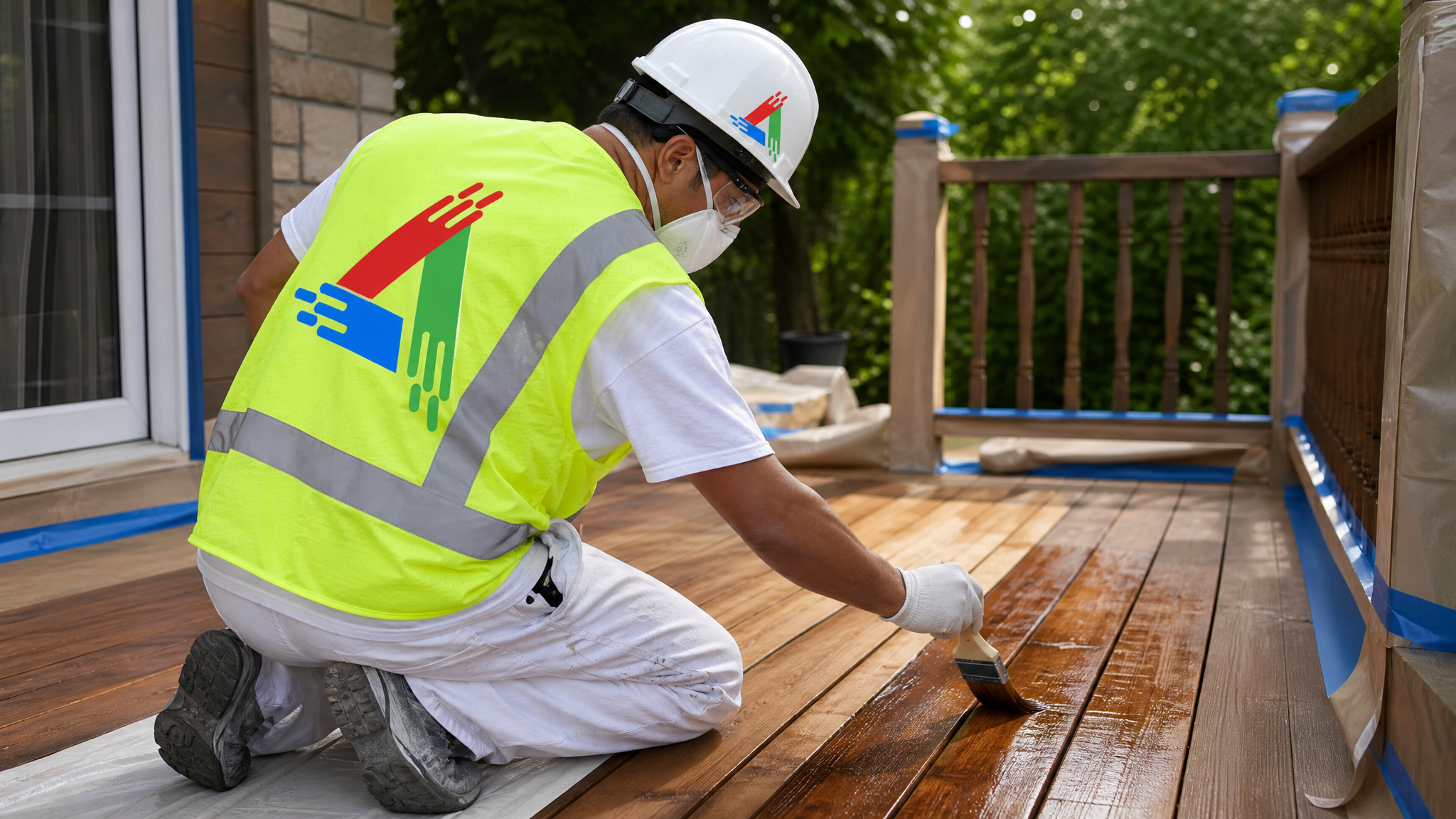
Here is the truth that separates a finish lasting six years from one failing in twelve months: preparation matters more than the product. Whether you choose paint or stain, roughly 60 to 70 percent of the labour on a professional deck project is prep. Homeowners are often surprised by this, but it is exactly why a rushed weekend DIY job rarely holds up against Toronto weather.
For a stain project, proper prep means a thorough cleaning to strip away dirt, mildew, algae, and any old failing finish, followed by brightening the wood and letting it dry completely. Weathered boards may need sanding to open the grain so the stain can penetrate. For a paint project, prep is even more demanding: every trace of loose or peeling paint must be scraped and sanded, glossy areas dulled, bare wood primed, and gaps caulked. Skipping any of these steps traps the failure underneath your fresh coat.
We also inspect the structure during prep, because there is no point finishing rotten boards. If we find soft spots, popped fasteners, or split rails, we flag them before coating. This attention to substrate is the same standard we bring to interior work like staircase painting and staining, where surface preparation is equally decisive. The table below summarises the prep steps each finish demands.
| Prep Step | For Staining | For Painting |
|---|---|---|
| Deep clean and de-mildew | Required | Required |
| Wood brightener | Recommended | Not needed |
| Scrape failing finish | Light | Extensive |
| Sanding | Spot sanding | Full sanding |
| Primer coat | Not required | Required on bare wood |
| Drying time before coating | 48 – 72 hours | 48 – 72 hours |
Choosing the Right Product for Your Wood Type
Wood species plays a major role in the deck painting vs staining decision. Pressure-treated pine, the most common deck material in the GTA, is often best served by a solid stain or a hybrid approach because its grain is not especially attractive and it accepts pigment readily. Cedar and other premium softwoods, prized for their natural grain and warm tone, are almost always better stained with a semi-transparent or transparent product so that beauty stays visible. Painting over cedar buries exactly what you paid extra for.
Newer pressure-treated lumber needs to weather and dry for several weeks to months before any finish is applied, because the treatment chemicals leave the wood too wet to accept a coating. Exotic hardwoods like ipe are so dense that only specialised penetrating oils will absorb, and paint should never be used on them. Composite boards should not be painted or stained at all unless the manufacturer specifically permits it. When we consult on a project, matching the product to the wood is the first thing we assess, the same way we match products to substrate on our house painting jobs.
Colour choice matters too. Darker stains and paints absorb more heat, which can make a south-facing deck uncomfortable underfoot on a hot July afternoon and can accelerate finish wear. Lighter and medium tones stay cooler and tend to fade more gracefully. We help homeowners weigh appearance against practical performance so the finished deck looks good and feels good all summer.
The Professional Application Process Step by Step
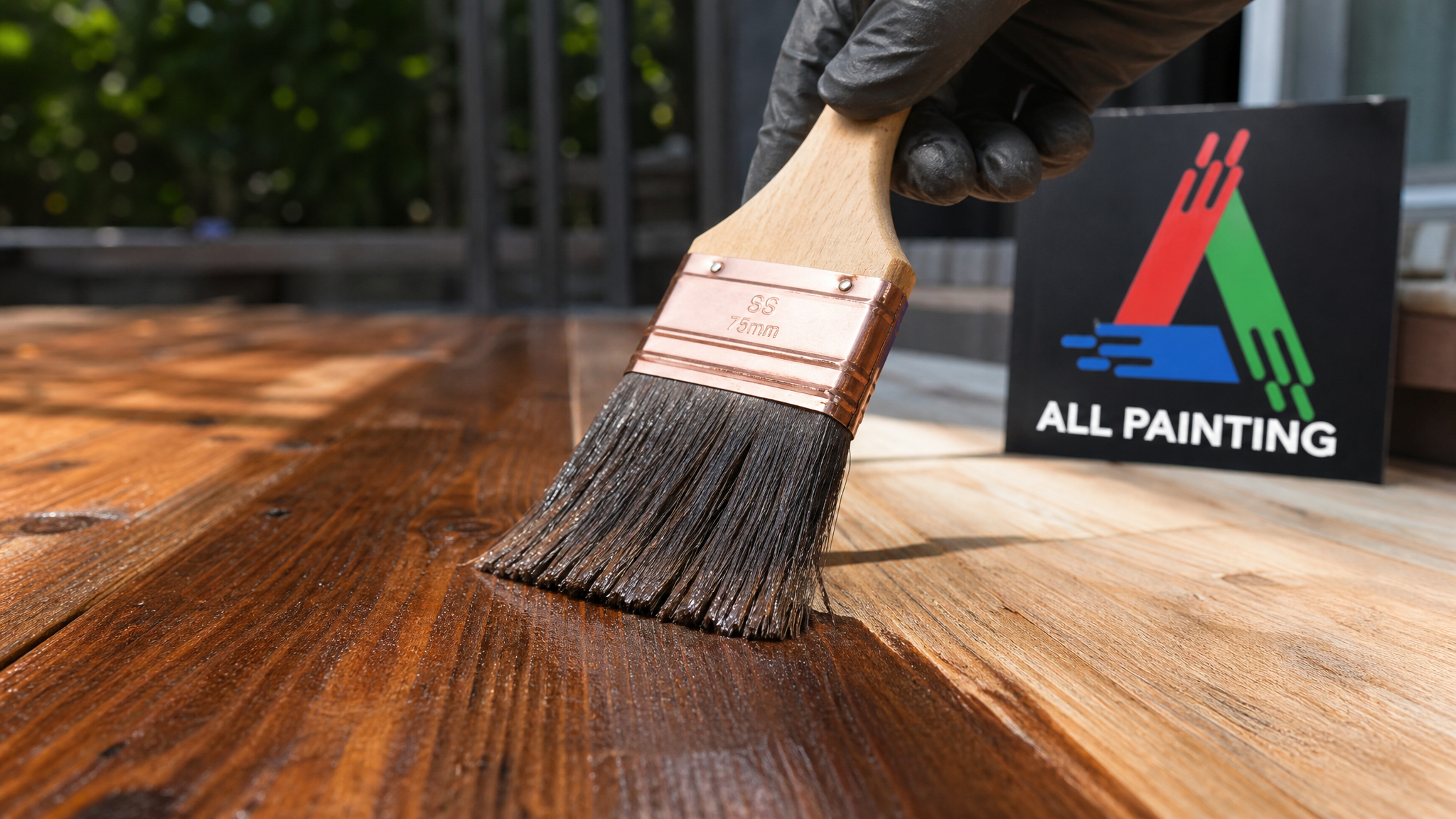
Once the finish is chosen and the prep is complete, application is where craftsmanship shows. For staining, we typically apply the product with brushes and pads worked into the grain, maintaining a wet edge to avoid lap marks and back-brushing to drive the stain into the wood. Most decks receive one to two coats depending on the product and how thirsty the wood is. We never over-apply penetrating stain, because excess that cannot absorb will sit on the surface and get tacky.
For a painted deck, we prime bare wood, then apply two coats of a premium acrylic deck-and-floor paint formulated to flex and resist abrasion. Between coats we allow full recoat times and inspect for coverage. Railings, spindles, and posts are cut in carefully for crisp lines where they meet a stained floor. Throughout the job we protect adjacent siding, plants, and hardscaping with drop sheets and tape, the same discipline we bring to interior projects such as interior painting.
Timing is everything with outdoor finishes. We avoid coating in direct midday sun on the hottest days, because a surface that is too hot causes stain to flash-dry before it can penetrate and paint to skin over unevenly. Early morning and late afternoon in summer often give the best results. We also watch the forecast closely, since rain within the curing window can ruin a fresh coat. This is one of the biggest reasons professional results outlast DIY attempts.
Maintenance and Longevity: Planning for the Long Run
No deck finish is permanent, and understanding maintenance is essential to the deck painting vs staining decision. A stained deck is generally the lower-effort choice over time. Because stain fades rather than peels, a maintenance coat every few years simply refreshes the colour and protection without stripping anything. A quick clean, a light scuff if needed, and a fresh application restores it.
A painted deck can look flawless for years, but when the film eventually fails on the walking surface, the maintenance is more involved. Peeling paint must be scraped, feathered, and spot-primed before recoating, and if the failure is widespread the whole floor may need to be stripped. This is why we often steer high-traffic residential decks toward stain on the floor. That said, a painted deck floor can be a great choice for older, previously painted, or blemished wood where you want a clean uniform look and are prepared for the maintenance rhythm.
Regular care extends any finish dramatically: sweep debris, rinse periodically, keep planters from trapping moisture against boards, and address mildew early. Booking your refinish during the warm, dry summer months gives the finish the best possible cure and the longest service life. The table below lays out realistic maintenance expectations for GTA decks.
| Factor | Stained Deck | Painted Deck |
|---|---|---|
| Recoat frequency | Every 3 – 5 years | Every 3 – 5 years (floor) |
| Recoat difficulty | Low (clean and reapply) | High (scrape, prime, repaint) |
| Failure mode | Gradual fading | Peeling and cracking |
| Best for | Cedar, newer wood, high traffic | Old or previously painted wood |
| Grain visibility | Visible | Hidden |
Whichever direction you choose, the value of professional work shows up in years three, four, and five, when a properly prepped and applied finish is still protecting your deck while a rushed job has already begun to fail. Homeowners across Mississauga, Oakville, and Markham call us precisely because they want that long-term result rather than a short-lived cosmetic fix.
Which lasts longer when comparing deck painting vs staining?
Is deck painting vs staining more expensive?
Can I paint a deck that has already been stained?
Should cedar decks be painted or stained?
What is the best time of year for deck painting vs staining in Toronto?
Can I stain the floor and paint the railings?
Get Expert Help Choosing Between Deck Painting vs Staining
The right answer to the deck painting vs staining question is the one tailored to your specific deck, your wood, and how you use your outdoor space. The team at All Painting has finished decks across the GTA and will assess your boards, recommend the ideal finish, handle every step of prep and application, and leave you with a protected deck built to survive Toronto seasons. This summer is the perfect window to get it done right.
Call us today at (416) 710-4224 or request a free quote to get started.
All Painting proudly serves Toronto, Mississauga, Oakville, Markham, Burlington, Hamilton, Richmond Hill and the GTA.