
Choosing the right painting techniques can make the difference between a room that looks freshly painted and one that looks professionally transformed. Toronto homeowners have access to a wide range of decorative and functional painting methods that go far beyond simply rolling a flat colour onto drywall.
In this guide, All Painting shares the most popular and effective residential painting techniques that our professional painters use across the Greater Toronto Area, from classic approaches to modern decorative finishes that add depth, texture, and character to any space.
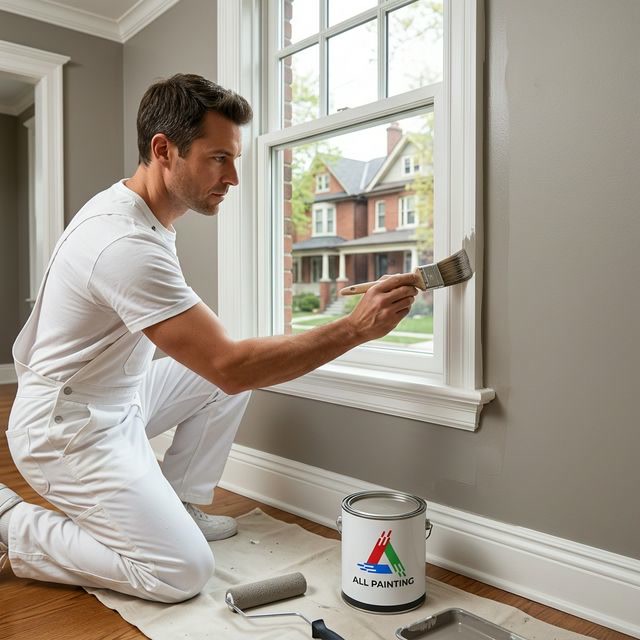
1. Cutting-In: The Foundation of Every Professional Paint Job
Cutting-in is the technique of painting clean, straight lines along edges where walls meet ceilings, trim, door frames, and window casings without using tape. While most DIY painters rely on painter tape, a skilled professional can cut in a perfect line freehand using an angled sash brush, producing sharper results in a fraction of the time.
This technique requires a steady hand, the right brush angle (approximately 45 degrees), and proper paint loading. The brush should be dipped only one-third of the way into the paint and gently tapped against the side of the can to remove excess. Too much paint causes drips and uneven lines; too little creates gaps and streaks.
2. Venetian Plaster and Faux Finishes
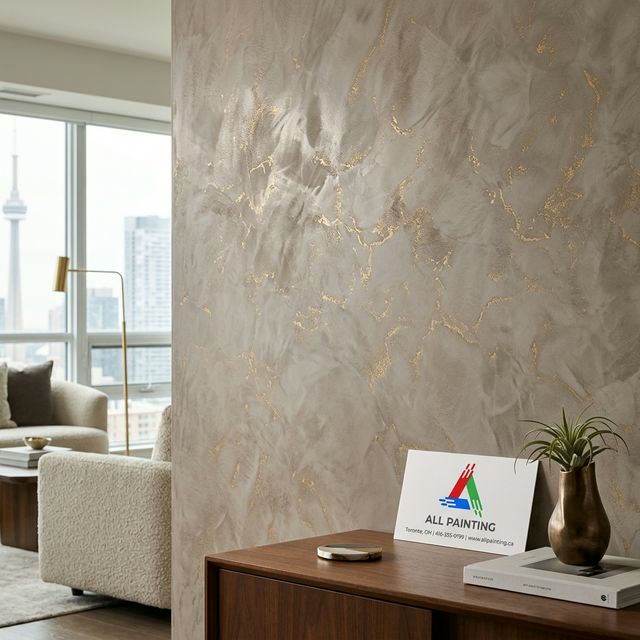
Venetian plaster is one of the most luxurious decorative painting techniques available, and it is experiencing a massive revival in Toronto interior design. This technique involves applying multiple thin layers of tinted plaster with a flat steel trowel, then burnishing the surface to create a polished, marble-like finish with natural depth and movement.
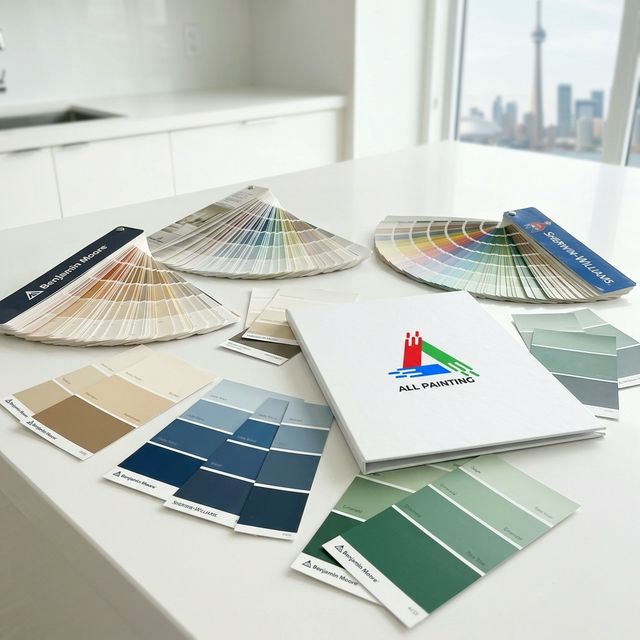
| Faux Finish Type | Best For | Difficulty Level | Cost Per Sq Ft (Toronto) |
|---|---|---|---|
| Venetian Plaster | Accent walls, fireplace surrounds, dining rooms | Expert | $8 – $15 |
| Limewash | Full rooms, European-style homes | Intermediate | $5 – $10 |
| Colour Washing | Bedrooms, living rooms, subtle texture | Intermediate | $4 – $8 |
| Sponge Painting | Bathrooms, powder rooms, small spaces | Beginner-Intermediate | $3 – $6 |
| Rag Rolling | Dining rooms, hallways | Intermediate | $4 – $7 |
| Metallic Glaze | Accent walls, ceiling medallions | Expert | $10 – $20 |
3. Spray Painting for Cabinets and Trim
Spray painting delivers the smoothest, most factory-like finish achievable for kitchen cabinets, trim, doors, and railings. Professional HVLP (High Volume Low Pressure) spray systems atomize the paint into a fine mist that lays down in perfectly even coats without visible brush strokes or roller stipple.
The preparation for spray painting is more intensive than brush and roller work: every surface that should not be painted must be meticulously masked with plastic sheeting and tape, and the area must be well-ventilated. However, the results are worth the effort — sprayed cabinets look indistinguishable from factory-finished surfaces.
4. Two-Tone and Colour Blocking
Two-tone painting — dividing a wall into two colours, typically with a darker shade on the lower portion and a lighter shade above — is a timeless technique that adds architectural interest to plain walls. The dividing line can be created with a clean tape line, a decorative chair rail, or even a painted stripe.
Modern colour blocking takes this concept further by using geometric shapes, diagonal lines, or asymmetric colour divisions to create bold, contemporary focal walls. This technique is particularly popular in Toronto condos and modern homes where the architecture is clean and minimal.
5. Ombre and Gradient Painting
The ombre technique involves gradually transitioning from one colour to another on a single wall, creating a soft, dreamy gradient effect. This is typically done from dark at the bottom to light at the top, mimicking the natural gradient of a sunset or ocean depth.
Achieving a smooth ombre transition requires working quickly while the paint is still wet, blending each colour zone into the next with a large, dry brush or roller. Professional painters often use a spray system for the smoothest gradients, as hand-blending can leave visible transition marks if not executed with expert timing.
6. Stenciling and Patterned Accent Walls
Stenciling has evolved far beyond the basic border patterns of the 1990s. Today Moroccan-inspired geometric patterns, botanical motifs, and large-scale damask designs are used to create stunning accent walls that rival the look of expensive wallpaper at a fraction of the cost.
Professional stencil work requires careful alignment, consistent paint loading on the stencil brush or roller, and patience. The key is applying thin, even coats through the stencil rather than heavy applications that can bleed under the edges.
7. Textured Painting Techniques
Textured painting adds physical dimension to your walls beyond just visual effects. Techniques include:
- Skip Trowel: A plaster-like texture achieved by applying joint compound in thin, overlapping strokes with a drywall knife. Creates a Mediterranean or Old World feel.
- Knockdown Texture: Joint compound is splattered onto the wall and then lightly flattened with a knockdown knife, creating a subtle, organic texture popular in modern Toronto homes.
- Sand Texture: Fine sand is mixed directly into the paint or applied as a separate textured primer, creating a subtle gritty finish that hides minor wall imperfections.
- Suede Finish: Specialty suede-finish paints are applied with a crosshatch technique using a soft brush, creating a velvety, touchable surface that changes appearance depending on the viewing angle and lighting.
8. Proper Roller Technique: W-Pattern Application
Even the most basic painting technique — rolling a flat colour onto a wall — has a professional method that produces dramatically better results than the typical DIY approach. The W-pattern technique involves:
- Loading the roller evenly on a paint tray or screen.
- Rolling a large W shape on the wall without lifting the roller.
- Filling in the W with even, overlapping strokes.
- Finishing with light, consistent top-to-bottom strokes to even out the texture.
This technique prevents roller marks, lap lines, and uneven coverage that plague DIY paint jobs. Combined with the right roller nap — 10mm for smooth walls, 15mm for light texture, 20mm for heavy texture — the result is a uniform, professional finish.
| Technique | Time to Complete (Average Room) | DIY Friendly? | Professional Cost (Toronto) |
|---|---|---|---|
| Flat Colour (Brush + Roll) | 4 – 6 hours | Yes | $300 – $600 |
| Two-Tone / Colour Block | 6 – 8 hours | Moderate | $400 – $800 |
| Stencil Accent Wall | 8 – 12 hours | Moderate | $500 – $1,200 |
| Venetian Plaster | 12 – 20 hours | No | $1,500 – $3,000+ |
| Spray (Cabinets/Trim) | 2 – 3 days | No | $2,000 – $5,000+ |
| Ombre Gradient | 6 – 10 hours | Difficult | $600 – $1,500 |
Choosing the Right Paint Finish for Your Technique
The sheen level of your paint dramatically affects the final look of any technique. Here is what works best:
| Finish | Best For | Durability | Hides Imperfections? |
|---|---|---|---|
| Flat / Matte | Ceilings, low-traffic rooms, textured walls | Low (marks easily) | Yes — best at hiding |
| Eggshell | Living rooms, bedrooms, dining rooms | Medium | Moderate |
| Satin | Kitchens, bathrooms, hallways | Medium-High | Low |
| Semi-Gloss | Trim, doors, cabinets, railings | High | No — shows everything |
| High-Gloss | Front doors, accent furniture, built-ins | Very High | No — amplifies imperfections |
The general rule is: the higher the sheen, the more durable and washable the surface, but the more it will highlight any wall imperfections. Professional interior painters typically use flat or matte on ceilings, eggshell on walls, and semi-gloss on all trim and doors for a polished, cohesive look.
Preparation Techniques That Make or Break the Finish
No matter which decorative or standard painting technique you choose, the quality of the preparation work determines 80% of the final result. Professional painters in Toronto spend more time preparing surfaces than actually painting them, and this is precisely why professional results look so much better than DIY attempts.
Key preparation techniques include:
- Wall Patching and Sanding: Every nail hole, screw pop, dent, and crack must be filled with lightweight spackle, left to dry completely, and sanded smooth with 150-grit sandpaper followed by 220-grit for a glass-like surface. Professional painters use bright side-lighting to locate imperfections invisible under normal lighting but glaringly obvious once painted.
- TSP Cleaning: Trisodium phosphate (TSP) solution is used to wash all surfaces before painting. This degreaser removes kitchen grease, dust, hand oils, and surface contaminants that prevent proper paint adhesion. Skipping this step is one of the most common reasons paint peels within the first year.
- Priming: A quality primer coat does three critical things — it seals porous surfaces for uniform paint absorption, it provides a consistent base colour so topcoats look even, and it blocks stains like water marks and wood tannin from bleeding through the finish coat. For dark-to-light colour changes, professionals use a tinted primer close to the final colour to reduce the number of topcoats needed from three to two.
- Caulking: Every gap between trim and wall, between crown moulding and ceiling, and around window and door casings must be filled with a high-quality paintable caulk before any paint touches the surface. Clean caulk lines give the finished paint job a polished, seamless appearance that is impossible to achieve by painting over gaps.
Common Painting Mistakes Toronto Homeowners Make
After completing thousands of projects across the Greater Toronto Area, All Painting has seen every painting mistake in the book. Here are the most damaging ones and how to avoid them:
| Mistake | Why It Happens | How to Avoid It |
|---|---|---|
| Skipping primer | Trying to save time and money | Always prime — it actually saves paint and time by improving coverage |
| Painting in direct sunlight | Working on exterior walls during peak sun hours | Work in shade or paint when the sun has moved off the wall |
| Using cheap brushes and rollers | Budget cutting on tools | Quality Wooster or Purdy tools produce dramatically better results |
| Not maintaining a wet edge | Working too slowly or in too-large sections | Work in manageable 4-foot sections and maintain the wet edge |
| Over-loading the roller | Trying to cover in fewer passes | Two thin coats always look better than one thick coat |
| Removing tape too early or too late | Impatience or forgetting | Remove tape when paint is touch-dry but not fully cured (2-4 hours) |
The most expensive painting mistake of all is choosing the wrong colour. In the excitement of a renovation, many homeowners select bold, saturated colours that look stunning on a small paint chip but overwhelming on four walls. Always test full-size paint samples (at least 12 by 12 inches) on the actual walls, viewed under both natural and artificial light, before committing to a full room. Our colour consultation service helps Toronto homeowners make confident choices they will love for years.
What is the best painting technique for Toronto home walls?
For most Toronto homes, the best overall painting technique is a professional brush-cut-in and roller application using the W-pattern method. This delivers the cleanest, most uniform coverage with minimal visible roller marks. For accent walls, Venetian plaster and colour blocking are the most popular techniques in the current Toronto design market.
How much does decorative painting cost in Toronto?
Decorative painting costs in Toronto range from $3 to $6 per square foot for simple sponge or rag rolling techniques, up to $8 to $15 per square foot for Venetian plaster and $10 to $20 per square foot for metallic glaze finishes. A standard accent wall typically costs $500 to $3,000 depending on the technique selected.
Can I do faux finish painting myself?
Some faux finishes like colour washing and sponge painting are achievable for experienced DIYers. However, techniques like Venetian plaster, metallic glazes, and spray painting require professional tools, training, and practice to execute well. A poorly done faux finish can look worse than a plain painted wall, so consider hiring a professional painter for high-end decorative techniques.
What roller nap should I use for painting walls in Toronto?
For smooth drywall (standard in most Toronto homes), use a 10mm roller nap for the smoothest finish. For walls with light orange-peel texture, use a 15mm nap. For heavily textured walls or stucco, use a 20mm nap. Using the wrong nap size is one of the most common reasons DIY paint jobs look uneven and unprofessional.
Is spray painting better than brushing for kitchen cabinets?
Yes, spray painting produces a significantly smoother, more factory-like finish on cabinets compared to brushing. Professional HVLP spray systems atomize the paint into a fine mist that eliminates visible brush strokes and roller marks. This is why professional cabinet painters almost exclusively use spray application for kitchen cabinetry.
What paint finish is best for Toronto bathrooms?
Satin or semi-gloss finish is best for Toronto bathrooms because these sheens are moisture-resistant and easy to clean. The high humidity in bathrooms makes flat and eggshell paints prone to mould and difficult to wipe down. Semi-gloss is especially recommended for bathroom ceilings where moisture accumulates most.
Ready to transform your Toronto home with professional painting techniques? Contact All Painting for a free estimate. Our skilled painters bring over 15 years of experience with every technique in this guide, from simple colour refreshes to stunning Venetian plaster accent walls. Call us at (416) 710-4224 to schedule your consultation.