
Building a brand-new deck is one of the most rewarding upgrades a Toronto homeowner can make, but the finish line is not the last board being screwed down. If you want that pressure-treated pine, cedar, or hardwood to survive our punishing freeze-thaw winters and humid summers, staining a new deck at the right time and in the right way is the single most important step you can take. Done correctly, a stain seals out moisture, blocks UV greying, and adds years to the life of the wood. Done too early or with the wrong product, it can peel, blister, and trap water in the grain. This guide walks you through exactly when to start, how the professionals at All Painting approach staining a new deck across the GTA, realistic 2026 pricing, and the prep steps that separate a five-year finish from a two-season disappointment.
When Should You Start Staining a New Deck?
The most common mistake we see is homeowners rushing into staining a new deck the same weekend it is built. Fresh lumber, especially pressure-treated wood from the big-box yards, arrives saturated with moisture and preservative chemicals. If you seal that in, the stain has nowhere to bond and will flake within a season. The wood needs to dry and, in many cases, weather slightly before it will accept a finish.
Timing depends heavily on the species. Kiln-dried cedar and many exotic hardwoods can often be stained within a couple of weeks. Pressure-treated pine, the most common decking material in the Greater Toronto Area, is a different story, it can hold moisture for weeks or even months depending on how wet it was when delivered. The simplest field test is the water-drop test: sprinkle water on the boards. If it beads up and sits on top, the wood is still too wet or too oily to stain. If it soaks in within a minute or two, the wood is ready. During a warm, dry Toronto July, a pressure-treated deck built in early summer is often ready by mid-to-late season, which is exactly why the warm months are prime time for this work.
| Decking Material | Typical Drying Time Before Staining | Field Readiness Test |
|---|---|---|
| Pressure-treated pine (wet) | 4 to 12 weeks | Water soaks in within 1 to 2 minutes |
| Kiln-dried cedar | 2 to 4 weeks | Water absorbs readily, no beading |
| Western red cedar (green) | 3 to 8 weeks | Boards feel dry, moisture meter under 15% |
| Ipe / exotic hardwood | Several weeks to season | Surface oils dissipated, water absorbs slowly |
| Composite (no staining) | Not applicable | Never stained, cleaned only |
Why Timing Matters So Much in Toronto’s Climate
The GTA subjects outdoor wood to a brutal cycle: hot, humid summers followed by hard, wet, freeze-thaw winters. Water that penetrates unsealed decking freezes, expands, and splits the grain from the inside out. UV radiation bleaches the natural colour to a dull grey and breaks down the lignin that holds wood fibres together. This is why staining a new deck before its first winter is not optional if you want longevity, it is the barrier that keeps moisture, mildew, and sunlight from doing their damage.
Summer is the ideal window for this work. You want at least two consecutive dry days with temperatures between 10 and 29 degrees Celsius and no rain in the forecast for 24 to 48 hours after application. July mornings in Toronto, before the afternoon heat peaks, are perfect. Applying stain in direct blazing sun is a mistake, the finish flashes off too quickly and cannot penetrate properly, so we often chase the shade around the deck as the day progresses. The same crews that handle our exterior painting in Toronto plan deck projects around these weather windows to get the best possible cure.
Preparing the Surface Before Staining a New Deck
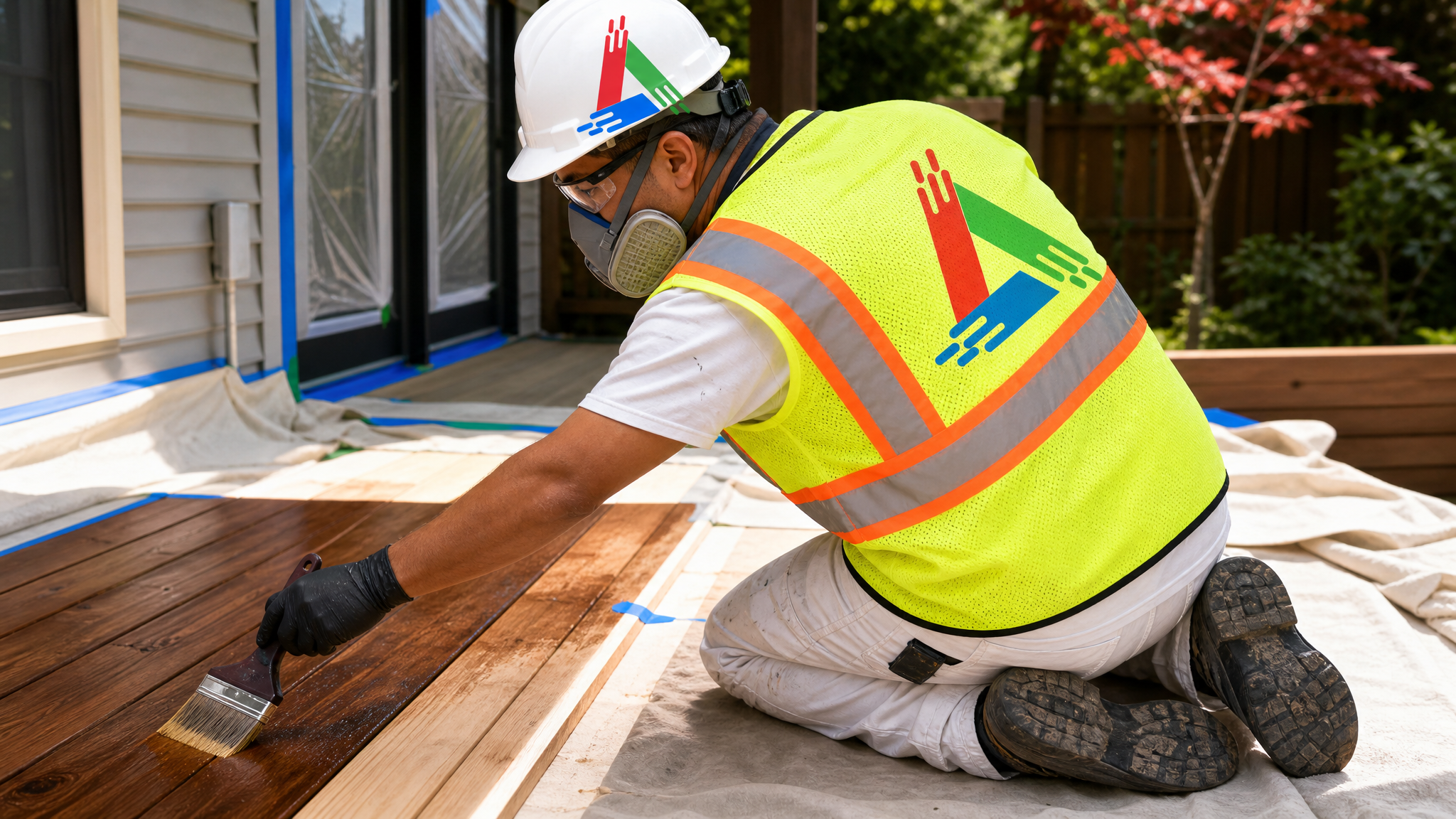
Preparation is where a professional finish is won or lost. Even brand-new lumber needs attention before staining a new deck. Mill glaze, a shiny, compressed surface left by factory planing, sheds stain if not addressed. Pressure-treated boards carry surface residue from the treatment process. Sawdust, dirt, and greasy fingerprints from the build all interfere with adhesion.
Our standard prep sequence looks like this:
- Clean the boards with a dedicated deck cleaner or a wood brightener to strip surface contaminants and open the grain. This also neutralises any tannin bleed on cedar.
- Rinse thoroughly and allow the deck to dry completely, usually 24 to 48 hours in warm weather.
- Sand lightly with 60 to 80 grit on the walking surface and rails to knock down mill glaze and raised fibres. Handrails get extra attention since that is what people touch.
- Sweep and vacuum every trace of dust from the grain and the gaps between boards.
- Mask and protect siding, brick, foundations, and nearby landscaping with drop sheets and painter’s tape.
Set nails and screws below the surface, and check for any pitch or sap that needs spot treatment. Skipping the cleaning and sanding steps is the number one reason a DIY deck stain fails early. This same discipline is what we bring to our house painting projects across Toronto, the finish is only as good as the surface underneath it.
Choosing the Right Deck Stain and Finish
Not all stains are created equal, and the right choice depends on the look you want and how much maintenance you are willing to do. When staining a new deck, the biggest decision is opacity, how much of the natural grain you want to show through.
Transparent and semi-transparent stains show off the wood grain and are ideal for cedar and hardwoods. They penetrate deeply, wear gracefully, and are easy to recoat because they do not form a film that peels. Semi-solid and solid stains offer more colour and far more UV protection, which is often the smarter pick for pressure-treated pine that lacks the beauty of cedar. Solid stains behave more like paint, they hide the grain, last longer between coats, but can eventually peel if water gets underneath.
Oil-based penetrating stains remain a favourite for new wood because they soak into the fibres and nourish the grain, while modern water-based and hybrid formulas offer lower odour, faster cleanup, and excellent colour retention. For Toronto decks that bake in summer sun and freeze in winter, we lean toward products engineered for freeze-thaw durability and mildew resistance.
| Stain Type | Grain Visibility | UV Protection | Best For | Recoat Interval |
|---|---|---|---|---|
| Transparent | Full grain shows | Low | Premium cedar, hardwood | 1 to 2 years |
| Semi-transparent | Most grain shows | Moderate | Cedar, quality pine | 2 to 3 years |
| Semi-solid | Some grain shows | High | Pressure-treated pine | 3 to 4 years |
| Solid / opaque | Grain hidden | Very high | Older or lower-grade wood | 4 to 5 years |
The Professional Application Process
Once the wood is dry, clean, and prepped, application is methodical. When staining a new deck, we work with the grain and follow a board-by-board, edge-to-edge approach to avoid lap marks, the ugly overlap lines that appear when stain dries before you can blend a fresh section into it. Maintaining a wet edge is everything.
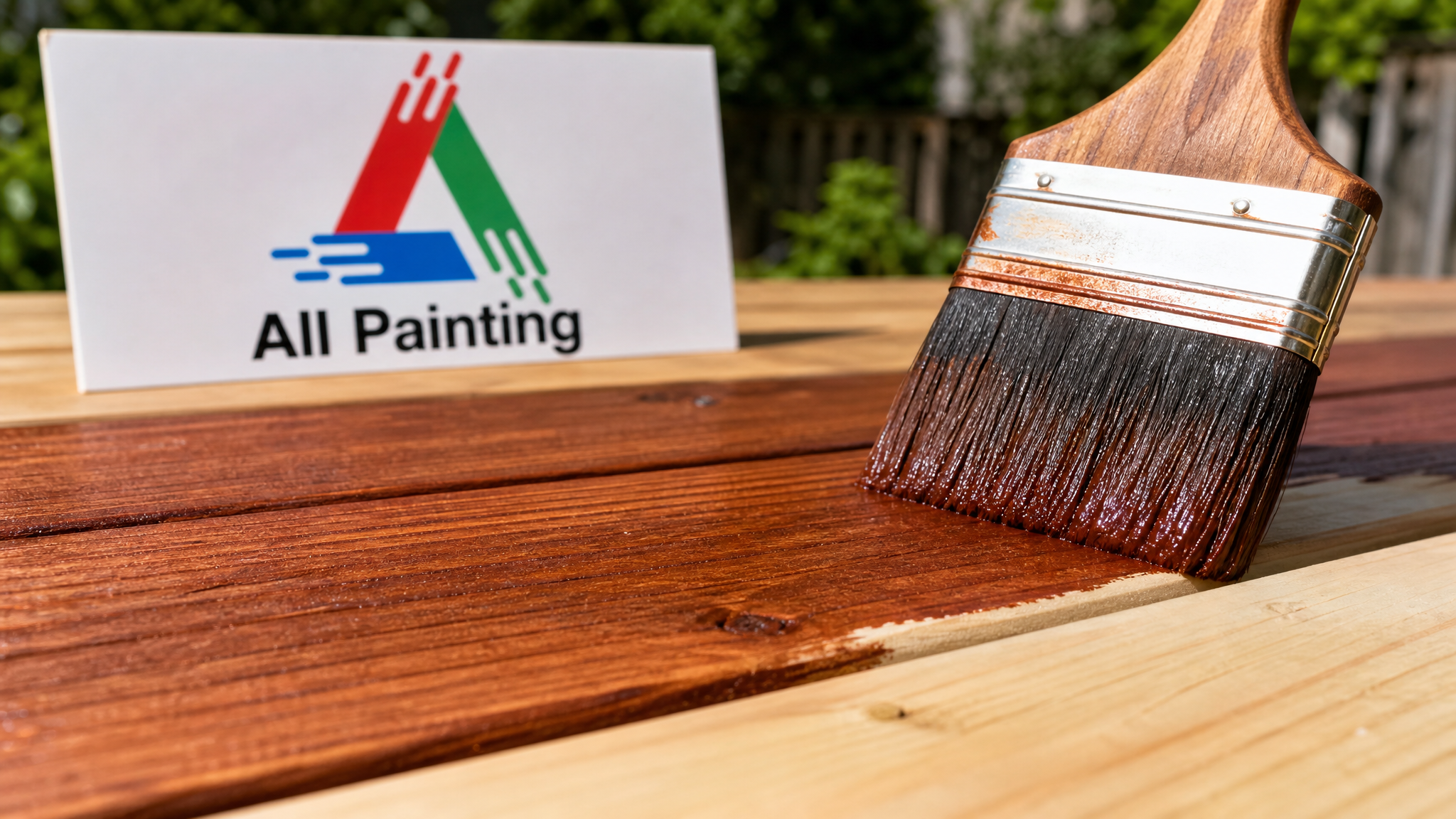
For the walking surface, we typically brush or pad the stain into the wood so it penetrates the grain, then back-brush to work it in evenly and avoid puddling in the gaps. Sprayers speed up large surfaces and rails, but they are always followed by back-brushing so the finish bonds rather than just sitting on top. Most penetrating stains want a thin coat, over-application leaves a sticky, tacky surface that never fully cures. Two thin coats almost always outperform one heavy coat.
We stain the railings, balusters, and posts first, then work our way across the deck boards toward an exit so we never paint ourselves into a corner. Vertical surfaces and end grain, the cut ends of boards, drink up the most stain and are the first place water tries to enter, so they get extra attention. After application, the deck needs to stay dry and foot-free for the manufacturer’s recommended cure time, usually 24 to 48 hours in warm weather before light use, and a few days before moving furniture back. Our crews apply the same care to deck and fence staining across Toronto that we bring to interior finishes.
Realistic 2026 Costs and Timeline in the GTA
Homeowners always want to know what staining a new deck costs and how long it takes. Pricing in the Greater Toronto Area depends on the size of the deck, the number of rails and balusters, the condition and species of the wood, and the product chosen. Intricate railings and multi-level decks take longer than a simple rectangular platform because of all the vertical surfaces and hand-detailing involved.
As a general 2026 guide, professional deck staining in the GTA runs roughly 3 to 6 dollars per square foot for a standard single-level deck, with heavily railed or elevated decks landing higher. A typical backyard deck of around 300 square feet, including cleaning, light sanding, and two coats of quality stain, often falls in the range below. These figures assume the wood is ready to stain, extensive drying delays or repairs can shift the timeline.
| Deck Size | Prep + Two Coats (Estimated) | Approximate Duration | Notes |
|---|---|---|---|
| Small (under 200 sq ft) | $700 to $1,300 | 1 to 2 days | Simple platform, minimal railing |
| Medium (200 to 400 sq ft) | $1,300 to $2,400 | 2 to 3 days | Standard backyard deck with rails |
| Large (400 to 600 sq ft) | $2,400 to $3,800 | 3 to 4 days | Multi-level or wraparound |
| Extra large (600+ sq ft) | $3,800+ | 4+ days | Elaborate railings, stairs, privacy walls |
Remember that these timelines cover the staining itself and assume dry weather. If the wood still needs weeks to dry before you can even start, plan accordingly. This is why we often recommend booking your deck-staining slot early in the summer season so the crew arrives just as the lumber reaches readiness.
Common Mistakes to Avoid When Staining a New Deck
A little knowledge prevents expensive redos. Here are the errors we see most often around Toronto, Mississauga, and Oakville:
- Staining too soon. Sealing wet pressure-treated wood traps moisture and guarantees peeling. Always run the water-drop test first.
- Skipping the cleaning step. Mill glaze and surface residue block penetration. New does not mean clean.
- Applying in direct sun or high heat. The stain flashes off before it can soak in, leaving lap marks and uneven colour.
- Over-applying. Thick coats stay tacky and never cure. Wipe off any excess that has not absorbed within 15 minutes.
- Ignoring the forecast. Rain within 24 to 48 hours of application can ruin a fresh finish.
- Neglecting end grain and rails. These are the first failure points, so they need extra coverage.
Avoiding these pitfalls is exactly why so many GTA homeowners hand the job to a professional crew. If you would rather skip the trial and error, our team handles everything from deck and exterior work in Mississauga to detailed finishes right across the region, and you can read what past clients say on our reviews page.
Maintaining Your Newly Stained Deck
The work does not end after staining a new deck, though good maintenance is easy. Sweep debris regularly so leaves and dirt do not trap moisture against the boards. Rinse with a garden hose and a soft brush a couple of times a season, and avoid pressure washing at high settings, which can gouge softwood and strip the finish prematurely. Keep planters on feet so water does not pool underneath, and clear the gaps between boards where organic matter collects.
Watch for the first signs that a recoat is due: water no longer beading on the surface, fading colour, or a slightly rough, dry feel underfoot. Catching this early, before the wood greys or splits, means a simple clean-and-recoat rather than a full strip-and-restain. Penetrating stains make this especially painless because there is no peeling film to sand away. With attentive care, a professionally stained GTA deck can look sharp for many seasons and hold its protective barrier through winter after winter.
How long should I wait before staining a new deck in Toronto?
Can I stain a new deck in the summer heat?
Do I need to clean and sand a brand-new deck first?
What type of stain is best for a new pressure-treated deck?
How much does staining a new deck cost in the GTA?
One or two coats when staining a new deck?
Book Expert Deck Staining With All Painting Today
Getting the timing and technique right on staining a new deck takes experience, the right products, and a close eye on Toronto’s summer weather. The team at All Painting has finished decks, fences, exteriors, and interiors across the GTA for years, and we know exactly how to prep new lumber so your finish lasts season after season. From cedar to pressure-treated pine, we handle the cleaning, sanding, and professional application so you get a durable, beautiful result without the guesswork.
Call us today at (416) 710-4224 or request a free quote to get started.
All Painting proudly serves Toronto, Mississauga, Oakville, Markham, Burlington, Hamilton, Richmond Hill and the GTA.